
Decoupling Statistical Reference Anchors From Continuous Operational Aggregation Loops
Decoupling statistical reference anchors from operational loops isolates static historical baselines from live telemetry, preventing dynamic metric drift.

Anchor
Continuous operational aggregation loops process telemetry, transaction volume, or user interactions as streaming inputs. These loops update running mathematical constructs like rolling averages, exponential moving means, and high-frequency percentile estimates. A statistical reference anchor provides the fixed frame of comparison required to compute a true delta across time.
When an operational loop feeds its live aggregate calculations back into the baseline calculation engine, the reference anchor absorbs the operational noise it was designed to measure. Decoupling isolates the historical distribution parameters from the real-time execution path, preserving the integrity of the baseline snapshot.

Mechanism of Reference Anchor Contamination
A statistical reference anchor functions as a calibrated setpoint within a feedback loop. When streaming computational engines compute aggregations over short rolling windows, the calculated mean constantly tracks short-term oscillations. If downstream alerting engines or auto-scaling algorithms compare current live metrics against a baseline that updates inside the same computational window, the baseline moves in tandem with the signal spike.
The system loses the objective reference class necessary to distinguish a transient anomaly from a structural shift.
High-frequency aggregation loops without decoupled baselines develop dynamic setpoint drift. In an operational pipeline processing streaming transactions, an extended period of degraded latency raises the calculated operational mean. If the baseline continuously ingests this elevated latency stream into its active calculations, the reference anchor ratchets upward.
Subsequent operational delays then register as normal variance against the corrupted benchmark. The system displays empirical stability while performance quietly degrades.
Decoupling a reference anchor from active computational memory prevents transient operational spikes from rewriting the baseline threshold.
Operational aggregation engines optimize for low computational overhead and immediate state updates. They achieve this by using streaming algorithms like t-digests or exponential decay counters. These structures continuously drop historical raw observations to preserve memory capacity.
Statistical reference anchors require exact historical percentile distributions collected over fixed, static windows. Conflating the live streaming counter with the static historical baseline forces one mathematical structure to fulfill two opposing operational mandates.
The separation of reference calculation from operational aggregation requires distinct data pipelines. The operational loop runs on ephemeral memory, computing local throughput over seconds or minutes. The reference anchor pipeline operates on batch-ingested storage snapshots, calculating parametric or non-parametric distribution bounds over days, weeks, or months.
The output of the reference pipeline is a frozen snapshot, deployed to the operational runtime as a read-only parameter.
The explicit isolation of reference parameters changes the update vector from a continuous gradient into a versioned configuration deployment, preventing runtime drift from altering historical operational context.
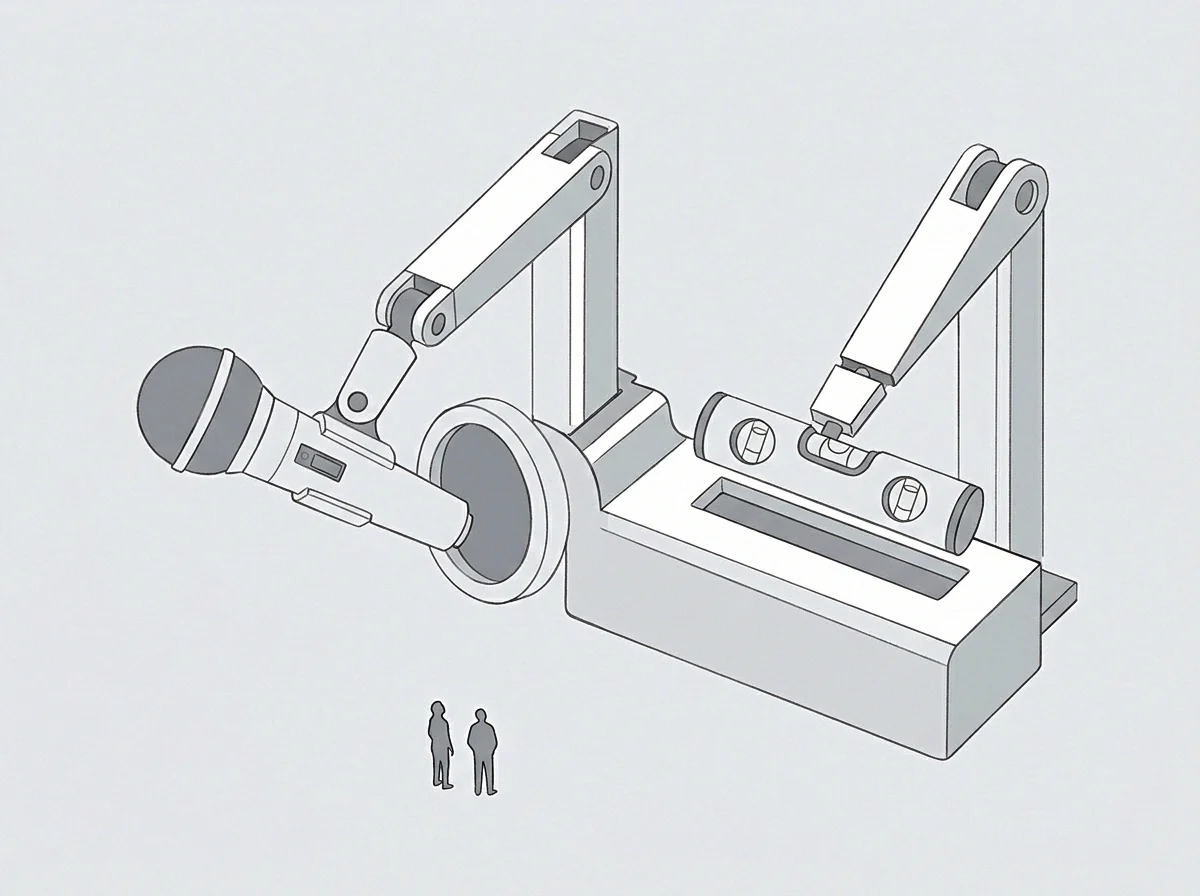
Wall
Physical and logical isolation between computational streaming loops and reference databases creates an architectural boundary. This boundary, or structural isolation wall, governs how reference parameters enter active aggregation memory. Operational nodes consume frozen reference snapshots without the ability to modify the source baseline dataset during runtime execution.
This design guarantees that operational feedback loops remain bounded by deterministic limits calculated outside the execution path.

Architectural Patterns for Baseline Isolation
Implementing an isolation boundary requires structural separation at the storage, execution, and state management layers. Streaming execution nodes calculate immediate metrics within volatile local cache windows. Reference anchors reside in immutable configuration vaults or specialized analytical data stores designed for low-frequency read access.
Operational aggregators fetch baseline parameters during initialization or through explicit configuration reloads, maintaining total independence from raw telemetry persistence channels.
| Evaluation Parameter | Integrated Reference Loop | Decoupled Reference Architecture |
|---|---|---|
| State Memory Allocation | Shared volatile operational memory | Isolated immutable snapshot store |
| Baseline Calculation Frequency | Continuous per-event update cycle | Scheduled asynchronous batch window |
| Susceptibility to Metric Drift | High under extended variance conditions | Zero during active streaming execution |
| Computational Overhead | O(1) continuous state updates | O(N) batch computation at fixed intervals |
| Validation Boundary | Self-referential live feedback | Deterministic external validation point |
Architectural failure modes occur when engineers attempt to shortcut baseline isolation to save memory or reduce pipeline latency. These failure modes expose active systems to false validation signals and undetected operational decay.
- Circular Reference Dependency arises when the output of an operational aggregation loop directly populates the input cache of the statistical benchmark engine without a decoupling window.
- Snapshot Pollution occurs when uncleaned operational anomalies pass into the offline batch baseline computation, distorting future reference parameters.
- State Corruption develops when operational worker processes write local aggregate overrides back to shared reference storage tables.
- Decay Blindness happens when a baseline refreshes so rapidly that the system cannot compute an ordinal delta across consecutive deployment phases.
A decoupled setup separates the continuous write operations of streaming data from the static read operations of reference anchors. The streaming aggregator processes incoming events without executing historical window queries. The baseline engine runs analytical operations on cold analytical replicas, generating static parameter blocks.
These parameter blocks upload to the operational nodes as versioned state files.
An operational system using isolated baseline snapshots retains historical sensitivity regardless of short-term variance.
When an operational pipeline lacks this isolation boundary, long-term degradation becomes mathematically invisible. An extended plateau of degraded network performance slowly pulls the integrated moving baseline down to match the poor performance. The error signal attenuates toward zero even as actual performance collapses relative to original design parameters.
Operational monitoring dashboards reflect normal status because the reference baseline shifted down alongside the operational metric.
Building the isolation wall requires explicit boundaries in memory allocation, network access, and deployment privileges. Operational runtime clusters receive read permissions on versioned baseline tables. They receive zero write permissions to baseline storage schemas.
Operational aggregate outputs route exclusively to telemetry sinks, never directly back into the statistical reference engine without passing through an offline cleaning and validation window.
Failing to establish logical isolation between streaming operational metrics and statistical reference parameters eventually converts an objective monitoring engine into a self-referential validation loop.

Latency
Decoupling operational loops from reference anchors introduces temporal lag between baseline recalculations. This latency is an explicit design requirement rather than an operational bottleneck. Controlled refresh latency prevents short-term volatility from polluting long-term benchmarks while keeping reference anchors grounded in recent system behavior.

How Does Refresh Asynchrony Prevent Feedback Saturation?
Continuous feedback loops suffer from instability when internal setpoints adjust at the same frequency as the live input stream. High-frequency setpoint updates cause feedback saturation, where the calculated variance drops to zero because the reference moves at identical speed with the signal. Introducing controlled latency into the reference update cycle breaks this synchronous tracking.
The operational loop operates against a stable baseline, allowing real deviations to trigger legitimate delta signals.
The duration of the decoupling latency window depends on the underlying statistical distribution of the domain. In systems characterized by strong diurnal or weekly seasonality, the baseline recalculation window spans complete seasonal cycles. A operational streaming metric aggregate running on a five-minute window compares its live performance against a reference anchor calculated over a trailing twenty-eight-day window, updated once every seven days.
Controlled update latency forces operational aggregation loops to measure live metrics against fixed historical realities.
The mathematical representation of this temporal isolation involves staggered execution clocks. The operational aggregation clock ticks at milliseconds or seconds. The reference anchor clock ticks at hours, days, or weeks.
The delta equation compares the high-frequency operational output against the low-frequency snapshot output.
An operator managing an automated scaling policy encounters false positive oscillations when setpoints refresh continuously. During sudden traffic surges, an instantly adapting baseline calculated over a two-minute window quickly reclassifies the surge volume as the new default baseline. The autoscaler ceases scaling out because the delta between live traffic and the moving baseline disappears.
As traffic drops, the opposite failure occurs, causing premature downscaling. Introducing a twenty-four-hour baseline update latency preserves the baseline during short-term traffic spikes, maintaining correct scaling responses.
Selecting an excessively long baseline latency window creates structural drift risks. If the underlying operational capacity changes permanently due to an architectural deployment, an stale baseline produces persistent false positive anomalies. The reference anchor remains tuned to an obsolete physical reality, generating continuous false delta alerts.
Decoupling latency requires balance between variance absorption and structural adaptation.
The optimal latency specification for a reference anchor refresh cycle presents an open question regarding how automatically systems can differentiate structural capacity shifts from transient distribution spikes without manual baseline resets.

Ground
Establishing an empirical statistical ground requires defining reference classes outside the operational execution loop. A reference class groups historical operations that share identical structural conditions, technical configurations, and environmental variables. Comparing live continuous aggregate outputs against an uncalibrated general baseline produces false insights.
Effective decoupling grounds operational metrics in specific, contextually relevant reference classes that remain immutable during the operational evaluation window.

Worked Situation of Reference Class Isolation
Take an operational system processing payment transactions across three distinct payment gateways. Assume Gateway A operates with an average network latency of forty milliseconds, Gateway B operates at one hundred twenty milliseconds, and Gateway C operates at two hundred milliseconds. The system processes streaming transactions through a continuous operational aggregation loop that calculates a unified trailing five-minute mean latency across all incoming transactions.
In an integrated configuration without reference class isolation, the system computes a single operational mean latency of one hundred twenty milliseconds across all gateways combined. If Gateway A suddenly experiences a complete outage, traffic automatically shifts entirely to Gateway C. The live aggregate latency calculated by the streaming loop surges to two hundred milliseconds. The integrated alerting system compares two hundred milliseconds against the historic combined mean of one hundred twenty milliseconds, triggering a high-severity general system latency alarm.
The root problem is not system-wide latency degradation, but a shift in routing mix across distinct reference classes. The system lacked reference class isolation. The operational aggregation loop mixed heterogenous statistical distributions into a single streaming counter, comparing it against a non-decoupled, unsegmented baseline snapshot.
A decoupled reference class architecture isolates baseline metrics by gateway segment before live evaluation occurs. The system stores three distinct, static baseline anchors in a read-only memory cache.
The live operational aggregation loop tracks incoming transactions by gateway tag, computing three independent streaming means. When Gateway A traffic drops and Gateway C traffic increases, the live metric for Gateway C remains at two hundred milliseconds. The system compares Gateway C live metrics strictly against the Gateway C statistical reference anchor of two hundred milliseconds.
The calculated delta for Gateway C equals zero. The system identifies a traffic redistribution event rather than an infrastructure performance failure, avoiding unnecessary operational intervention.
Creating valid empirical grounds requires operators to record reference baseline distributions across explicitly documented environmental parameters. The assumptions underlying a baseline must be stated clearly prior to operational deployment.
A baseline recorded during a holiday promotional period cannot serve as the reference class for an ordinary Tuesday operation. If the operational aggregation loop compares standard operational streaming volumes against the promotional baseline, the computed delta remains permanently negative, generating false alarms of capacity loss.
The ground exists independently of operational sentiment or short-term execution goals. Operators must resist the temptation to manually adjust baseline bounds when live aggregates repeatedly breach designed thresholds. Modifying baseline anchors to clear active alert conditions destroys the empirical validity of the reference class, obscuring underlying system decay.
The operational team states that the current performance meets historical bounds because the alert threshold was recalibrated upward after the last three deployment failures.

Audit
Verifying that statistical reference anchors remain decoupled from operational aggregation loops requires continuous diagnostic testing. System architecture degrades over time as engineers introduce optimization shortcuts, unified memory caches, or automatic configuration updates. An architectural audit tests whether reference anchors maintain structural and operational isolation from active streaming aggregation paths.

Diagnostic Protocol for Invariance Testing
The primary method for verifying baseline isolation is the invariance test. An invariance test introduces synthetic noise, artificial latency spikes, or extreme volume anomalies into the active operational aggregation stream while observing the output of the statistical reference anchor engine. If the reference anchor parameter values change in response to short-term operational inputs, the reference anchor is coupled to the operational loop, indicating an architectural failure.
- Inject a sustained high-amplitude synthetic signal spike into the live telemetry aggregation ingestion engine.
- Verify that active operational alerts trigger correctly as the live aggregate deviates from the baseline frame.
- Maintain the synthetic anomaly across three standard operational aggregation window cycles.
- Read the baseline parameters stored in the active configuration vault to check for unexpected value drift.
- Confirm that the reference anchor values remain completely invariant throughout the active anomaly injection window.
- Purge the synthetic signal from the streaming ingestion path and observe the live operational aggregate returning to baseline alignment.
Detecting hidden coupling requires inspecting state storage access patterns. Engineers must verify that write operations to reference baseline databases originate exclusively from scheduled offline batch jobs or explicit administrative deployment pipelines. Any operational worker process that holds direct write access to reference baseline schemas represents an immediate coupling hazard.
Audit procedures must inspect the versioning metadata attached to active baseline parameter files. Every deployed reference anchor must carry explicit lineage metrics, including the historical window start time, historical window end time, generation timestamp, and source dataset hash. An operational system evaluating live aggregation metrics against unversioned or un-timestamped baseline values cannot establish historical provenance or defend delta calculations under scrutiny.
Evaluating decoupling efficacy involves assessing the stability of error signals during prolonged operational stress. A properly decoupled system produces an explicit, sustained error delta whenever system behavior diverges from historical bounds. A system where error deltas collapse back to zero during ongoing operational failure suffers from baseline contamination, proving that live aggregation data has polluted the baseline engine.
Continuous operational aggregation loops require fixed reference anchors, and system stability depends on keeping baseline updates slower than operational state variations.