
Updating Unit Economics Priors Under Time Varying Acquisition Cost Distributions
Updating unit economics priors under time-varying acquisition cost distributions requires state-space filtering to separate temporary auction noise from structural shifts.

Cohort
A treasury account shows advertising expenditure rising twelve percent over thirty days while reported unit acquisition stays unchanged on the primary executive dashboard. The baseline holds scalar values. Beneath that aggregate figure, channel performance has fractured into discrete price distribution bands.
Early customer cohorts delivered predictable payback dynamics under stable bidding environments, establishing a historical prior for payback velocity and acquisition expense. When auction dynamics shift, that historical prior turns into a cached answer that obscures real capital allocation efficiency.

Static Assumptions and Non-Stationary Realities
Traditional unit economics calculations rely on stationary distribution assumptions. The standard model treats customer acquisition cost as a random variable drawn from a fixed Gaussian distribution with constant mean and bounded variance. Advertising platforms modify algorithms, competitors adjust capital deployment, and target audience segments exhaust their responsive yields.
Bids escalate during channel shifts. Consequently, the actual underlying probability distribution generating acquisition expense moves continuously across time.
When customer acquisition cost distributions shift upward, updating unit economics priors requires separating structural distribution movements from transient statistical variance. An operator observing a fifteen percent increase in weekly acquisition cost faces an inference challenge. Interpreting the increase as temporary noise leaves capital allocation unchanged, preserving acquisition velocity at the expense of unit margin.
Interpreting the increase as a permanent structural shift leads to immediate budget contraction, potentially sacrificing market share during competitive expansion periods.
Evaluating cohort performance without adjusting for time-varying acquisition distributions creates severe misallocations. A cohort acquired at sixty dollars per user during an ad platform auction spike exhibits fundamentally lower lifetime value relative to acquisition cost than a cohort acquired at forty dollars during a calm period, assuming identical retention curves. Aggregating these two groups into a single monthly mean hides the margin degradation of the late cohort.
Blended acquisition metrics mask severe channel degradation until customer payback windows double.
Failing to update unit economic priors against time-varying cost distributions results in deploying growth capital into unviable channels until cash depletion forces an abrupt, unplanned operational contraction.

Auction
Consider a digital commerce enterprise spending two hundred thousand dollars monthly across paid search and paid social channels. The historical prior for customer acquisition cost sits at forty-two dollars per unit, supported by twelve months of empirical telemetry. Over a ninety-day window, market clearing prices inside the primary auction inventory escalate by thirty-five percent due to seasonal competitive bidding.
The actual acquisition cost distribution shifts its mean to fifty-seven dollars while widening its standard deviation from six dollars to fourteen dollars.

Distortion Across Bidding Channels
The auction clearing price fluctuates daily. Growth teams attempting to maintain target customer volume under escalating bid prices inevitably move down the audience quality gradient. Higher clearing prices force ad networks to display creative assets to broader, less qualified user segments to meet volume parameters at acceptable bid thresholds.
This interaction links acquisition expense directly to subsequent retention quality.
Higher acquisition costs systematically correlate with degraded cohort lifetime value. When an auction becomes expensive, the marginal user acquired during that window exhibits a lower conversion rate and higher thirty-day churn than users acquired during low-cost windows. Static expectations misprice acquisition capital.
A prior model that holds cohort revenue expectations constant while acquisition cost varies understates the actual deterioration of the payback vector.
The signal degrades over time. Ad platforms cache conversion probabilities internally, taking weeks to reflect shifts in user responsiveness. When an operator updates priors using unweighted trailing averages, recent observation windows carry insufficient weight relative to the long historical baseline.
- Stationary Noise Misclassification occurs when high clearing prices get coded as routine stochastic variance rather than structural platform shifts, delaying budget adjustments.
- Payback Window Stretching happens when rising acquisition costs extend the duration required to recover capital past agreed liquidity thresholds.
- Cohort Quality Decay emerges when high auction bids force media delivery into lower-intent user inventory, reducing long-term retention.
- Budget Overshoot Amplification develops when automated bidding tools spend fixed daily amounts despite declining marginal unit margins.
The time-varying nature of acquisition distributions forces a continuous recalibration of acquisition limits. Static thresholds fail because auction mechanisms dynamically extract consumer surplus into ad platform revenue. The operational team observing this shift often insists that creative iterations will restore historical customer acquisition performance within two attribution cycles.
Treating continuous clearing price escalation as temporary noise guarantees capital depletion before unit margins recover.

Kernel

Which Prior Model Absorbs Auction Spikes?
Updating unit economics priors under dynamic conditions requires a mathematical structure capable of weighting recent observations higher than distant historical baseline records. Standard Bayesian updates apply fixed learning rates to incoming data streams. Under time-varying distributions, fixed learning rates cause slow adaptation to structural shifts.
A system using a static Bayesian updating structure requires months of elevated acquisition data before the updated posterior mean aligns with the real clearing price environment.
State-space modeling provides a dynamic alternative by introducing a process variance parameter into the state update equation. The underlying acquisition cost mean is modeled as a stochastic process that evolves over time according to a random walk or autoregressive transition function. The Kalman filter framework separates observation noise from state shifts.
When observation variance spikes alongside state transitions, dynamic variance weighting adjusts the Kalman gain, allowing the model to update priors rapidly during structural shifts while ignoring isolated daily outliers.

Mathematical Updating Under Time Variation
Incorporating time-decay kernels into Bayesian prior updating ensures that historical data points lose influence as they age. An exponential decay kernel assigns weights to historical cohort observations based on their temporal distance from the current period. Data points from ninety days prior contribute significantly less to the current prior distribution than data points gathered within the past seven days.
| Update Mechanism | Assumed Cost Distribution | Response to Auction Volatility | Capital Risk Profile |
|---|---|---|---|
| Static Gaussian Prior | Stationary mean and variance | Ignores shifts as temporary noise | High risk of extended capital loss |
| Moving Average Decay | Slowly shifting baseline | Lags sudden auction spikes by fixed window | Moderate risk of budget overshoot |
| Kalman State-Space Filter | Dynamic state with process noise | Separates structural step-changes from noise | Balanced capital protection under volatility |
| Particle Kernel Density | Non-Gaussian, multi-modal distribution | Adapts to complex tail-risk shifts rapidly | Low risk of mispricing fat-tail events |
Selecting an update kernel requires matching the mathematical model to the underlying auction reality. Particle filtering approaches become necessary when acquisition cost distributions display fat tails or multi-modal characteristics. Multi-modality occurs when an enterprise acquires users across distinct channels with vastly different cost structures, such as viral organic referrals mixed with high-cost search capture.
A single Gaussian prior fails to describe a multi-modal distribution, creating misleading unit economic updates.
Prior models fail without decay metrics. When platforms alter privacy permissions or attribution tracking windows, historical conversion data loses structural validity. A particle filter update maintains multiple hypotheses regarding the current distribution state, collapsing parameters quickly when new telemetry confirms a specific cost distribution profile.
Calculated margins recede under pressure.
Variance spreads across late cohorts. Evaluating the updating protocol requires testing how rapidly the estimated posterior acquisition cost converges to the true distribution mean after an exogenous auction shock. An optimal kernel minimizes both convergence latency and parameter variance during stable baseline periods.
When variance weights decay faster than cohort maturation periods, Bayesian update signals deliver false stability readings.
Modifying the variance decay factor from an exponential rate of zero point nine five to zero point eight zero increases updating velocity while expanding the confidence interval around sixty-day customer payback estimates.

Shelf
Calculated estimates sit on physical desks and digital dashboards, presented during monthly operational reviews as established truths. Executive teams review monthly financial reports structured around historical unit economics, while ad platform auctions process millions of bid adjustments every second. This temporal mismatch creates operational friction.
The operator seat faces immediate cash realities, while governance functions operate on lagging accounting cycles.

Structural Friction in Executive Reporting
Operational updates often stall due to corporate reporting cadence. A capital allocation decision made on day one relies on financial priors established during the prior quarter’s planning session. By day forty-five, clearing prices in acquisition auctions have shifted the real cost distribution upward by twenty-five percent.
Capital deployment accelerates quietly. The physical records, printed cash flow projections, and board meeting presentations lag the empirical reality unfolding inside ad platform server racks.
- The media buying desk observes auction clearing price inflation during daily campaign monitoring operations.
- The performance marketing team aggregates weekly cohort performance data into trailing channel dashboards.
- The finance department reconciles monthly bank statements against reported platform conversion metrics.
- The executive team evaluates quarterly capital allocation models against outdated unit economics priors.
Data windows collapse under tail volatility. When accounting structures require formal quarterly audits before modifying target customer acquisition cost limits, growth teams operate under invalid priors for sixty consecutive days. The seat remains occupied.
Meanwhile, market forces continuously alter acquisition vectors regardless of internal reporting cycles.
A sixty-day delay between auction cost shifts and financial model revisions produces structural treasury deficits.
What structural mechanism prevents executive governance committees from acting on real-time Bayesian parameter shifts before trailing accounting cycles record cash losses?
Band
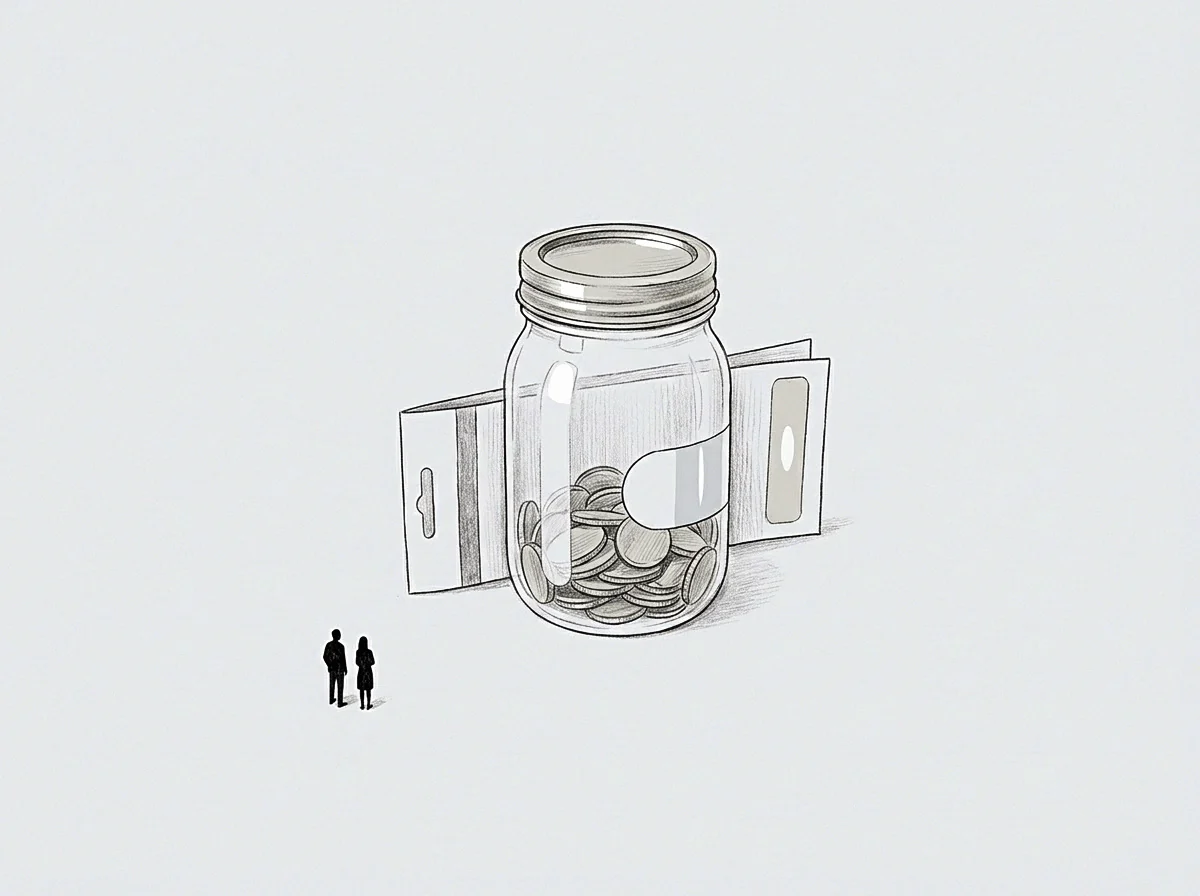
Managing unit economics under time-varying acquisition cost distributions requires setting operational tolerance bands around prior parameters. Rather than managing to a single point estimate for customer acquisition cost, sophisticated teams establish dynamic variance bounds. When daily clearing prices move inside expected statistical bounds, the system treats the variation as routine noise, preserving media spend efficiency.
When clearing prices cross upper boundary thresholds for three consecutive reporting windows, the model triggers an automatic Bayesian parameter update, altering capital allocation limits across all active campaigns.
Execution Protocol for Priors Recalibration
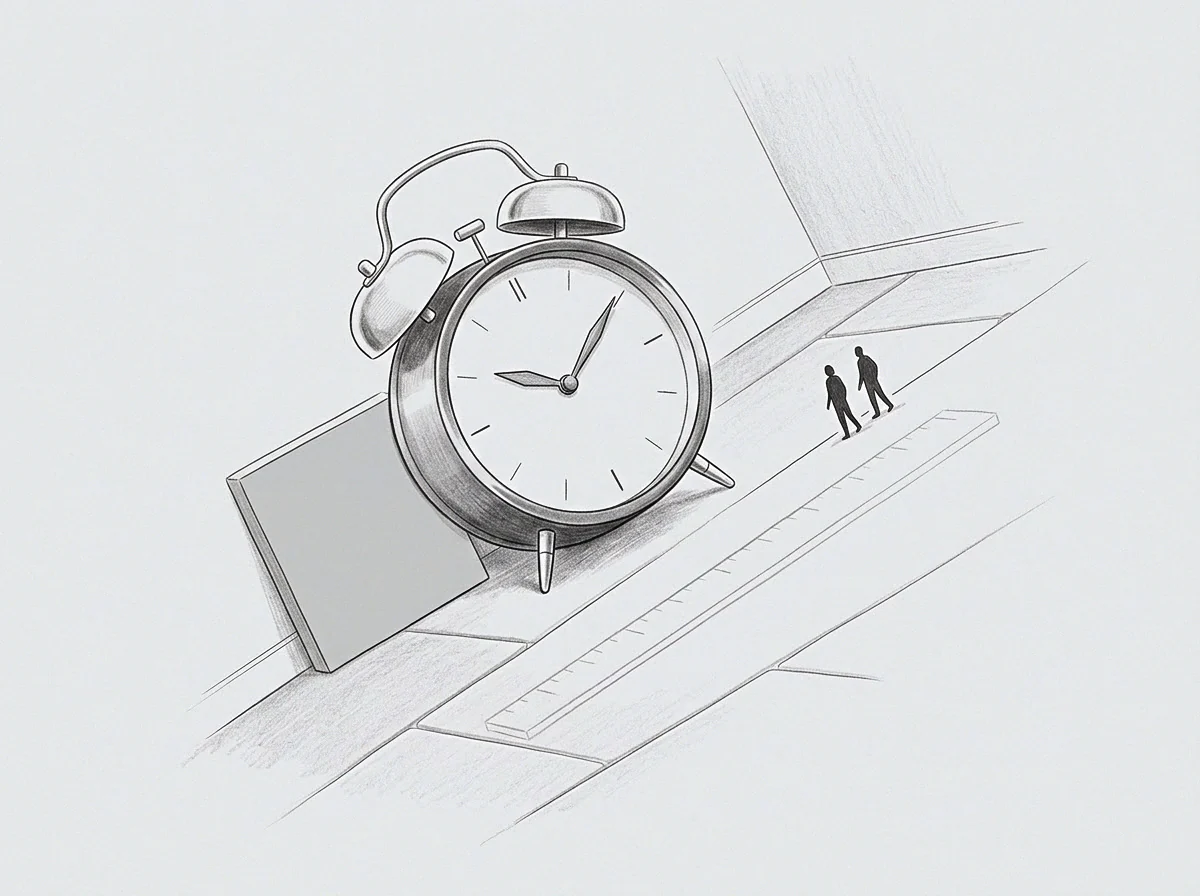
Implementing dynamic parameter bounds establishes an operational bridge between media execution and corporate treasury governance. The ordinal cost vector guides daily bidding behavior, ensuring that media buyers reduce bid ceilings before cash reserves suffer depletion. Cardinal price ceilings enforce hard limits on overall capital commitment, protecting the enterprise from systemic auction manipulation or channel saturation events.
Every update alters future budget targets.
Obsolescence arrives before financial audits. Growth teams that continuously recalibrate their acquisition cost distributions using dynamic state-space models preserve unit margins through market cycles. By decoupling operational priors from static historical averages, capital moves fluidly toward channels exhibiting true unit economic stability.
The calibration loop operates continuously. Trailing cohort retention data feeds back into the kernel estimator, refining the joint probability distribution of acquisition cost and lifetime revenue. When auction clearing prices escalate permanently, the updated prior automatically contracts the target acquisition volume, forcing the enterprise to defend gross margins rather than nominal growth targets.