
Deriving Ascent Vectors By Reversing Established Operational Workarounds
Reversing an operational workaround extracts the geometric trajectory of manual avoidance and directs development leverage directly at the underlying defect.
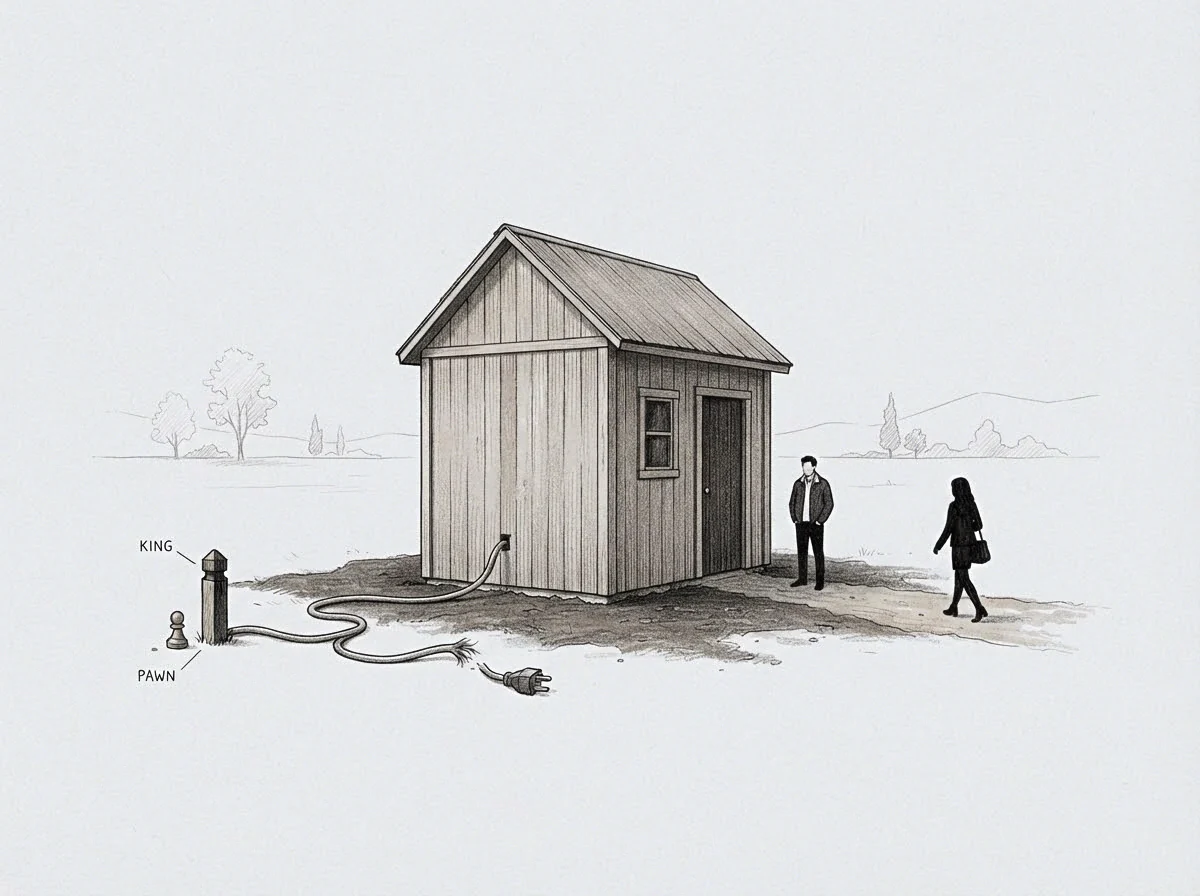
Floor
A founder spends forty minutes every Tuesday morning reconciling two incompatible software exports by hand. The spreadsheet contains eighteen columns, four conditional formatting rules added during a product sprint two years earlier, and six cell references that point to a shared drive folder that no longer accepts new entries. The task produces clean records for the weekly finance check.
The routine protects the business from an immediate accounting error, yet the repetition consumes twenty hours of administrative attention each calendar month without altering the source defect. The patch operates as an operational shock absorber, absorbing mechanical friction that belongs inside the product code.
Operational workarounds accumulate along paths where human labor is cheaper than system revision. An operator confronted with a software limitation, an ambiguous contract term, or a missing procedural handoff invents a manual routine to bypass the obstacle. The bypass resolves the immediate blockage to keep the workflow intact at a local equilibrium, while the labor required to maintain it stays invisible on balance sheets because the founder absorbs the operational debt directly through unrecorded exertion.
A manual routine settles across a broken interface when human labor costs less than software revision.
This exertion sets an artificial floor beneath the organization. Manual intervention shelters the broken system from the operational consequences of its failure, so the product team sees no reason to fix the export protocol while finance figures still arrive on schedule every Tuesday. Because the routine masks the underlying deficit, an inadequate baseline stays stabilized, its manual effort tracing the exact outline of the unaddressed structural flaw.
An investor reading the weekly reporting packet sees clean tables and concludes that operational delivery is holding up well under transaction growth.
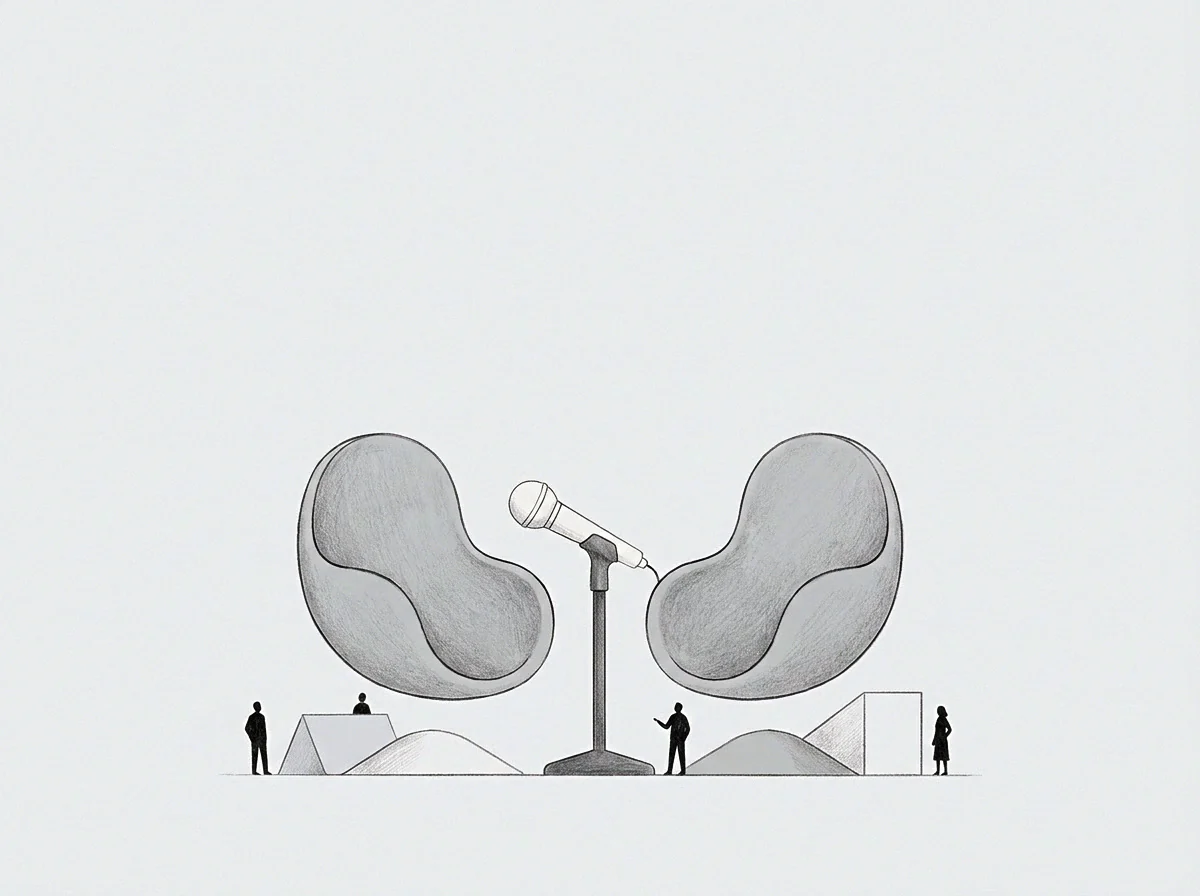
Bypass

The Geometry Of Operational Deflection
Every operational workaround is a path bent by an obstacle. When an executive runs into an uncooperative technical interface, direct effort meets resistance. The energy deflects along the path of least resistance instead of disappearing, settling into a detour around the blockage.
The resulting detour gets labeled as process, though its actual function is avoidance.
These workarounds trace organizational friction directly. An operator tracking customer churn notices on a personal whiteboard has simply located a failure mode the company software fails to monitor. The whiteboard is not an eccentric preference; it records a real gap in the reporting infrastructure, maintained only because an operator spends time and memory holding data the system drops.
Deflection routes organizational energy around an obstacle while leaving the impediment intact.
That diversion creates a secondary liability by demanding continuous attention and tying the operator to recurring administrative loops. What started as an emergency stopgap hardens into operating policy. New hires learn the bypass during onboarding and treat it as standard practice, embedding the detour until the organization confuses systemic avoidance with operational rigor.
The routine holds only until transaction volume outgrows the manual capacity of whoever runs the patch. Failure comes without warning when the operator falls ill or an unhandled input breaks a spreadsheet column, exposing the original defect and dropping accounts that depended on uninterrupted service.

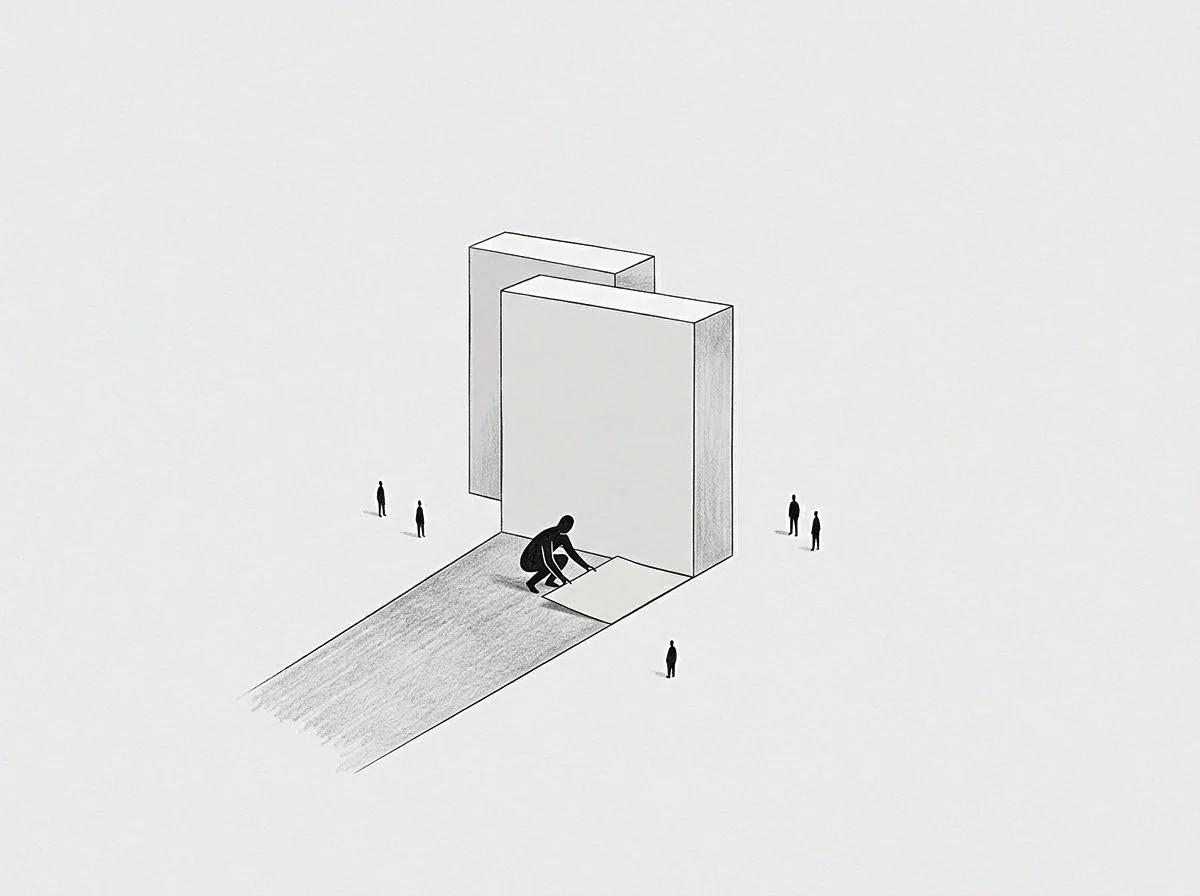
Friction
What Signals A Permanent Operational Route?
Separating an emergency accommodation from a structural failure requires watching how friction behaves over time. A tactical patch answers a transient disruption and disappears once normal conditions return. A structural detour settles in, claiming recurring calendar space and spinning off maintenance work of its own.
Several clear patterns distinguish the two:
- Resource Absorption grows over successive quarters as transaction complexity increases, demanding an increasing share of executive hours just to maintain baseline throughput.
- Documentation Drift sets in when official operating manuals leave the manual intervention out entirely, leaving execution to informal habits passed between staff.
- Dependency Hardening ties specific individuals to repetitive verification tasks, preventing delegation because the operational context lives only in personal memory.
- Error Masking hides core defects from technical teams by resolving bad data by hand before an issue tracker ever logs the fault.
Consider two operating models managing transaction exceptions on merchant accounts. Model Alpha routes exceptions from an automated ingestion pipeline straight to engineering triage. Model Beta assigns support leads to update transaction status flags by hand whenever a batch run fails.
| Evaluation Vector | Model Alpha Automated Triage | Model Beta Manual Workaround |
|---|---|---|
| Weekly Founder Hours | One hour reviewing exception summaries | Nine hours executing manual database patches |
| Throughput Constraint | Server processing capability | Support staff physical working hours |
| System Visibility | High error logging directly in codebase | Low error logging masked by human repair |
| Marginal Handling Cost | Decreases per marginal transaction | Scales linearly with account volume |
Model Alpha treats friction as telemetry: every transaction failure leaves a coordinate in an error log, directing engineering time straight to the point of failure. Model Beta treats friction as an administrative chore to be absorbed through effort. That manual work preserves an inefficient plateau, piling up technical debt behind an appearance of steady delivery.
A system operator who absorbs operational friction by hand creates an undocumented dependency that breaks when throughput expands.
Human endurance functions as an insulating layer that keeps systems from adapting. By absorbing the shock between a bug and its business impact, the operator deprives the technical mechanism of corrective feedback. The software stays stagnant while the person running the workaround burns time and attention on repetitive upkeep.
Accepting friction as routine manual labor consumes the builder’s time and attention without resolving the defect.
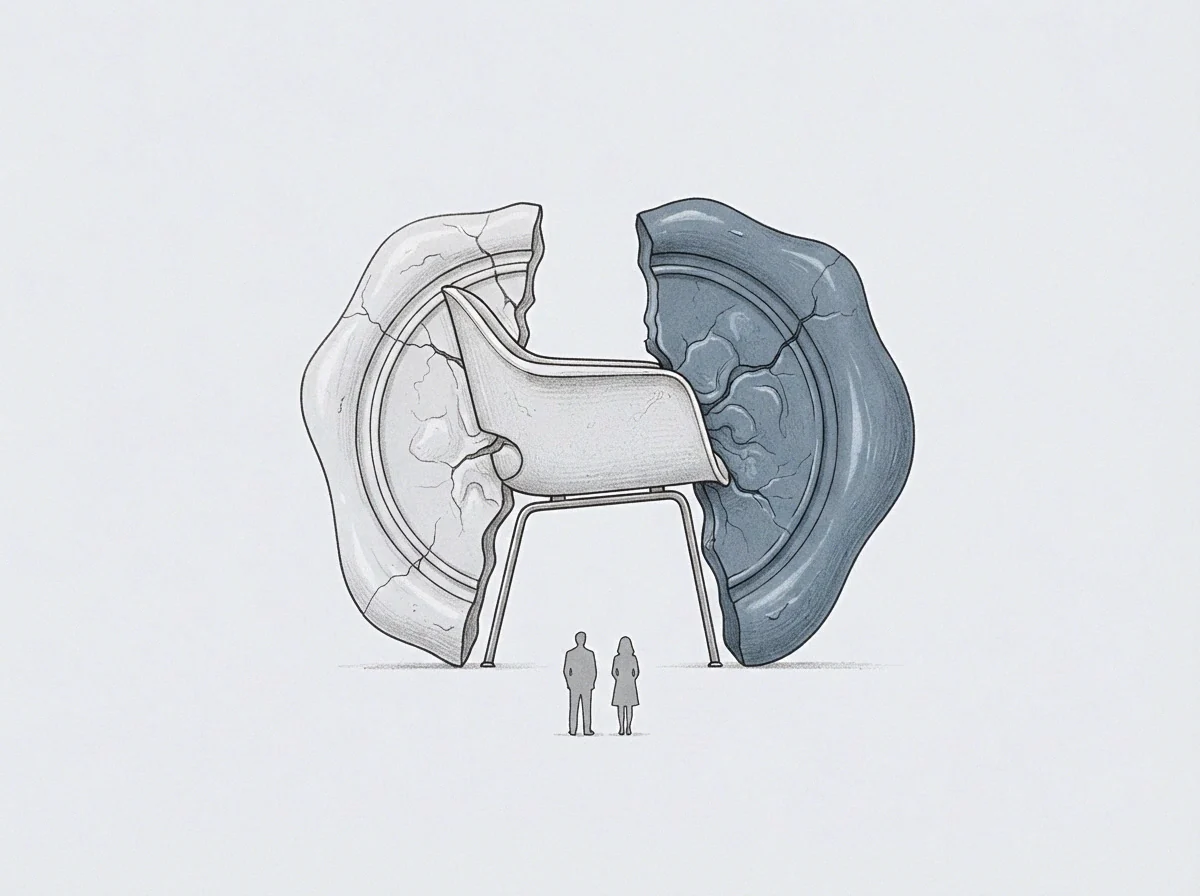
Inversion

Transforming Avoidance Trajectories Into Ascent Vectors
A direct fix emerges by taking the exact path of a manual workaround and reversing it. Because an operator routes around heavy friction, the contour of the detour mirrors the shape of the obstacle underneath. That avoidance pattern marks where productivity is trapped behind an unresolved barrier.
Inverting the workaround means cutting off the manual compensation and applying engineering effort directly to the point being bypassed.
The inversion protocol proceeds through three sequential phases:
- Inventory Isolation catalogues every repetitive manual intervention performed outside documented core software routines.
- Vector Extraction measures the direction, frequency, and administrative hours tied up in each bypass.
- Polarity Reversal rebuilds the broken interface directly at the point of resistance, removing the detour entirely.
Cutting off a working bypass immediately disrupts operations. When the founder stops reconciling the Tuesday spreadsheet by hand, the finance report fails to deliver on time. That failure creates friction and exposes the technical deficit to everyone who relies on the figures, forcing the team to build an automated fix at the point of failure rather than cushioning the breakdown through personal effort.
Terminating a manual compensation pattern releases administrative capacity and exposes the structural repair point.
This transition converts an operational liability into technical leverage. The forty minutes spent every Tuesday morning shift into engineering time directed at the database extraction script. Once resolved in code, the recurring time cost drops to zero, establishing a higher operational baseline where an avoidance route once drained hours.
Ending the routine clarifies the operating standard by pulling human reconciliation out of baseline expectations and requiring engineers to repair the underlying interface.
Torque

Rotational Leverage At The Boundary Edge
Systemic change happens at the boundary of routine operations. Replacing a workaround with a technical solution shifts the organization from absorbing defects to removing bottlenecks. The operator stops serving as an operational buffer and steps back to let the system run under its own mechanics.
Reclaiming that capacity creates immediate organizational leverage. A team that recovers thirty percent of its weekly schedule from manual workarounds gains the hours needed to build new infrastructure, redirecting time once lost to routine data reconciliation into core systems.
This shift exposes the real limit of manual maintenance. An organization cannot scale on repetitive patches; an operator’s working capacity remains bound by daily hours and cognitive endurance. Software mechanisms, by contrast, scale with processing capacity and investment.
Eliminating these bypasses removes recurring manual tasks, moving the baseline from ongoing emergency intervention to systematic capacity growth.
Whether leadership maintains this discipline as new market conditions create fresh points of operational friction remains an open question as an enterprise grows.