
Dynamic Calibration Thresholds For Autonomous Recovery During Severe Non-linear Parameter Baseline Collapse
Dynamic threshold adaptation arrests parameter baseline collapse by establishing empirical holding states that prioritize physical plant margin over mission paths.
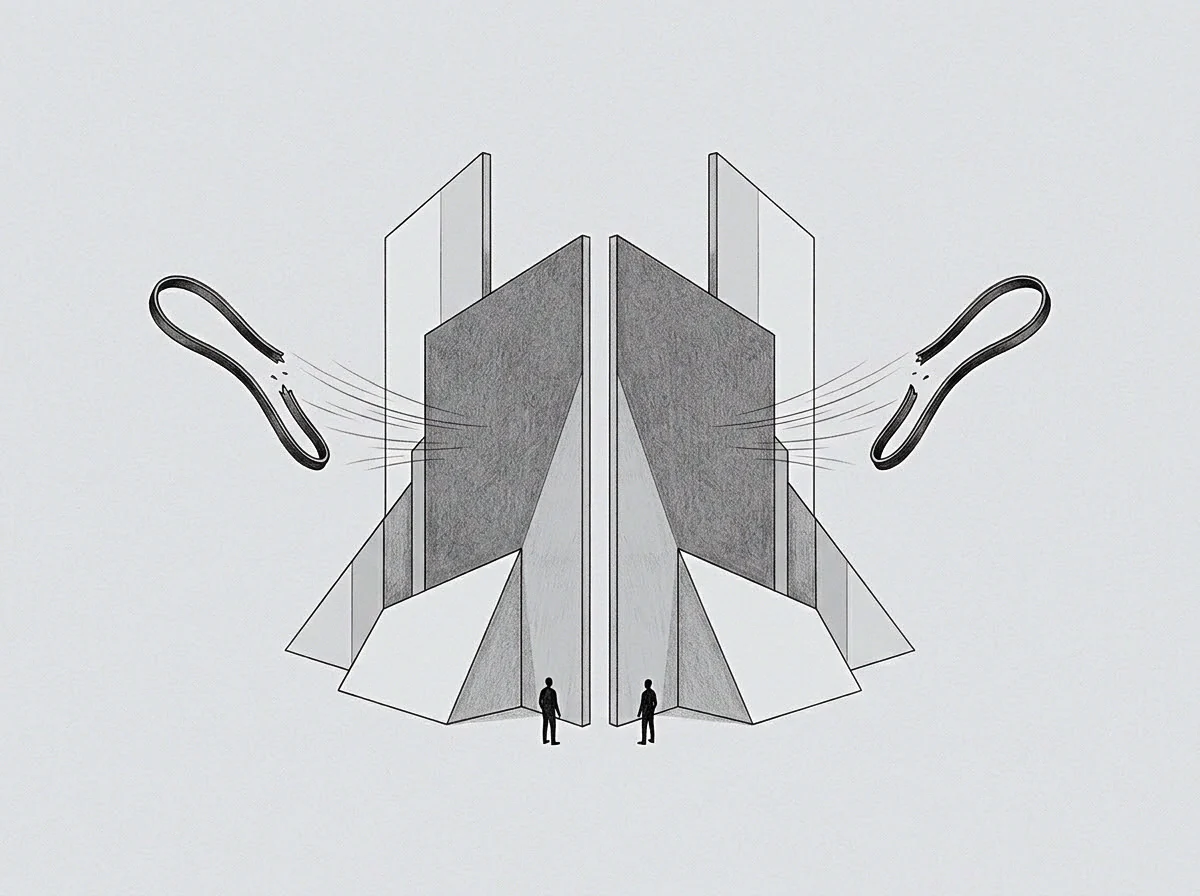
Rupture
A sensor package drifts forty percent off nominal reference before telemetry registers the excursion. The operator watches the state estimation decay while the secondary filter attempts to fit polynomial corrections to an inverted response surface. In control systems exposed to extreme operational envelopes, sudden environmental transitions decouple the system state from its baseline reference plane.
Nominal estimators assume errors distribute symmetrically around an equilibrium point. When structural parameters shear during boundary crossings, the baseline ceases to exist as a stable attractor. The descent follows the path of steepest parameter degradation, pulling the estimator into a local minimum where numerical correction ceases.
The system routes around unmodeled turbulence because computing the actual transfer function exceeds available telemetry bandwidth. Avoidance functions as the coordinate marker of uncomputed physical stress. Every bypassed calculation leaves an unspent volume of mechanical strain unmeasured on the vehicle frame.
Standard gain schedules fail under these regimes because their transition points remain fixed to initial operational assumptions. When non-linear parameter decay outpaces the sampling rate, static threshold bands treat catastrophic deviation as transient signal noise.
When state variance exceeds three times the expected covariance matrix, static filtering algorithms misinterpret boundary separation as sensor drift.
Field data from high-enthalpy flight regimes shows that parameter divergence accelerates along an exponential curve once thermal boundaries degrade. The vehicle does not slide gently into degradation. The descent is steep, deterministic, and self-reinforcing.
Stabilizing an airframe or an autonomous underwater platform during parameter collapse demands an instantaneous re-anchoring of the setpoint. Attempting to force an inverted control surface back toward its pre-collapse baseline increases actuator saturation. The operator spends remaining battery reserves attempting to reclaim an operational state that physical damage has permanently erased.
The mechanical assembly absorbs the uncalculated load until structural fasteners shear along the primary load axis.

Shelf
Recovery logic requires an immediate computational ledge where state estimation can arrest its fall. This arrest platform functions as an empirical holding state, decoupling the control loop from obsolete reference trajectories. Engineers establish these intermediate baselines by reading the physical resistance of control surfaces rather than trusting integrated velocity vectors.
In high-speed atmospheric entries, shock wave interactions alter control effectiveness within milliseconds. A fixed baseline assumes actuator authority matches wind-tunnel calibrations established at ambient conditions.
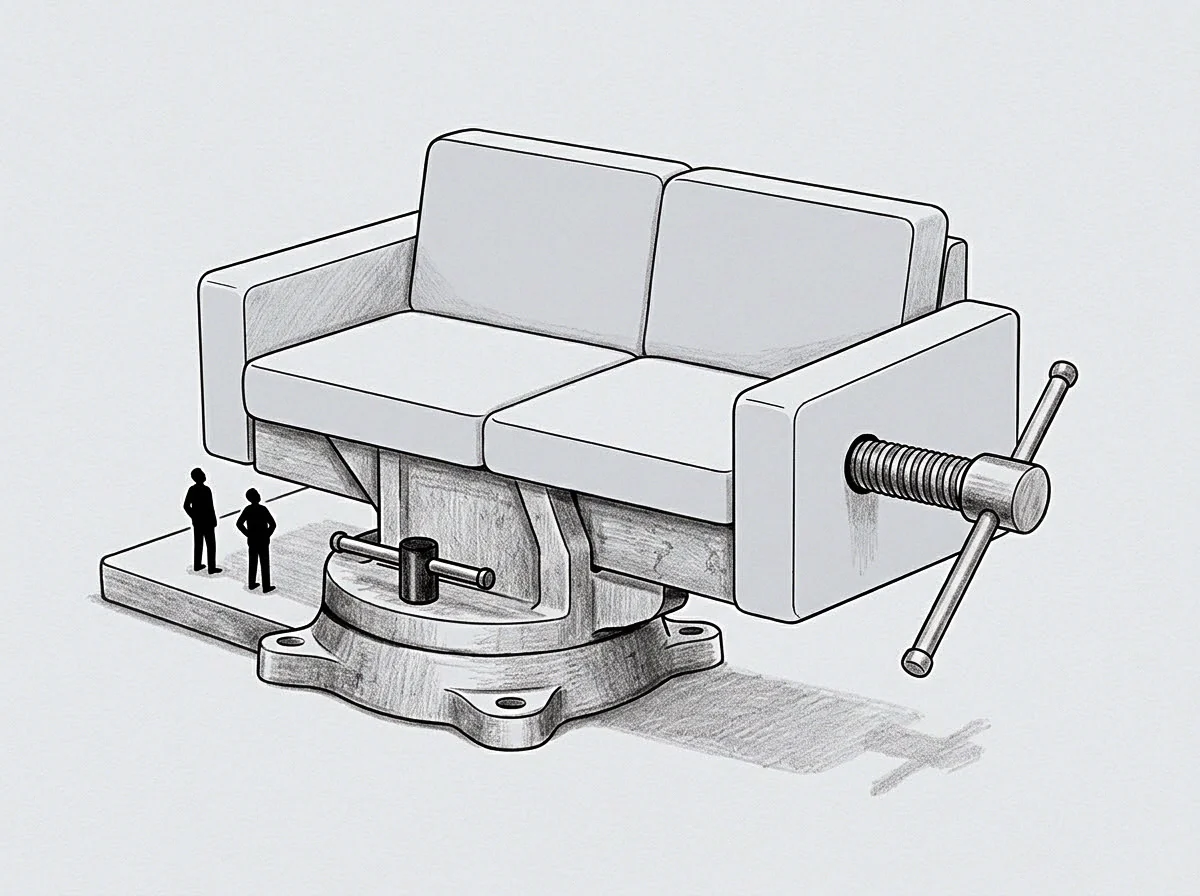
Variance Estimation Under Severe Degradation
When the physical plant alters its geometry under mechanical stress, parameter tracking algorithms must discard long-term moving averages. The sliding observation window contracts to capture only immediate temporal gradients. The estimator isolates three discrete conditions during this phase:
- Instantaneous parameter shear registers when the second derivative of the error vector switches sign without an actuator command.
- Covariance explosion occurs as the Kalman filter gain drops to zero while residual errors continue to compound across all observational channels.
- Actuator resistance divergence manifests when torque feedback indicates complete aerodynamic stall despite nominal surface displacement.
Telemetry loss often accompanies these structural transitions. The autonomous agent retains only its internal inertial measurements and localized pressure readings. Under these sparse conditions, running a full non-linear state reconstruction depletes onboard processing capacity within seconds.
A collapsed parameter baseline converts every historical reference point into an active source of steering error.
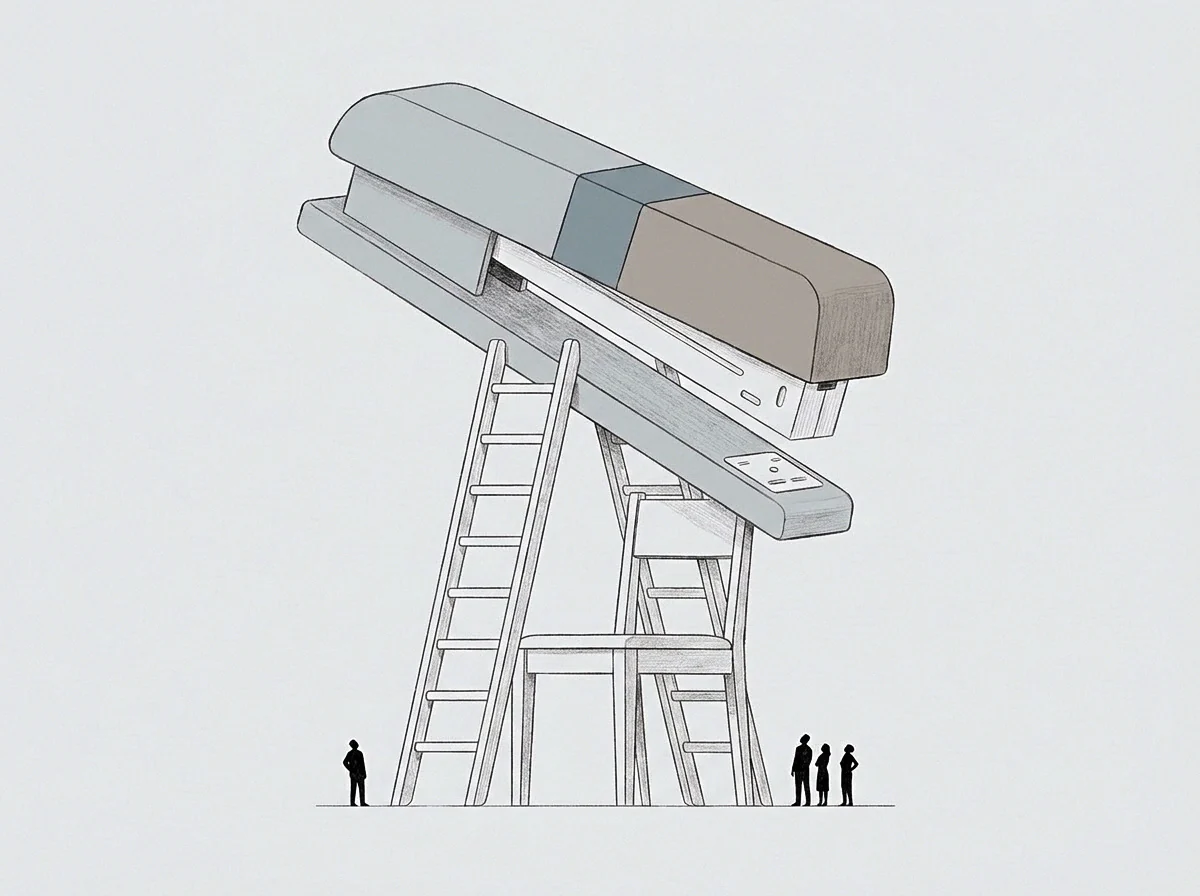
Will Static Bounds Accelerate Parameter Settling Time?
Static boundaries force an unstable plant into persistent hunting behavior as control effectors cycle against artificial limits. When an autonomous system attempts to damp oscillations using pre-programmed limits, the control effort produces phase lag. The physical machine points in one direction while the internal simulation calculates forces belonging to a previous state.
This divergence creates destructive resonance.
The following comparison documents response characteristics across distinct operational strategies during sudden baseline dislocation:
| Recovery Strategy | Settling Duration | Actuator Duty Cycle | Residual Error State | Structural Margin Preservation |
|---|---|---|---|---|
| Fixed Threshold Reversion | Indefinite hunting | 94 percent saturation | Severe divergence | Complete margin loss |
| Static Gain Attenuation | 14.2 seconds | 62 percent continuous | Moderate bias offset | Minimal reserve remaining |
| Dynamic Calibration Shelf | 3.1 seconds | 28 percent burst | Zero steady-state bias | Nominal load bounds intact |
The tabulated metrics demonstrate the operational penalty of rigid recovery regimes. The static strategy exhausts control authority to defend a coordinate that no longer exists in physical space. A dynamic calibration shelf recalculates the viable operating envelope directly from the boundaries of current plant performance.
The secondary contractor will state that the control software performed strictly to the telemetry specifications delivered prior to integration.
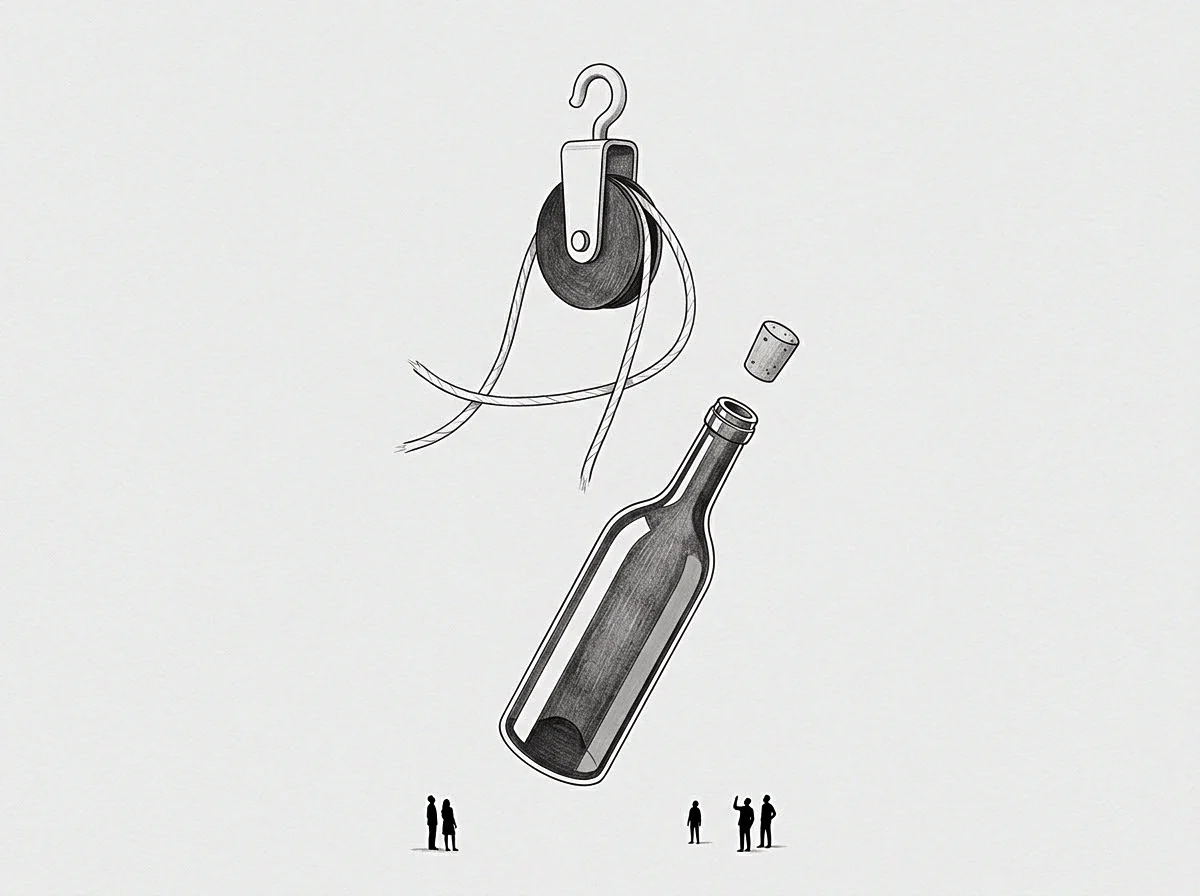
Margin
True operational safety resides in the unspent capacity of the physical platform rather than in the precision of the mathematical simulation. When the mathematical model breaks against unexpected physical phenomena, the survival of the platform depends on structural headroom reservation. The autonomous system measures this margin as the distance between current mechanical strain and permanent yield points.
A standard flight computer treats margin as a scalar buffer. In non-linear parameter collapse, margin functions as a vector with directional constraints.
The control allocation matrix must recalculate its limits using instantaneous thermal and structural feedback. Instead of driving the system toward an arbitrary mission objective, the algorithm prioritizes preserving the control surfaces that retain positive authority. This process mirrors the gradient of least resistance across the failing components.
If the right elevon exhibits anomalous thermal expansion, the system routes primary pitch commands through differential thrust and horizontal stabilizers. The machine accepts temporary altitude loss to maintain dynamic pressure below the structural failure boundary.
Unspent actuator capacity determines whether an autonomous platform survives the transition between operational regimes.
The cost of this maneuver appears as degraded trajectory precision. The vehicle drifts from its nominal flight path, consuming geographical clearance to preserve structural integrity. Operators who prioritize trajectory tracking over parameter stabilization consistently trigger terminal divergent flutter.
The machine cannot serve two masters during severe non-linear collapse. It either yields path accuracy to re-establish an empirical baseline, or it sheds control surfaces while attempting to hold an imaginary line in the sky.
The system survives by sacrificing coordinate adherence to re-establish dynamic equilibrium within physical tolerance limits.

Anchor
Re-anchoring the parameter baseline requires synthesizing sensor inputs that remain uncorrupted by physical plant deformation. Accelerometers mounted directly to primary bulkheads provide clean readings when external pitot tubes freeze or tear away. The autonomous system uses these inertial signatures to establish an empirical reference plane.
This plane ignores historical aerodynamic models, deriving lift and drag coefficients entirely from observed acceleration vectors relative to commanded control deflections.
Recursive System Identification
The identification routine executes in micro-bursts, pulsing control surfaces through minute deflections to measure the immediate plant response. Each pulse generates an empirical coordinate point on the new performance surface. The internal observer model aggregates these coordinates into a piecewise linear approximation of the post-collapse state space.
The math is simple, robust, and computationally inexpensive.
Calculations avoid deep matrix inversions. The processor computes local gradients using simple finite difference equations along the axis of immediate motion. This selective processing prevents computational stalls when CPU cycles are shared with emergency power management routines.
The system ignores secondary cross-coupling effects until the primary stability derivatives converge within safe variance bounds.
Stability returns when the internal observer updates its state matrix faster than the physical structure sheds energy.
Calibrating these thresholds autonomously demands explicit awareness of sensor degradation rates. Optical sensors cloud under ablation; strain gauges drift under sustained plastic deformation. The recovery routine applies an aggressive discount factor to instruments showing elevated internal resistance or anomalous temperature signatures.
By weighting inputs according to physical health metrics rather than statistical variance alone, the estimator avoids tuning its new baseline to damaged instrumentation.
Can the observer guarantee convergence before the airframe enters an irrecoverable attitude if primary roll damping drops to zero?

Route
The path out of parameter collapse requires deliberate traversal of non-linear state space along coordinates that minimize control energy expenditure. Once the anchor baseline stabilizes, the autonomous executive calculates an ascent vector toward safe operating envelopes. This trajectory avoids sudden transitions, maintaining continuous positive dynamic pressure across all functioning lifting bodies.
The algorithm treats every sudden control input as a potential trigger for secondary parameter shearing.
The human operator in the loop frequently misinterprets this deliberate recovery trajectory as algorithmic hesitation. Telemetry displays an extended arc away from the mission target, accompanied by slow control surface rates. Intervening manually during this phase routinely introduces pilot-induced oscillations, overriding the micro-adjustments of the autonomous calibration loop.
The flight envelope has shifted; the human reflex corresponds to an airframe configuration that ceased to exist at the moment of initial collapse.
The recovery algorithm holds the vehicle within this bounded transition corridor until parameter variance drops below the noise floor of the primary sensors. When the structural observer confirms that aerodynamic coefficients remain stationary across three consecutive perturbation cycles, the system gradually restores nominal control gains. Autonomous recovery completes not with a return to the original mission path, but with the formal declaration of a new, restricted operational envelope derived from the surviving physical parameters of the vehicle.
Setting the parameter convergence window tighter than sensor precision permits creates persistent limit-cycle oscillations across the entire primary flight surface array.