
Isolating Memory Mutation Overhead In Stateful Stream Processing
Memory mutation overhead in stateful stream processing stems from heap allocation churn and GC write barriers, isolated through off-heap binary state structures.

Allocation

Heap Pointer Chasing and Allocation Churn
Stateful stream processing engines process high-velocity events by evaluating state transitions over key-value records stored in execution memory. When an operator mutates an existing state entry on the heap, the runtime allocates fresh Java virtual machine objects or modifies mutable object reference chains within heap space. In-place object mutation avoids immediate serialization costs.
High event rates compound object allocation overhead on the managed heap, forcing frequent garbage collection sweeps. The JVM garbage collector sweeps short-lived allocation debris while tracing long-lived state references, increasing stop-the-world pause duration. Tail latency spikes when garbage collection cycles interrupt continuous event processing loops.
Every memory mutation alters the object topology within heap space. Object reference updates generate garbage collector write barriers, enforcing card table updates to track inter-generational pointer movements. The execution thread spends CPU cycles maintaining GC metadata rather than evaluating stream transformations.
Stream execution engines operating with dense state structures encounter throughput degradation as the heap volume expands. Pointer dereferencing across fragmented memory regions reduces CPU cache efficiency, turning simple state read-modify-write loops into memory bus bottlenecks.
State updates inside execution threads create hidden write barriers that reduce processor instruction throughput.
Under heavy streaming workloads, memory allocation rates frequently outpace the reclamation throughput of generational collectors. Memory churn forces the runtime to escalate from young-generation collection to full heap compaction sweeps. Full compaction halts event ingestion, causing backpressure to propagate upstream into message brokers.
Buffer pools on ingestion channels fill completely, forcing network sockets to drop window sizes or pause read operations. Stream processing topologies experience catastrophic latency degradation when execution threads spend more time in allocation pauses than in user code.
State mutation overhead exhibits nonlinear growth relative to total heap utilization. Small state footprints fit within processor L3 caches, masking allocation costs behind fast reference traversals. State expansion past cache boundaries exposes underlying pointer traversal latencies across system main memory.
Allocation stalls manifest prior to out-of-memory errors, signalling systemic friction in execution memory long before process termination occurs. Unoptimized object mutations convert high-throughput processing pipelines into latency-sensitive execution bottlenecks.

Allocation Metrics in Execution Memory
State updates inside execution threads create hidden memory layout shifts across execution windows. Systemic memory profiling exposes the dynamic boundary where mutation frequency overrides pipeline efficiency.
- Eden Space Allocation Rate measures the speed of object creation inside managed runtimes, indicating potential garbage collection pressure during continuous ingestion cycles.
- Write Barrier Execution Overhead quantifies memory bus cycles spent updating generational card tables when object references change during state mutation.
- Promotion Failure Frequency captures instances where short-lived state objects survive young-generation collection and fill old-generation memory prematurely.
- Cache Line Miss Ratio monitors hardware cache efficiency during pointer-chasing operations within complex, object-graph state backends.
Failure to isolate memory mutation mechanics from execution threads guarantees eventual pipeline stall under sustained peak traffic.
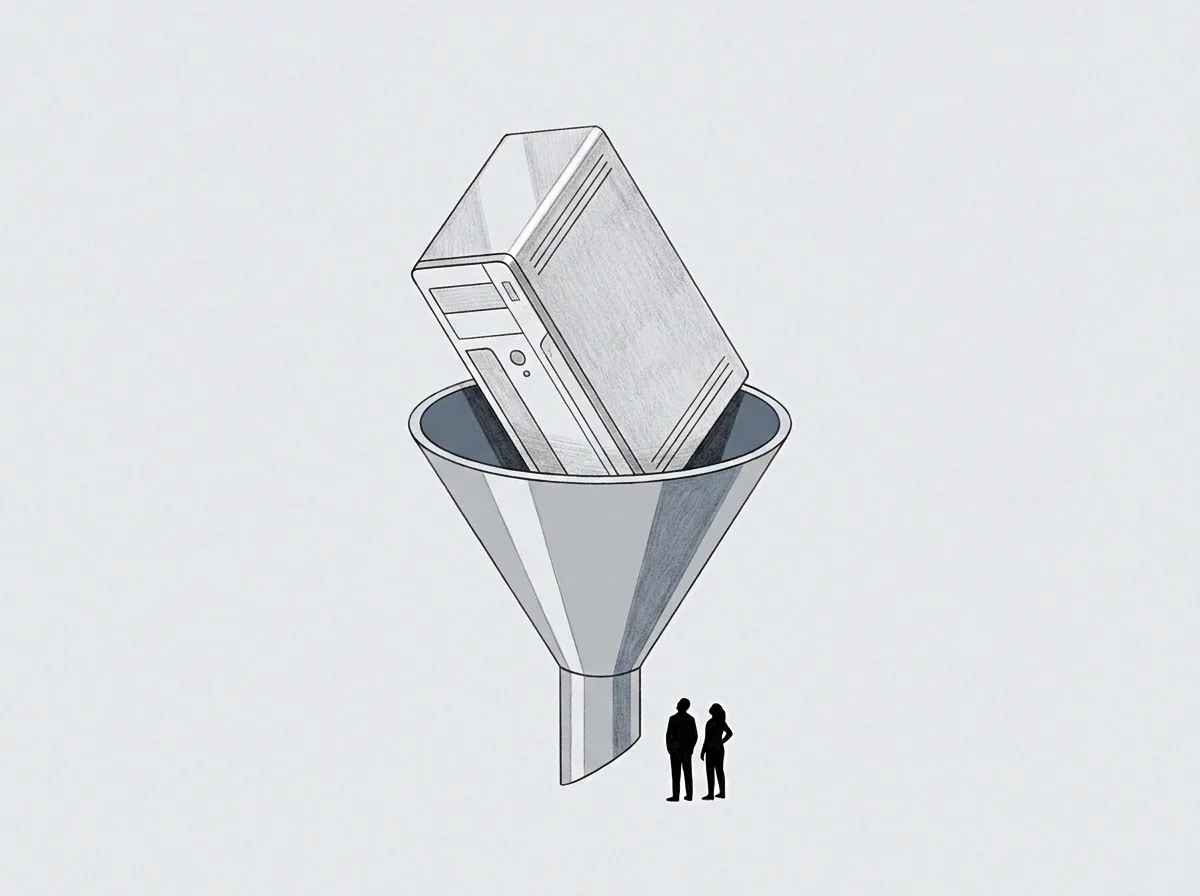
Shelf

Storage Engine Boundaries and Off-Heap Isolation
Off-heap state storage moves key-value allocations out of managed heap structures into native memory shelves, removing garbage collection tracing overhead from state mutations. Engines using native storage engines, such as embedded RocksDB instances, write state changes to off-heap byte buffers. The execution thread serializes state objects into byte arrays, transferring write operations to key-value log-structured merge trees.
Off-heap storage bounds GC pauses by maintaining a fixed heap allocation profile regardless of state cardinality. Off-heap mutation shifts system bottlenecks from garbage collection cycles to binary serialization throughput.
Binary serialization requires memory allocation for target byte buffers during every mutation event. Transforming object graphs into structured byte streams consumes CPU cycles for encoding, checksum calculations, and memory copy operations. Fast serializers use direct byte buffers to minimize intermediate memory allocations.
Direct byte buffer allocations bypass managed heaps, but manual native memory management introduces native memory fragmentation and operating system memory mapping limits. The storage backend offloads mutation complexity to off-heap memory, trading managed heap stalls for serialization processing latencies.
Log-structured merge tree state backends write incoming mutations into an in-memory write buffer called a memtable. When a memtable fills, the engine flushes state mutations to disk as immutable sorted string tables. Disk flushes and background compaction loops run asynchronously, preventing single-element state mutations from locking the main stream execution thread.
High write amplification during background compaction operations competes for storage subsystem IOPS, creating unpredictable micro-stalls during high-throughput state updates. Storage backends isolate heap mutation at the cost of continuous disk I/O interaction.
Off-heap byte buffers require clear boundaries between stream operator code and storage engine interfaces. Crossing the boundary requires copying byte arrays from native memory into Java execution space for processing, followed by re-serialization after modification. Copy-on-write mechanisms mitigate redundant copying by allowing read operations to access direct memory pointers safely.
Immutable state snapshots isolate mutation paths by cloning state references only when a write operation alters target byte structures. Isolation architectures rely on structured byte layout designs to minimize serialization costs across the storage boundary.
Off-heap state backends isolate garbage collection pressure by transferring execution cost directly to serialization pipelines.
State serialization bounds heap size while introducing strict buffer management boundaries. Operating system kernel page caches buffer disk writes, absorbing write spikes until dirty pages flush to storage hardware. When write saturation occurs, stream processing throughput drops to disk hardware write speeds.
Memory mutation overhead shifts from CPU allocation stalls to operating system memory management delays. The native memory shelf bounds JVM GC pauses but leaves operating system page management exposed to continuous mutation streams.
Operating state backends with unmanaged off-heap buffers alters failure modes. Heap exhaustion triggers immediate, detectable out-of-memory exceptions, whereas native memory leaks cause silent process termination by operating system kernel OOM killers. Precise memory limits on native state shelves prevent uncontrolled process crashes under burst stream conditions.

Gradient

Quantifying Throughput Slope Against State Volume
State mutation cost grows along a measurable gradient as state cardinality and object size expand. Tracking throughput against increasing state volume maps system efficiency boundaries. At low state volumes, memory mutation operates near hardware line rates, as CPU cache lines contain hot state entries.
As state volume breaches cache boundaries, throughput degrades along a downward slope determined by memory latency and reference depth. The mutation cost gradient reflects system friction introduced by allocation overhead, garbage collection tracing, and serialization operations.
The state size axis measures total stored key-value records within execution memory. The performance vector calculates processed events per second against CPU core utilization. Evaluating performance across expanding state volumes yields an exact mutation overhead slope.
Discontinuities in the performance slope indicate structural transitions, such as JVM young-generation overflow or LSM-tree memtable saturation. Identifying these transition coordinates allows system operators to isolate state mutation overhead from network or deserialization bottlenecks.
Garbage collector pause logs provide an explicit metric for memory allocation friction. Plotting total pause duration against state mutation rate creates a predictive curve for pipeline capacity. Systems exhibiting steep pause duration curves suffer from high reference mutation frequency on managed heaps.
Systems with flat pause curves successfully isolate state mutations off-heap or within managed byte arrays. Computing the memory cost gradient isolates runtime execution limits, revealing structural bottlenecks long before total system saturation occurs.
State mutation overhead creates an operational deficit between peak theoretical ingestion speed and realized stream throughput. The magnitude of this gap represents unspent compute potential, constrained entirely by state management architecture. Stream engines using in-place heap object mutation trade continuous architectural scalability for short-term low latency at baseline state volumes.
Systems designed around byte-level copy-on-write mutations maintain stable processing slopes across multi-terabyte state volumes.
What distinguishes in-place mutation from copy-on-write in managed heaps under sustained state scale?
In-place mutation updates field references directly inside existing heap objects, avoiding object instantiation costs during state update execution. Managed runtimes track modified references using GC write barriers, marking card table pages dirty for subsequent scan phases. Continuous in-place field updates fragment memory layouts over long runtime windows, increasing object scanning costs for garbage collectors.
Copy-on-write mechanisms isolate mutations by instantiating new state objects or cloning state segments during modification. Copy-on-write architectures prevent concurrent modification conflicts during asynchronous checkpointing, paying an allocation tax to guarantee snapshot isolation across stream execution threads.
System performance curves flatten when state mutation overhead reaches equilibrium with serialization processing speed. Beyond this operational baseline, adding processing threads fails to increase event ingestion capacity due to memory channel saturation. Memory bus lock contention during concurrent write operations bounds execution scaling.
Mapping system behavior along the state size gradient identifies hardware limits before production deployment failures occur.
Arrangement
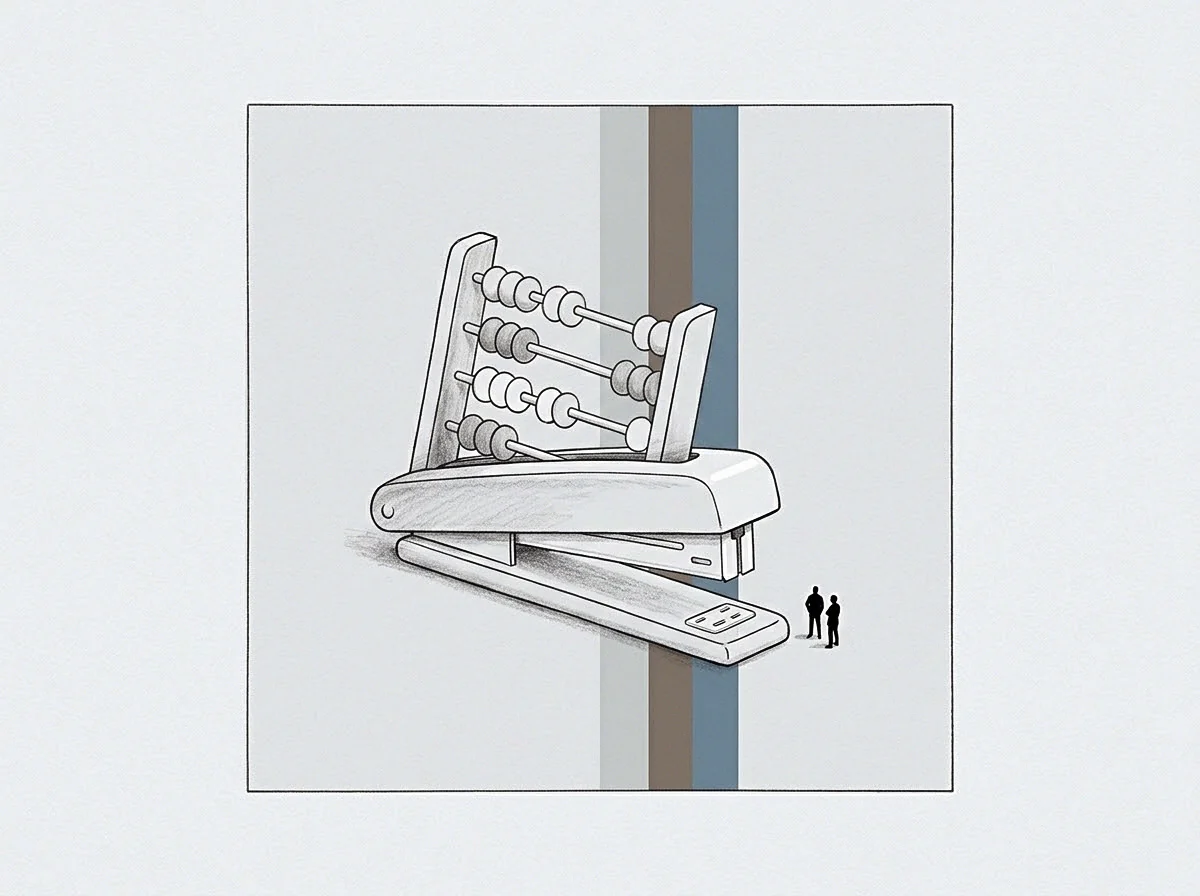
Isolation Architectures and Zero-Copy Byte Buffers
Isolating memory mutation from event execution streams requires specialized memory architectures designed to eliminate pointer-chasing allocations. Modern stateful stream processing engines employ off-heap memory management, zero-copy byte buffers, and append-only state structures to separate mutation execution from stream ingestion threads. Memory allocation framing isolates mutation side effects, preserving ingestion latency across high-cardinality state processing pipelines.
| Isolation Architecture | Heap Mutation Cost | GC Impact | Serialization Overhead | Tail Latency Profile |
|---|---|---|---|---|
| Managed Heap In-Place | Low initial cost; high under churn | Severe pause spikes on large heaps | Zero on access; high at checkpoint | Unpredictable tail latency spikes |
| Copy-on-Write Heap Trees | Moderate allocation cost per write | Moderate GC tracing overhead | Low during local execution | Bounded by collection frequency |
| Off-Heap LSM-Tree (RocksDB) | Zero heap object creation cost | Negligible heap GC footprint | High per-element write cost | Deterministic with I/O stalls |
| Off-Heap Direct Memory Segment | Zero GC allocation footprint | Zero managed GC impact | Minimal binary slice indexing | Flat deterministic latency curve |
Direct memory segments allocate continuous native byte blocks outside JVM garbage collection sweeps. Stream operators store key-value state entries inside binary memory slices, indexing values using primitive byte offsets. Mutating state within a direct memory segment involves modifying binary values directly at designated byte offset addresses.
Eliminating object instantiation during state writes maintains predictable garbage collection metrics under continuous high-volume ingestion workloads.
Zero-copy byte buffers pass references to underlying binary slices directly to state storage engines, avoiding intermediate memory copies. When a state update occurs, the stream processor updates the target offset within the off-heap segment without instantiating intermediate Java objects. Asynchronous background snapshot processes read frozen binary memory slices safely while stream processing threads continue updating active memory regions.
Isolating state updates at the byte level decouples execution speed from heap garbage collection behavior.
Primitive byte offsets replace object reference chains, removing memory allocation side effects from stream state updates.
Append-only state logs offer an alternative isolation pathway by converting random state mutations into sequential write streams. Instead of updating values in place, incoming updates append delta mutations to an in-memory ring buffer. Periodic background compaction threads merge delta logs into baseline state snapshots off the main execution path.
Append-only designs turn random memory writes into fast sequential memory operations, maximizing hardware CPU cache utilization and eliminating write contention across execution threads.
State isolation trade-offs depend on serialization efficiency. Direct memory mutations require strict binary schema management, as fields must align to pre-calculated byte offsets. Schema evolution inside raw binary buffers demands explicit migration logic to avoid buffer corruptions.
Abstracting state changes behind byte-level memory architectures adds code complexity to stream operators, trading developer ergonomics for deterministic latency and scaling.
The operational team demands predictable tail latency metrics, while the stream engineering team prioritizes rapid feature deployment across mutable object graphs.
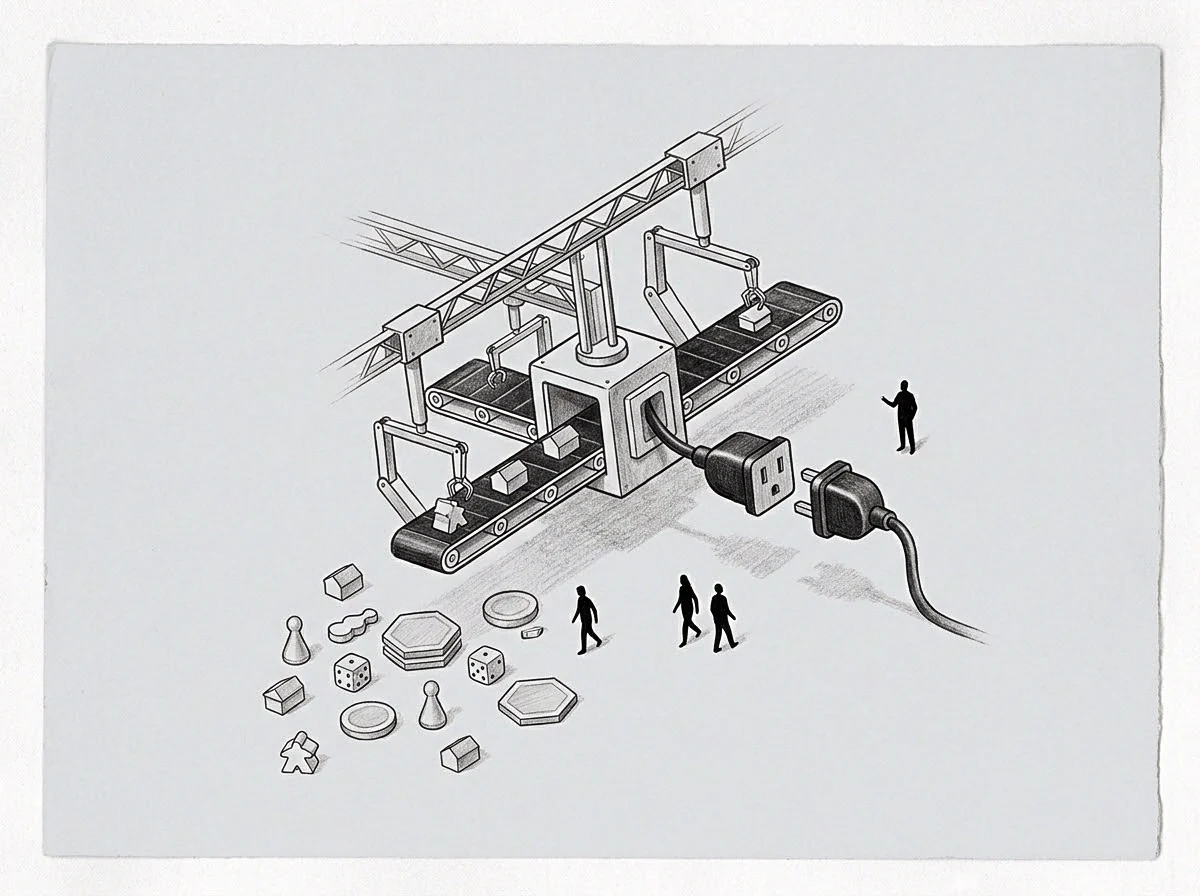
Cost
Systemic Trade-Offs and Bounded Memory Operational Limits
Isolating memory mutation overhead requires balancing compute resource allocation against tail latency predictability. Achieving low-latency state processing requires selecting explicit trade-offs between CPU serialization overhead, memory bus saturation, and storage I/O capacity. In-place heap mutation minimizes immediate CPU execution costs by avoiding object encoding overhead, but exposes processing pipelines to unpredictable garbage collection stalls.
Off-heap binary isolation stabilizes latency metrics, but consumes CPU cycles for encoding and decoding binary state data.
Memory mutation overhead places a hard ceiling on single-node stream processing density. As state cardinality grows, memory architecture choices dictate hardware resource requirements. Systems relying on managed heap state demand large memory allocations, increasing garbage collection pause risk during peak load events.
Systems using off-heap binary memory demand high CPU allocations to process continuous serialization, shifting infrastructure costs from RAM capacity to compute core density.
State snapshotting and checkpointing operations add secondary costs to state mutation architectures. Stateful stream processors must capture consistent state snapshots to guarantee exactly-once processing semantics during node failure recovery. In-place heap architectures copy full state graphs during checkpointing, creating temporary memory allocation surges that double memory pressure.
Copy-on-write and off-heap LSM-tree architectures clone snapshot pointers instantly, enabling asynchronous background persistence without stalling active event processing streams.
Hardware architecture constrains memory isolation options. Single-socket CPU configurations handle high serialization workloads efficiently due to unified memory access paths. Multi-socket Non-Uniform Memory Access (NUMA) systems incur latency penalties when stream processing threads mutate state stored across remote memory nodes.
Pinning execution threads to specific NUMA sockets and allocating local native memory pools minimizes inter-socket memory bus traffic, stabilizing mutation throughput at multi-terabyte state scale.
Isolating state mutation overhead is fundamentally an exercise in explicit resource budgeting. Operating stream engines at scale demands selecting an operational point on the latency, throughput, and hardware cost spectrum. Systems designed with clear memory isolation boundaries transform chaotic heap allocation behavior into deterministic, controllable resource usage profiles.