
Quantifying Capacity Losses From Unsynchronized Strategic Redirection In Organizations
Unsynchronized redirection converts delivery hours into scrap work and switching waste whenever corporate strategy turns faster than operational propagation.
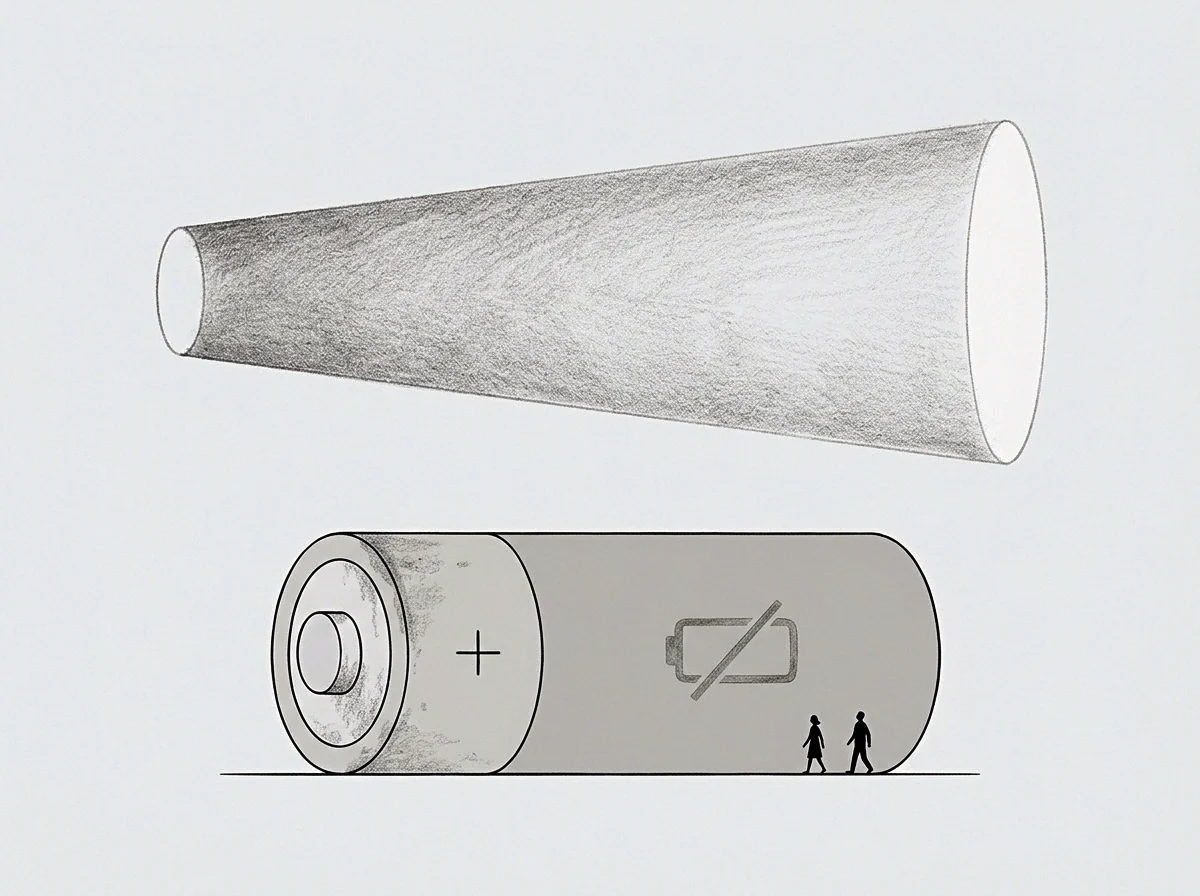
Drag
In the third week of November, engineering recorded four hundred hours against an interface architecture that was already obsolete. The board had approved an enterprise expansion model twenty-two days earlier. Even though the executive committee changed target contract values on a Monday morning, platform teams kept merging code for single-user workflows until the sprint boundary closed three weeks later.
Work kept moving along the old path because the shift stayed trapped inside executive slide decks. As a result, the company spent sixteen percent of its quarterly engineering budget on software destined for immediate deletion.
Unsynchronized redirection creates immediate friction. When leadership shifts intent without tying it directly to delivery mechanisms, capacity bleeds away between planning and engineering. The floor keeps building to the previous spec while sales tries to close deals under the new one, and neither side works against what the other is actually delivering.
Strategic redirection without immediate operational synchronization expends engineering velocity on disposable assets.
Executives routinely treat strategic redirection as an event that happens all at once: circulate a deck, hold an all-hands call, and assume the organization has turned. In practice, an operating company behaves more like a loaded container ship. Putting the helm over creates hydrodynamic force on the rudder well before the hull responds, and during that interval, energy burns purely against internal momentum.
Standard accounting rarely captures that drag. Payroll reads as a fixed operational expense whether engineers push live production code or throw away unfinished features. The real capacity loss is unspent volume that could have gone to the new priority.
When an organization shifts four times a year without lining up delivery cycles, it spends upwards of forty percent of its aggregate labor hours clearing rubble instead of building revenue assets.
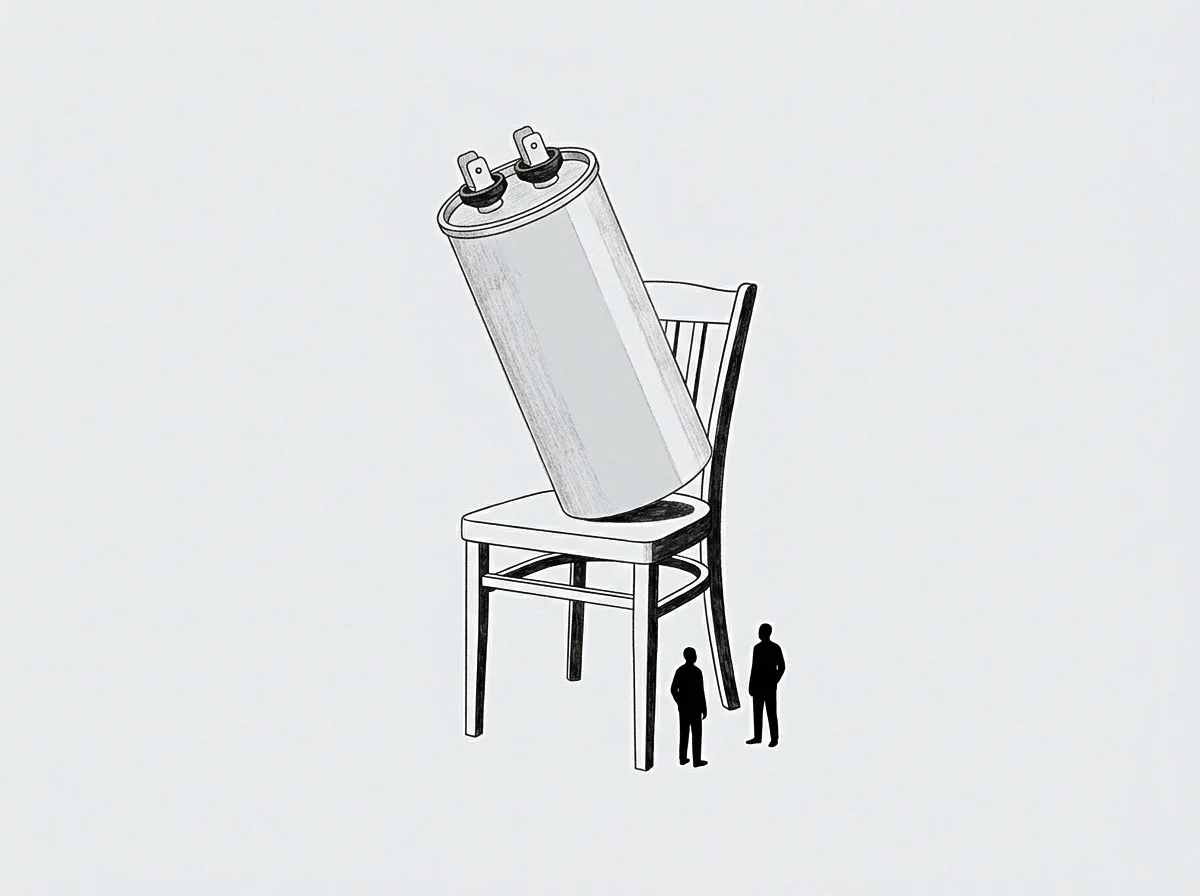
The Velocity Tax on Trajectory Alteration
Every shift in direction carries an immediate speed penalty. Teams scrap mental models they spent months developing, context slips away, institutional memory thins out, and tools built for the old spec become liabilities. On the floor, that friction shows up as quiet disengagement.
When signals arrive late, engineering leads build defensive buffers. They slow down on purpose to shield their people from rework, settling into a pattern where caution wins over speed. To most managers, shipping late carries a smaller cost in credibility than shipping code that leadership scraps forty-eight hours after deployment.
Repeated pivots without mechanical alignment steadily eat away at operating margins until basic delivery stalls entirely.

Phase
Information travels through a hierarchy at different rates. The executive tier runs on narrative time, where announcing an objective feels like completing it. Middle management works on quarterly budget and review cycles, while delivery lives in pull requests and technical dependencies.
During any pivot, these layers fall out of phase. The time it takes for a signal to travel from leadership to the teams doing the work is the enterprise’s propagation latency. In a company of two hundred people, that gap runs fourteen to twenty-one business days on average.
At two thousand people, it regularly stretches past two full fiscal quarters.
When strategic intent outpaces operational transmission, teams execute obsolete mandates at full capacity.

When Does Latency Compound Across Operating Tiers?
Misalignment compounds when leadership issues another round of directives before the first one has even reached the floor. The organization ends up carrying overlapping, conflicting instructions, and team leads find themselves reviewing code that serves three different strategies at the same time.
The structural consequences split across tiers:
- Executive leadership commits external capital to an enterprise service model while remaining unaware that the technical base lacks multitenancy capabilities.
- Middle management splits team allocations down the middle, funding shadow projects to keep legacy client commitments alive while pretending to staff the new corporate priority.
- Individual contributors write defensive code designed for modular disposal, knowing leadership will scrap the repository before user acceptance testing begins.
The result is widespread disorientation. Teams burn their energy untangling internal contradictions rather than working against external competitors. Delivery drops toward zero while calendar utilization sits at one hundred percent.
An organization can sustain conflicting operational vectors for only so long before key contributors leave their desks.

Gear
Mechanical assemblies rely on interlocking teeth to transfer torque without slipping. In an organization, resource allocation interfaces serve that same function. When leadership turns the primary drive shaft without adjusting the subsidiary gearing, the teeth shear off under the load.
The breakdown almost always occurs between strategic roadmaps and resource allocation mechanisms. Roadmaps update in an afternoon, but budgets, hiring requisitions, and vendor agreements move on a multi-month cycle. Mandating an artificial intelligence push while enterprise sales compensation remains tied to legacy on-premise software licenses locks the machinery in place.
Sales reps keep pitching legacy contracts because their quotas demand it, and engineering managers refuse to move senior architects when legacy technical debt threatens service level agreements. The redirection stalls right where stated intent meets real incentives.
To get anything done, the staff invents workarounds. Product managers rewrite ticket descriptions to dodge procurement rules, and engineering directors quietly borrow headcount from maintenance budgets to assemble prototypes. These shadow mechanisms soak up immense cognitive energy as the company works around its own administrative machinery to deliver what leadership assumed was already in flight.
The board can vote for enterprise software all afternoon, but payroll runs on consumer transaction fees until the third quarter ends.
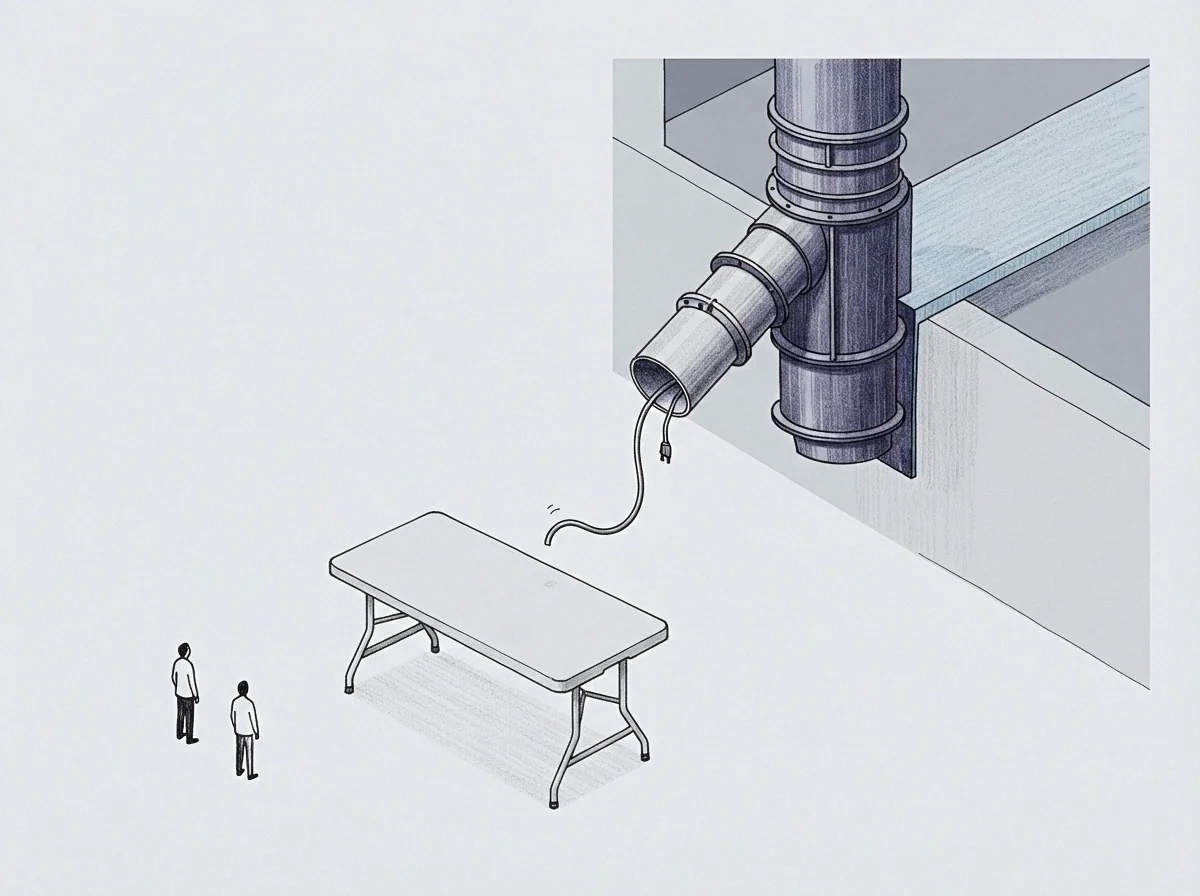
Toll
Tracking lost capacity requires breaking down operational hours systematically. That capacity does not vanish; it turns into measurable forms of waste across four main channels: scrap work, context re-indexing, dual-track maintenance, and architectural deadlocks.
Scrap work is the most straightforward to track, counting raw hours spent on code and designs that get thrown out after a pivot. Context re-indexing captures the switching cost when an engineer or designer has to leave a familiar problem space, get up to speed on an unfamiliar domain, and rebuild mental models before producing useful work.
| Alignment Mode | Propagation Delay | Scrap Ratio | Context Switching Penalty | Net Capacity Retention |
|---|---|---|---|---|
| Synchronized Pipeline | 3 to 5 Days | 4% | 8% | 88% |
| Unsynchronized Decoupled | 15 to 30 Days | 22% | 19% | 59% |
| Continuous Whiplash | 45+ Days | 48% | 31% | 21% |
Dual-track maintenance appears when an organization cannot cleanly cut ties with an earlier strategy. Teams end up patching, supporting, and scaling the legacy system while simultaneously trying to prototype its replacement. Splitting focus this way degrades output across both tracks, as engineers juggle two incompatible architectures at once.
Take an organization with a baseline of fifty engineers billing two thousand hours annually. In an unsynchronized pivot that delays alignment by thirty days, scrap work burns roughly four thousand hours, and context switching takes another three thousand across the transition quarter. The company loses seven thousand engineering hours, representing a monetary loss exceeding one million dollars at prevailing market rates, without shipping a single feature.
Strategic redirection without delivery cadence alignment costs more in abandoned assets than in development salaries.
A transition plan that fails to specify an immediate halt to legacy development leaves engineering leads holding the financial burden of abandoned code.

Span
The distance between strategic intent and day-to-day operations can stretch only so far before the organization breaks down. Every firm faces a ceiling on how quickly it can pivot, set by its architectural complexity and governance structure. Pushing past that limit turns operational capacity into systemic friction.
The frequency of redirection must stay lower than organizational settling time. Settling time is how long a mandate takes to travel from the board room down to deployment, stabilize through quality assurance, and produce baseline performance metrics. When leadership pivots again before that window closes, the organization enters perpetual resonance, vibrating until critical components break.
The strongest contributors depart first during these periods. Engineers who care about tangible output will not spend their working lives generating digital scrap, and they move to environments where strategic priorities stay stable long enough to deploy software. The organization ends up keeping people who tolerate endless process churn without caring whether products ever reach production users.
Recovering from an unstable redirection requires deliberate deceleration. Leadership halts all new initiative declarations, while middle management reconciles backlogs, archives abandoned projects, and establishes a clean baseline. The enterprise recovers velocity by matching its strategic clock to its operational transmission rate.
Directional changes succeed only when the rate of strategic rotation remains slower than the speed of technical execution.