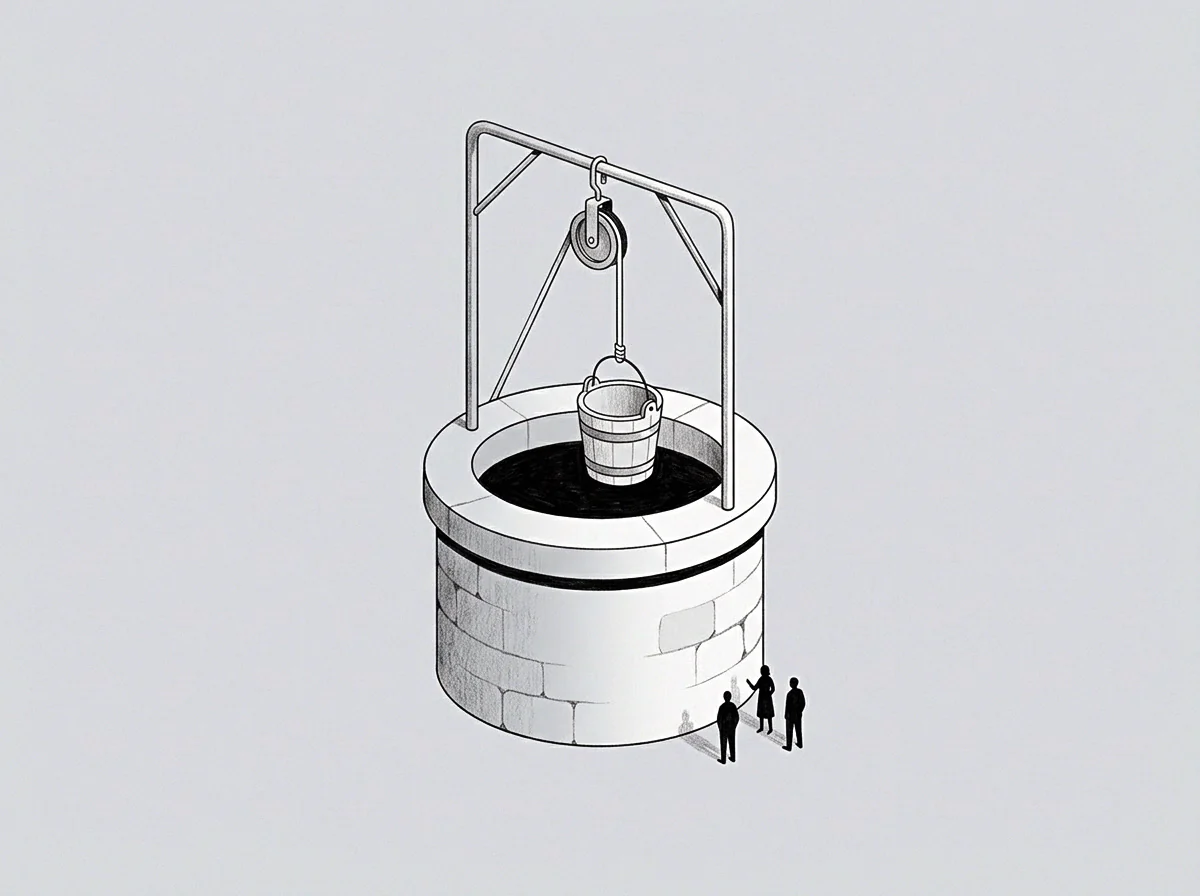
Meaning
Data points that remain fixed within a decision model despite shifts in the underlying environmental variables govern cached assumptions. These elements act as static inputs that preserve historical logic even when current performance indicators deviate from prior expectations. Their utility persists only as long as the correlation between past events and future outcomes remains stable.
Stagnation Risk
Reliance on these parameters creates a predictable distortion in resource allocation when market conditions change. A founder maintains specific performance targets based on outdated benchmarks, causing an accumulation of internal tension between observed reality and the model output. Error rates grow as the delta between projected performance and actual capacity widens over successive operational cycles.
Calibration Metric
This instrument functions as a secondary filter for identifying divergence in organizational logic through the comparison of legacy projections against real time input flow. Each interval of observation produces a variance value that indicates the degree to which internal models have drifted from current operational reality. Low variance suggests a high degree of calibration, whereas high variance signals that internal structures require manual adjustment to reconcile with external demand.
Correction Loop
The adjustment of these values follows a mechanical process of rebaselining inputs against the most recent set of verified observations. Analysts identify the oldest active data points in the model and replace those fields with current measurements to minimize the influence of outdated priors. Periodic manual cycles ensure that the internal logic updates in alignment with the actual output of the organization rather than relying on stale benchmarks.