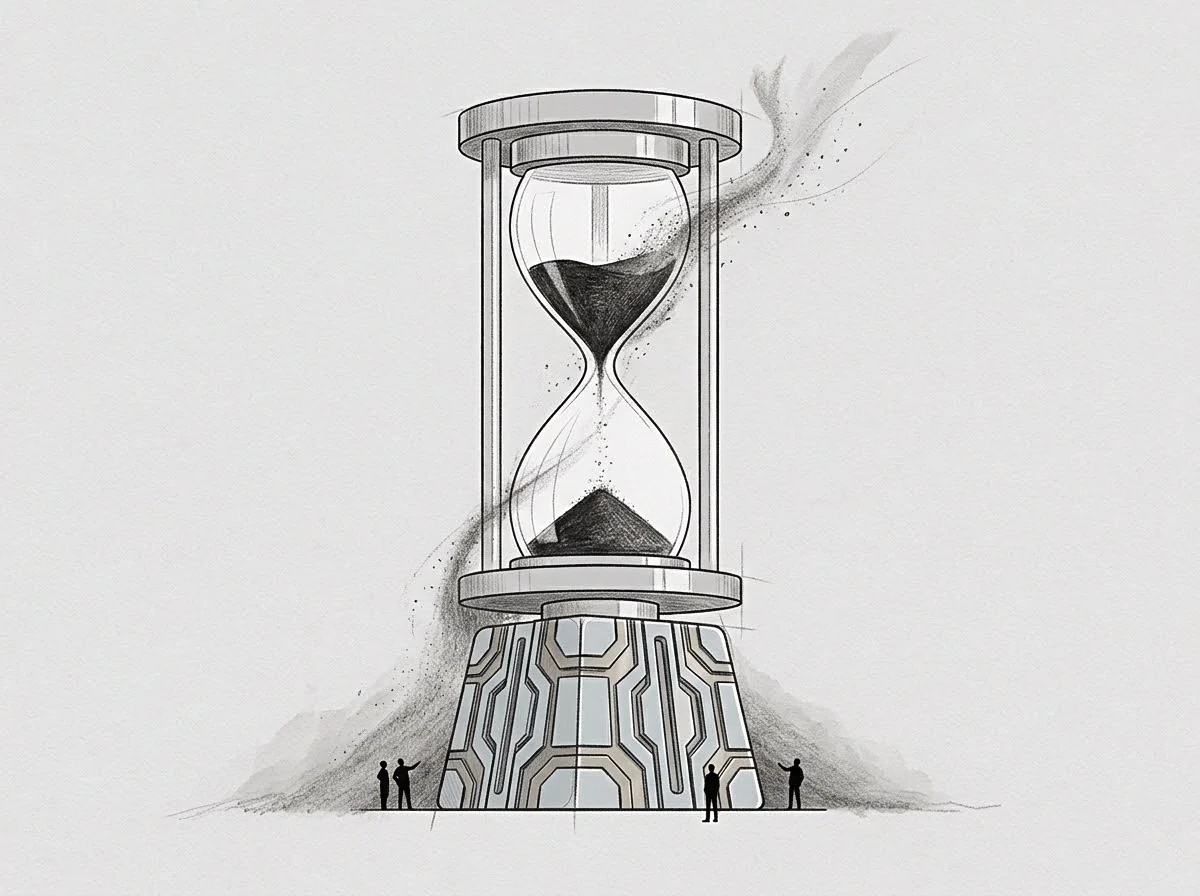
Meaning
Mathematical pairings within probability theory identify prior distributions that result in a posterior distribution within the same family after an update. Using conjugate priors simplifies the calculation of new probabilities by allowing for algebraic additions rather than complex integration. They ensure that the structure of the model remains consistent as more data is collected, making the refinement of knowledge a predictable process.
Algebraic Logic
Efficiency in computation improves when the prior and the likelihood function share a specific relationship. Because conjugate priors follow this rule, the person can update their beliefs by simply adding new observations to the existing parameters. This speed allows for real-time monitoring of shifting gradients.
Model Consistency
Maintaining the same distribution type prevents the math from becoming unmanageable over many iterations. The conjugate priors keep the focus on the movement of the mean and variance rather than the shape of the curve. This consistency makes it easier to compare results across different stages of a project.
Persistence Factor
Distributions that stay in the same family provide a stable framework for long-term tracking. While the values inside the parameters change, the underlying logic of the conjugate priors does not. It provides a reliable bridge between the initial assumption and the final proof.