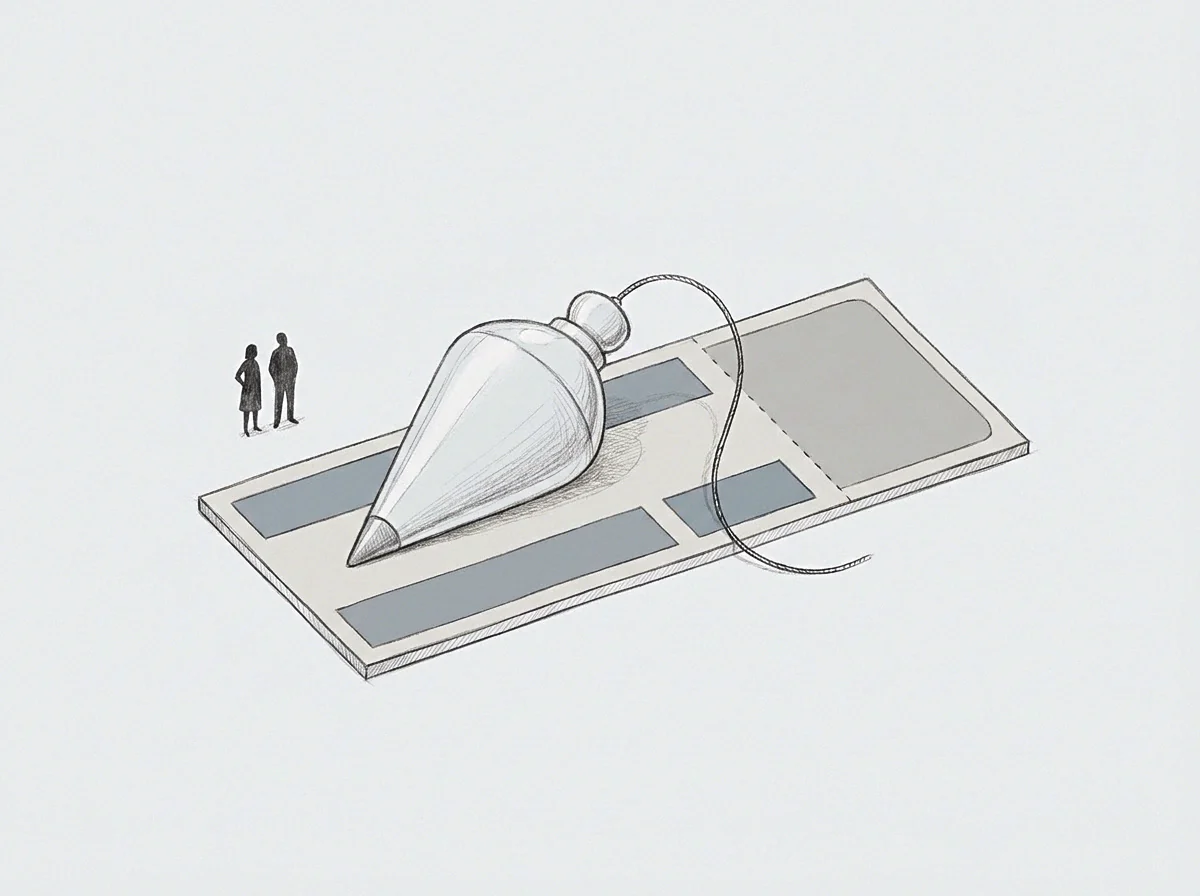
Meaning
Output invariance is a system property holding when varying operational inputs produce identical productive outcomes within stated tolerances. Founders tracking performance metrics rely on output invariance to confirm that scaling up resource allocation produces predictable returns rather than degraded efficiency. Production lines and software architectures alike depend on output invariance to maintain steady delivery volumes despite fluctuating raw material quality or varying concurrent user loads.
Operational Calibration
Measuring this stability requires recording the ratio between incoming resource volumes and final unit generation over a standard observation window. Mathematical models use the resulting cardinal values to plot variance vectors on a Cartesian grid where the horizontal axis represents input magnitude and the vertical axis registers finished product counts. When the plotted line runs parallel to the baseline abscissa, the system achieves the target state.
Any downward slope in that trajectory signals friction points inside the manufacturing loop long before final revenue figures drop.
Systemic Boundary
Operating limits define the exact threshold where this stability breaks down under extreme stress. Surpassing maximum rated capacity forces components into non-linear degradation zones where output invariance ceases to function. Analysts monitor thermal dissipation rates and error logs to identify the exact tipping point where additional power input yields diminishing unit returns.
Environmental factors like ambient temperature shifts can also narrow the operational window by altering physical tolerances within mechanical assemblies.
Resource Discipline
Maintaining this characteristic protects operating margins by preventing wasteful over-provisioning of raw materials during high-demand cycles. Budget allocations stay tightly coupled to true demand curves because production output does not inflate simply because additional capital was deployed into the workflow. Strict adherence to output invariance prevents founders from masking underlying process bottlenecks by throwing extra energy or human attention at an inefficient machine.