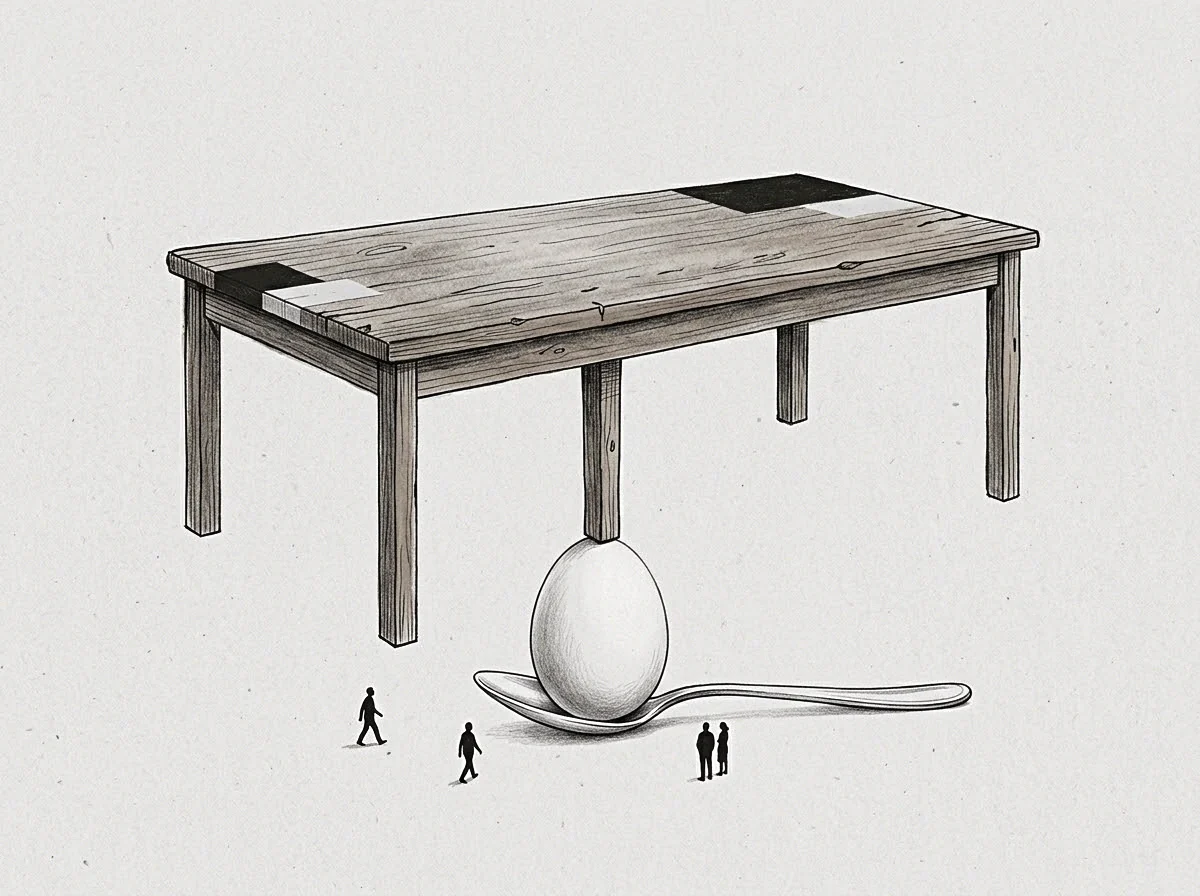
Meaning
Fixation of the variables in a business model arrives when previous choices fix the cost and scope of all future adjustments. Once a system enters parameter lock, the cost of changing a single value exceeds the benefit of the optimization. This status defines the point where a mechanism is finished and cannot be further iterated.
Design Rigidity
Early decisions about the technology stack or the distribution model often become unchangeable foundations. When parameter lock sets in, the founders find that they can no longer alter the unit economics or the delivery speed. This rigidity is the result of multiple interdependent variables being tuned to a single outcome.
Path Constraint
Choosing one direction necessarily closes off others as resources are committed. The experience of parameter lock is the realization that the current path is the only one the organization is capable of following. Moving away from this path would require a total destruction of the existing value.
Flexibility Loss
Adaptation requires that at least some parts of a system remain fluid and uncommitted. In a state of parameter lock, every part of the machine is engaged and under tension, leaving no room for a response to a new competitor or a change in regulation. This loss of flexibility is the natural consequence of optimizing for a single, stable environment.
As the external world shifts, the locked parameters become liabilities that pull the organization away from its target. Total failure occurs when the external pressure exceeds the breaking point of the rigid internal structure.