
Arbitrating Non Linear Cognitive Recovery Lags Against Emergency Capital Interventions In High Fatigue Environments
Emergency capital resolves balance sheet liquidity immediately, but executive cognitive recovery lags by days, causing exhausted operators to concede vital governance rights.

Shock
An emergency wire of four hundred thousand dollars clears into an operating account at two on a Tuesday morning. The wire settles payroll, extinguishes an immediate vendor default, and arrests an acute solvency crisis that kept two executives awake across four consecutive nights. Liquidity returns in a single discrete transfer.
The cognitive capacity of the person who signed the subordinated debt note does not return with the transfer. The money sits in the bank while the prefrontal cortex remains depleted, processing threat cues hours after the balance sheet stabilizes.
Acute capital relief functions on a step function. Cognitive restoration follows an exponential curve punctuated by protracted hysteresis. When physical exhaustion compounds over months of sustained stress, neural recovery exhibits severe latency.
The person in the operating seat mistakes the arrival of capital for the restoration of competence. They commit to post-crisis restructuring terms, investor side letters, and personnel realignments within twelve hours of the wire, while attention deficits degrade their risk assessment.
The primary cost lands on attention.
A cash infusion alters liquidity instantly while executive capacity remains compromised by biological exhaustion.
Capital interventions during distressed operational cycles alter balance sheets cardinally. The financial instrument is explicit: a loan with twelve percent interest, warrants covering five percent of common stock, and a seventy-two-hour payment standstill. An exhausted operator reads that cardinal figure as a solved state.
They overlook the ordinal cost of the decision debt incurred while negotiating under acute sleep deficit. Executive arbitration requires sustained multi-attribute evaluation. Severe exhaustion collapses multi-attribute evaluation into singular risk avoidance.
Operating under seventy-two hours of acute sleep restriction impairs working memory and cognitive flexibility. Neurobiological studies on circadian disruption establish that while subjective alertness partially rebounds following a brief rest, complex decision calibration remains suppressed for days. The finding rests on controlled laboratory sleep deprivation trials with healthy young adults.
Field conditions with older operators enduring chronic metabolic strain would show even steeper impairment lags. Signing binding operational covenants during that physiological gap hands commercial advantages to counterparties who negotiate from rested positions.
Every commercial arrangement finalized before cognitive baseline returns extracts a permanent discount on equity.

Latency
Prolonged systemic pressure depletes metabolic reserves throughout the nervous system. When the acute crisis recedes, biological systems do not snap back to their baseline setpoints. Recovery operates across multiple asynchronous timelines.
Sleep architecture requires several nights of slow-wave rebound before working memory stabilizes. Metabolic replenishment lags sleep restoration by days. Risk calibration remains distorted longest of all.
Laboratory trials measuring prefrontal recovery after chronic sleep restriction establish that vigilance recovers before executive function. A tired operator feels alert after eight hours of sleep, yet their capacity to evaluate non-linear risk remains depressed. That specific finding relies on psychomotor vigilance tests alongside cognitive flexibility tasks in controlled clinical settings.
If an investigation evaluated chronic founders under continuous commercial threat rather than monitored subjects in sleep labs, the observed executive recovery gap would widen substantially.
- Acute vigilance returns first, restoring simple reaction speed while complex forecasting remains erratic.
- Affective regulation recovers second, leaving the operator vulnerable to sudden defensive reactions during high-stakes board conversations.
- Executive synthesis lags all other functions, requiring extended metabolic rest before multi-variable strategic planning functions accurately.
- Risk calibration returns last, keeping the operator anchored to catastrophic threat models long after structural insolvency has cleared.
Subjective alertness rebounds days before executive capacity returns to its baseline accuracy.
Operating agreements executed inside this recovery window suffer from cognitive hysteresis. The operator agrees to draconian governance concessions because their nervous system remains attuned to existential danger. A rested counterparty recognizes that the operator is negotiating against an internal panic response rather than the current economic reality.
The emergency financing saves the balance sheet while governance rights transfer to external lenders.
A structural mechanism separates true biological restoration from the superficial alertness that tricks an exhausted founder into premature strategic negotiation.

Floor
Protecting enterprise value during an emergency financing requires establishing an operational pause. The operational floor is a contractually mandated interval separating cash execution from governance commitments. When institutional lenders inject liquidity into a distressed venture, they routinely attach restructuring covenants.
Inserting a mandatory seventy-two-hour cognitive buffer prevents exhausted leadership from conceding board control under acute neurological strain.
Emergency financing documents divide into immediate cash mechanics and deferred structural decisions. The cash mechanics address short-term solvency. The structural decisions determine long-term enterprise control.
Isolating the two prevents cognitive exhaustion from compounding monetary distress.
| Intervention Layer | Execution Window | Cognitive Demand | Counterparty Position | Governance Consequence |
|---|---|---|---|---|
| Liquidity injection | Zero to twelve hours | Discrete execution | Secures collateral | Preserves baseline operations |
| Standstill period | Twelve to seventy-two hours | Passive monitoring | Halts collection actions | Prevents forced liquidations |
| Strategic governance | Seventy-two hours onward | High synthesis | Demands board parity | Alters voting control |
| Option pool dilution | Seven days onward | Multi-attribute modeling | Expands management carve-out | Redistributes long-term equity |
Lenders push for simultaneous execution. They recognize that an operator under acute fatigue accepts terms that a rested executive would reject outright. The counterparty exploits the cognitive lag to extract voting rights, liquidation preferences, and personal guarantees.
A disciplined board enforces a strict separation: execute the secured liquidity line immediately, but defer governance amendments into a subsequent legal instrument.
Commercial aviation enforces strict flight-hour limits and mandatory layovers regardless of passenger delays or logistical expense. Industrial mechanics obey metal fatigue tolerances because micro-fractures propagate unseen beneath static loads. The human central nervous system possesses no digital warning light when executive synthesis fails.
The operator continues driving complex commercial bargains while their neural processing channels operate on emergency margins.
The primary cost lands on hours.
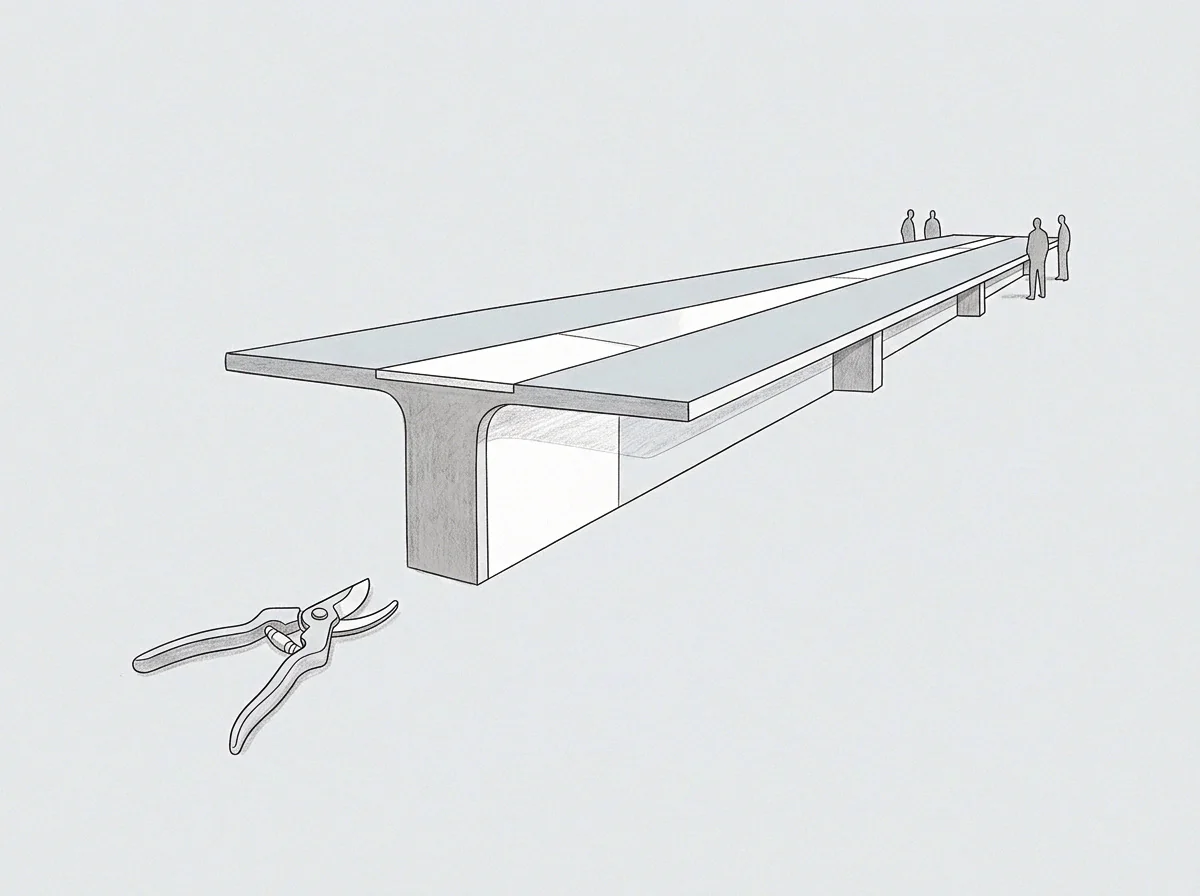
The clause states that all governance restructuring terms agreed upon during an acute liquidity crisis remain non-binding until reaffirmed seventy-two hours post-funding.
Hours
Time functions as an ordinal filter during operational distress. An exhausted founder cannot process ten complex issues simultaneously. They process them sequentially, dropping items that exceed their immediate cognitive span.
When emergency capital arrives, the administrative burden spikes. Legal teams demand disclosures, accounting firms audit receivables, and lenders request real-time cash reconciliations. The sheer volume of incoming tasks overwhelms depleted mental capacity.
Distressed executives routinely misjudge their available stamina. They assume that adrenaline will sustain their analytical clarity through a week of emergency negotiations. That assumption fails consistently.
Adrenaline supports motor activity and singular focus. It disables lateral thinking and nuanced evaluation. The operator signs onerous debt covenants simply to terminate the interrogation.
- Triage sequencing isolates liquidity preservation from structural governance revisions during acute crises. Two priorities receive focus. Every peripheral administrative request is postponed.
- Mandatory delegation shifts legal review to independent external counsel who have slept regular hours. The fatigued executive steps away from term sheet redlines.
- Information throttling limits daily counterparty communication to two scheduled windows. Constant messaging keeps prefrontal circuits in a reactive state.
- Physical decompression requires uninterrupted sleep before signing final definitive agreements. Rest restores risk calibration.
Execution errors multiply when an exhausted executive attempts complex negotiations before biological recovery occurs.
Whether seventy-two hours suffices for complete prefrontal restoration after three months of severe operational exhaustion remains uncertain. Clinical literature indicates that chronic stress induces neuroplastic alterations in the amygdala that persist for weeks. Under that physiological uncertainty, a prudent board enforces a minimum seventy-two-hour operational freeze, extending the buffer whenever transaction complexity escalates.
Physical rest precedes commercial commitment when crisis liquidity enters the firm.

Reserve
Preserving residual enterprise control requires treating executive attention as a scarce, non-renewable asset during turnaround phases. Emergency capital injections resolve balance sheet distress. They do not repair the biological vehicle executing the corporate strategy.
When capital interventions fail, the cause is rarely insufficient liquidity. The collapse stems from strategic errors committed by leadership teams operating under profound cognitive debt.
Restructuring negotiations test physiological endurance as much as financial engineering. Rested institutional lenders cycle fresh legal teams into negotiating sessions while the founding team remains static in the seat. The physical asymmetry dictates the commercial outcome.
Exhaustion forces concessions that no financial model justifies.
Capital acts as an accelerant. Injected into an organization led by cognitively depleted operators, emergency funds accelerate strategic errors. The money gets deployed into panic-driven pivots and defensive market moves.
Restoring operational stability requires slowing transaction velocity until executive cognitive functions match the complexity of the commercial landscape.
The lender provides the requested capital, and the operator’s signature sits on the restructuring agreement.