
Calibrating Enforceable Fiduciary Safe Harbors for Early Restructuring When Biological Reserves Deplete Under Crisis
Early restructuring safe harbors protect exhausted executives by pre-authorizing objective governance handovers before physical collapse breaches fiduciary duties.
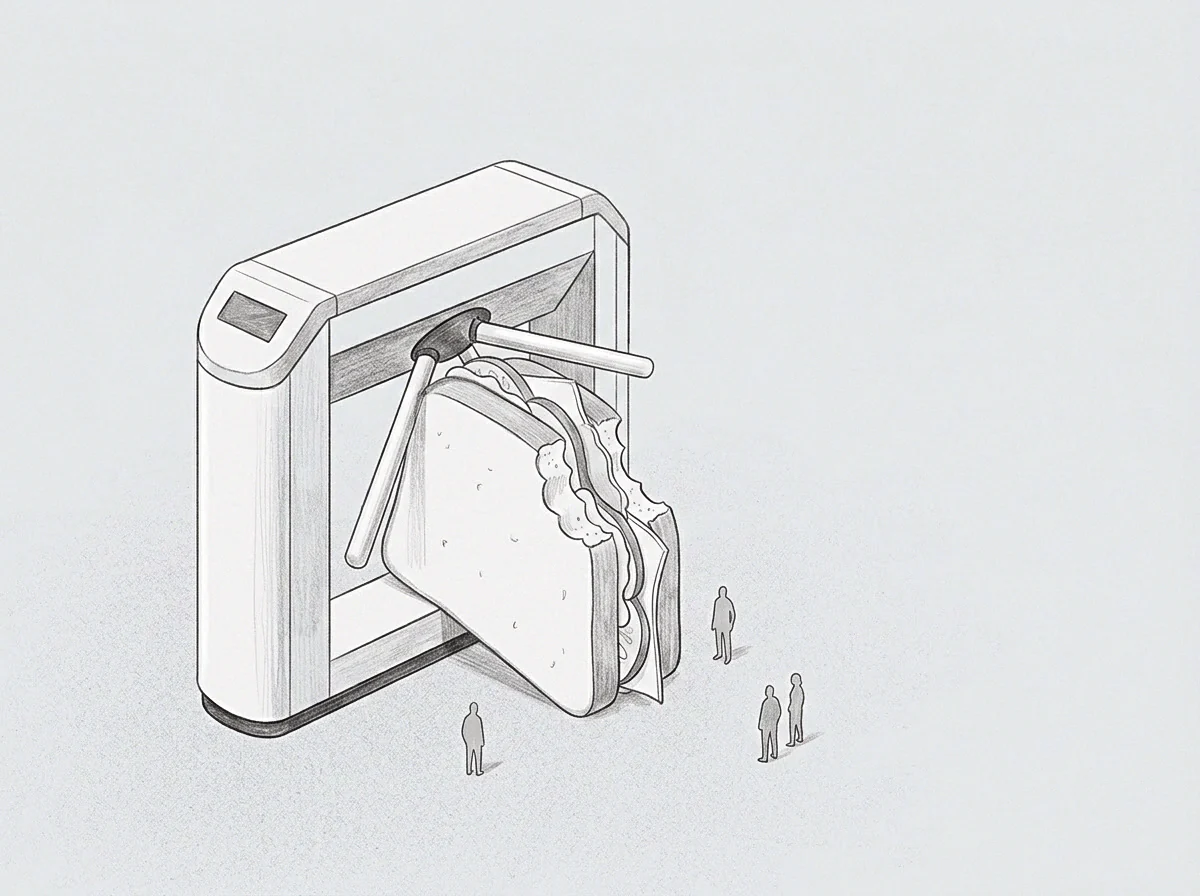
Drain
Insolvency windows compress reaction times while bodily reserves collapse under sustained panic. Prolonged sleep loss combined with intense allostatic load alters executive calculation, degrading multi-attribute risk appraisal into acute loss aversion. The operator facing balance sheet insolvency experiences the same physiological failure as an aircraft pilot undergoing hypoxia: peripheral vision narrows, temporal discounting steepens, and the capacity to evaluate delayed consequences drops toward zero.
The legal apparatus treats that physiological collapse as an irrelevant personal contingency, presuming deliberate, rational fiduciary agency through every hour of distress.
Statutory duties enforce continuous oversight across every phase of corporate distress. Directors and corporate officers hold an affirmative duty of care that demands the attention an ordinarily prudent person would exercise under similar circumstances. When equity deteriorates into the zone of insolvency, fiduciary duties expand to encompass the pool of unsecured creditors.
Creditors scrutinize delays in corporate debt restructuring, asserting that prolonged trading during operational distress wastes enterprise value. Officers who freeze or make erratic resource reallocations face personal exposure through claims of fiduciary breach, wrongful trading, or gross negligence.
A biological reserve depleted past operational limits accelerates enterprise loss before statutory insolvency triggers fire.
Legal standards penalize early operational cessation before formal technical default occurs. If an officer initiates premature standstill talks or attempts to hand over control without ironclad pre-authorization, equity holders threaten derivative suits alleging fiduciary abandonment and tortious interference. The officer stays locked between statutory mandates that punish operational freeze on one side and investor actions that penalize early operational pauses on the other.
Working capital burns and exhaustion accelerates while cognitive capacity fractures under the sustained output of twenty-hour crisis shifts.

Biological Limits Against Legal Prudence
Human stamina functions on an ordinal curve that declines sharply past critical exertion thresholds. Clinical studies on sleep loss demonstrate that forty-eight hours of acute wakefulness impairs operational working memory to an extent equivalent to acute clinical intoxication. Corporate governance documents systematically omit this operational reality.
Charters and executive employment agreements assume that fiduciary vigilance remains constant across eighty consecutive days of emergency negotiations.
The gap between organic stamina and theoretical duty generates dangerous corporate delays. Officers conceal severe exhaustion from boards of directors out of legitimate fear that admission of impairment will trigger immediate termination for cause. In doing so, the officer prolongs unilateral authority over enterprise assets at the exact moment neural capacity for appraisal has evaporated.
Assets get misallocated and capital preservation opportunities vanish as the executive clings to authority to dodge allegations of bad-faith dereliction.
When this regulatory mismatch goes unaddressed, officers preserve formal governance appearances until absolute physical collapse forces emergency receivership at systemic loss.
Desk
The physical center of executive authority becomes a point of profound structural exposure during prolonged financial restructuring. Operational decisions executed from the corner seat carry personal liability when cash flows turn negative and payroll accounts require bridge funding. In standard venture and middle-market operating entities, founders sign personal guarantees on credit facilities, equipment leases, and banking covenants.
These instruments pierce standard limited liability protections, binding executive survival directly to corporate solvency.
The board room dynamic turns hostile as liquidity contracts. Independent directors retreat behind outside counsel, insulating their own fiduciary exposure by demanding accelerated reporting rhythms and exhaustive scenario analyses. These information demands consume thirty hours per week of raw computational effort from executive leadership.
The officer spends scarce energy generating retrospective audit defenses rather than executing debt restructuring or stabilizing operations.

Asymmetry Across Corporate Governance Seats
Board representatives possess structural protections unavailable to operational leadership inside the target company. Outside directors rely on indemnification agreements, comprehensive director liability policies, and institutional sponsors capable of funding legal defense fees across years of litigation. The executive officer carries direct personal liability for unpaid wage statutes, sales tax remittances, and misdirected corporate opportunity claims.
This asymmetry warps every crisis conversation.
Institutional board members insist on continuing risky turnaround maneuvers because downside exposure sits heavily on the operational officer. If a high-variance pivot fails, the fund marks an equity tranche to zero, while the operational executive confronts personal bankruptcy from triggered personal guarantees and wage claims. The executive needs an institutional mechanism to trigger early restructuring protocols without giving up all leverage or inviting instant claims of fiduciary abandonment.
A contract term executed before distress shields operational transition when biological capacity hits its floor.
Unilateral resignation provides no shelter from fiduciary exposure. Courts examine the circumstances of an executive departure, finding fiduciary breach if an officer steps down in a manner that abandons corporate assets during a liquidity spiral without providing for orderly operational succession. An officer cannot simply walk away from operational exposure without risking personal liability for all ensuing losses.
An executive who accepted full equity upside cannot step back from downside responsibilities when the room runs out of money.

Charter
Corporate organizational instruments require mechanical triggers that automate restructuring protections before human biological collapse occurs. Modern limited liability company operating agreements and corporate bylaws can embed explicit, objective indicators that automatically transfer restructuring authority to specialized fiduciaries. Drafting these provisions into early organizational documents protects operational officers from downstream claims of fiduciary surrender.
The core innovation involves the calibration of objective, verifiable thresholds that suspend ordinary executive governance. Rather than waiting for voluntary admission of incapacity, which executives resist, the organizational code activates specialized crisis protocols based on verifiable operational and biological inputs. The protocol must run cleanly, without discretionary delays, to insulate all participants from subsequent litigation.
| Restructuring Pathway | Trigger Event | Operational Authority | Liability Allocation |
|---|---|---|---|
| Informal Executive Hold | Discretionary executive assessment of distress | Impaired operational officer retains all decision rights | Full personal exposure to creditor and shareholder claims |
| Contractual Safe Harbor | Verified liquidity runway under sixty days | Chief Restructuring Officer assumes operational authority | Business judgment protection preserved via charter safe harbor |
| Statutory Receivership | Complete payment default or creditor filing | Court-appointed receiver liquidates enterprise assets | Extensive officer liability under clawback and priority statutes |

Architectural Elements of Early Safe Harbors
Enforceable safe harbors rely on precise corporate drafting that reconciles standard business judgment protections with biological depletion triggers. Integrating these terms establishes clear liability boundaries across the restructuring phase:
- Objective liquidity runways calculated from verified trailing cash burn establish the initial boundary, removing subjective executive hesitation when available capital falls below specified duration markers.
- Independent advisory board oversight assumes immediate operational delegation power upon verified trigger activation, insulating the executive from claims of unlawful corporate abandonment.
- Third-party medical certification protocols provide confidential, binding verification of executive biological impairment without creating destructive public disclosures or securities disclosure defaults.
- Pre-authorized restructuring delegations empower specialized chief restructuring officers to negotiate creditor debt adjustments while preserving original executive equity rights.
Will Statutory Carveouts Protect Compromised Executive Action?
Corporate statutes in jurisdictions like Delaware offer broad latitude to exculpate directors from monetary liability for breach of the duty of care, yet these statutes rarely extend identical protections to operational officers. The 2023 amendment to Section 102(b)(7) of the Delaware General Corporation Law permits corporate charters to eliminate personal monetary liability for certain officers for direct claims of care violations. Derivative claims brought on behalf of the corporation, however, remain entirely excluded from statutory officer exculpation.
This statutory gap means charter amendments alone cannot insulate an exhausted executive from creditor-backed derivative suits. Safe harbors must instead be constructed through comprehensive standstill agreements, explicit contractual delegations, and formal board consents that channel operational decisions through independent restructuring committees. When structured properly, the independent committee’s ratification of early restructuring actions restores the full protective mantle of the traditional business judgment rule.
A corporate charter clause explicitly designating early debt negotiations as an affirmative duty under liquidity stress eliminates ambiguity around officer authorization, transforming an alleged fiduciary breach into an unassailable operational mandate.
Harbor
Executing an early restructuring safe harbor requires clinical timing and detached communication. Once cash reserves breach pre-established trigger boundaries, the impaired officer invokes the delegation clause formally in writing. The notification must state objective criteria: cash runway duration, debt service maturities, and the delivery of independent medical or governance assessments confirming operational exhaustion.
Personal narrative stays out of the transmission.
The transmission delivers certainty to external capital partners. Lenders and senior creditors respond productively to structured corporate safe harbor invocations because orderly delegations preserve remaining asset value far better than erratic, exhausted operations. When creditors observe a pre-planned restructuring process deploying specialized turnaround operators, default acceleration notices give way to negotiated standstill windows, replacing panic with predictability.
Clarity of operational delegation stabilizes creditor claims while cognitive exhaustion degrades executive balance.
The handover process transfers specific operational signing authorities while ring-fencing the executive from ongoing contract liabilities. The operational officer ceases signing new supplier credit terms, commercial vendor commitments, and banking certifications. All outbound commercial commitments shift entirely to the restructuring officer or designated board committee.
This legal insulation stops the accumulation of personal statutory exposure for corporate transactions executed during the late-stage distress window.
Pre-packaged operational safe harbors allow companies to enter early restructuring long before reaching balance sheet collapse. This mechanism preserves remaining enterprise value for creditors and shareholders while protecting executive health from irrecoverable physical damage. Operational stamina receives the same structural risk containment that sophisticated enterprises apply to capital reserves.
Restructuring protocols initiated at the first breach of operational capacity secure double the enterprise recovery rate of processes triggered after physical collapse.

Relief
Exiting the executive seat during an acute financial emergency provides immediate biological stabilization, yet it introduces secondary fiduciary entanglements that take months to resolve. The departing officer retains duties of loyalty and confidentiality that persist long after operational authority transfers to third-party turnaround managers. Creditors, forensic auditors, and bankruptcy trustees scrutinize transactions executed during the preceding one-year preference period, inspecting every reimbursement, bonus payment, and insider transaction.
Restructuring committees often view the former executive as a material witness rather than a collaborator. The former officer must deliver exhaustive institutional context regarding customer contracts, proprietary intellectual property, and banking histories while simultaneously protecting their own legal position against potential indemnity clawbacks. Memory lapses caused by prior sleep deprivation and exhaustion get misinterpreted by opposing litigation counsel as willful concealment or bad-faith misrepresentation.

Retaining Professional Distance During Corporate Wind-Down
The operational officer who steps down must establish strict boundaries around informal consulting during the wind-down period. Turnaround managers often reach out informally for operational advice, guidance on legacy client relationships, or access to administrative systems. Providing informal, uncompensated direction exposes the former officer to ongoing shadow-director liability without the protection of officer employment agreements or active directors and officers insurance coverage.
Formal transition advisory agreements must govern every post-resignation interaction. These contracts establish clear compensation rates, explicit indemnification covenants, advance legal fee coverage, and strict limits on operational authority. The former executive operates strictly as an independent information resource, leaving ultimate operational and disposition decisions to the appointed restructuring professionals.
This detachment protects personal assets while allowing the enterprise to salvage value from institutional memory.
Biological recovery occurs on a timeframe measured in quarters rather than days. The human endocrine and cardiovascular systems require sustained, low-cortisol conditions to reverse the physical damage caused by prolonged operational stress. Attempting to enter subsequent commercial ventures while legacy restructuring litigation remains active guarantees chronic health relapses and impaired strategic judgment in new commercial seats.
Whether statutory authorities will ultimately recognize severe biological depletion as an affirmative, exculpatory legal incapacity under common law fiduciary standards remains an unresolved question in restructuring law.