
Designing Shadow Traffic Validation Pipelines To Isolate Latency Spikes In Microservices
Duplicated live ingress requests routed through mock downstream stubs expose candidate microservice tail latency spikes without mutating active databases.

Mirror
Incoming HTTP requests hit the load balancer and duplicate toward an isolated candidate release before reaching the active production target. Synthetic benchmarks miss the tail distribution because synthetic clients generate uniform packet distributions, clean payload structures, and predictable arrival schedules. Production traffic contains malformed query parameters, expired authentication cookies, and bursty inter-arrival delays.
Duplicating live packets exposes candidate binary builds to real socket pressure without exposing live users to service degradation.
Replication creates immediate isolation demands. Active user sessions write state to primary datastores, update cache entries, and enqueue transactional asynchronous tasks. Shadow pipelines mirror the ingress call while severing downstream stateful side effects.
If a candidate service processes a duplicated order submission, it executes internal computations, exercises parsing logic, and calls mock downstream stubs rather than executing debit operations against the production payment processor.
Duplicating ingress traffic isolates candidate performance variations when stateful side effects encounter explicit termination before touching live databases.
Engineers evaluate system safety through rigorous structural filters:
- Outbound mutation isolation strips write privileges at the shadow service transport tier so candidate instances run against localized read-only datastore mirrors or mock sockets.
- Payload sanitization proxies purge sensitive authentication secrets, authorization headers, and payment credentials prior to secondary routing, preventing credential storage inside test telemetry.
- Asynchronous buffer shedding drops secondary traffic copies whenever the candidate service exhibits backpressure, protecting the primary ingress path from socket depletion.
A mirrored request path adds memory overhead at the reverse proxy layer. Buffering incoming byte arrays to send parallel asynchronous copies consumes kernel socket buffers. The primary service path proceeds without awaiting the candidate service response.
The candidate system processes identical payloads, but its response drops into a null sink.

Split
Traffic duplication happens at different tiers of the infrastructure stack, and each layer extracts a distinct resource toll. Duplicating packets at the kernel level via packet filters bypasses user-space context switches. Duplicating requests at the application gateway allows selective path matching, header manipulation, and payload scrubbing.
Duplicating calls through a sidecar proxy attaches latency penalties directly to application pods.
| Interception Mode | Ingress CPU Overhead | Kernel Context Switches | Header Sanitization Latency | Downstream Mutation Risk |
|---|---|---|---|---|
| Kernel Socket Tap | Low | Zero | High | High |
| Service Mesh Sidecar | Moderate | Elevated | Low | Moderate |
| Application Gateway Fork | High | Moderate | Low | Low |
Kernel taps capture raw packets at high throughput. They lack awareness of high-level protocol boundaries, making selective HTTP header suppression computationally expensive. Application gateways hold full protocol awareness, decrypt TLS sessions, and manipulate headers with minimal software development effort.
Gateway replication doubles the egress network bandwidth of the edge tier. System architects accept this egress bandwidth expansion to guarantee that secondary traffic never issues writes to external billing APIs.
A traffic fork constructed at the edge eliminates mutation hazards before packets touch internal microservice meshes.
Sidecar replication deploys alongside every microservice container. The sidecar proxy captures incoming calls to Service A, duplicates the call, and forwards it to candidate Service A while dispatching the primary call to standard Service A. This distribution distributes duplication overhead across nodes. It also complicates telemetry correlation when intermediate downstream dependencies execute unexpected internal writes.
Safe traffic splitting demands zero downstream contamination.
Clock
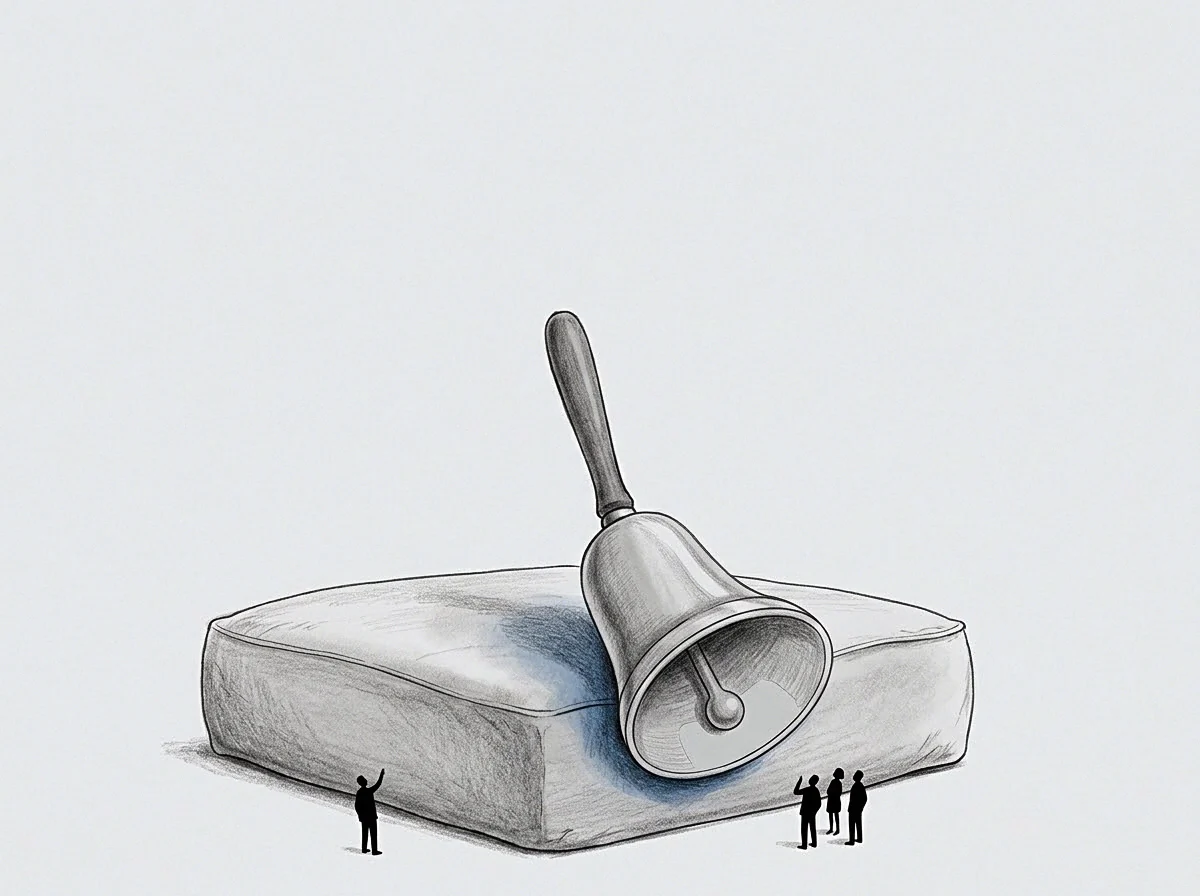
Wall clock time hides variance when systems evaluate average response times instead of long-tail quantiles. A microservice averaging twenty milliseconds can easily conceal a ninety-ninth percentile reaching eight hundred milliseconds. Latency spikes manifest during specific concurrency thresholds, memory allocation surges, or garbage collection stop-the-world pauses.
Shadow traffic validation pipelines isolate these anomalies by benchmarking baseline and candidate builds against identical request arrival distributions.

Tail Latency Dispersion and Measurement Noise
Standard load generators fail to surface tail latency because they apply constant rates. Real production traffic exhibits Poisson arrival patterns with bursty clustering. When three hundred requests strike an ingress thread pool simultaneously, queueing delays compound.
The candidate build may handle three hundred requests per second under smooth pacing, yet collapse when those requests arrive within a five-millisecond window.
Thread pools exhaust their work queues. Memory allocations spike as request bodies sit in heap memory waiting for execution threads. Garbage collection frequency increases, pausing worker threads precisely as new ingress connections seek socket handshakes.
Shadow pipelines record timestamps at proxy ingress, upstream dispatch, candidate receipt, candidate processing completion, and discard. Comparing baseline timestamps against candidate timestamps isolates whether delays stem from internal algorithmic inefficiency or external operating system queueing.

How Downstream Jitter Muddies Canary Telemetry?
Isolating candidate service performance becomes difficult when downstream microservices exhibit intermittent slowness. If the candidate service queries an unstable production database, the observed latency spike reflects database query contention rather than candidate code regressions. Engineers resolve this ambiguity by pairing shadow traffic pipelines with automated downstream virtualization.
Statistical isolation occurs when external dependencies deliver deterministic responses to both candidate and production instances.
Candidate instances talk to high-speed in-memory wire mocks configured to return canned responses with fixed five-millisecond delays. When the candidate service spikes to five hundred milliseconds while the mock dependency maintains constant response profiles, the regression isolates directly to internal candidate operations: lock contention, serialization inefficiency, or memory fragmentation.
Discarding temporal context during collection produces systemic false positives that invalidate validation stages and strand developer capacity.

Trace
Distributed tracing connects disparate timing records across microservice boundaries. When an edge proxy duplicates an ingress call, it assigns a distributed context header containing a unique trace identifier, an active span identifier, and an explicit shadow flag. The primary call preserves standard production telemetry.
The duplicated request carries the shadow flag downstream, notifying telemetry collectors to segment candidate spans from active production metrics.
Telemetry ingest engines route shadow spans to isolated time-series storage. Production operational dashboards display unpolluted service level indicators, preserving alert integrity for site reliability teams. Candidate service metrics flow to differential analysis engines that contrast baseline response time distributions against candidate distributions across identical time windows.
Differential analysis matches requests using an idempotency key or ingress transaction hash. If request hash alpha took fourteen milliseconds in production and forty-eight milliseconds in the shadow candidate, the pipeline flags the request payload for deeper execution analysis. Developers retrieve the exact JSON payload, reproducing the latency spike locally through isolated regression suites.
Sampling rates dictate pipeline efficiency. Mirroring one hundred percent of production traffic generates severe compute and storage demands. High-volume services operate with a shadow validation clause setting duplication rates to ten percent of ingress volume, isolating tail spikes without doubling total cluster compute expenses.
Fault
Latency regressions often trace to edge-case payloads that trigger unoptimized execution paths. A regex parsing routine with catastrophic backtracking, an unindexed database query condition, or an oversized base64-encoded image string causes thread execution to stall. Shadow traffic surfaces these payloads safely because candidate failures never reach active clients.
When the candidate build experiences an unhandled exception or an out-of-memory crash, the proxy swallows the error code. Production users receive the baseline instance response undisturbed. The pipeline logs the crash event alongside the exact input payload, thread memory dump, and system metric snapshot.
Pipelines detect subtle infrastructure failures through categorical isolation:
- Connection starvation patterns emerge when candidate connection pools fail to recycle sockets under high concurrent shadow volume.
- Memory bloat accumulation surfaces when candidate instances retain payload fragments across processing cycles, degrading long-term throughput.
- Serialization serialization stalls appear when candidate JSON parsers encounter non-standard character encodings in production headers.
- Thread lock contention registers when multiple worker threads wait on shared mutable state during bursty request waves.
Isolating the root cause demands rigorous payload dissection. Developers compare the memory allocation graph of the candidate build against the baseline profile. If the candidate service requires three times more heap allocation for identical payloads, latency spikes will inevitably manifest during peak production load.
The system reveals which payload structures trigger thread starvation, yet it leaves open how teams determine acceptable percentile latency boundaries when migrating legacy microservices with undocumented performance baselines.