
Emergency Capital Terms Signed During Acute Founder Exhaustion
Distressed emergency capital uses founder exhaustion to extract senior liquidation multiples and voting rights that extinguish common equity value.
Seat

Depletion and the Operational Vacuum
Twelve consecutive weeks of missed payroll forecasts alter cognitive function. Accumulated sleep debt degrades executive processing, pulling temporal horizons down to the immediate forty-eight-hour cash run. Acute liquidity distress forces a chief executive into isolated negotiations while routine operations drift.
Physical stamina drops below baseline levels. Under this pressure, standard contractual diligence collapses into a drive to close the transaction at any structural price.
Biochemical depletion restricts the capacity to evaluate downstream legal liabilities. Chronic nervous activation narrows perceptual focus to the immediate threat of insolvency, leaving deferred ownership covenants as abstract abstractions. When a bridge term sheet arrives on an unread desk, the executive reads only the headline wire amount and the closing date.
Provisions governing transfer restrictions, liquidation waterfalls, and observer appointments receive superficial review during midnight scanning.
Diminished physical stamina contracts the executive planning horizon to the immediate banking deadline.
The operational environment deteriorates at the same time. Senior engineers update resumes, vendors halt deliveries pending wire confirmations, and board members withhold bridge commitments to preserve personal fund reserves. A solitary operator carries the weight of potential insolvency without internal counsel.
Under continuous insomnia, signing the document functions as an exit from prolonged physical stress.
Fatigue treats any closing signature as survival.

Pledge
Whose Equity Absorbs the Senior Liquidation Preference?
Participating preferred shares with cumulative dividends introduce an immediate structural overhang. In standard early arrangements, preferred holders receive their original capital back or convert to common equity upon a sale. Emergency financings deployed during severe distress invert this balance by attaching multiple liquidation preference multiples.
A three-times non-participating preference or a two-times participating preference extracts the first proceeds of an enterprise exit, leaving residual common pools dry beneath mid-tier purchase valuations.
A senior multiple liquidation preference consumes all recovery capital beneath high enterprise valuations.
Senior tranches take precedence over earlier venture partners. Historical cap tables lose practical value once senior recovery claims cross the enterprise break-even threshold. The incoming lender demands priority over all previous series, converting earlier supporters into junior claims holding common paper.

Structured Ratchets and Price Protection
Downside price revisions extract equity through statutory recalculations. A full-ratchet anti-dilution provision reprices previous shares to the lowest penny issued in subsequent bridge financings, multiplying share counts exponentially. The original ownership percentage drops instantly.
Broad-based weighted average formulas distribute dilution across historical share counts, whereas strict ratchets penalize existing common allocations without regard to previous enterprise milestones.
- Full Ratchet Provision multiplies incoming share counts retroactively to match the lowest future price, wiping out prior equity percentages during subsequent financings.
- Pay-to-Play Clause strips existing venture partners of preferred voting protections if they decline pro-rata allocations, concentrating control in the bridge fund.
- Warrant Coverage attaches thirty to fifty percent unpriced equity options to emergency debt notes, compounding long-term ownership dilution upon eventual conversion.
Emergency debt carries structural triggers that bypass common share protections. When a distressed convertible instrument encounters a failed follow-on round, default interest accrues at statutory ceilings while maturity dates contract automatically. The conversion price drops to nominal floor rates.
The debt holder gains legal title to physical assets, patents, and customer contracts without initiating bankruptcy proceedings.
The promissory note specifies immediate acceleration upon any technical covenant breach, stripping operating authority from common equity holders.

Discount

Ordinal Strain Against Cardinal Extraction
Personal exhaustion functions as an unquantified internal weight, yet legal documentation converts that strain into numerical concessions. The executive experiences depletion as an accumulation of sleepless hours, lost focus, and physical stress. The institutional investor records that vulnerability as a basis for cardinal pricing discounts.
An emergency investor calculates exact liquidation multiples, warrant coverages, and board seat assignments from the operator’s shrinking cash runway. The internal physical toll cannot travel across a negotiation table without becoming commercial leverage.
| Instrument Dimension | Standard Venture Series | Distressed Bridge Note |
|---|---|---|
| Liquidation Multiplier | 1x Non-Participating | 2x to 3x Fully Participating |
| Anti-Dilution Defense | Broad-Based Weighted Average | Strict Full Ratchet |
| Governance Allocation | Proportional Board Seats | Independent Majority Sweep |
| Information Covenants | Quarterly Financial Packets | Weekly Cash Audit Rights |
Cash depletion forces contract surrender. Market clearing prices reflect counterparty desperation rather than long-term asset worth. The capital provider measures days until unpaid tax filings, recognizing that the enterprise must accept extreme covenants or cease operations by Friday afternoon.
The executive concedes structural control points simply to satisfy pending wage checks.
Emergency recapitalizations price the desperation of the seller rather than the future earnings of the asset.
Concessions multiply quietly across midnight redlines. The capital provider requests a twenty percent structural cushion to account for operational unpredictability, knowing the exhausted executive will concede without forensic line edits. Silence across three contractual drafts transfers governance authority permanently.
The term sheet reflects the exact capital market reality of an enterprise three days from payroll default.

Carveout

Governance Dislocation and Board Reconstitution
Distressed terms rewrite voting control before the capital wire settles in the treasury account. Emergency investors frequently demand separate class voting thresholds that isolate the founding group from major operational votes. A dedicated investor director receives unilateral veto rights over future financing rounds, corporate mergers, executive hiring, and intellectual property transfers.
Even when holding thirty percent nominal equity, the founding team loses practical ability to steer corporate policy.
Fiduciary duties shift immediately toward debt covenants. Corporate directors owe obligations to enterprise solvency once liabilities outstrip liquid balances. The board reconstitutes to protect incoming liquidation claims.
Outside directors who previously supported long-term technical research pivot to cost reduction programs, headcount terminations, and distressed sale evaluations. The original builders sit in operational rooms without authority to set product schedules or authorize capital expenditures.
Fiduciary duty shifts toward capital preservation the moment enterprise liabilities exceed immediate liquidation assets.
Management retention pools frequently disguise ownership wipeouts. When senior liquidation preferences render common equity worthless, incoming sponsors allocate special carve-out compensation plans to keep technical teams operating during trade sales. These bonuses pay out of gross exit proceeds before preferred allocations clear, functioning as retention incentives for hired labor.
The original common equity holder remains an employee collecting a transactional fee, stripped of historical capital gains.
Surrendering operational governance under duress transfers enterprise recovery value directly to emergency preferred claimants while leaving long-term operational liabilities with the founding common pool.

Recourse
Assessing Structural Remedies and Walkaway Math
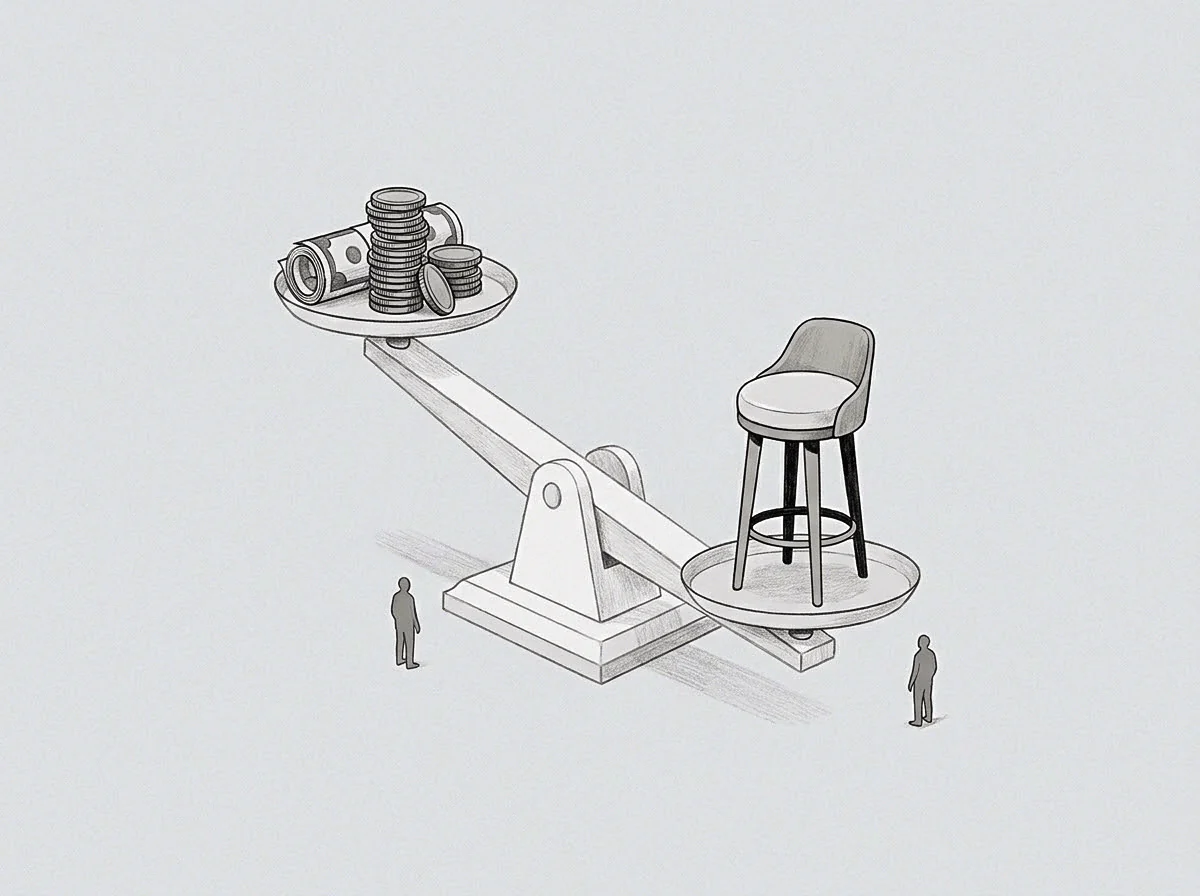
Surviving a predatory bridge round requires an objective forensic audit of remaining options. Operators must compute whether continuing inside an underwater cap table yields acceptable returns on physical energy. When liquidation preferences exceed realistic market valuations by a factor of three, continuing as chief executive serves institutional debt recovery rather than personal wealth creation.
The operator evaluates the remaining upside against the personal energy cost of working under hostile covenant monitoring.
Recapitalization negotiations require collective leverage from technical teams. Common holders retain leverage only if operational continuity depends entirely on proprietary institutional knowledge that departs if the founding team resigns. In certain distress scenarios, resigning the corporate seat forces preferred holders to write off capital or grant clean common equity grants through revised incentive structures.
Remaining in the executive chair without contractual parity guarantees uncompensated labor.
Contract restructuring demands emotional detachment from historical effort. Legal counsel experienced in distressed reorganizations can challenge coercive transaction timing, yet legal defense demands liquid capital that the depleted enterprise lacks. The operator must decide whether to sign secondary releases, negotiate management retention carve-outs, or walk away toward new ventures with operational vitality intact.
Whether an exhausted operator can reclaim governance leverage after surrendering voting control remains an unanswered challenge for distressed corporate reorganizations.