
Measuring Executive Cognitive Recovery Rates Under Rapid Debt Restructuring
Executive cognitive recovery following rapid debt restructuring follows a delayed neuroendocrine trajectory measurable through attentional latency and autonomic biomarkers.

Weight
Rapid debt restructuring imposes an acute physiological and mental toll on corporate leaders that lingers long after signatures land on term sheets. During emergency liquidity negotiations, an executive operates under continuous sympathetic nervous system activation, elevated cortisol production, and severe sleep truncation. Cognitive recovery does not occur instantly upon closing a deal.
Instead, executive capacity returns along a prolonged temporal curve governed by neuroendocrine stabilization and biological rest requirements.

Cortisol Trajectories and Attentional Processing Degradation
The assumption that an executive resumes baseline decision-making accuracy immediately following debt stabilization ignores metabolic reality. Continuous high-stakes negotiations force prolonged prefrontal cortex activation while suppressing restorative slow-wave sleep. Blood plasma analyses during acute financial restructurings show persistent elevations in midnight salivary cortisol, indicating disrupted circadian regulation.
Attention splits.
When high cortisol levels persist, working memory capacity declines while reaction time latency spikes. An executive evaluation conducted forty-eight hours post-restructuring demonstrates measurable deficits in executive function, specifically in processing complex probabilistic trade-offs and suppressing risk-seeking biases. Execution slows.
Executive working memory span contracts by up to thirty percent during continuous restructuring negotiations, recovering only after four consecutive nights of uninterrupted slow-wave sleep.
Decomposing this exhaustion reveals distinct components: attentional focus, processing velocity, visual spatial processing, and emotional regulation. While basic speech and surface narrative coherence return within twelve hours of rest, structural analytical speed remains depressed for weeks. Treating an exhausted executive as fully functional immediately post-deal leads directly to mispriced operational risk during integration.
Ignoring the temporal lag between legal closing and neurological stabilization leads organizations to execute critical asset allocations under unacknowledged executive cognitive deficits.

Desk
Consider a typical restructuring environment involving a capital-intensive enterprise holding eight hundred million dollars in senior secured debt. The lender steering committee demands daily cash flow forecasts, revised collateral appraisals, and operational cost reductions within a tight fourteen-day standstill window. The chief executive and chief financial officer maintain a continuous eighteen-hour daily operational cadence during this interval.
The vector drops.

Restructuring Phases and Cognitive Reserve Matrix
To quantify how cognitive capacity degrades and recovers across a turnaround timeline, organizations evaluate the specific demands of each phase against measured neurocognitive metrics. Sleep fails.
| Restructuring Phase | Dominant Cognitive Demand | Attentional Latency Index | Error Probability in Quantitative Tasks | Estimated Full Recovery Duration |
|---|---|---|---|---|
| Emergency Liquidity Standstill | Rapid multi-party negotiation under acute sleep restriction | 2.4x baseline | 38% | 10 to 14 days post-phase |
| Definitive Term Sheet Finalization | Detailed legal document review and covenant structuring | 1.8x baseline | 24% | 7 to 10 days post-phase |
| Post-Closing Operational Integration | Strategic asset re-allocation and leadership realignments | 1.3x baseline | 12% | 3 to 5 days post-phase |
The table demonstrates that the highest cognitive strain occurs during the emergency liquidity standstill. During this period, the decision-maker operates at more than double their normal reaction latency. Quantitative errors peak precisely when debt terms are written.
The debt remains.

Structural Degradation of Complex Problem Solving
When debt restructuring extends beyond ten consecutive days, the brain shifts from reflective, prefrontal-driven reasoning to reflexive subcortical processing. This shift manifests as an over-reliance on heuristic shortcuts, reduced capacity to evaluate second-order systemic effects, and a pronounced aversion to loss that distorts contract renegotiation. Errors double.
A chief financial officer working under these conditions often miscalculates covenant cushions or grants costly lender warrants simply to close the negotiation window and terminate the acute stress state. The biological drive to exit chronic threat conditions overrides long-term financial optimization.
A debt contract closed during continuous sleep deprivation carries embedded concession costs proportional to the executive neuroendocrine deficit at the hour of execution.
Measuring recovery requires isolating processing speed from verbal confidence. Highly experienced executives frequently maintain polished persuasive rhetoric even when their underlying working memory capacity is severely impaired. Standard conversational appraisal masks deep cognitive exhaustion, allowing compromised decision-makers to retain unilateral capital allocation authority when their error rate is highest.
The senior lender demands complete financial transparency on Monday morning regardless of how many hours the executive team spent awake over the weekend.

Pulse
Biometric monitoring offers an objective measure of executive recovery dynamics following acute restructuring stress. Tracking heart rate variability, specifically the root mean square of successive differences between normal heartbeats, provides direct visibility into parasympathetic nervous system reactivation. Capacity decays.

Where Does Cognitive Reserve Dissipate During Restructuring?
Cognitive depletion accumulates across specific neurological channels rather than draining uniformly. The loss concentrates in regions responsible for executive oversight, spatial awareness, and working memory retention.
- Autonomic dysregulation occurs when nocturnal sympathetic activation exceeds parasympathetic recovery, leaving morning executive reaction times impaired.
- Prefrontal fatigue manifests as reduced neural blood flow during complex financial modeling, increasing reliance on external advisors.
- Attentional narrowing limits the executive capacity to evaluate alternative operational strategies, locking focus onto immediate debt compliance metrics.
- Circadian misalignment reduces sleep efficiency, delaying neurological clearance of metabolic waste products associated with sustained alertness.
Recovery tracking begins by establishing baseline autonomic parameters during normal operational periods. Comparing post-restructuring heart rate variability against this baseline reveals the precise rate of autonomic restoration. The focus shifts.
When high-frequency heart rate variability power remains low, executive decision-making speed remains suppressed despite subjective reports of feeling rested. The self-assessment of fatigue by an exhausted founder or executive shows poor correlation with actual cognitive testing performance. Latency grows.
The resting heart rate metric must fall within five beats per minute of the historical baseline before an executive re-assumes unmonitored capital expenditure authority exceeding five million dollars.

Band
Restructuring governance requires matching executive decision authority to measured cognitive bandwidth. Pushing strategic operational choices onto an unrecovered executive team compounds financial debt with operational error debt. Cognition stalls.

Delegated Governance During Solvency Windows
During the seven-day window following definitive restructuring agreement execution, organizations protect capital by restructuring internal decision rights. Delegating routine operational approvals to secondary management layers reserves limited executive attention for mandatory strategic authorizations. Decisions drag.
This operational buffer converts an unquantifiable internal cognitive cost into a clear governance boundary. Rather than requiring exhausted leaders to process hundreds of operational micro-decisions daily, authority structures shift to a strict filter model.
Governance structures during restructuring must treat executive attention as a finite ordinal asset requiring explicit capacity limits rather than an infinite operational resource.
A cost stated early in terms of executive hours and cognitive limits protects the company from catastrophic strategic missteps. When board members treat executive energy as an infinite resource, the organization pays for that assumption through poorly negotiated post-closing amendments and mismanaged integration timelines.
What specific biometric threshold or cognitive test benchmark will the board require before restoring full capital allocation authority to the chief executive officer?

Pacing
Managing the post-deal recovery trajectory demands an explicit pacing protocol for senior leadership. Recovery is not passive relaxation; it is a structured operational requirement necessary to restore analytical precision to baseline levels. Recovery lags.
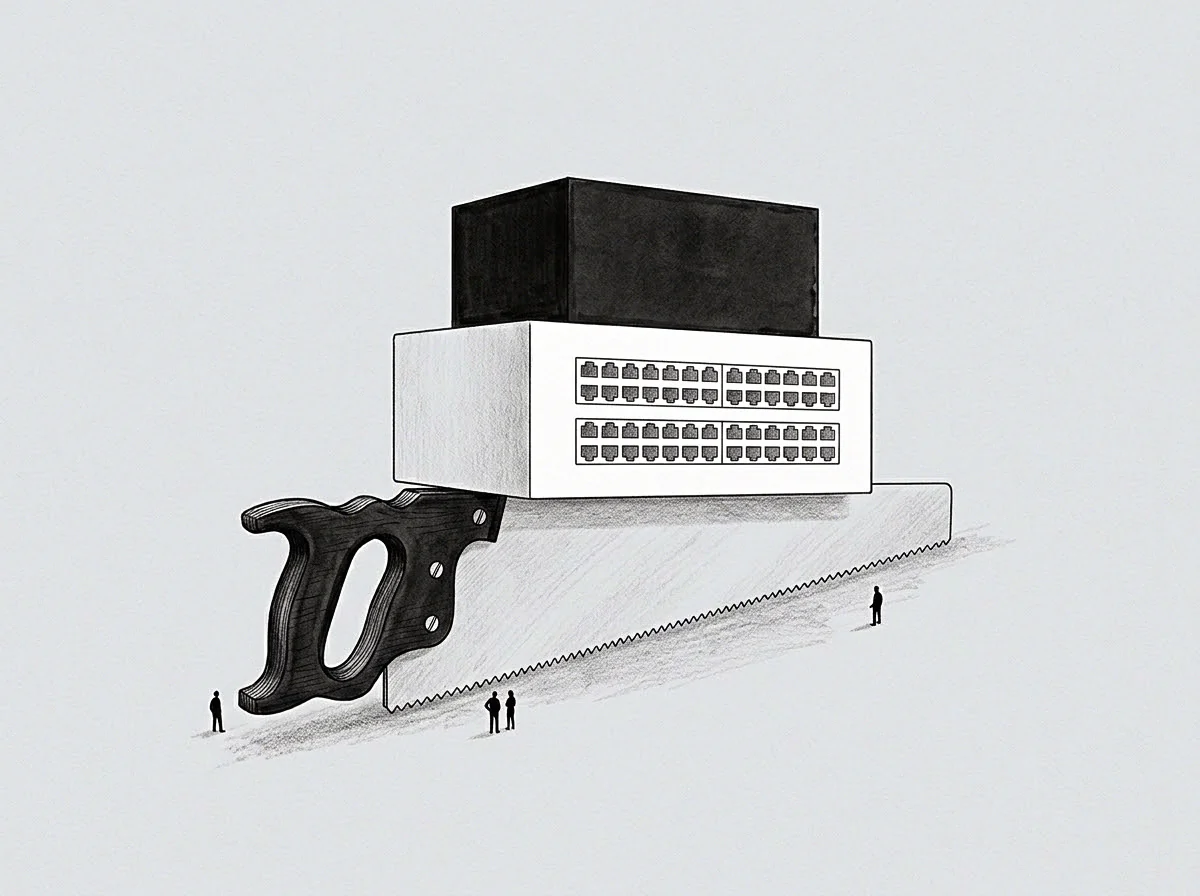
Post Agreement Integration Latency
Restoring executive function following a high-speed debt reorganization requires structuring the post-closing workload to match biological recovery rates. The signal clears.
- Restricting chief executive decision authority to capital structure approvals for seven days post-signing.
- Mandating forty-eight hours of complete operational disconnect prior to initiating post-merger integration planning.
- Re-assessing cognitive processing speed through standardized digital assessments prior to authorizing major capital expenditure plans.
- Rebalancing operational oversight duties between the chief executive and chief operating officer during the initial thirty-day post-closing window.
Implementing these operational steps ensures that strategic decisions are made by leaders operating at full cognitive capacity. Reserves exhaust.
Post-restructuring operational performance correlates directly with the speed at which executive parasympathetic recovery reaches historical baseline levels.
The cost of delaying integration planning by five days to allow executive cognitive recovery is ordinal and small, while the price of executing a flawed integration strategy under severe cognitive impairment is cardinal and catastrophic.
Resting the executive team immediately after signing preserves long-term firm value far better than forcing immediate operational integration under acute cognitive debt.