
Structuring Tiered Retainer Contracts To Protect Strategic Executive Capacity
Tiered retainers protect strategic capacity by separating high-leverage governance from tactical execution through explicit communication firewalls and drawdown limits.

Load
An executive calendar split across six shared team channels registers fifteen urgent alerts before eight in the morning. None of these messages involves corporate strategy or capital allocation. They ask for copy reviews, vendor sign-offs, and intermediate troubleshooting on active delivery pipelines.
The retainers funding this presence were negotiated to purchase senior governance and strategic oversight. The reality of the engagement delivers low-tier operational assistance at an elevated hourly rate.
Reservation agreements frequently suffer from a categorical confusion between standing availability and manual production. An organization paying a monthly retainer often assumes that payment grants unrestricted operational deployment during business hours. Context collapse consumes attention quickly.
When an advisory agreement lacks explicit barriers around the nature of incoming requests, tactical labor crowds out executive synthesis.
A retainer agreement preserves strategic attention only when the contract explicitly separates availability for governance from labor allocation for execution.
The resulting damage accumulates along the cognitive vector. When an executive shifts between corporate trajectory planning and immediate operational remediation, task residue degrades cognitive depth for several hours. Tactical friction destroys executive utility.
An advisor who spends Tuesday morning fixing broken software integrations cannot evaluate corporate restructuring scenarios on Tuesday afternoon with full precision.
The client interprets this dynamic through Cardinal metrics, evaluating the monthly fee against visible task completion. The executive experiences the arrangement through an ordinal scale of cognitive exhaustion and degraded leverage. Unbounded access accelerates cognitive fatigue.
When an agreement leaves this tension unaddressed, the executive ends the quarter depleted while the counterparty complains that strategic guidance failed to produce enterprise momentum.

Wall
Structural separation between strategic advisory work and tactical execution preserves executive capacity under commercial pressure. The contract establishes this barrier through precise jurisdictional limits that define what categories of enterprise work the retainer covers. Strategic synthesis demands unfragmented cognitive reserves.
Without definitive structural demarcations, clients naturally convert strategic retainers into emergency staff-augmentation arrangements.
An effective agreement erects institutional firewalls that route distinct organizational demands into appropriate engagement channels:
- Strategic Governance Tier governs enterprise architecture, financing oversight, and quarterly executive reviews through asynchronous briefings and scheduled synthesis meetings.
- Directed Advisory Tier handles structured monthly reviews of operational leads, policy drafting critique, and targeted decision arbitration within explicitly scheduled calendar blocks.
- Tactical Execution Reservation routes routine production tasks, vendor negotiation execution, and hands-on operational remediation into separate statement-of-work agreements carrying discrete cardinal pricing.
Communication protocol design reinforces these contractual partitions. Asynchronous channels invite continuous operational leakage. Direct inclusion in client chat software guarantees context fragmentation.
The contract restricts client access to structured communication channels: a single administrative conduit for scheduling, an asynchronous written portal for briefing documents, and scheduled live sessions for complex analysis.
Contractual limits that force all client inquiries into structured weekly synthesis documents prevent tactical tasks from invading daily operational calendars.
Operational drift compounds across quarters. When early operational incursions pass without contractual reinforcement, clients treat that compliance as an informal expansion of the baseline agreement. The client subsequently expects immediate execution on tactical emergencies within the fixed retainer fee.
We expected this retainer to give our teams hands-on execution whenever internal bandwidth fell short.
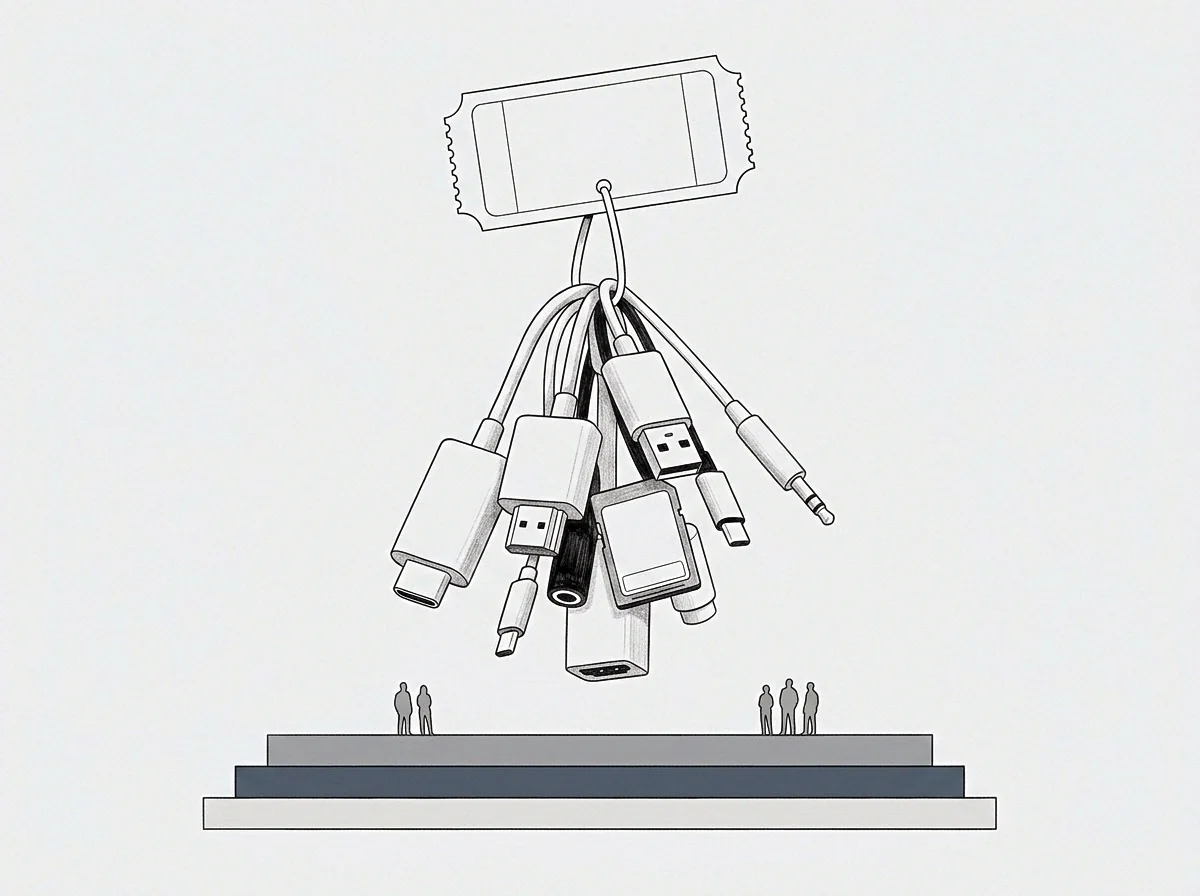
Grid
A multi-tiered structure resolves the conflict between standing executive access and unbounded tactical demand. The arrangement balances access guarantees against cognitive draw by defining clear delivery thresholds across distinct engagement levels. Pricing reflects scarce judgment capacity.
The contract explicitly indexes compensation to the level of cognitive autonomy surrendered by the executive.

Can Advisory Retainers Absorb Operational Surges?
Surges in operational demand threaten strategic capacity unless contractual mechanisms govern temporary spikes in client activity. The contract handles these demands by defining precise escalation pathways and capacity limits for each retainer tier. Availability differs from unlimited extraction.
The architecture separates structural advisory functions from operational intervention.
| Tier Designation | Executive Capacity Draw | Primary Delivery Format | Operational Containment Tool |
|---|---|---|---|
| Tier One: Horizon Advisory | Low context, high leverage oversight | Monthly strategic review, written synthesis | Complete prohibition on daily operational messaging |
| Tier Two: Directed Governance | Moderate context, scheduled evaluation | Bi-weekly decision sessions, document review | Strict limits on agenda scope and review turnaround |
| Tier Three: Surge Intervention | High context, bounded duration involvement | Embedded sprint leadership, direct negotiation | Prepaid block pricing with mandatory expiry windows |
Assume an executive engages three enterprise clients simultaneously under Tier One retainers. Each contract guarantees two hours of monthly live synthesis alongside asynchronous review of core strategic memoranda, priced at ten thousand dollars monthly. The total time expenditure across all clients totals twenty hours per month, leaving substantial mental capacity for long-range enterprise building.
Assume one client enters a corporate crisis and requests forty hours of immediate operational intervention. Under a flat retainer, this intervention cannibalizes the executive’s capacity, destroying the ability to serve other clients or advance internal initiatives. Execution requests belong in statements.
Under a tiered agreement, Tier Three triggers automatically, transferring the operational burden into a bounded intervention contract at a significant cardinal premium while preserving the structural integrity of baseline advisory commitments.
Executives who fail to structure explicit capacity limits into baseline agreements inevitably become uncredited emergency operators for client management teams.
Scope creep follows structural ambiguity. When retainer agreements define deliverables through generalized qualitative terms like ongoing support, clients define value through physical availability. A contract that defines value through specific decision thresholds protects high-leverage attention.
The surge capacity clause and its mandatory pricing multiplier shift operational firefighting into a discrete, time-bound statement of work.

Draft
Contractual terms preserve executive attention through systematic capacity drawdown protocols. Retainers buy access, not labor. When clients draw down executive time, clear structural mechanics must account for that depletion without relying on informal interpersonal negotiations.
Unscheduled calls fracture strategic focus.
A disciplined drawdown workflow preserves cognitive capacity throughout the engagement lifecycle:
- The client submits written synthesis packets seventy-two hours prior to scheduled advisory sessions to establish context without live extraction.
- The advisory session executes strictly against the submitted agenda, concluding immediately upon resolution of strategic items.
- Asynchronous review requests deduct predetermined units from the client’s quarterly advisory allocation based on document complexity.
- Surge requests that exceed tier allowances generate an automatic transition notice into project-specific statements of work.
Structural limits protect high-leverage attention. Without clear depletion metrics, clients treat retainers as infinite options on executive presence. Tracking cognitive drawdown through discrete units transforms an ambiguous relationship into a bounded professional transaction.
A contract that charges explicitly for unexpected context switches protects strategic presence more effectively than high baseline retainer fees.
Strategic capacity recovers only when work boundaries remain rigid across consecutive quarters. When an advisor establishes explicit drawdown boundaries, the client learns to filter trivial inquiries internally. Protecting executive capacity requires structured boundaries that stand long after preliminary contract enthusiasm fades.
Protection of executive capacity depends on clear limits rather than client restraint.