
Measuring Non Monetary Resource Substitution Under Acute Financial Liquidity Shortfalls
Non monetary resource substitution measures the conversion of unpriced human, social, and operational reserves to absorb acute cash shortfalls.

Unit
A liquidity shortfall forces an immediate shift between separate operating registers. When cash reserves run dry, an enterprise stays operational by drawing down labor, goodwill, and deferred system maintenance. Conventional financial statements record the drop in cash balances while treating this secondary extraction as invisible, hiding severe balance decay behind an appearance of stable survival.
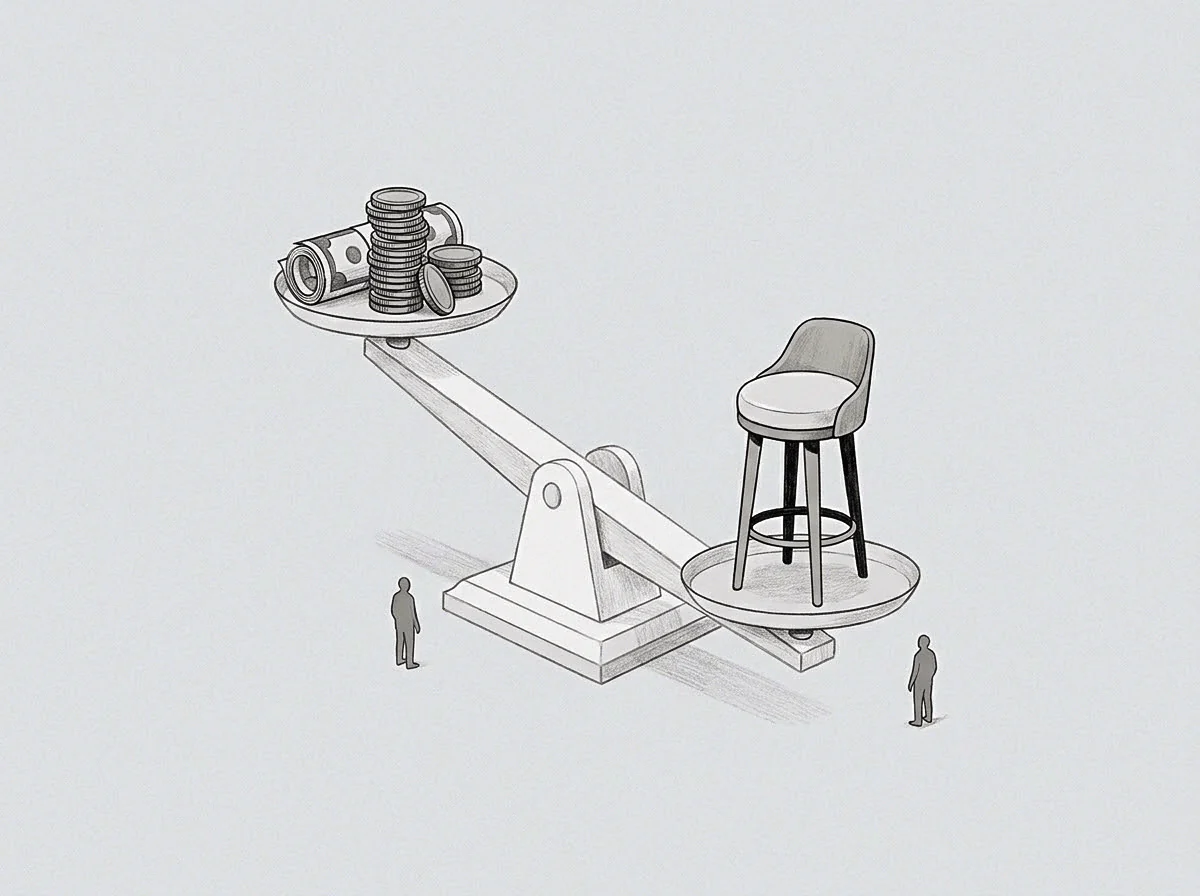
These extracted resources occupy fundamentally different scales. Cash is cardinal, consisting of divisible, standardized units that permit arithmetic addition. Human energy, focused attention, and network reputation function along ordinal vectors that resist simple addition and subtraction.
A business substituting fifteen hours of uncompensated night labor for a missing contractor fee does not execute an arithmetic offset. It pulls capacity from an unmeasured reserve that depletes sharply once strained.
Labor extraction during cash shortfalls accelerates non-linearly once personal recovery time drops past biological thresholds.
Tracking this substitution requires isolating the specific assets consumed during periods of zero cash disbursement. Unpaid executive overtime, vendor goodwill spent on delayed payments, and skipped technical refactoring constitute shadow expenditures. An operator observing an enterprise during a cash freeze tracks these non-monetary outlays alongside bank balances.
A formal reserve substitution agreement establishes explicit non-cash drawdown limits, altering repayment priority when external revenue resumes.
Beam

Physical Limits of Non Cash Reserves
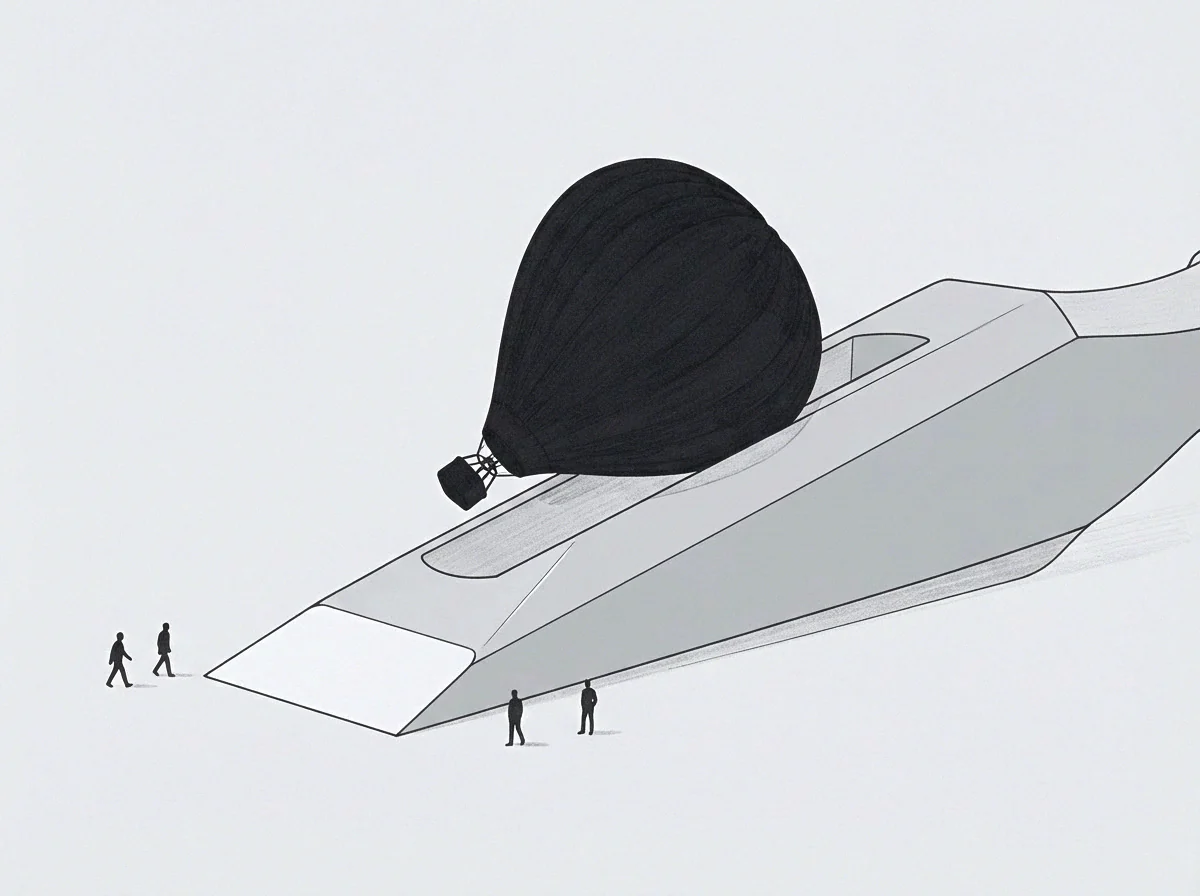
Every operational system rests on a physical support beam formed by human endurance and equipment integrity. When financial capital disappears, management shifts operating loads directly onto this physical tier. The enterprise survives the payment failure by consuming the structural safety margins of its people and machines.
Consider an operating group facing an eighty thousand dollar payroll deficit over a ninety-day window. The company reduces cash compensation to zero while demanding seventy weekly hours per person to deliver client commitments, finishing the work on schedule. Financial accounts show eighty thousand dollars conserved.
The physical tally records three departures, forty-two unresolved software defects, and complete loss of team trust.
The operational load shifted entirely to irreplaceable personal reserves, with physical stamina failing first.
| Substituted Resource | Measurement Scale | Depletion Velocity | Recovery Latency |
|---|---|---|---|
| Uncompensated Labor | Ordinal exertion bands | Linear initial, parabolic late | Three to six quarters |
| Vendor Goodwill | Relational tier ranking | Step-function collapse | Permanent relationship reset |
| System Maintenance | Defect accumulation count | Exponential compounding | Two to four quarters |
| Executive Attention | Cognitive bandwidth index | Immediate fragmentation | One to two quarters |

Observation of Structural Friction
Tracking non-monetary drain requires measuring operational latency rather than price. When team members work without pay, response times to critical system incidents degrade systematically. That delay indicates cognitive overload and hidden operational friction.
- Cognitive bandwidth drain manifests through rising error counts across standard technical tasks and skipped documentation cycles.
- Relational capital erosion appears when long-term suppliers restrict credit windows or demand immediate payment upon delivery.
- Equipment deferred service creates immediate cash conservation at the price of accelerated mechanical breakdown risks.
Vendor goodwill drops in discrete step functions rather than continuous linear gradients.
Ignoring shadow resource consumption produces severe organizational failure when the enterprise exhausts all non-cash reserves before capital replenishment occurs.
Rate
Quantifying Substitution Velocity
The speed of resource substitution determines survival runway during insolvency events. An operator quantifies this velocity by observing weekly depletion rates across three distinct non-cash categories: discretionary time, relational favors, and structural maintenance. Each category maintains a finite saturation boundary.
Discretionary time converts readily during the initial thirty days of a liquidity crisis, as team members absorb extra tasks without immediate performance decay. Relational capital with clients and vendors absorbs strain during the subsequent thirty days through requested extensions and waived contractual terms. Structural maintenance absorption occurs throughout the entire shortfall interval, accumulating compounding operational risk.
Converting ordinal human capacity into cardinal currency projections distorts management visibility. The substitution rate accelerates as reserves diminish. A team operating at eighty hours weekly loses problem-solving efficacy at twice the speed of a team working fifty hours.
The conversion ratio between extracted hours and saved capital deteriorates continuously.
A team operating past sustainable exertion thresholds burns three units of future capacity for every unit of current cash conserved.
Clients notice delivery slippage long before executive leadership acknowledges the depletion of operational capacity.
Strain
Prolonged liquidity distress transforms temporary resource substitution into permanent organizational impairment. When cash shortfalls extend past ninety days, the enterprise operates entirely on borrowed human capital. The hidden capacity cost surfaces through irreversible capability losses, employee turnover, and customer defection.
Managing this condition requires continuous assessment of non-monetary burn rates. The operator records hours extracted, favors drawn down, and technical compromises accepted during each cash-constrained cycle. Documenting these shadow outlays preserves clear sight of total system liabilities.
Whether an organization can systematically quantify non-monetary substitution before structural exhaustion destroys the underlying enterprise remains an open analytical challenge in distressed operations.