
Ranking Operational Workstations and Enterprise Commitments During Extreme Liquidity Contraction
During extreme liquidity contraction enterprise survival depends on preserving operational workstations with high capability vectors while restructuring cardinal commitments.

Rig
When quarterly revenue drops forty percent, bank facilities freeze without warning. On the floor, the operating team works across physical test benches, active development environments, and automated logistics nodes, while legal counsel holds binding agreements for software licenses, office leases, and take-or-pay cloud compute commitments. The immediate tension lies between keeping active revenue-generating nodes running and servicing obligations that cannot be paused.
Workstations represent current production capacity: the real-time ability to ship goods or deliver services. Enterprise commitments are historical promises to transfer capital to third parties regardless of whether that capacity gets used. Weighing these two demands requires breaking them down into their mechanics rather than treating every dollar leaving the accounts as interchangeable expenditure.
Operational Seats and Contractual Fixed Points
Running a production terminal consumes continuous cash and human attention. An operator pays hourly wages, power, software maintenance, and direct technical support to keep that node active. Assets like these carry an ordinal cost vector: immediate cash outlay, team attention, capacity drain, and retained technical skill.
When capital contracts, protecting the nodes that generate real capability keeps the operating core intact.
Operational workstations preserve enterprise capability when cash reserves fall below critical thresholds, provided their net operational output exceeds direct marginal cost.
Long-term leases, minimum cloud spend commitments, and annual software maintenance agreements operate under rigid accounting terms. Landlords still demand full payment within thirty days. Shutting down a server cluster lowers the monthly power bill right away, but the annual contract keeps accumulating unpaid balances against the company.
When operators fail to distinguish flexible operating infrastructure from fixed contractual obligations, they routinely lay off revenue-generating talent while leaving unused software subscriptions untouched.
Most commitment contracts contain specific termination for convenience, force majeure, or suspension terms that change when cash actually has to leave the accounts.
Outflow
Capital drain during a downturn follows channels carved out months or years earlier. A company takes on obligations during growth phases when liquidity feels unconstrained: enterprise software agreements, dedicated server reservations, logistics guarantees, and office footprints that carry legal penalties for default.
Idling a workstation cuts variable expenses immediately. Stopping payment on an enterprise commitment triggers cure notices, credit downgrades, or formal default proceedings. In practice, the structural penalty for defaulting on long-term contracts often forces insolvency faster than the direct loss of operational output would.
Dissecting Contractual Friction Across Contractual Horizons
These commitments fall into distinct legal and operational categories, each presenting different obstacles when an organization tries to suspend or break them.
- Take or pay agreements require payment for fixed volumes of cloud compute or materials regardless of actual use, draining cash continuously during an operational slowdown.
- Commercial real estate leases create multi-year liabilities backed by corporate guarantees, which usually require formal surrender negotiations or insolvency filings to restructure.
- Enterprise software licenses bundle seat fees with mandatory annual maintenance contracts that run uninterrupted even after layoffs eliminate the users.
- Equipment debt covenants demand recurring monthly debt service on physical machinery, where missed payments allow lenders to seize core production equipment.
Waiting to review these contracts leaves the business exposed to sudden acceleration demands. A clause-by-clause audit identifies terms that allow temporary suspension without triggering cross-default provisions across credit facilities.
A contract clause that mandates full payment upon early termination shifts a future liability into an immediate balance sheet obligation.
Overlooking cancellation windows in enterprise contracts turns manageable operational friction into an outright legal default.
Weight
Evaluating active workstations alongside passive corporate commitments requires looking past standard accounting. Financial reporting flattens every line item into dollar amounts, but during a cash crisis, execution time, continuity, and counterparty leverage carry far more structural weight than the cash figures show.
Shutting down non-essential compute nodes produces immediate cash savings. Withholding payment from a critical vendor saves the same amount of cash today, but it severs vendor relationships needed to operate next month.

Which Commitments Sever Operational Capability First?
Ranking these obligations means evaluating each seat and contract across four dimensions: immediate cash burn, exit friction, cross-system dependency, and capability loss.
| Asset or Commitment Type | Cardinal Cash Drain | Termination Penalty | Operational Interdependence | Capability Vector Impact |
|---|---|---|---|---|
| Primary Engineering Workstation | Moderate recurring payroll | Zero contract penalty | High internal coupling | Severe permanent reduction |
| Automated Logistics Node | Low variable operational expense | Low equipment lease penalty | High customer shipping coupling | Immediate revenue loss |
| Enterprise Cloud Compute Commitment | High fixed monthly minimum | Severe contractual acceleration | Moderate platform coupling | Negligible if underutilized |
| Corporate Headquarters Lease | High fixed monthly outlay | Extreme legal surrender cost | Low production coupling | Zero core output loss |
| Aggregate Operational Exposure | High fixed periodic burn | Variable contract penalty | High systemic coupling | Immediate structural reduction |
Keeping the core operational team in place ensures the business retains the capability to execute workflows once conditions stabilize. Contracts that contribute nothing to active workstation throughput take priority for immediate renegotiation or restructuring.
Preserving infrastructure that generates no capability consumes cash reserves without extending operational runway.
What a workstation produces right now dictates its priority during a liquidity squeeze, regardless of how much capital was spent building it out.

Shelf
The window to restructure narrows rapidly as cash dwindles. Early in a contraction, an operator has room to negotiate contract adjustments, request forbearance, or shift technical resources. As reserves drop, those options collapse into emergency cuts.
When new invoices land, managers without a defined order of cuts make arbitrary decisions, like letting core engineers go while continuing to pay for idle enterprise software. A clear sequence of depletion protects essential capacity until cash stabilizes.
Sequence of Depletion in High-Fixed-Cost Operations
Stretching capital requires cutting in a deliberate order that extends runway without dismantling production capacity.
- Cut non-essential software tiers that handle internal reporting without supporting direct customer deliverables.
- Move engineering staff off speculative research and onto customer-facing production work.
- Open standstill talks with primary enterprise vendors to shift fixed commitments to usage-based billing.
- Consolidate facilities and begin lease surrender discussions for non-production real estate.
- Reduce specialized workstations only when actual customer demand for that specific output falls off.
Third-party vendors rarely offer concessions until confronted with formal restructuring terms or credible non-payment alternatives.
Cash preserved through early contract renegotiation protects core technical capability longer than deep operational headcount cuts.
Creditors accept reduced terms when it becomes clear that demanding full payment will force the business into insolvency.
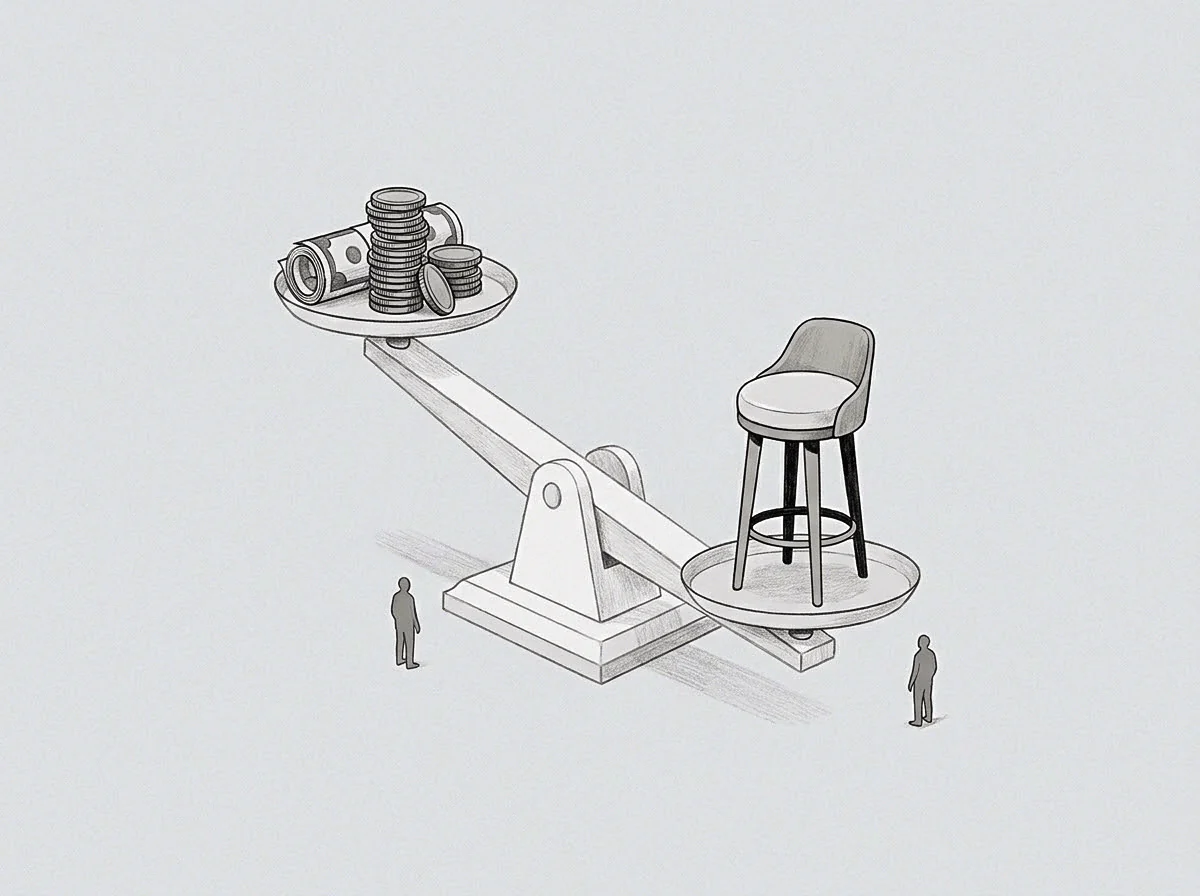
Rank
Balancing workstations against contractual obligations means turning operational needs into clear negotiation stances. Contract counterparties will try to claim as much of the remaining cash as possible. The operator has to make clear that capital will go only to the production nodes that keep the business alive.
Workstations generate current revenue. Contract commitments do not; they secure background capacity or historical access. In talks with lenders, cloud providers, and landlords, ongoing operational capacity is the primary bargaining chip.
Showing creditors that active workstations are generating cash proves the business is a going concern capable of servicing restructured terms over time.
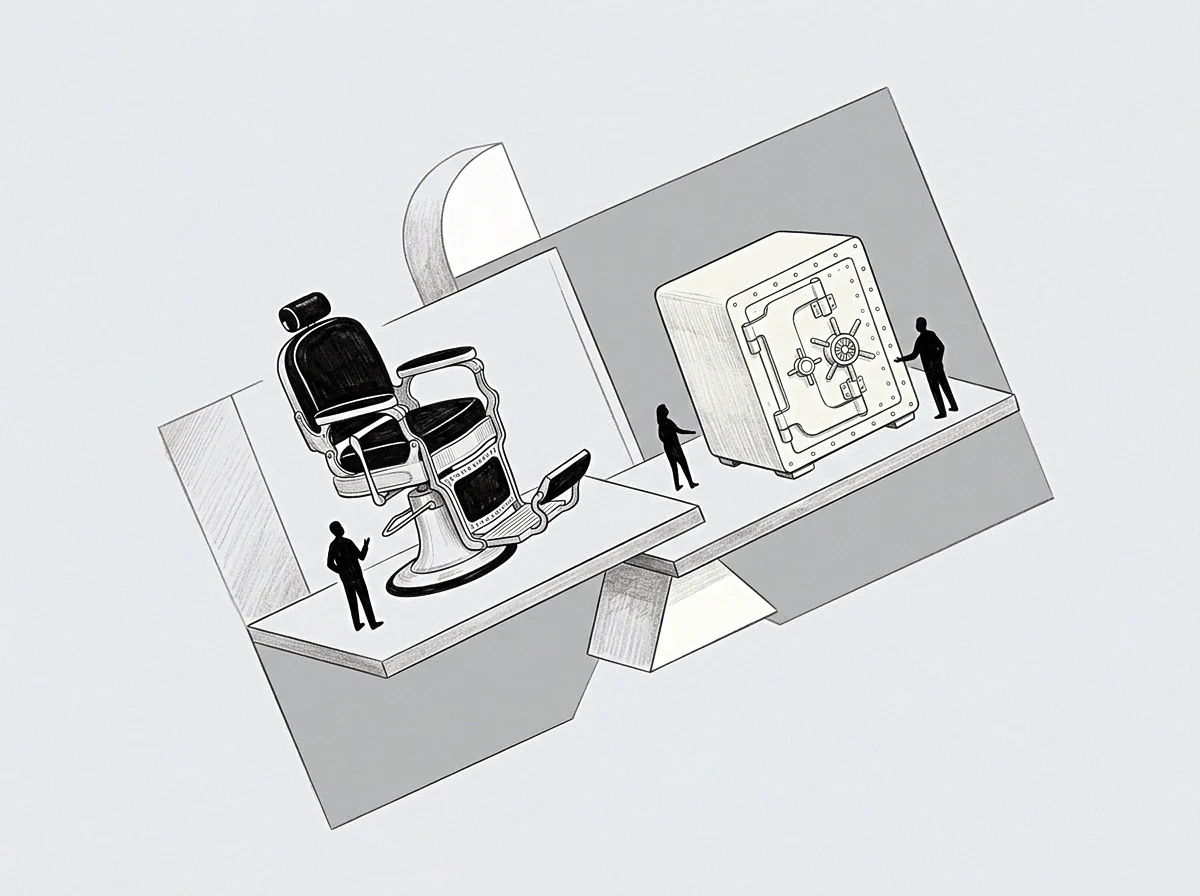
Conversion of Workstation Productivity into Counterparty Leverage
Using production capacity as leverage requires clear communication about spending priorities. Landlords and software vendors often assume their contracts take priority over payroll and operations. Presenting a direct breakdown of production costs against passive corporate commitments shows them that unviable contracts will simply be rejected if they threaten ongoing revenue.
Obligations are restructured by ranking them strictly on utility. High-priority workstations receive ongoing funding because they generate the output needed to bring in revenue. Lower-priority commitments receive reduced payments, deferred schedules, or unilateral termination notices.
An enterprise survives severe liquidity shortfalls by shielding its productive engine and shedding rigid obligations.