
Resolving Unbounded Operational Drains Caused By Unpriced Client Escalations In Fixed Milestone Deliveries
Unpriced client escalations convert fixed deliverables into unbounded capacity drains by decoupling executive intervention from cardinal economic penalties.
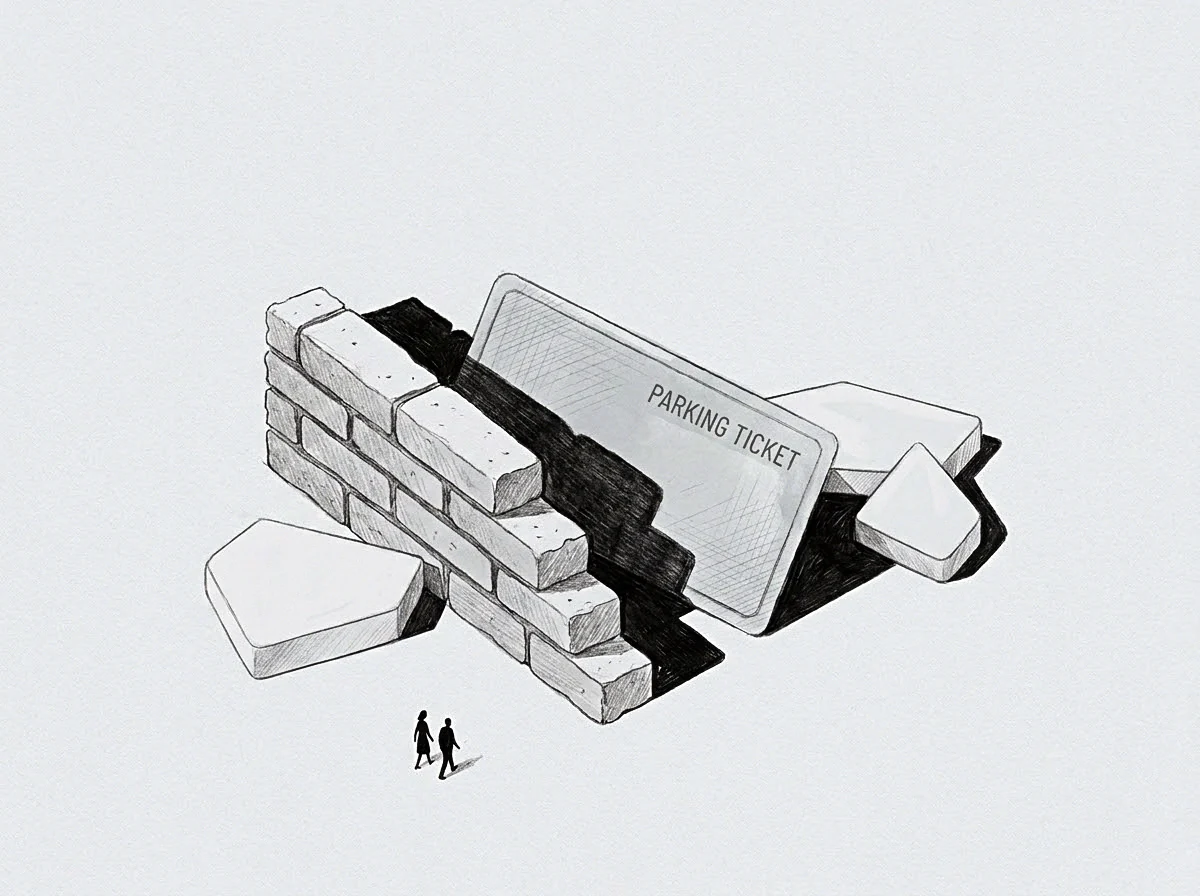
Wedge
An email arrives at nine on a Tuesday evening, marked high urgency by a client vice president who does not attend weekly steering calls. The message bypasses the project management board, copies three company executives, and frames a minor stylistic discrepancy on an unapproved layout as a complete deliverable failure. By midnight, two principal engineers, an account director, and the operations lead are reviewing commit histories to prove the work matches the signed technical specification.
No additional budget accompanies the twelve hours spent assembling evidence, drafting defensive explanations, and placating the counterparty, while the commercial agreement remains unamended.
This dynamic drives a wedge between delivery economics and counterparty behavior. In a staged contract, the supplier commits to fixed outputs against calendar milestones, locking in revenue while absorbing any production variance. The client faces zero marginal cost when elevating complaints through executive backchannels, creating an unpriced call option on supplier labor.
Without a transactional fee for out-of-band demands, technical capacity gets overconsumed. When an operational channel carries no explicit price, counterparties use it until its marginal utility drops to zero, regardless of the operational loss imposed on the supplier.
A fixed contract gives the buyer every incentive to treat routine feedback as an emergency as long as executive access costs nothing.
Contractual structures usually treat governance channels as neutral administrative conduits rather than operational resources. When an agreement permits unrestricted stakeholder reach into executive tiers without billing triggers, the client organization routes ambiguous anxieties through escalation channels rather than resolving them in change-control boards, letting unpriced triage consume the schedule. Supplier leadership routinely tolerates the drain on the assumption that quick responses preserve retention, obscuring the transfer of uncompensated work.
Structural friction in fixed agreements traces to distinct architectural flaws across the client interface:
- Unbounded governance pathways allow informal communication to bypass designated intake channels, forcing delivery teams to validate finished work outside formal review cycles.
- Decoupled severity definitions give client personnel room to label routine preferences as critical system defects without technical verification.
- Unpriced executive intervention routes minor disputes directly to senior leadership, burning organizational capacity without adjusting delivery dates or fees.
- Ambiguous acceptance criteria invite late speculative revisions by failing to separate objective technical requirements from subjective client impressions.
The cost lands directly on the operator’s personal hours. The counterparty views immediate executive availability as an entitlement already covered by the baseline fee.

Drag
Senior technical focus drops immediately. When a lead architect leaves execution to parse an urgent client inquiry, the immediate time lost is only a fraction of the real operational damage. Task-switching research in software engineering shows that complex technical work requires long uninterrupted blocks of time, with recovery after an unscheduled interruption averaging over twenty minutes before baseline efficiency returns.
When interruptions arrive repeatedly through emergency channels, team output degrades as attention scatters across concurrent disputes. This observed cognitive penalty rests on trials tracking focused programming tasks in medium-sized technical teams, though asynchronous protocols could alter these figures if delivery personnel are protected from immediate response expectations.
The internal cost of an escalation spreads across several areas rather than appearing as a single line item. Engineering hours are the most visible piece, but capacity loss reaches into delayed delivery stages, skipped testing, and lower creative capacity for future milestones. In maritime logistics, moving unmonitored secondary ballast within a vessel compromises stability long before reaching open water.
In service delivery, diverting primary builders into defensive client communication shifts operational ballast, eroding quality across adjacent accounts and landing the cost squarely on engineering attention.
When unscheduled interruptions pass a critical threshold, operational output falls far faster than the hours spent reading the messages.
Operating margins collapse quietly while financial records show predictable fixed fees, because internal capacity burns at accelerated speeds, draining the firm’s ability to take on new billable work. The drain operates ordinally: an organization can rank its most exhausted delivery units accurately even when cardinal price metrics fail to record the damage.

How Does Unpriced Access Deplete Senior Delivery Capacity?
Uncontrolled access turns senior engineers into defensive administrators during critical deployments. The client team quickly learns that an alarming message to the supplier founder yields faster action than submitting an official ticket. This creates a destructive loop: subordinate client managers bypass their own triage protocols, using supplier leadership as an external hammer to discipline internal stakeholders while delivery teams absorb the variance.
| Dimension | Unbounded Escalation Model | Gated Capacity Model |
|---|---|---|
| Communication Routing | Direct executive reach through informal channels | Designated single-point intake via structured tracking |
| Severity Determination | Subjective classification by client stakeholders | Deterministic technical verification against contract terms |
| Cost of Out-of-Band Reviews | Absorbed entirely by supplier operational capacity | Deducted from fixed revision pool or billed at premium rates |
| Schedule Adjustment | Fixed deadlines enforced despite disruption | Automatic day-for-day calendar extensions applied |
| Delivery Margin Impact | Unbounded erosion across technical labor pools | Bounded operational variance preserved within contract margins |

Structural Consequences of Unmetered Friction
Failing to price escalations distorts organizational learning. Junior staff watch senior leadership set aside documented delivery standards to placate loud stakeholders, eroding internal discipline and demoralizing technical teams as production halts during active triage. When suppliers absorb endless administrative volatility without financial consequence, clients remain insulated from the cost of their own indecision, compounding inefficiencies across subsequent delivery stages.
Persistent unpriced interventions steadily erode project profitability, leaving the delivery organization unable to meet baseline contractual commitments.

Tariff
Cardinal figures enforce strict arithmetic. To stop unbounded operational drains, the supplier must convert team exhaustion into contractual constraints that counterparties encounter as financial boundaries. Research into incomplete contracts shows that parties exploit vague governance terms to extract uncontracted value unless explicit pricing penalizes opportunistic behavior.
This finding draws on bilateral bargaining experiments with non-verifiable effort; the behavior may lessen in small, close-knit networks where informal social pressure restrains excessive demands. In broader commercial markets, explicit pricing remains the primary constraint against opportunistic behavior.
A structured tariff schedule aligns client incentives with delivery health by placing explicit financial consequences on operational interruptions. The contract must separate routine milestone deliverables from ad-hoc technical reviews, requiring the client to purchase emergency capacity as an explicit addendum. Under loose agreements, the client pays nothing extra for disruptions; introducing structured fees for out-of-band reviews turns emotional escalations into deliberate commercial decisions.
A mandatory pricing schedule for out-of-band triage forces client sponsors to filter subordinate complaints before sending them.
The sequence for pricing and managing out-of-band demands follows precise commercial steps:
- Diagnostic triage intake logs the incoming escalation against defined defect categories and pauses active development.
- Economic impact assessment calculates required engineering reallocations, assigning specific hourly fees and calendar delay penalties.
- Sponsor authorization checkpoint presents the cost estimate to the designated client decision-maker before technical teams intervene.
- Delivery schedule adjustment shifts downstream delivery dates day-for-day relative to the time consumed by the dispute.
Implementing this sequence reveals the true operational cost of executive interference, forcing the client to weigh the utility of an immediate demand against a guaranteed delay to core delivery goals.
Because every unscheduled escalation consumes hours, clear financial friction deters speculative interventions while preserving high-urgency channels for genuine emergencies.
Gate
Rigorous stage gating insulates production teams from external commercial turbulence. Stage deliverables require binary acceptance criteria based strictly on verifiable functional specifications, leaving no room for subjective reappraisal at delivery. When a client triggers an escalation during formal acceptance, the contract must freeze calendar milestones until the dispute reaches documented resolution, stalling the deliverable.
Halting the clock protects the supplier from compounding schedule penalties while investigating disputed items.
An operator must balance contractual enforcement against client relationship stability. The desk cannot establish a single numerical friction threshold for how much resistance an enterprise buyer will tolerate before walking away; corporate cultures vary widely in risk appetite and pride, requiring managers to calibrate enforcement against counterparty temperament. Where tolerance is uncertain, structured contractual notices detailing resource consumption provide legal protection without triggering unnecessary commercial conflict.
True delivery speed depends on strict boundaries rather than open executive channels.
Bilateral boundaries require symmetrical commitments. The supplier guarantees defined response times for genuine severity-one defects, while the client forfeits the right to demand off-schedule progress reviews outside agreed intervals. Channeling these requests into structured, pre-scheduled governance sessions ensures delivery leaders retain the uninterrupted focus needed to finish stage deliverables on time.
The contract specifies that any client escalation resolved in favor of the original technical specification automatically converts investigative hours into a billable change order, extending downstream deadlines by the full duration of the review.