
Setting Primary Rotation Shifts To Maintain System Familiarity
System familiarity persists when primary operational shifts force engineers to execute routine write operations across unfamiliar technical domains.

Switch
Routine operational assignments often default to static domain ownership, prioritizing immediate execution speed over distributed architecture knowledge. When engineering organizations assign primary on-call shifts strictly to subject matter experts, localized delivery throughput remains high. This arrangement isolates system context within narrow developer cohorts.
Scheduled primary rotation shifts alter this dynamic by intentionally reallocating operational responsibility across team boundaries. Primary rotation shifts serve as an explicit investment mechanism designed to build and maintain operational system familiarity across broad infrastructure footprints.
Cognitive models decay without active exposure. Static assignments create dangerous knowledge silos. System familiarity is an ordinal capability vector representing active working memory of codebase architecture, deployment tooling, telemetry structures, and failure patterns.
An engineer possess direct operational familiarity only through active write execution and live incident triage within a given service boundary. Theoretical understanding gained from documentation or passive code reviews does not translate into rapid incident recovery capabilities during production outages.
Primary operational rotation forces working memory updates across technical boundaries when engineers execute active write commands within unfamiliar codebases.
Incident recovery times reflect system familiarity. When an unexpected outage occurs in an isolated service, resolution latency depends on whether the responder understands the underlying system state. Assigning primary operational shifts to non-domain engineers forces routine context acquisition during calm operational windows, preventing emergency context gathering during high-severity production failures.
Isolating primary shifts to familiar domains concentrates system context within single individuals, compounding recovery latency during unforeseen catastrophic outages.

Cadence
System comprehension decays predictably when an operator remains disconnected from a service repository. The rate of decay depends on codebase modification frequency, architectural complexity, and individual working memory limits. Operational knowledge degrades along an exponential decay curve.
Without continuous exposure, an engineer loses detailed mental models of service dependencies within weeks of departing a domain.

Cognitive Half-Life of Codebase Context
Engineers store active mental models of system dependency graphs during routine maintenance tasks. Unused knowledge decays across eight weeks. When an operator does not execute deployments or triage alerts within a secondary service for two calendar months, their active comprehension drops below the threshold required for self-directed incident response.
Primary shifts redistribute operational burden directly.
Take an engineering cohort of twelve operators managing four distinct service groups under explicit production readiness standards. Assume sixteen weeks elapse without an operator taking a primary shift in an adjacent domain. When that operator eventually faces an unexpected escalation in that secondary service, initial context reconstruction consumes between two and four hours before remediation action begins.
The initial operational cost manifests as prolonged mean time to resolution across the organization.
Operational shift intervals exceeding six weeks cause rapid decay in dynamic system mental models, forcing engineers to reconstruct contextual baselines during live production incidents.
System context requires continuous active practice. Setting primary rotation shift cadences inside six-week intervals ensures that cognitive decay remains bounded. Enforcing a maximum six-week primary shift interval establishes continuous background baseline context across all operational boundaries.

Friction
Reallocating primary operational duties creates temporary output drops as engineers adjust to secondary codebases. Execution speed drops during initial shifts. This friction represents an immediate reduction in cardinal output metrics such as story points completed or feature pull requests merged.
Evaluating this throughput loss on a single cardinal scale misinterprets operational strategy. The ordinal gain in multi-domain capability offsets short-term efficiency losses.
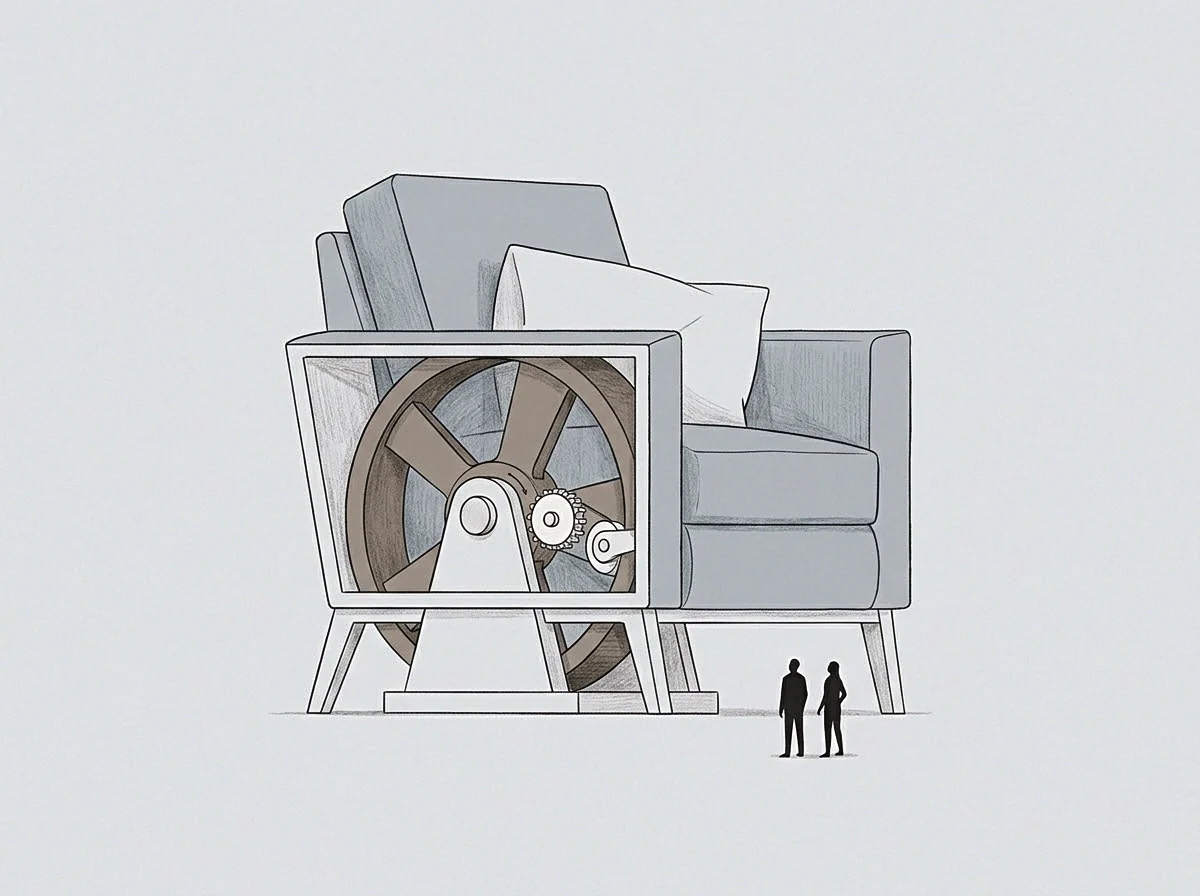
System Familiarity Vector vs Sprint Throughput
Measuring execution velocity during domain transition reveals distinct short-term performance trade-offs. Primary shift rotations exchange immediate localized sprint capacity for distributed organizational resilience. Operational resilience offsets temporary velocity reductions.
| Operational Metric | Fixed Domain Assignment | Primary Rotation Shifts |
|---|---|---|
| Initial Feature Velocity | Optimal local throughput | Temporary initial velocity reduction |
| Incident Recovery Latency | High reliance on specific individuals | Distributed rapid remediation capability |
| Domain Isolation Risk | Concentrated single point failure | Systemic context distribution |
| Context Restoration Overhead | Deferred to live emergency events | Absorbed continuously during routine shifts |
Transitioning engineers into primary operational roles across unfamiliar services exposes predictable failure patterns during early rotation shifts. Managing these modes involves recognizing context friction as a baseline investment rather than an execution failure.
- Context Restoration Overhead occurs when an operator spends the initial hours of a primary shift locating logs and configuration files.
- Deployment Hesitation arises when unfamiliarity with testing suite constraints delays routine hotfix releases.
- Escalation Reliance happens when rotating primaries consult original domain owners for standard production alerts.
Short-term throughput loss during rotation shifts operates as an intentional premium paid for broad system familiarity across the entire engineering cohort.
Engineering leads frequently observe local capacity dips during the first three rotation cycles as operators assimilate unfamiliar architecture rules. The current sprint velocity dropped because the primary on-call engineer spent three days learning the deployment scripts of the payments service.
Tenure
Engineering retention and incident confidence correlate directly with distributed system ownership. Single-owner arrangements create extreme operational stress for domain experts who cannot disengage from primary escalation duties. Distributing primary rotation shifts protects individual capacity while expanding institutional capability.

Can Scheduled Rotations Survive Production Crises?
High-severity outages tempt engineering leads to freeze primary handovers and revert to domain specialists. Suspending rotation shifts during prolonged delivery pushes preserves immediate output while quietly accumulating severe execution debt. When rotation shifts pause, system familiarity decays, leaving the team vulnerable once original domain owners depart.
Domain isolation elevates catastrophic outage risks. Active write access builds long-term comprehension. Handovers between rotating primaries demand explicit structural routines to prevent tacit knowledge loss during domain transfers.

Handover Structure and Knowledge Transfer
Formal transition mechanisms enforce systematic context sharing between outgoing and incoming primary operators. Shift handovers reveal implicit architecture dependencies.
- The outgoing primary documents active production anomalies and recent configuration updates completed during the shift.
- The incoming primary executes a verified deploy in the secondary domain alongside the outgoing primary.
- The incoming primary takes exclusive ownership of primary alert queues while the outgoing primary recedes to advisory status.
Engineers report lower incident anxiety when scheduled primary shifts ensure prior hands-on experience with every critical repository.
Shared operational responsibility reduces incident stress. Maintaining structured rotational primary shifts across fluctuating feature deadlines poses continuous organizational friction. Whether organizations can maintain structured primary rotation schedules during sustained high-urgency feature delivery cycles remains unclear.
Anchor
Embedding primary duty rotation into organizational baseline routines prevents expertise specialization bottlenecks. Tacit context evaporates from idle documentation. Primary rotations eliminate isolated expertise bottlenecks.
System familiarity demands routine active engagement with production software state.
Organizations balance domain specialization with operational coverage by setting firm shift duration standards. Primary shifts lasting between one and two weeks provide sufficient immersion to execute real write operations without completely disrupting core feature development responsibilities. Longer shifts create specialization silos; shorter shifts create superficial context exposure without meaningful familiarity gains.
Rotational primary shifts protect system familiarity best when scheduled routine write access accompanies every operational handover.