
Short-Term Operational Margin Preservation Under Fixed Pricing
Fixed pricing preserves operational margins only when direct labor hours are strictly capped against milestone deliverables through objective acceptance criteria.

Span
By the third week of a fixed-sum contract, forty unbilled requests sit on the project board. The signed agreement sets a deliverable at forty thousand dollars, payable on completion. Staff engineers log ten additional hours rewriting an interface component because the counterparty altered their staging environment without notice, yet the invoice stays at forty thousand dollars.
When operational margin collapses under fixed pricing, the breakdown rarely stems from a catastrophic technical failure; it erodes through incremental labor expansion against a fixed sum that does not adjust upward.
Fixed pricing shifts variance directly onto the contractor. Every unplanned ticket, late feedback response, or extra meeting consumes capacity with an internal cost. While contract price reflects the negotiated invoice value, internal drain accumulates through unbilled staff hours, delayed work for parallel clients, and diluted focus.
When delivery stretches from eight weeks to twelve weeks, direct payroll expenses outpace the fixed milestone payment, keeping cash inflows frozen while payroll outflows continue on schedule.
A fixed price shifts all labor variance onto the delivering organization whenever delivery timelines expand.
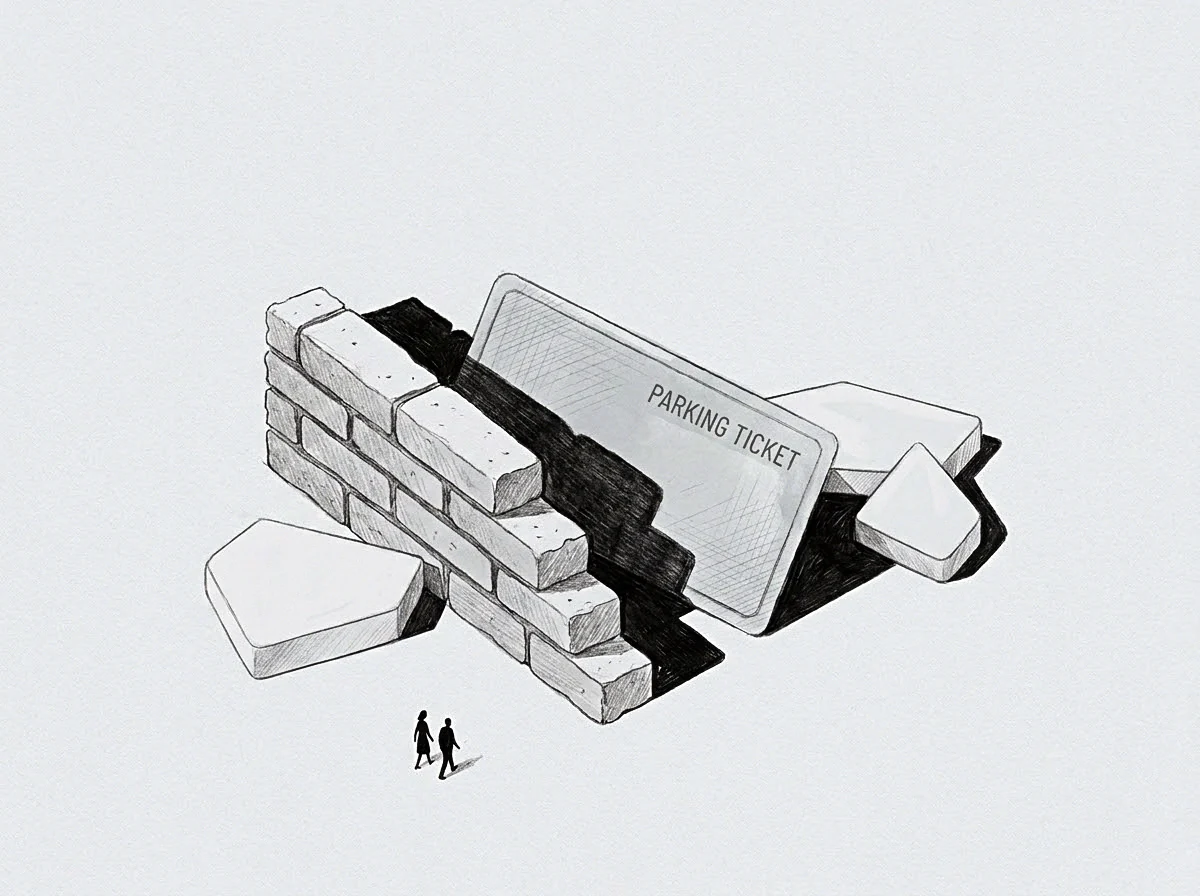
Fixed Fee Compression in Project Operations
Margin decay often shows up as calendar drag. If an agency agrees to deploy an inventory microservice for sixty thousand dollars across sixty days, projected margins assume roughly two hundred engineering hours at an internal payroll rate of one hundred dollars per hour, leaving forty thousand dollars in paper profit. When two weeks of client silence push review meetings past the milestone date, the fee stays static while support staff continue attending status calls, maintaining staging servers, and switching context away from new business.
That operational cost lands squarely on payroll and the delivery schedule. When staff spend unbudgeted attention clarifying ambiguous specifications, that energy is lost to subsequent projects. The firm cannot bill for this friction because the contract ties compensation to milestones rather than labor hours.
Preserving margin in the short term requires stopping the leak of unbilled hours before contract profitability disappears entirely.
When unplanned revisions absorb fifty hours, the operator absorbs the variance. Without active containment protocols, the deliverable turns from a profitable deployment into a subsidized labor transfer where the client captures full economic surplus while the vendor exhausts working capital.

Bolt
Explicit boundaries inside delivery workflows create enforceable stops against labor bleed. In manufacturing, a physical stop halts an assembly line when a part falls out of tolerance, and software delivery needs similar gates. Once a fixed-price engagement enters active production, establishing strict verification checks at each stage prevents work from moving into subsequent phases until criteria are certified in writing.
Scope boundaries decay when team members make casual verbal concessions to maintain goodwill. An account manager agrees over the phone to adjust a schema layout, or an engineer implements a modified export routine without a formal change order. Each adjustment feels trivial on its own, yet twenty small concessions add eighty hours to the delivery cycle before deliverables freeze on Friday.
A boundary holds only when production stops the moment unpriced modifications enter the queue.

Hard Delimiters on Unbilled Labor
Stopping margin erosion requires clear triage mechanisms to classify incoming requests upon arrival, preventing labor from flowing into unbudgeted items during an active schedule. This classification system isolates unplanned work before execution begins:
- Core Specification Work advances the contracted milestone definition directly and consumes allocated sprint budget according to the original baseline plan.
- Variance Clarification resolves ambiguous functional parameters that prevent milestone sign-off, proceeding only with written scope confirmation from counterparty leadership.
- Out-of-Scope Requests require an executed supplementary billing addendum or deferral to a subsequent contract phase before any staff member allocates working hours.
Enforcing these tiers stops the immediate burn of unallocated hours. When a client submits an adjustment to an approved design, project managers isolate the request from the active production sprint so the engineer can stay focused on components defined in the original statement of work. This practice insulates active capacity from scope creep and keeps baseline tasks within planned operational budgets.
Margin security improves when contracts include a revision ceiling restricting adjustments to two written reviews per milestone and converting any subsequent modification requests to standard hourly rates.

Count
Tracking internal expenditure requires measuring hours, diverted attention, and unbilled expenses against baseline estimates daily. Traditional accounting relies on month-end reconciliation to spot project losses, but under fixed-price constraints, waiting thirty days to detect margin compression guarantees the loss cannot be recovered. Teams must track variance daily using operational burndown rates.
Consider two mid-sized professional service firms building comparable database integrations. Both contract a fixed sixty-thousand-dollar fee against an internal budget of twenty thousand dollars in direct labor. Firm Alpha tracks progress through weekly status summaries and lets client revision cycles proceed without gates, whereas Firm Beta reviews daily ticket consumption against the milestone schedule.
When week four arrives and the client requests another round, Firm Alpha absorbs the revision silently, driving labor expenditure up to thirty-two thousand dollars. Firm Beta identifies that unbudgeted feedback tickets have consumed fifteen percent of total labor reserves, issues an immediate pause notice, and holds its twenty-thousand-dollar labor target.
| Intervention Mechanism | Direct Labor Burn Impact | Calendar Delivery Variance | Client Sentiment Risk | Immediate Margin Defense Level |
|---|---|---|---|---|
| Sprint Scope Freezing | Zero additional hours added to active milestone sprint | Milestone delivery adheres to original contract calendar | Moderate friction regarding rigid process rules | High preservation of direct project profitability |
| Change Order Surcharge | Billed labor compensates for additional engineering hours | Calendar expands while contract price increases proportionally | Elevated resistance during commercial negotiation | Moderate margin preservation after transaction friction |
| Feature De-scoping Trade | Total hours remain neutral by swapping equivalent tasks | Timeline remains aligned with projected release targets | Low friction when functional trade-offs are documented | High preservation of operational margin and velocity |
| Uncapped Revision Absorption | Labor burn exceeds baseline projections by twenty to fifty percent | Milestone slips by two to six additional weeks | High satisfaction followed by sharp dispute over final invoices | Severe margin erosion resulting in operational loss |

Quantitative Divergence in Task Absorption
Evaluating fixed-price exposure requires recognizing that contract price remains static while internal operational costs accumulate dynamically. A project billing fifty thousand dollars looks healthy on sales ledgers, but if technical discovery uncovers legacy database incompatibilities requiring sixty additional hours of data sanitization, internal margins plummet as the contracted rate collapses.
When attention splits across three tickets and engineers spend mornings troubleshooting unbudgeted infrastructure quirks, cognitive throughput declines across concurrent tasks. Task switching carries a real penalty that never shows up on a vendor invoice, yet directly reduces delivery speed across all active accounts. Measuring project margin strictly through billed invoices conceals the operational deficit created when senior talent is trapped fixing under-scoped deliverables.
Ignoring daily burn metrics leads to discovering project insolvency only after payroll expenses swallow contract receivables, leaving the firm with exhausted staff and no remaining cash surplus.

Pace
Controlling execution velocity protects operational reserves when fixed-price constraints strain capacity. Client delays in providing feedback or testing assets routinely stall project momentum. When a client pauses for two weeks before approving wireframes, dedicated staff cannot sit idle waiting for a reply; velocity must be throttled, reassigning billable resources to secondary accounts while the fixed-fee project sits in review.
Idle capacity under fixed pricing generates immediate margin loss. If two developers remain allocated to an unresponsive client account, their base salary continues to consume cash reserves without progressing the milestone toward its invoicing trigger as the calendar slips three weeks. Re-sequencing workflow stages prevents this operational drain.
Operational margin vanishes the moment dedicated personnel sit unbilled waiting for third-party approvals.

Work Sequencing Across Delivery Windows
To insulate profitability against client friction, operations leads use reallocation protocols that maintain high utilization across the production team. When milestones stall, work sequencing moves through structured stages:
- Active Pipeline Reassignment shifts unblocked developers onto short-term hourly projects or concurrent fixed-fee milestones that possess immediate approval clarity.
- Secondary Task Throttling slows internal production on non-critical path components, preventing the accumulation of unreviewed work inventory that may require subsequent revision.
- Formal Milestone Freezing issues an administrative pause to the project calendar, stopping contractual service-level agreements until the counterparty fulfills its technical prerequisites.
Reallocating technical talent protects the company from absorbing uncompensated wait states. In industrial manufacturing, queue theory establishes that inventory held between processing stages represents trapped capital. In service delivery, unfinished code or unreviewed documentation held between milestone checkpoints represents trapped labor investment.
Throttling work prevents this unbilled inventory from expanding.
Clients frequently suggest that the team continue building secondary modules while awaiting feedback on earlier deliverables, arguing this keeps the final launch date intact regardless of review delays.

Yield
Final project margin depends on terminal delivery discipline. The closing ten percent of a fixed-sum contract routinely consumes thirty percent of total operational labor if acceptance criteria remain subjective. Counterparty stakeholders frequently use the final deployment phase to submit cosmetic revisions, minor preference adjustments, and feature enhancements omitted during initial scoping sessions.
A founder managing delivery operations must resist absorbing endless finishing touches under the guise of customer satisfaction. When final acceptance criteria rely on objective technical benchmarks rather than subjective stakeholder impressions, project closure becomes a binary event: either the software passes automated acceptance tests and functional parameters, or it does not, pushing operational reserves to zero.
Subjective acceptance criteria convert the final phase of delivery into an open-ended labor liability.

Terminal Realization and Downside Protection
Preserving margin during closure requires strict adherence to documented acceptance tests. If an integration meets all contracted performance criteria, the deliverable is complete operationally. Personal preferences expressed by client staff during user acceptance testing are not defect remediations; they represent new requirements that warrant separate commercial arrangements.
When direct expenses outstrip weekly collections, short-term margin protection under fixed pricing requires treating staff hours as a finite, unrecoverable operational asset. Every hour spent polishing an already conforming deliverable directly reduces profit margins and deprives other revenue-generating initiatives of capacity. Once contracted specifications are met, production stops immediately, the final invoice is submitted, and resources transition to subsequent engagements.
Protecting short-term operating margins under fixed pricing requires treating project scope as an immovable boundary rather than a flexible commercial negotiation.