
Evaluating Invariant Routing Sequences Against Input Variance In Live Operations
Invariant sequences process variable inputs through static stages, converting payload attribute variance into tail latency and node starvation across pipelines.

Path
Operations run on routing lines laid down during calm conditions. An input enters, moves through a predetermined processing sequence, and exits as finished work. As long as incoming work matches the profile used when setting up the sequence, processing stays predictable.
But static paths decay over time. Invariant execution looks like reliability only until input variance widens. When high-volume bursts, irregular payload sizes, corrupted states, and mixed priority levels hit the pipeline at once, the fixed order creates backlogs at nodes unprepared for those specific payload traits.
An operator tests an invariant sequence by watching throughput deltas across different input classes. A fixed five-step sequence might handle standard text records with uniform latency, but choke when records contain unstructured attachments or nested arrays. Treating execution as a scalar timeline creates a structural error by assuming stability that production environments rarely offer.
When input geometry varies, stage durations shift, altering station occupancy and starving downstream workers while upstream queues spill over into storage.
A routing sequence maintains stability only while incoming variance stays within the narrow envelope recorded during pipeline staging.
Evaluating this behavior requires finding where invariant order creates structural drag. The operator measures baseline latency across twenty thousand synthetic cycles with zero attribute variance, then introduces controlled entropy in subsequent cycles through payload size fluctuations, token length deviations, and irregular serialization formats. The delta between the baseline and the perturbed run isolates the penalty of fixed sequence execution.
When processing order cannot reorder stages to validate lightweight attributes first, heavy nodes waste compute on records destined for downstream rejection.
Static ordering works well when operational cost matters more than scheduling logic, but breaks down as soon as input attributes drive processing overhead.

Seat

Station Saturation and Human Triage Realities
The human operator absorbs the structural friction of rigid sequences. When automated pipelines follow invariant routes, exceptions land on manual desks in irregular bursts, leaving a worker to spend six hours on idle monitoring before three hundred nested exceptions arrive in eight minutes. Because upstream traffic patterns drive input variance, treating every ticket with identical sequential checkpoints creates unnecessary bottlenecks.
An operator sitting at the console cannot redistribute load across intermediate steps. The sequence requires step three to follow step two, even when step two depends on a degraded third-party service. As workers clear identical batches, invariant progression allows a delay at a secondary enrichment node to stall primary validation, stranding the operator in an artificial queue while the seat functions as an expensive buffer for inflexible system architecture.
A console operator absorbs through manual triage the exact volume of variance that automated routing refuses to compute.
Tracking manual override rates offers clear evidence of sequence mismatch. When an operator overrides automated step progression on more than five percent of incoming records, the sequence no longer matches production variance. The human seat effectively acts as an undeclared branching mechanism, draining staff attention on routine exceptions while high-severity deviations remain hidden in identical queues.
- Static checkpointing forces uniform inspection stages on low-risk payloads, consuming human attention without reducing error rates.
- Decoupled verification catches fast-fail conditions early in execution, letting contaminated records exit before reaching manual operational desks.
- Adaptive batching adjusts group sizes based on payload complexity rather than arrival order, smoothing workload deltas at human stations.
Unaddressed sequence rigidity harms staff retention, as operators spend entire shifts manually clearing predictable pipeline stalls.

Load
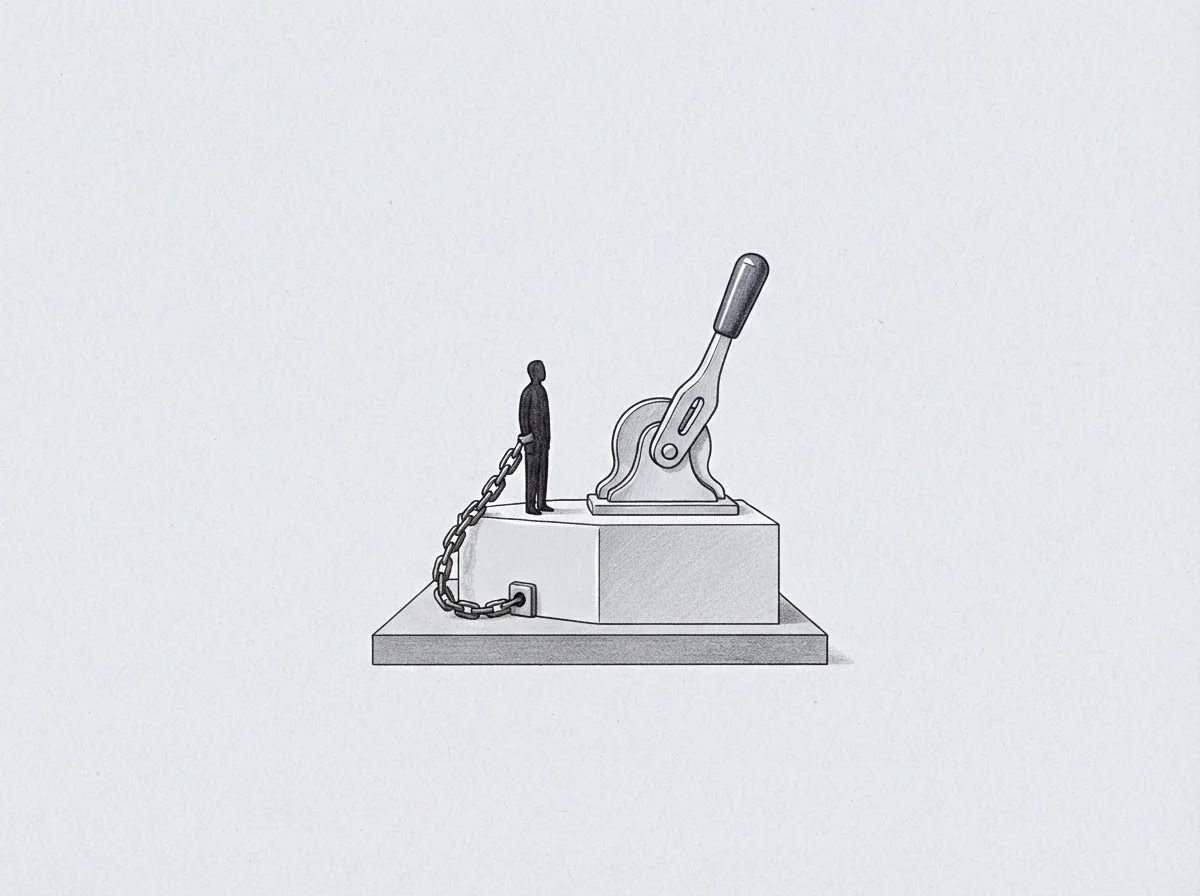
Can Static Paths Survive Shifting Payload Volume?
Capacity limits highlight the difference between invariant routing and adaptive distribution. When input variance is low, an invariant sequence incurs lower orchestration overhead than dynamic alternatives, executing simple function pointers or remote procedure calls without routing delays. But as state builds between stages and incoming distribution widens, the lack of branching forces every payload through worst-case operational steps.
Consider two parallel operational designs handling fifty thousand requests per hour. System Alpha routes every payload through unpacking, full virus scanning, semantic analysis, entity extraction, and persistence. System Beta uses an early payload classification step, sending lightweight metadata payloads directly to storage while bypassing deep semantic extraction, reserving heavy extraction nodes for unverified records.
| Execution Architecture | Uniform Low-Weight Input | High-Variance Payload Mix | Downstream Node Starvation | Average Compute Delta |
|---|---|---|---|---|
| Invariant Static Sequence | 14ms median latency | 182ms median latency | High during burst phases | Baseline zero compute offset |
| Dynamic State-Filtered Route | 19ms median latency | 31ms median latency | Low across all cycles | Forty-two percent compute reduction |
| Heuristic Fast-Path Branching | 16ms median latency | 44ms median latency | Moderate during reclassification | Twenty-eight percent compute reduction |
Under high-variance conditions, queues register significant delay and invariant sequences incur massive tail latency when a single oversize input blocks the thread pool assigned to a stage. Dynamic routing absorbs a small upfront metadata calculation cost, but distributes throughput across dedicated pools based on payload class. Computing routes live costs far less than paying the capacity penalties of running oversized records through standard pipelines.
A fixed sequence costs least to schedule and most to run whenever input dimensions vary.
Testing live systems exposes where static routing breaks down under load. Injecting ten percent non-standard inputs into a production sequence shows whether capacity degradation scales linearly or exponentially. In an invariant architecture, saturation at an intermediate stage halts processing upstream and starves downstream nodes, causing the entire system to behave as a single serial queue governed by its slowest processing point.
The schedule cannot support dynamic branches while the infrastructure bill shows the price of static paths.

Check
Measurement Methods for Operational Invariance
Evaluating an operational pipeline requires precise measurement across all execution boundaries. The observer records three vectors: input entropy, station residency duration, and pipeline exit condition, tracking how the baseline drifts. Comparing these figures against an identical window with zero input variance exposes structural bottlenecks.
The primary diagnostic tool is the stage residency ratio, calculated by dividing the time a record spends waiting for an intermediate node by the time it spends undergoing active processing. In an invariant sequence exposed to variable inputs, this ratio spikes at stages following compute-heavy analysis nodes. Lightweight tasks accumulate in memory while waiting for execution slots occupied by dense records; high throughput in simple stages can hide this structural drag until the waiting-to-processing ratio exceeds four to one, at which point invariant ordering actively degrades capacity.
An invariant pipeline converts input property differences directly into stage residency delays.
A second metric tracks the cost of dead execution. When an invariant sequence processes twenty attributes before encountering an invalid condition that terminates the record, all compute invested prior to that check represents pure waste. As capacity drops under input variance, routing sequences that fail to prioritize cheap invalidation checks force the system to pay full execution costs on corrupted records.
Before making adjustments, the operator tests sequence validity by deploying a shadow pipeline with a reordered sequence: lightweight validation stages execute first, variable compute stages run conditionally, and persistence occurs only after attribute verification. Comparing telemetry between the production baseline and the shadow branch over seven days isolates the specific cost of invariance.
Does the operational overhead of managing conditional routing state in high-throughput engines outweigh the infrastructure cost of overprovisioning static execution paths?