
Evaluating structural operational velocity when feedback cadence diverges across organizational tiers
Structural operational velocity drops when high frequency task cycles produce local optimization noise that slow strategic review loops misinterpret as real directional progress.

Axis
An execution team deploys software updates twelve times each day while the executive board evaluates operational velocity on a ninety-day review cycle. The execution layer measures throughput by deployed commits, while the strategic layer measures velocity by quarterly return on capital. Localized production acceleration occurs continuously, yet directional realignment registers only four times a year.
This structural cadence mismatch creates phase distortion across organizational layers. The system moves rapidly along local vectors while remaining motionless relative to long-term objectives.
Evaluating true structural operational velocity requires treating value as the underlying coordinate axis. Operational speed cannot be inferred from activity counts or cycle frequencies alone. Calculating velocity requires measuring the scalar change in position along the value axis per unit of time.
When feedback cadences diverge, lower-tier teams optimize for local gradient descent, taking the path of least resistance within short review windows. Higher-tier evaluation operates over longer windows, smoothing out high-frequency fluctuations and obscuring directional drift. The resulting delta between localized task completion and structural displacement measures the systemic friction generated by cadence divergence.

Cadence Divergence and Latent Phase Disconnects
Diverging evaluation frequencies introduce latent phase lag between strategic intention and frontline execution. High-frequency execution layers generate continuous operational telemetry. Low-frequency governance layers consume aggregated summaries delayed by weeks or months.
By the time strategic feedback reaches the operational floor, the execution environment has shifted, rendering the corrective signal obsolete. Teams receive guidance addressed to past operational states. The execution layer either ignores stale directives to maintain momentum or halts work to reconcile conflicting signals.
Operational velocity decays when rapid execution feedback loops decouple from slow governance review cycles.
Structural alignment breaks down when feedback loops operate out of phase. The operational slope reflects the rate of value generation relative to resource expenditure. When feedback arrives too late to adjust the vector, teams continue descending local gradients that lead away from global minima.
High throughput under delayed feedback creates unspent structural risk. The volume of unprocessed variance expands in proportion to the speed of the lower tier and the latency of the higher tier.
The Signal Gradient Across Operational Tiers
Information moving upward through organizational tiers undergoes filtering and aggregation. This attenuation strips high-frequency signals of critical contextual noise. Strategic leaders observe a smoothed trajectory that appears stable, while operational managers experience high volatility on the floor.
Conversely, guidance moving downward undergoes translation delays. Middle management acts as a low-pass filter, converting rapid executive adjustments into damped operational steps. The structural operational velocity of the entire enterprise becomes constrained by the transfer function between these tiers rather than the raw output speed of any single group.
Uncorrected cadence divergence forces operational tiers to construct localized sets of assumptions. Execution units adopt operational proxies that maximize short-term throughput metrics, bypassing governance checkpoints that introduce friction. Strategic units interpret proxy achievements as genuine progress until quarterly reviews expose the divergence.
Correcting the trajectory at that late stage incurs heavy rework costs, erasing the paper gains in speed achieved during the preceding cycle.

Clock
Sampling frequency governs the fidelity of feedback across any multi-layered system. In an organization, each tier operates on an internal clock defined by its review period, governance checkpoints, and planning horizon. The execution layer operates on a daily or hourly clock.
The tactical layer functions on weekly or monthly cycles. The strategic layer operates on quarterly or annual cycles. When these clocks interact without explicit signal processing, mathematical aliasing occurs.
| Organizational Tier | Sampling Frequency | Signal Distortion Risk | Latent Variance Accumulation | Velocity Metric Validity |
|---|---|---|---|---|
| Execution Tier | Continuous to Daily | High local noise sensitivity | Low cumulative latency | High for localized task throughput |
| Tactical Tier | Weekly to Monthly | Moderate phase lag distortion | Moderate intermediate drift | Valid for functional feature delivery |
| Strategic Tier | Quarterly to Annual | Severe high-frequency aliasing | High unexamined variance volume | Valid for overall capital allocation |
Aliasing transforms high-frequency operational fluctuations into false low-frequency strategic trends. An executive team reviewing quarterly summaries observes a steady upward trend in task completion. They assume operational velocity is high and aligned with corporate targets.
On the floor, the team experiences intense volatility, shifting focus three times to meet changing immediate demands while abandoning long-term architectural work. The low sampling frequency of the executive clock completely misses the high-frequency oscillation, reading turbulent motion as smooth progress.

Sampling Frequency and Nyquist Limits in Strategy
Information theory establishes that to accurately reconstruct a signal, the sampling frequency must exceed twice the highest frequency component of the underlying process. Operational processes in modern software or market-facing units change rapidly. If an operational vector shifts twice a month, an executive evaluation clock operating on a quarterly cycle falls far below the necessary sampling threshold.
The strategic layer receives an aliased representation of operational reality.
Decisions made on aliased data generate erroneous steering commands. Strategic leaders issue course corrections based on phantom trends created by undersampled operational data. The organization executes these corrections just as the underlying operational state naturally shifts, amplifying systemic instability.
The cost of this instability manifests as functional oscillation, where departments spend energy repeatedly reversing previous direction changes.
When Does Cadence Mismatch Become Phase Cancellation?
Phase cancellation occurs when corrective feedback from a strategic tier arrives exactly out of phase with the operational reality of the execution tier. Assume an execution team encounters a major technical block during month one of a quarter. They pivot locally to work around the obstacle, resolving the issue by month two.
At the end of month three, the strategic review analyzes month one telemetry, detects the original block, and issues an order to restructure the project approach. The team receives an instruction to solve an already resolved problem, forcing them to dismantle functional infrastructure built during month two.
- Structural hysteresis occurs when operational teams delay decisions while waiting for governance cycles that run at a fraction of execution speed.
- Metric decoupling emerges when frontline units create private operational metrics to track real progress while maintaining public strategic reporting metrics.
- Governance bypass develops as rapid units actively withhold high-frequency volatility data to prevent disruptive, late-arriving strategic interventions.
- Gradient flattening happens when continuous mid-course corrections exhaust operational capacity, reducing effective enterprise movement to zero.
Measuring structural operational velocity under divergent clocks requires calculating the transfer coefficient between tiers. The system velocity equals the true displacement along the value axis divided by total elapsed time across all evaluation loops. High local throughput paired with low strategic sampling yields low enterprise velocity, because unaligned local efforts cancel out over longer time horizons.
Enforcing a single uniform clock across all organizational tiers destroys local responsiveness or overwhelms executive capacity. High-frequency strategic reviews overwhelm leadership with operational noise. Low-frequency execution reviews freeze frontline adaptability.
The solution lies in matching feedback protocols to tier frequencies rather than forcing identical clock rates across divergent functional domains.
Gradient
Value serves as the primary scalar field across the operational landscape. Operational velocity represents the vector of maximum rate of change along this value surface over time. When an organization moves along the value landscape, it follows a gradient.
Descent represents following the path of least resistance, completing trivial tasks that offer immediate closure but marginal elevation. Ascent represents climbing toward higher systemic value, which demands energy, sustained coordination, and resistance against immediate local optimization.
Divergent feedback cadences alter how tiers perceive the gradient. An operational team operating on a daily cycle sees the immediate local slope. They naturally route around hard obstacles, seeking local minima of effort that register as quick task completions on daily dashboards.
The executive tier sees the macro-topography over a longer horizon. The strategic path requires traversing a high-elevation ridge that demands sustained investment without immediate yield. Without aligned feedback cadences, the operational layer continually optimizes for local descent, drifting away from the strategic elevation target.
Consider an enterprise software organization operating with two primary layers over a twelve-month observation window. The execution tier consists of eighty engineers running on daily sprint cadences, while the executive tier allocates budget on an annual review cycle. The strategic goal requires refactoring the core platform architecture to support enterprise scale, a task estimated to take nine months of concentrated effort without visible feature additions.
The local operational feedback system rewards weekly feature delivery and bug resolution count.
During the first six months, the engineering teams attempt to perform the refactoring while continuing to satisfy weekly feature delivery metrics. The high-frequency operational feedback loop penalizes teams when feature velocity drops. The daily standup culture and weekly status reporting push engineers to resolve immediate customer tickets, effectively routing around the structural refactoring task.
The path of least resistance favors feature patches over architectural renewal.
Local optimization along short review windows systematically diverts capacity from long-term structural value generation.
By month nine, the annual executive review approaches. Operational dashboards report high task velocity, with thousands of story points completed and hundreds of bugs closed. The localized operational velocity appears exceptionally high.
The structural platform refactoring, however, stands at fifteen percent completion. The platform cannot support new enterprise deals, halting commercial expansion. The enterprise expended significant capital and energy, moved at high local speed, yet achieved near-zero structural operational velocity along the primary value axis.
Calculating the true velocity in this worked situation requires analyzing the net displacement along the strategic value vector. Local task completion created localized motion, but because the vectors radiated in multiple directions to satisfy short-term feedback demands, their vector sum yielded minimal net progress. The unspent volume of technical debt and structural risk grew proportionally to the local speed, creating a steep negative gradient that eventually forced an emergency shutdown of feature work.
Strategic realignment requires quantifying this gradient delta. The operator evaluates the difference between the local gradient vector and the global strategic vector. When the scalar product of these vectors falls below a critical threshold, operational speed is actively destructive.
The system builds infrastructure in directions that must eventually be abandoned, compounding structural waste.
The team completed every assigned ticket on schedule and met every local operational metric provided to them during the review period.
Sieve
The boundary between organizational tiers functions as an information sieve. High-frequency operational details pass through filtration layers to become low-frequency strategic summaries. The design of this operational sieve determines which signals are preserved and which are discarded.
When feedback cadences diverge significantly, the sieve often filters out the precise variance signals needed to evaluate structural velocity accurately.
Filter design usually prioritizes stability over fidelity. Strategic leadership prefers stable, predictable metrics, encouraging middle management to smooth out operational variance before passing reports upward. This aggregation process strips out the lead indicators of phase lag.
By the time a structural operational stall registers on strategic dashboards, the operational layer has been stuck or running in circles for multiple review cycles.

Attainable Operational Speeds at Tier Boundaries
Maximum achievable operational velocity is bounded by the speed of signal transmission across tier interfaces. Information moving across a tier boundary undergoes translation, verification, and aggregation. Each step adds latency.
The effective speed of the system cannot exceed the throughput capacity of its slowest operational interface.
- Operational units detect a divergence between daily execution outcomes and strategic assumptions.
- Local teams attempt local workarounds to maintain throughput while submitting variance reports upward.
- Middle management aggregates variance reports into monthly summary documents, diluting the specific operational signal.
- Strategic leadership evaluates the aggregated report during quarterly reviews and requests additional verification data.
- Operational units receive formal authorization to adjust their direction four months after the initial divergence was detected.
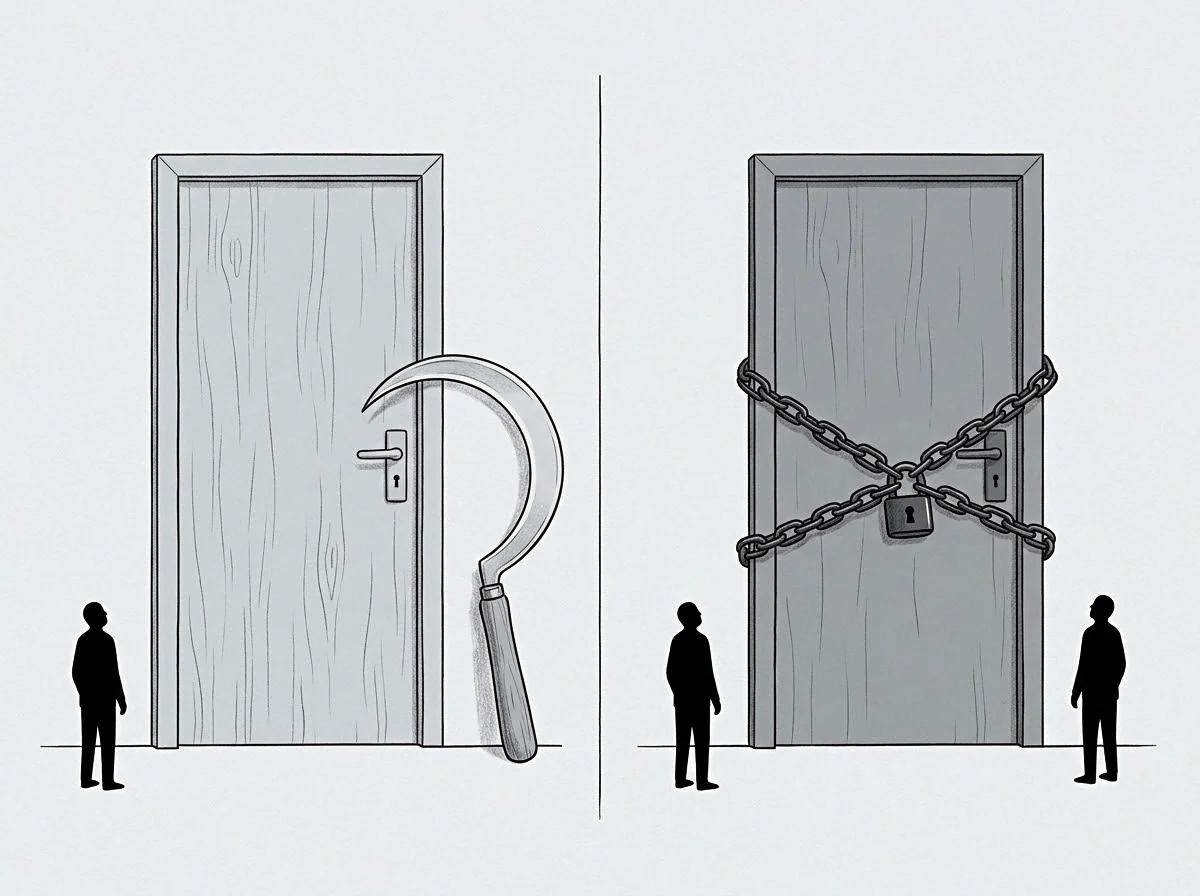
This transmission latency defines the structural wall of the organization. The wall represents the boundary of the current operational model, made of the friction and delays the system generates when attempting to coordinate across cadences. Pushing operational teams to execute faster against an unyielding governance wall produces localized overheating, burnout, and quality degradation without increasing systemic throughput.
Filtering Localized Noise from Structural Motion
Differentiating meaningful structural motion from local operational noise requires dynamic filtering protocols. Static aggregation filters treat all high-frequency variance as noise, hiding critical early warning signals of structural divergence. Dynamic sieves alter their sampling frequency based on observed variance thresholds.
When operational volatility exceeds acceptable bounds, the governance layer temporarily increases its sampling frequency to capture detailed telemetry until stability returns.
Dynamic sampling protocols prevent strategic governance from operating on aliased representations of operational reality.
Avoidance serves as a coordinate marker for structural friction along tier boundaries. When an operational process consistently routes around a formal governance checkpoint, that checkpoint marks a point of unmanageable cadence friction. Teams bypass slow formal reviews to preserve local execution speed, creating covert operational pathways.
These dark pathways maintain local velocity at the expense of enterprise visibility and structural alignment.
What systemic feedback structures allow high-frequency operational teams to self-correct strategic alignment without waiting for low-frequency executive review cycles?

Vector
Harmonizing structural operational velocity across divergent tiers requires establishing explicit vector reconciliation mechanisms. Forcing all tiers into identical operational cadences is inefficient. Strategic planning cannot operate on daily sprints, and frontline execution cannot pause while waiting for quarterly board reviews.
The objective is establishing asynchronous mathematical translation between feedback loops operating at different frequencies.
Asynchronous alignment relies on nested boundary conditions rather than real-time tactical control. Strategic tiers define bounded operational corridors rather than rigid step-by-step instructions. These corridors specify acceptable limits on resource consumption, quality metrics, and directional deviation.
Operational tiers execute at maximum frequency within these boundaries, making autonomous adjustments without triggering upward governance reviews. Upward reporting triggers only when execution vectors breach the defined boundary corridor.

Harmonizing Operational Speed Across Divergent Cadences
Corridor-based governance changes the nature of the feedback signal moving between tiers. Strategic reviews shift from evaluating completed historical actions to evaluating current vector trajectories against corridor boundaries. If the operational trajectory remains within the corridor, structural velocity is verified, and the local team retains full operational autonomy.
The strategic tier intervenes only when trajectory telemetry indicates an impending boundary breach.
This management by exception decouples evaluation cadence from execution cadence. High-frequency teams maintain rapid operational cycles without waiting for periodic executive sign-offs. Strategic leaders maintain macro-control over long-term direction without becoming overwhelmed by high-frequency noise.
The organizational sieve shifts from filtering data based on scheduled time intervals to filtering data based on geometric threshold breaches along the value axis.

Reconciling Cardinal Metrics with Ordinal Feedback Slopes
A persistent operational challenge stems from mixing cardinal measurement systems with ordinal feedback slopes. Strategic tiers track cardinal figures, such as capital expended, revenue realized, and units shipped. Operational tiers evaluate ordinal vectors, such as relative code quality, workflow velocity improvements, and customer sentiment trajectory.
Attempting to convert every high-frequency ordinal observation into a precise cardinal figure introduces immense measurement overhead that slows local execution.
Effective alignment protocols map ordinal slope directional trends to cardinal strategic forecasts through empirical baseline windows. By establishing historical correlation between specific ordinal operational vectors and subsequent cardinal results, organizations evaluate structural velocity in real time. If the ordinal slope along a lead indicator begins to flatten, the system detects a loss of structural velocity months before the cardinal metrics reflect the decay.
Structural operational velocity is ultimately limited by an organization’s capacity to convert operational error signals into vector corrections without destroying execution momentum. Friction inevitably accumulates along the interfaces between high-frequency tactical work and low-frequency strategic evaluation. Evaluating operational velocity across divergent organizational tiers requires examining the fidelity, latency, and phase alignment of the feedback loops that connect them.
When value serves as the governing axis and evaluation protocols accommodate multi-frequency operational rhythms, the enterprise converts localized task execution into sustained, non-linear strategic displacement.