
Measuring Localized Thermal Variations in Industrial Facility Plant Floors
Subsurface thermistor arrays and baseline subtraction isolate conductive plant floor heat flux from ambient air noise to evaluate structural risk vectors.
Slab
Industrial concrete floors experience thermal loading from subsurface process piping, heavy furnace footprints, and ambient atmospheric cycles. Heat flows down temperature gradients. Concrete acts as thermal storage.
Heat transfer through reinforced slab-on-grade structures follows Fourier’s law of thermal conduction, where heat flux density correlates directly with the material’s thermal conductivity and the spatial temperature differential across the slab profile. Standard industrial concrete mixtures present thermal conductivity values ranging between 1.4 and 2.2 Watts per meter-Kelvin. Variations in aggregate density, moisture saturation, and rebar concentration modify local thermal transmittance, producing localized heat dissipation channels across plant bays.
When high-temperature industrial processes interface directly with uninsulated slab surfaces, vertical and lateral thermal gradients develop rapidly. Surface temperatures beneath heat-treating furnaces or slag pouring zones can exceed 180 degrees Celsius, while the underlying sub-base remains near ground temperature at 12 to 15 degrees Celsius. This steep gradient induces non-uniform thermal strain throughout the concrete matrix, generating compression stresses on the upper slab face and tension stresses near the ground interface.
Thermal mass delays heat transfer through thick concrete, creating a surface temperature delta that trails subsurface heat inputs by several hours.
Surface flux lags deep heat. The thermal inertia of thick concrete foundations delays surface temperature manifestation, creating a temporal lag between peak heat application and observed surface thermal anomalies. In slabs exceeding 300 millimeters in thickness, subsurface heat accumulation continues to migrate laterally for hours after surface equipment deactivation, establishing hidden thermal reservoirs within the facility floor slab.
| Modality | Spatial Resolution | Depth Profile | Calibration Drift Window | Installation Timing |
|---|---|---|---|---|
| Distributed Fiber-Optic Sensing | 0.5 meters continuous | Subsurface embedment depth | 12 to 24 months | Pre-pour structural phase |
| Embedded RTD Array | Fixed point node spacing | Multi-depth vertical profiles | 6 to 12 months | Pre-pour structural phase |
| Surface Infrared Thermography | Millimeter field of view | Top surface boundary only | Per inspection pass | Post-construction operational phase |
| Heat Flux Transducer Pads | Discreet surface nodes | Surface interface boundary | 3 to 6 months | Retrofit operational phase |
Measuring these internal shifts demands continuous telemetry rather than spot checks. Infrequent surface temperature scans miss internal heat buildup during active production cycles. A temperature measurement taken before the floor reaches thermal equilibrium reflects ambient air changes rather than sub-slab heat transfer.
Array
Spatial density dictates whether local temperature spikes remain hidden between measurement nodes. Sensor array design for industrial floors balances spatial coverage against structural integrity and wiring channel complexity. Deploying discrete sensor points at excessive intervals creates monitoring blind spots where localized thermal variations escape detection.
Subsurface Sensor Placement and Spatial Geometry
Subsurface probes reveal hidden gradients. Continuous mapping relies on selecting appropriate physical transducer technologies embedded at specified depths during slab construction.
- Embedded Thermistor Strings provide fixed multi-depth sampling across targeted grid intersections, delivering continuous subsurface telemetry without exposing sensors to surface wear.
- Fiber-Optic Distributed Arrays capture continuous temperature profiles along kilometers of cable, measuring backscattered light spectrum changes along the sub-slab interface.
- Surface Heat Transducer Pads record local energy flow across the top surface, separating convective plant air transfer from conductive ground transfer.
Determining sensor node pitch depends on the target thermal plume radius. Heavy equipment footprints produce thermal plumes that propagate outward through the concrete at rates governed by the slab’s thermal diffusivity. Placing thermistors at 2.0-meter intervals along a rectangular grid ensures overlap of detection boundaries for thermal plumes exceeding 0.5 meters in diameter at the base.
Widening node spacing beyond the thermal plume radius converts continuous localized heating into an unrecorded background gradient.
Data validation demands continuous signals. Signal lines routed through concrete require protective conduit to withstand mechanical shear caused by slab settling and thermal movement. Sensor wiring termination boxes placed along perimeter walls provide accessible reference check points for routine calibration verification.
Establishing a 30-day baseline before machinery activation separates structural thermal loss from process heat.

Drift
Ambient plant temperature shifts continuously over 24-hour cycles, introducing noise into raw sensor signals. Thermal variations in industrial facility floors represent a composite signal combining external atmospheric changes, seasonal ground temperature shifts, and internal operational heat generation. Isolating operational heat flux from background environmental cycles demands systematic signal baseline subtraction.

Isolating Background Noise from Process Heat Signals
Diurnal solar heating of plant roofs elevates ambient facility air temperature during afternoon shifts, transferring heat downward into the top millimeter of the concrete floor. Conversely, underlying soil beds act as perpetual heat sinks, absorbing thermal energy from the slab base throughout winter operational windows. Raw telemetry collected without ambient decoupling attributes atmospheric surface heating to process machinery anomalies, skewing facility diagnostic data.
Take an industrial facility operating a 300-millimeter reinforced floor over a four-month summer-to-autumn window. Process equipment runs 16 hours daily, introducing a localized heat pulse of 45 degrees Celsius directly beneath the mounting pads. The facility operator reads a temperature elevation of 6 degrees Celsius at a subsurface sensor placed 1.0 meter from the load centroid.
Assuming thermal conductivity remains fixed at 1.8 Watts per meter-Kelvin, raw temperature readings without baseline subtraction mask a 3-degree ambient drop. The live delta calculation reveals an accelerating thermal footprint, whereas a cached historical mean displays a false steady state.
Sensor readings that fail to vary during facility downtime indicate transducer failure rather than thermal stability.
Executing accurate baseline calibration involves a structured sequential isolation protocol across facility operational phases.
- Record baseline sub-slab temperatures across 72 hours of complete facility downtime to establish baseline ground thermal equilibrium.
- Isolate diurnal plant air variations by fitting surface thermistor readings against coincident air temperature data.
- Subtract ambient atmospheric contributions from embedded sensor channels to isolate pure conduction deltas.
- Compare weekly directional thermal vectors to verify sensor integrity against physical conductive bounds.
Sensor baseline subtraction prevents false readings. Thermal lag masks deep movement. Ambient shifts distort sub-slab metrics.
Evaluating localized thermal variation without subtracting ambient atmospheric cycles leads facility operators to install redundant cooling systems under stable floor sections while active heat leaks continue unchecked.
Anomaly
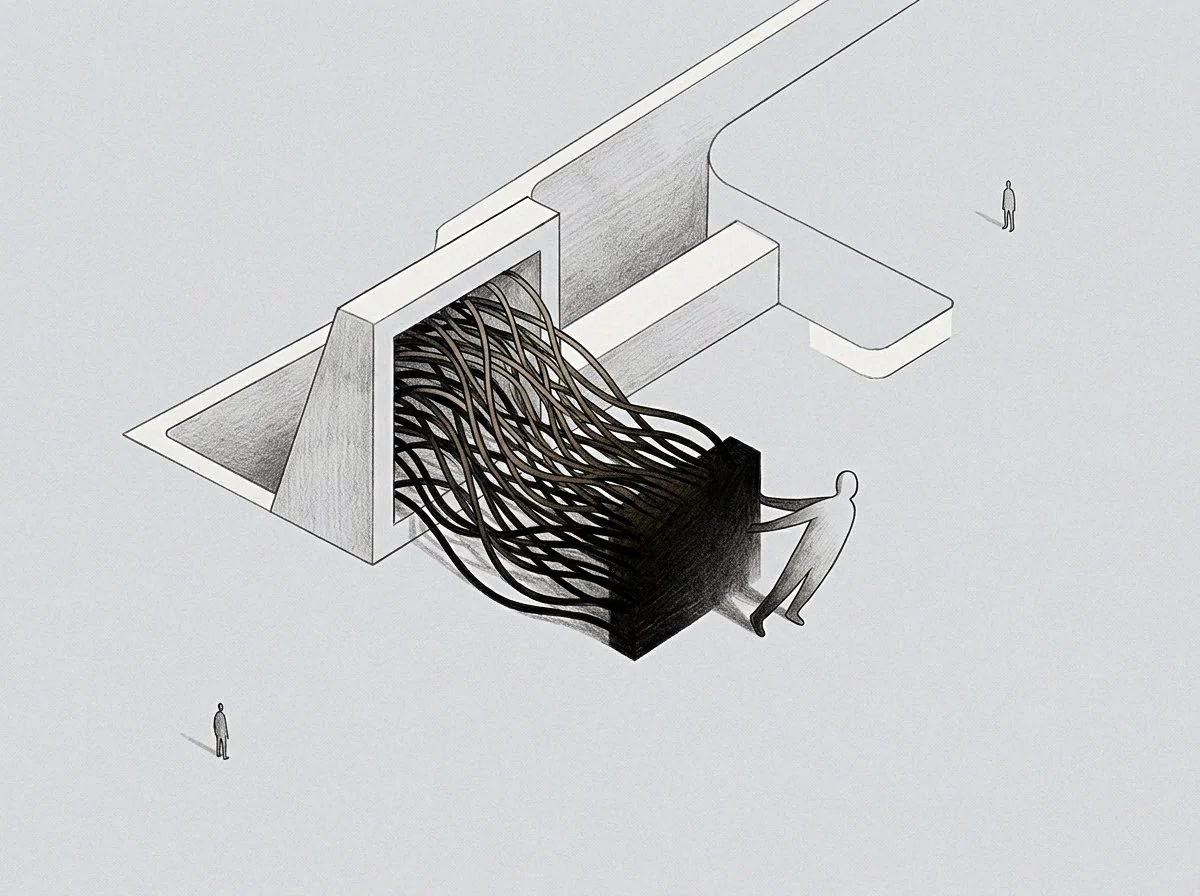
Subsurface structural defects disrupt expected thermal diffusion vectors through concrete slabs. Healthy concrete slabs exhibit continuous, predictable thermal decay curves radiating outward from heat sources. Discontinuities in thermal gradients signal internal slab curling, sub-slab void formation, moisture accumulation, or joint sealant breakdown.
Thermal Signatures of Structural Degradation
Air gaps created by sub-slab ground settling act as thermal insulation layers. When concrete loses physical contact with the sub-grade soil, ground heat dissipation stops along the void boundary. Heat accumulates rapidly within the isolated concrete section, generating a localized thermal hot spot detectable on the upper slab surface.
Conversely, ground water intrusion beneath the floor increases local heat extraction, creating a sharp localized cold sink within subsurface sensor networks.
Thermal expansion causes structural stress. Micro-cracks alter local conductive paths. Void spaces act as insulators.
Similar thermal conduction anomalies occur in aerospace heat shields and geothermal probe fields, where structural voiding alters thermal dispersion long before physical surface destruction manifests.
A sharp localized rise in floor surface temperature frequently marks joint sealant degradation long before physical cracks open.
Slab curling presents a distinct asymmetric thermal signature. Differential drying and thermal gradients cause slab edges to lift away from the sub-base, creating an air pocket along expansion joints. The edge temperature rises while the center remains tied to ground heat sink conditions.
Paraphrasing facility maintenance teams across heavy manufacturing sites, the floor surface stays within acceptable temperature limits during routine inspection, so the structural integrity underneath remains unchanged.
Remedy
Corrective interventions restore thermal stability by isolating heat sources or altering conductive pathways. Addressing high-gradient thermal anomalies prevents permanent concrete degradation, slab spalling, and foundation failure. Thermal isolation joints prevent stress.
Post-fix monitoring verifies thermal deltas. Cellular glass blocks deep heat.
Thermal Isolation Retrofits and Structural Decoupling
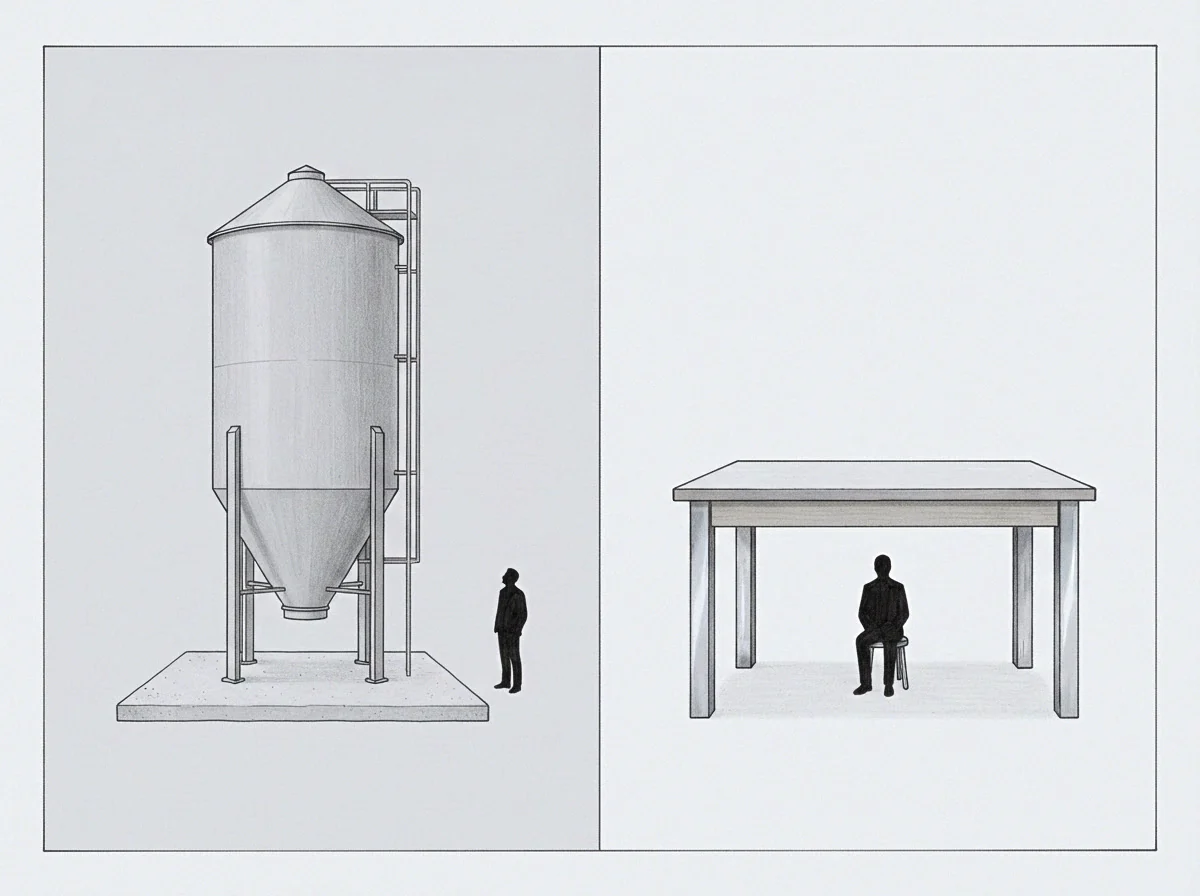
Installing thermal break barriers along equipment foundation perimeters limits lateral heat conduction into adjacent traffic bays. Closed-cell cellular glass insulation panels placed beneath heavy furnace slabs maintain high compressive strength while reducing thermal conductivity to 0.04 Watts per meter-Kelvin. Active sub-slab ventilation channels clear excess subsurface heat by circulating ambient air through embedded duct grids, stabilizing sub-grade moisture conditions.
Tracking post-intervention temperature deltas over a 90-day window confirms whether sub-slab insulation retrofit reduces conductive transfer to the foundation below baseline threshold levels.