
Resolving Authority Friction Between Automated Override Protocols and Strategic Human Operational Directives
Authority friction resolves through dual-key architectures that bind temporary human overrides to immutable secondary safety boundaries and time windows.

Clash

Contradictory Control Signals In Critical Operations
An automated safety governor throttles line pressure at 03:00 while the central operations log carries an active instruction to hold flow steady through the maintenance cycle. The valve follows the governor. Telemetry records the pressure drop, the throughput quota misses its margin, and the operator on duty is left holding two valid, incompatible mandates.
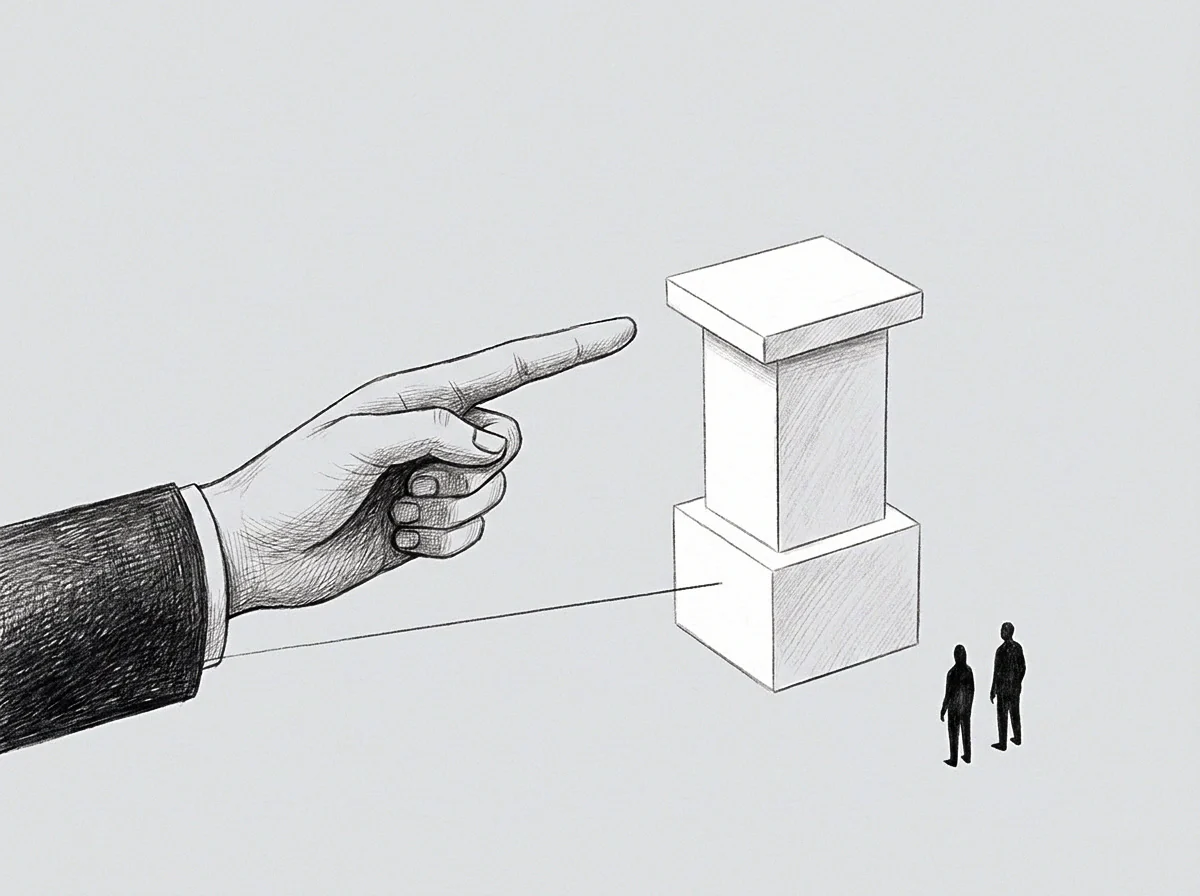
Authority friction occurs whenever a directive issued by human staff cuts across an automated control rule executing its programmed protection logic.
The control logic classifies the human input as an unauthorized disturbance. The operator sees the automated response as an impediment to production quotas. Both actions follow from legitimate operating parameters set in different tiers of the organization.
The friction turns into a problem when those tiers intersect without an explicit precedence rule to arbitrate them in real time.
Conflicting control signals generate operational paralysis unless the supervisory architecture enforces an explicit precedence hierarchy during execution.
Automated override routines track discrete numerical sensor boundaries. Operator directives balance priority rankings, commercial risk tolerances, and contextual assumptions that rarely map onto simple threshold values. When an unexpected condition surfaces, the governor isolates equipment to prevent local damage, while the human in the control room tries to protect total throughput.
That mismatch points to a fundamental structural gap in supervisory control systems.

Seam
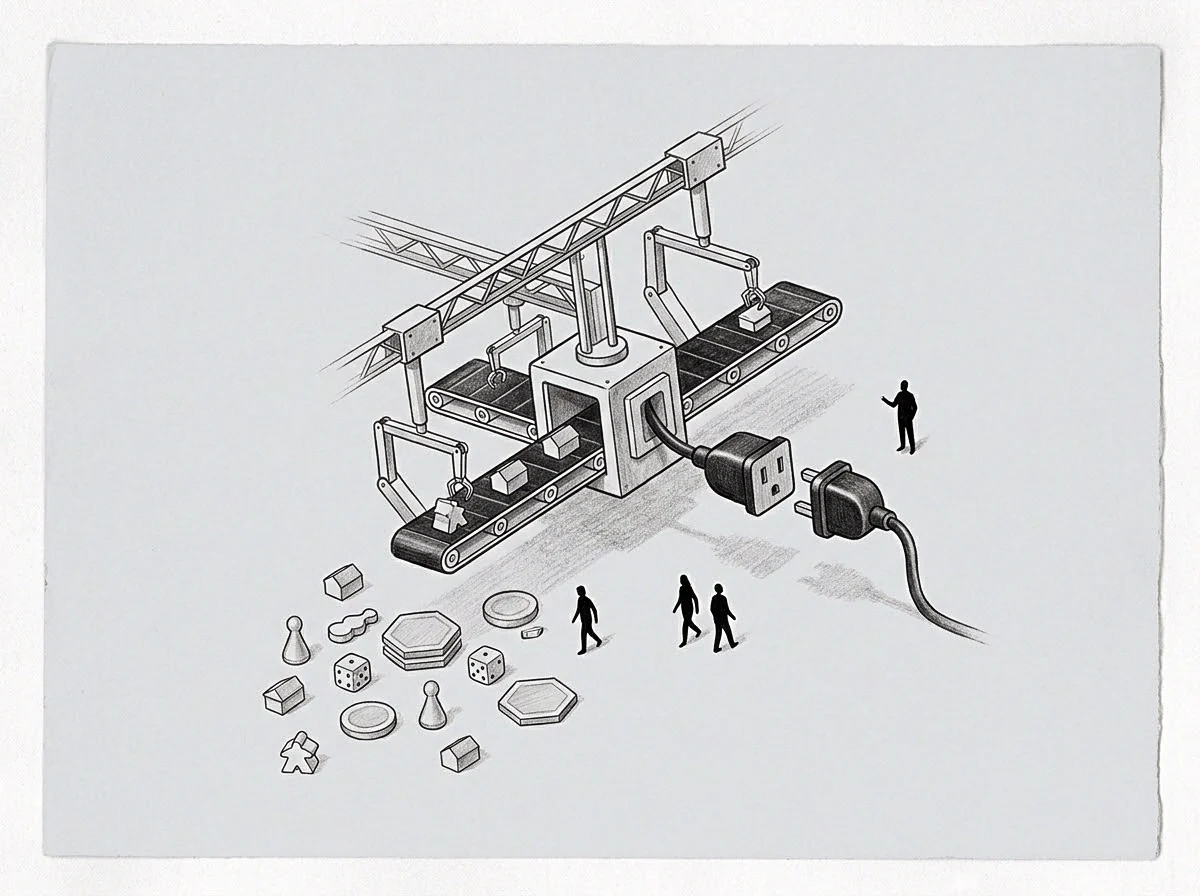
Architectures Of Control And Intervention Boundaries
Industrial control architectures run on layered loops partitioned by time scale. Fast physical regulation loops operate across milliseconds, tracking pressure, temperature, current, and voltage to enforce strict limits. Supervisory loops run across minutes, hours, or entire shifts, balancing immediate throughput against cumulative asset wear.
The boundary between those layers creates an operational seam where authority often turns ambiguous.
Plants once managed this boundary with hardwired emergency stops. Stripping power from the automation dropped control straight back to the floor. Modern distributed architectures discard that clean separation by weaving safety logic directly into continuous process feedback.
In current systems, manual overrides must run through algorithmic filters that check whether an operator’s intervention crosses hard safety limits.
The operator is no longer outside the loop. The human functions as an input variable within the very control system being adjusted. When an operator sends an instruction to bypass an automated interlock, supervisory software treats it as a request to evaluate rather than an instruction to execute.
That programmatic check is where control room friction builds.
| Layer Tier | Execution Window | Primary State Variable | Control Action | Default Precedence Authority |
|---|---|---|---|---|
| Physical Protection | 1 to 50 milliseconds | Thermodynamic and electrical limits | Deterministic shutdown or isolation | Hardcoded automated logic |
| Dynamic Process | 100 milliseconds to 5 seconds | Flow rates, pressure, speed variables | Closed-loop feedback regulation | Algorithmic setpoint control |
| Operational Supervisory | 1 minute to 1 hour | Batch targets, resource allocation | Dynamic setpoint adjustment | Collaborative operator control |
| Strategic Management | 1 shift to quarterly planning | Economic yield, contract delivery | Operational mode selection | Human executive directive |
Conflicting feedback paths operate within the operational tier itself. Protection routines measure instantaneous state vectors, tripping equipment whenever physical variables drift outside configured envelopes. Operators weigh risk against commercial penalties and restart complexity.
Neither side works from the full operating context visible to the other.
Lock
Invariance In Algorithmic Protection Routines
Automated protection routines run without nuance. If a sensor value crosses an established interlock threshold, the logic triggers isolation. The software does not weigh delivery deadlines, supply chain liabilities, or corporate commitments; it evaluates the live signal against its programmed limit and executes.
That rigid execution acts as a defense against operational bias under pressure. Crews facing urgent production deadlines tend to discount signs of mechanical failure to keep a process running. Automated safety rules remove that latitude, prioritizing physical equipment boundaries over schedule pressure by locking the equipment down.
An invariant protection protocol executes precisely because human operators under production stress normalize progressive operational deviance.
The lock becomes counterproductive when the trigger comes from sensor failure or ambient process drift. In an industrial boiler fitted with optical flame scanners, airborne dust or internal haze can cause detectors to register a false loss-of-flame, forcing an automated purge cycle. Even if operators confirm active combustion through external sight glasses and acoustic sensors, the safety protocol will reject a command to fire the igniter, imposing thirty minutes of downtime on a false premise.
The control room sees a rigid, unhelpful algorithm; the algorithm executes its programmed response against faulty data. When this happens often enough, technicians devise informal workarounds to fool sensor inputs and regain control. That adversarial posture between crew and control system degrades built-in safety margins.
Breach

Failure Cascades From Subverted Override Rules
When operational control lacks a formal path to resolve these conflicts, crews improvise unauthorized solutions. Technicians place jumpers across terminals, force software bits, or bridge relay outputs to suppress safety trips. These interventions circumvent automation to make human operating priorities take precedence.
In a continuous smelting line, an automated cooling interlock repeatedly halted feed because a thermocouple was misreporting high temperatures. The facility stood to lose fifty thousand dollars per hour in contractual downtime penalties. After three shutdowns, a maintenance technician placed a resistor across the thermocouple terminals, anchoring the temperature signal safely below the alarm threshold.
With the input artificially stabilized, the system resumed continuous operation.
Four hours later, the cooling jacket developed an actual thermal fault. The protective routine stayed quiet because the input circuit was clamped. Heat compromised the refractory lining, necessitating an emergency shutdown that incurred three million dollars in replacement materials and eighteen days of offline repairs.
A shortcut intended to protect hourly volume led to extensive physical damage.
- Interlock Bypassing involves jumping physical terminals or entering forced state overrides to suppress protective shutdowns without addressing underlying physical anomalies.
- Sensor spoofing alters input telemetry through software offsets or dummy electrical loads to prevent automated intervention logic from detecting genuine parameter violations.
- Alarm suppression floods central management consoles with acknowledged states to silence auditory warnings, removing operational feedback loops during high-risk transitions.
- Protocol decoupling disconnects automated supervisory subsystems entirely, isolating human control actions from real-time safety governor verification.
Unplanned interventions rarely remain local. Overriding an interlock on an upstream vessel transfers thermal and hydraulic strain to downstream equipment that is not configured for the surplus flow. Downstream automated systems then trip under the unmanaged load, producing an uncontrolled chain of opened breakers and shut valves.
Balance

Can Dual-Key Authorizations Eliminate Authority Deadlocks?
A dual-key supervisory model balances immediate physical limits against operating priorities by splitting override authority between sensor-based validation and tiered human sign-off. The automated safety routine keeps full authority to trigger an immediate, temporary trip when mechanical limits are breached. What it loses is the ability to enforce indefinite shutdowns against formal operational decisions.
The workflow requires a structured handshake across the operator, the software, and a designated authority. When a safety interlock trips, the operator cannot simply clear the alarm. The interface requires a documented override submission that captures specific operational parameters:
- The human operator specifies the mechanical hypothesis explaining the automated intervention, identifying whether the sensor state reflects corrupted telemetry or manageable physical deviance.
- The operational supervisor sets an enforceable time-bounded window during which the automated protection rule remains suspended, capping exposure to unmonitored operation.
- An independent secondary safety layer calculates secondary containment boundaries, ensuring that secondary thresholds initiate non-negotiable physical shutdowns regardless of human authorization.
- The governance system logs the entire transaction on an append-only audit trail, binding human intervention authority to legal and commercial accountability.
This workflow frames the override as an explicit operating contract. The directive takes effect only when the operator accepts procedural accountability inside an approved operating window. The safety framework maintains an absolute boundary: if secondary parameters cross critical thresholds, automatic trip routines execute immediately and reject manual cancellation.
A human override protocol remains safe only when bounded by an immutable secondary physical threshold that rejects human cancellation.
A petrochemical processing company tested this dual-key approach across a twelve-month baseline window across three cracking units. During the observation period, the installation recorded forty-two conflict events between automated safety setpoints and operational run directives. Under the dual-key framework, twenty-eight conflicts were resolved by authorized personnel identifying sensor calibration drift, avoiding an estimated sixty hours of unnecessary shutdown time.
In fourteen instances, the secondary automated containment boundaries triggered a full shutdown when process variables drifted toward genuine danger limits, successfully preventing physical rupture despite the active human run directive.
Mandate

Operationalizing The Resolution Protocol
Facilities need to formalize authority resolution in standard operating procedures long before an upset occurs. The control room display must present the specific logic driving an active trip alongside the physical parameter that triggered it. Opaque alarm panels showing generic error codes encourage operators to dismiss warnings and bypass controls.
Control room training must move past basic compliance drills to focus on boundary verification between human operators and automation. Operators need practice handling situations where algorithmic trips take absolute precedence, as well as scenarios where human oversight should override false instrumentation signals. Because the console interface is where control authority changes hands, it must clearly display which party governs each active setpoint.
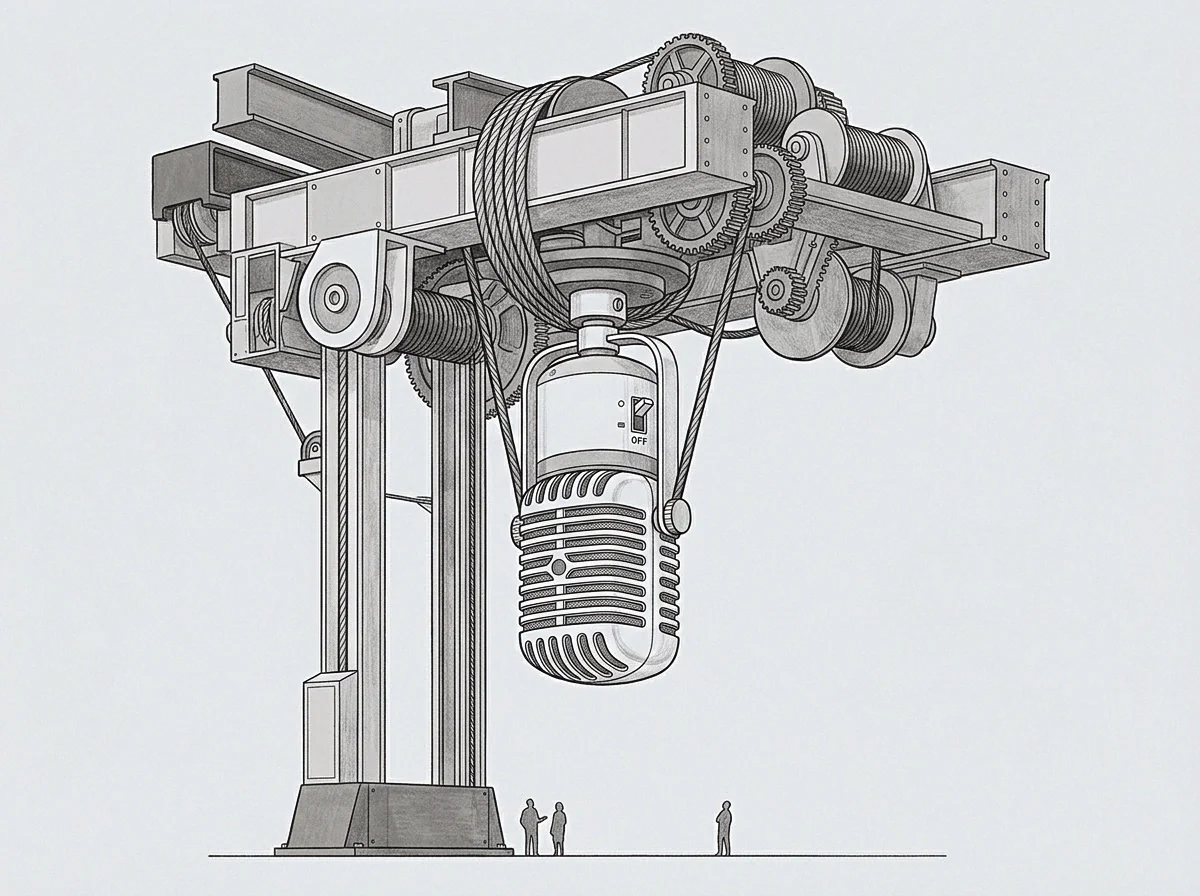
System architects should eliminate master hardwire bypasses that circumvent software governance entirely. Suspending an automated protection rule should always require completing an authorization sequence that establishes mechanical operating limits. Operational authority functions best within bounded parameters rather than blanket bypasses.
Whenever control conflicts arise, the system captures input telemetry, operator justification, and subsequent plant response. Engineering teams review these records weekly to adjust setpoints that generate nuisance trips during normal production. Refining baseline thresholds reduces spurious interventions and aligns automated protections with operational demands.
Under this operating model, an approved manual override suspends automated control solely for its registered time limit, restoring algorithmic safety supervision the moment the window closes.