
Resolving Multi-Entity Kinematic Interactions When Shared Pathways Degrade Into Asymmetrical Friction Baselines
Kinematic friction asymmetries resolve by decoupling shared pathways or throttling unimpeded entities to prevent shear failure across degraded operational links.
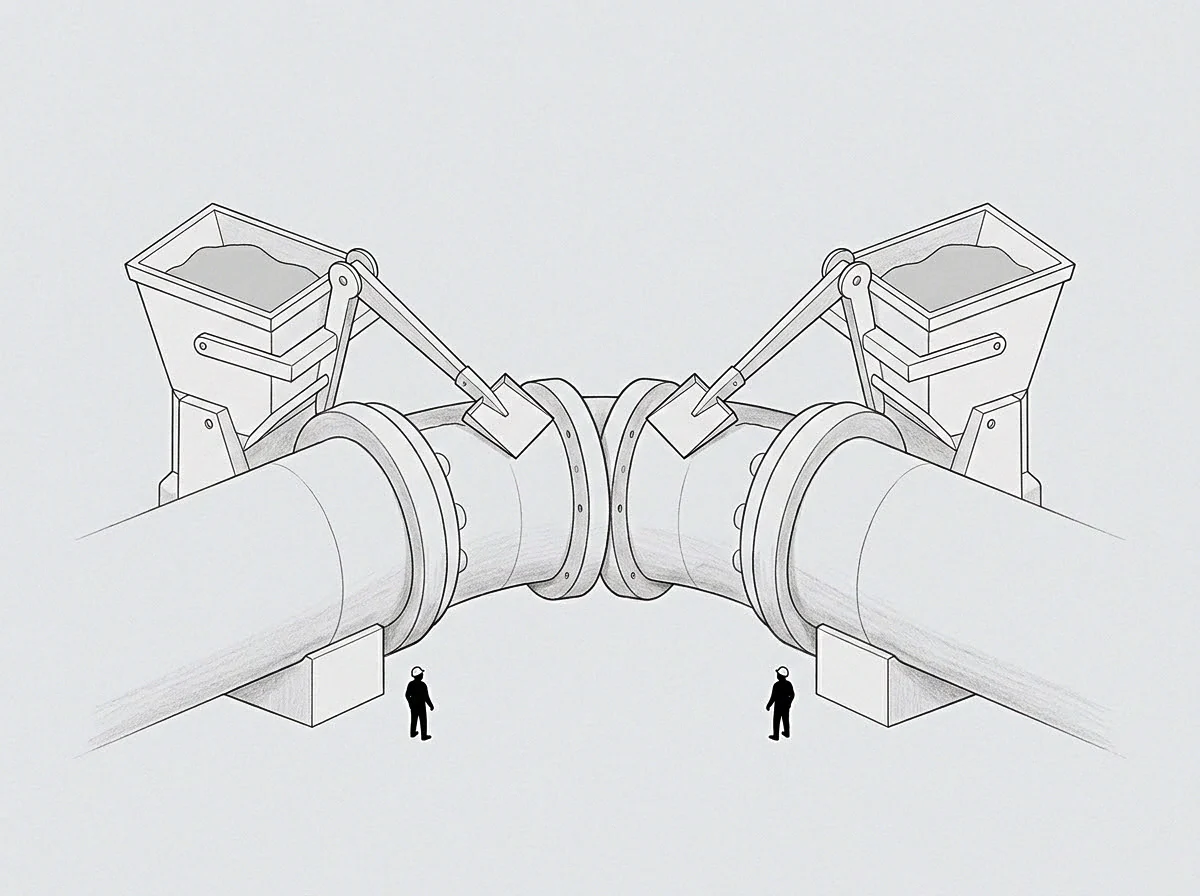
Track
Two operators sat beside a deployment terminal at midnight watching execution logs stall while downstream latency tripled on a shared staging branch. One operator completed routine migrations across five minutes. The second spent four hours patching unexpected dependency lockouts on identical hardware.
The shared branch had developed localized drag. When co-dependent actors traverse a mutual pathway, structural usage erodes the transit plane unevenly. Velocity differentials emerge without explicit operational divergence, leaving one person stalled while the other moves freely through identical functional territory.
Kinematic alignment between working systems depends on predictable resistance. A pipeline begins with uniform resistance across all participants, but over long cycles, high-frequency execution leaves structural deposits, state bloat, and undocumented dependencies behind. Those localized impediments alter the terrain for whichever party enters the channel later in the sequence, making momentum transfer unevenly across the interface.
A velocity differential between coupled entities produces mechanical stress whenever a shared pathway yields uneven contact resistance.
Kinematics measures motion through position, velocity, and acceleration without assigning moral weight to the forces producing them. When two operational actors share a pipeline, their interactions reflect raw contact physics. Acceleration depends on baseline tractive forces; if surface drag increases fivefold for one participant, maintaining identical cadence demands an unsustainable expenditure of energy, and the disparity widens quietly over time.

Differential Velocity Along Mutual Routes
Kinematic divergence occurs when one participant maintains high speed while their counterpart encounters sudden deceleration along what appears to be the same route. In organizational pipelines, an upstream deployment clears dependencies rapidly, leaving downstream integrations choked with stale lockfiles. The upstream operator perceives frictionless movement, while the downstream counterpart faces continuous traction loss as friction accumulates in the handoff.
Physical linkages between bodies under divergent drag baselines create rotational torque. The faster body pulls the slower body outward, deflecting both from their planned trajectory. In product delivery, this lateral deflection presents as rushed compromises, bypassed automated tests, and emergency hotfixes.
Misalignment compounds as tractive degradation deepens, and persistent neglect of contact asymmetry eventually breaks the mechanical link, tossing both actors into uncoordinated drifts that reduce mutual throughput.

Drag
Resistance baselines rarely degrade symmetrically. Surface abrasion concentrates where specific operational loads pass repeatedly. A database table accessed by read-only reporting tools maintains low frictional overhead, while the same table bombarded by synchronous transactional writes develops lock contention, index bloat, and connection pool exhaustion.
The subsequent reader encounters an abraded operational substrate.
Actors moving through degraded operational space experience an immediate slope shift. The gradient computed from value flattens as drag consumes output, and every unit of applied effort yields diminished displacement. The slower actor routes around the obstacle, generating informal workarounds that bypass established pipelines.
That avoidance functions as an accurate coordinate marker for unaddressed system degradation, tracing the exact boundary of the frictional hazard.
- Thermal accumulation consumes structural headroom through constant defensive retries and redundant validation routines.
- Momentum dampening halts forward displacement when unforeseen pipeline dependencies seize working memory, bleeding operational velocity across consecutive sprints.
- Deceleration shock occurs when a participant transitions instantly from clear runway into severe localized friction, twisting delivery schedules out of alignment.
Avoidance vectors accurately map the spatial distribution of unresolved resistance across degraded shared infrastructure.
Decoupling the movement of coupled actors demands a formal baseline audit. When friction shifts asymmetrically, treating both entities as identical kinematic particles introduces persistent prediction error. The heavier drag baseline requires direct measurement rather than rhetorical exhortation to move faster.
Speed remains a function of traction and resistance.
Can asymmetric surface drag be recalibrated without rebuilding the underlying conduit from scratch?
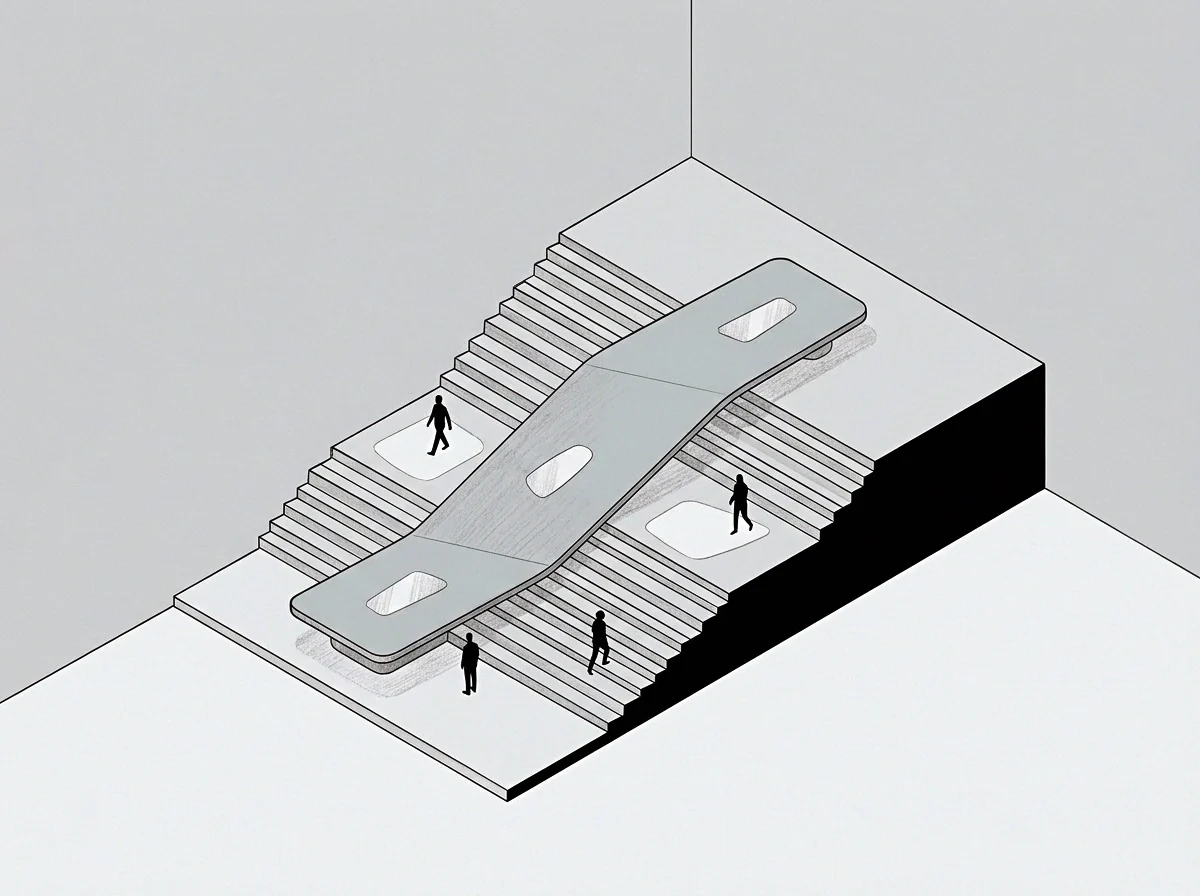
Shear
Lateral forces separate co-dependent entities whenever their velocities diverge beyond the elastic limit of their coupling. When one party decelerates sharply while the other surges forward, tension spikes across the interface. In operational teams, this rupture presents as misaligned roadmaps, mutual recrimination over missed deadlines, and unilateral decision-making.
The faster party views the slower party as dead weight, while the slower party views the faster party as reckless.
Kinematic interaction models demonstrate that rigid bonds between asymmetric movers guarantee structural failure. Elastic couplings absorb momentary velocity deltas, yet sustained baseline drag drains all available slack, keeping the elastic bond permanently stretched until a single minor external disruption snaps the connection entirely.
| Coupling Architecture | Drag Absorption Vector | Elastic Tolerance Limit | System Failure Mode |
|---|---|---|---|
| Rigid Mechanical Link | Zero lateral distribution | Low displacement buffer | Brittle fracture under sudden deceleration |
| Damped Elastic Buffer | Progressive momentum dissipation | Moderate strain absorption | Fatigue failure under continuous drag delta |
| Decoupled Kinetic Conveyor | Independent velocity channels | Infinite relative slip | Interface desynchronization without fracture |
The unspent volume of organizational potential sits precisely within the avoided frictional zones. By charting where actors deliberately slow down, operators identify the exact points of pathway degradation. A team avoiding a particular microservice architecture is not displaying cultural hesitation; the team is registering physical drag generated by technical debt, making the refusal to engage a rational calculation of tractive resistance.
Discomfort marks active computation against an unyielding boundary. When an operator hits severe frictional drag, intellectual energy shifts from delivery to friction management, diverting capacity, attention, and hours away from core value creation. The wall represents the physical limit of the existing operating model.
A rigid coupling operating across an uneven friction baseline will snap before it accelerates the impeded entity.
One actor simply moves faster because the shared conduit cleared its debris directly into the parallel lane.
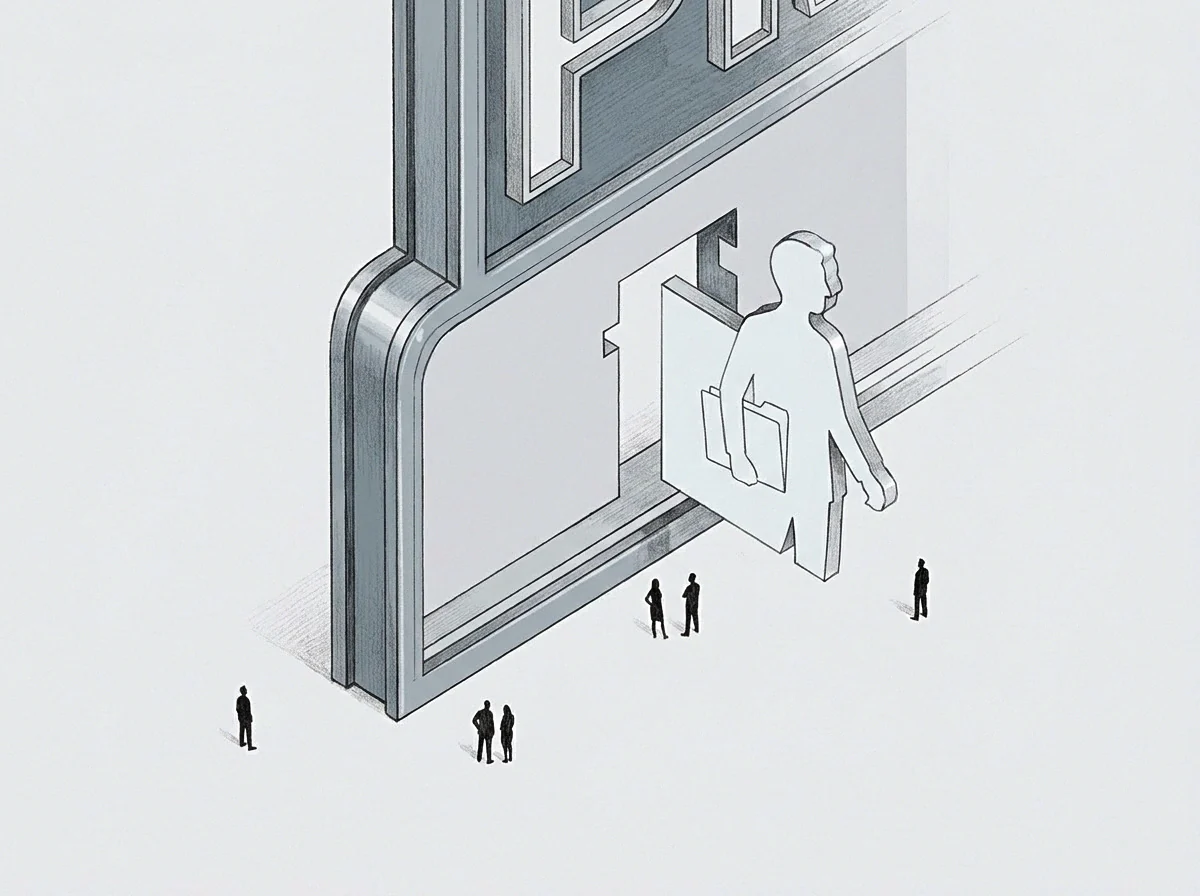
Table
Resolving kinematic disparity requires moving the contested variables onto an explicit plane of evaluation. The parties map their operational trajectories, drag coefficients, and energy expenditures without personal attribution. When friction is quantified as an objective drag baseline, mechanical remediation becomes straightforward, shifting the conversation from velocity expectations to tractive infrastructure.
A founder who builds without defining explicit friction thresholds invites compounding operational debt. Early in a project, low volume masks pathway defects, but as transaction density multiplies, subtle drag coefficients compound into insurmountable barriers. When the baseline shifts underneath the team, failure to formalize these thresholds early guarantees emergency re-architecting later.
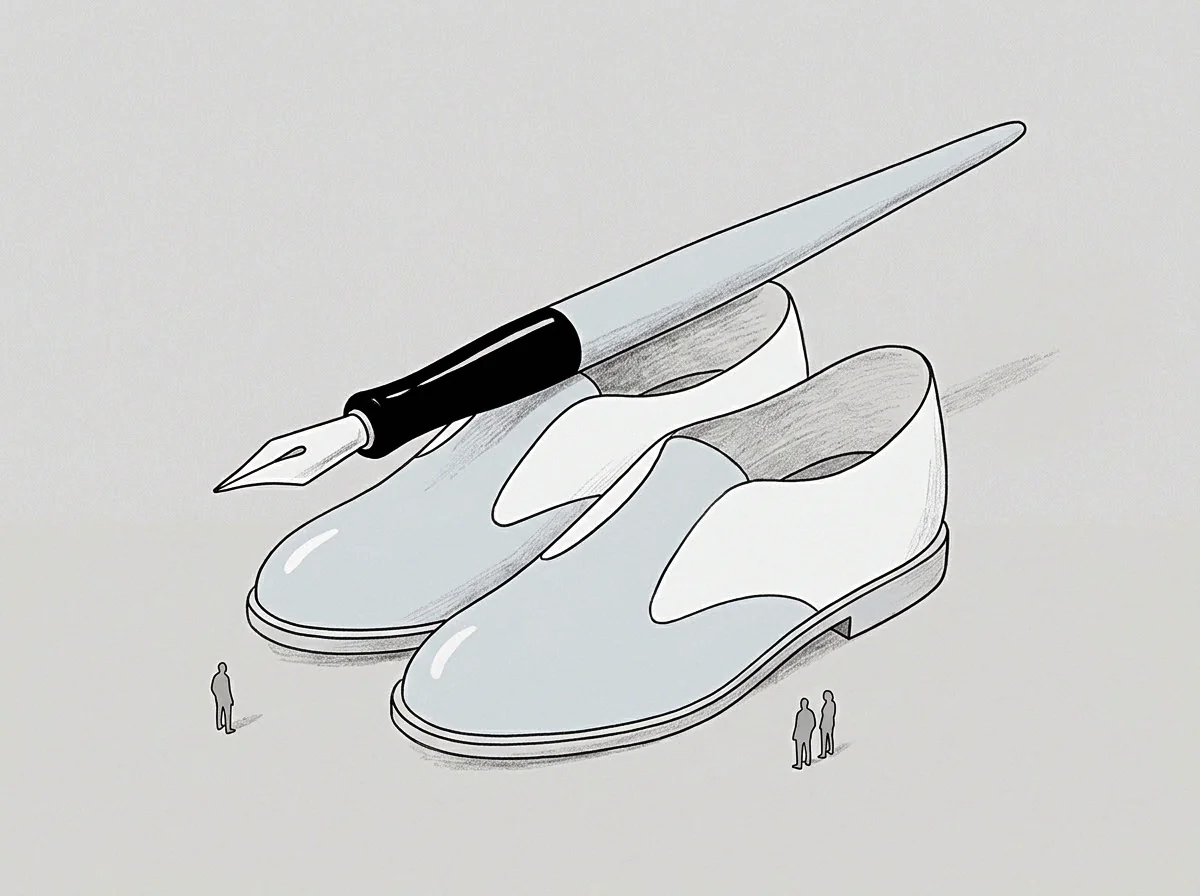
Does Differential Pathway Drag Compel Decoupled Movement?
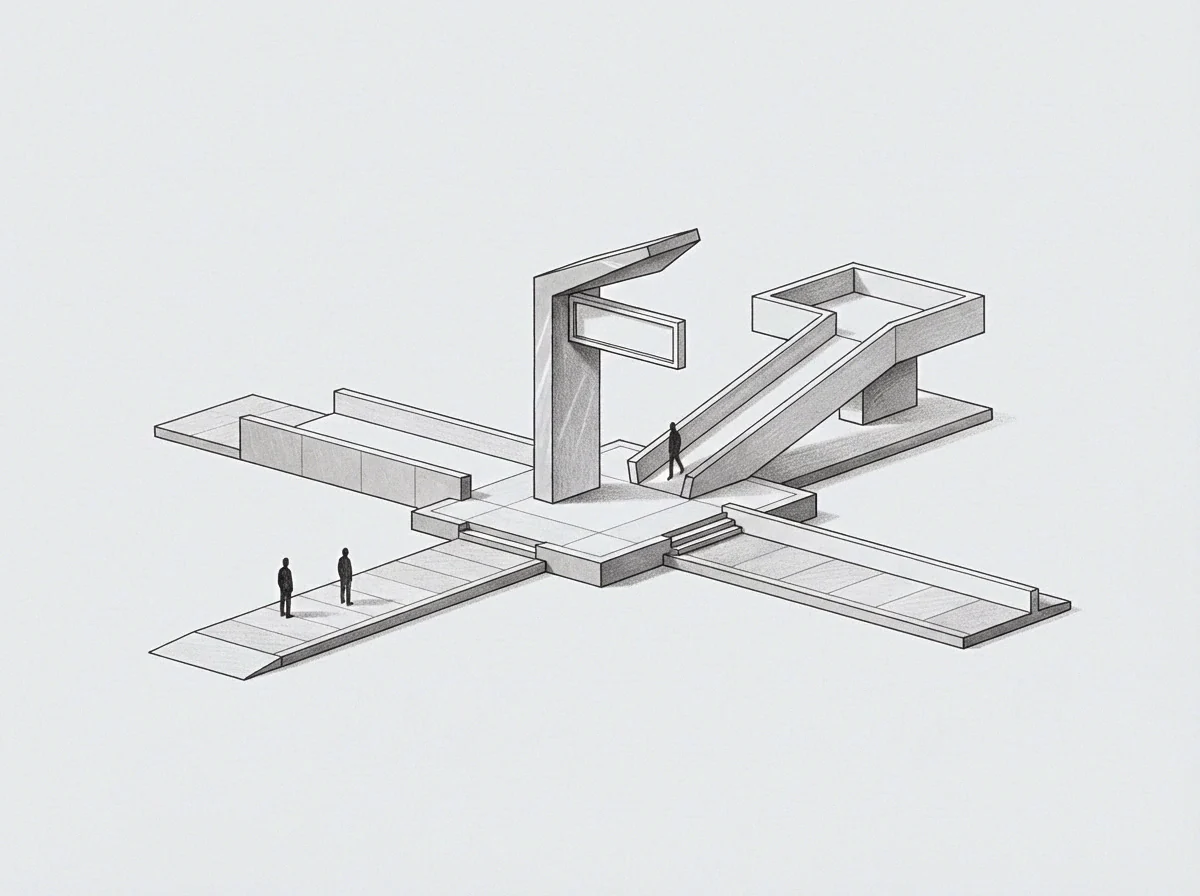
Decoupling resolves persistent kinematic friction. When two entities cannot traverse a mutual conduit at matching speeds, separating their transit paths eliminates destructive shear forces. Decoupled kinematic pathways permit each actor to calibrate velocity against an independent drag profile, whether through asynchronous communication conduits, independent deployment environments, or modular service boundaries.
- Index contact resistance by charting the precise operational steps where transit velocity collapses into defensive verification.
- Isolate kinetic conduits to ensure localized frictional spikes in one stream cannot transfer mechanical shock across shared dependencies, allowing each stream to balance its own load.
- Recalibrate transit cadence based on empirically observed tractive capacity rather than ungrounded scheduling targets, letting velocity follow substrate readiness.
Kinematic harmony does not mean identical speed. Harmonic interaction occurs when entities with divergent velocities move without destroying their shared operational link. Independent tracks allow varied cadences to coexist without lateral shear, preserving momentum across all participants by respecting physical limits.
When resistance increases along a mutual pathway, separating the transit lanes preserves momentum better than forcing uniform speed across damaged ground.
Brake
Intentional deceleration offers an indispensable mechanical intervention when asymmetric drag threatens system integrity. Applying a brake to the unhindered actor equalizes relative velocity across the shared interface; while counterintuitive to operators conditioned to maximize individual throughput, deliberate throttling halts the accumulation of destructive shear.
The boundary surveyor maps the wall as the perimeter where existing capacity ceases to function. When friction baselines degrade beyond recovery, stopping before impact prevents catastrophic mechanical failure. The pause allows debris clearance, pipeline refactoring, and surface recalibration, trading temporary momentum to protect system longevity.
Intentional mechanical throttling preserves coupling integrity whenever tractive differentials exceed structural tolerance limits.
Halting forward displacement exposes latent potential buried beneath chronic friction management. The energy previously wasted fighting surface drag redirects into structural remediation. The negative gradient mirrored above the baseline reveals the latent capacity awaiting release once the pathway returns to uniform resistance, transforming drag into clean propulsion.
The inclusion of an automated throughput throttle clause recalibrates execution speed the moment differential processing latency exceeds twenty milliseconds.