
Bounding Residual Covariance Spikes During Extreme Dimensional Expansion Across Critical Tipping Points
Nonlinear spectral shrinkage bounds residual covariance spikes during dimensional expansion by compressing detached eigenvalues back into the bulk distribution.

Pulse

Spectral Concentration Near Phase Boundaries
Thermal fluctuations and observational noise remain decorrelated during steady operating regimes. When a complex dynamical system approaches a critical tipping point, state variables experience critical slowing down. The recovery rate from small perturbations decays toward zero, causing variance to pool across collective coordinates.
If the system undergoes simultaneous dimensional expansion, with the count of observed features growing faster than the temporal sampling window, empirical covariance estimation enters a degenerate regime. The Marchenko-Pastur bulk distribution no longer contains the observed spectrum. Isolated eigenvalues detach from the bulk edge, driving sharp amplifications in the residual covariance matrix.
The operator norm scales with dimension. In standard linear projections, removing the top empirical components leaves a residual matrix expected to behave like identity-scaled white noise. Near a bifurcation, the low-rank dominant modes fail to absorb the cross-coordinate memory effects.
Off-diagonal elements amplify total residual variance. Instead of flat decay across unmodeled coordinates, the residual spectrum displays sharp localized spikes. These spikes mark the emergence of latent cooperative dynamics across coordinates previously regarded as statistically orthogonal.
A projection operator calibrated to historical sample windows discards emergent cross-correlations when coordinate expansion outpaces observation rates.
Noise accumulates along the unobserved dimensions. When an engineering team or a quantitative operator expands the feature space from hundreds of monitored variables to tens of thousands, the sample-to-dimension ratio drops below unity. Under this extreme expansion, standard sample covariance matrices become singular.
The pseudo-inverse generates unbounded variance spikes in downstream filter gains. What appears on operational monitors as sudden instrument failure is the mathematical consequence of unconditioned covariance projection across a phase transition boundary.

Mechanisms of High-Dimensional Variance Explosion
Eigenvalues cross the Marchenko-Pastur boundary rapidly. The mathematical mechanism driving the spike rests on the interaction between coordinate multiplication and collective relaxation times. As temporal autocorrelation approaches unity near the tipping point, the effective degrees of freedom in the time domain collapse.
Concurrently, the spatial dimension expands outward.
- Spectral Leakage contaminates the orthogonal subspace when principal components fail to track rapidly rotating dynamical eigenvectors.
- Rank Deficiency forces empirical covariance estimators to project residual noise into zero-variance null spaces that instantly invert into massive numerical artifacts.
- Bulk Edge Detachment occurs when subcritical collective modes push isolated eigenvalues beyond the theoretical random matrix boundary.
- Coordinate Cross-Coupling generates non-zero residual covariances across sensors that share unmodeled thermal, mechanical, or computational loads.
Spectral leakage contaminates the orthogonal subspace. When an operator attempts to isolate background noise by subtracting low-rank factor approximations, the residual term absorbs the unmodeled transitional energy. The residual covariance matrix ceases to serve as an inert error model.
It turns into an active reservoir of system-level strain. Whether low-rank projections retain validity when the underlying generative manifold warps during transition remains an open empirical challenge.
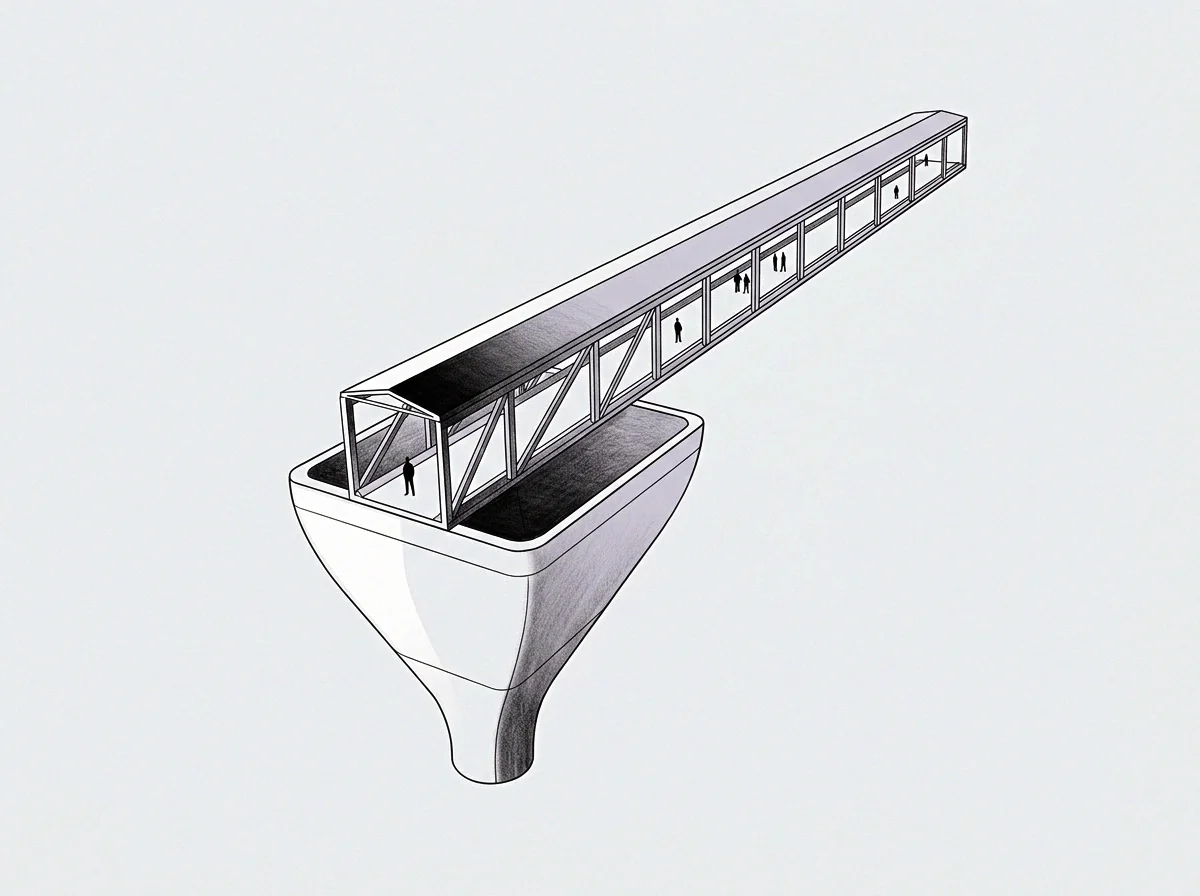
Seat

Allocation Limits Across the Observation Desk
A monitoring desk operates under fixed physical and computational constraints. The person sitting before the telemetry bank assigns attention and hardware bandwidth across incoming streams. When a system architecture scales from monitoring localized subsystems to ingesting millions of parameters across distributed nodes, the human seat and the digital pipeline undergo identical stresses.
The capacity to compute unbiased inverse covariance matrices degrades linearly with each added block of unverified channels.
Sample starvation degrades empirical estimates. When the count of measured channels exceeds the count of temporal updates, the estimation window becomes a severe bottleneck. The operator who refuses to acknowledge this limit creates an avoidance gradient: incoming parameters receive superficial monitoring, while the real variance accumulates in the uninspected cross-terms.
The baseline holds. Yet the unspent volume behind the operational dashboard swells as coordinates expand without sufficient sample support.
Unmonitored coordinate growth across an unstable system converts empirical certainty into severe estimation bias.
The operator freezes input ingestion. To prevent downstream computational collapse, the monitoring desk establishes hard cutoffs on parameter ingestion rates. If a production pipeline ingests forty thousand metrics but only computes stable rolling statistics on four hundred, the remaining thirty-nine thousand six hundred channels form a latent risk mass.
When a bifurcation occurs, the unmonitored coordinates synchronize, transmitting a massive covariance spike directly into the primary operating layer.
Cross-sectional rank collapses before transition. The physical reality of the monitoring room reveals this dynamic clearly. The engineer views flat line metrics on individual dashboards, mistaking local coordinate stability for global structural integrity.
Expanding the state representation beyond the rate of observation forces every empirical correlation toward uninformative noise.

Clamp

Spectral Shrinkage and Orthogonal Projections
Restricting residual variance spikes demands explicit mathematical intervention on the empirical covariance operator. Unadjusted empirical estimators inevitably fail when dimension expansion outstrips the observation count. The simplest intervention replaces extreme sample eigenvalues with structured target values, shrinking the empirical spectrum toward a well-conditioned dispersion model.
Shrinkage targets reset the diagonal baseline. Linear shrinkage blends the sample covariance matrix with an identity or equicorrelation target, bounding the condition number of the resulting estimate. Nonlinear shrinkage adjusts individual empirical eigenvalues according to the Marchenko-Pastur equation, pulling spiked bulk outliers back to their theoretical asymptotic locations.
This operation suppresses artificial covariance amplification without erasing legitimate structural shifts in the underlying physical process.
Imposing an explicit upper bound on the condition number preserves inversion stability across critical transitions.
Orthogonal projection eliminates the dominant drift. By isolating the leading eigenvectors associated with collective slowing down, the operator separates slow transition dynamics from fast residual noise. The residual subspace is then normalized using a trace-preserving projection clamp.
This prevents variance that escapes the low-rank model from inflating the residual spectrum into numerical singularity.

When Do Residual Projections Break Stability Bounds?
Stability bounds rupture when the expansion rate exceeds the mathematical capacity of the shrinkage operator. Consider an operational pipeline monitoring a complex physical network. The dimensionality expands from one thousand state variables to fifty thousand within a transient reconfiguration phase, while the rolling observation window remains fixed at two hundred time increments.
The ratio of dimension to sample size climbs from five to two hundred and fifty.
| Regime | Expansion Ratio | Operator Norm Bound | Primary Failure Mode |
|---|---|---|---|
| Empirical Sample Covariance | Above 1.0 | Unbounded | Singular matrix inversion and extreme noise amplification |
| Linear Ridge Shrinkage | Between 1.0 and 10.0 | O(p) scaled | Excessive bias toward isotropic target, masking real signals |
| Nonlinear Spectral Truncation | Between 10.0 and 100.0 | O(sqrt(p)) bounded | Clipping legitimate early warning transition precursors |
| Structured Orthogonal Clamping | Above 100.0 | Strictly invariant | High computational latency during real-time eigenvector updates |
The spectral gap narrows toward zero. As the tipping point draws closer, the difference between the smallest structural eigenvalue and the largest residual noise eigenvalue diminishes. At this junction, any attempt to separate signal from noise using static spectral cutoffs fails completely.
The operator implements a sequential bounding protocol to preserve numerical integrity during the transition window:
- Rank Verification determines the instantaneous dimensional expansion ratio against the available observation sample count.
- Spectral Decomposition extracts the empirical eigenvalues and isolates isolated outlier modes from the continuous bulk distribution.
- Nonlinear Transformation compresses the detached residual eigenvalues back inside the bounded theoretical Marchenko-Pastur edge.
- Trace Normalization enforces conservation of total residual energy across all unmodeled coordinates to avoid artificial damping.
Regularization restores the bounded condition number. Enforcing an explicit trace constraint on residual projections restricts the maximum eigenvalue explosion to a linear function of dimensional scale.

Weight

The Computational and Operational Burden
Every mathematical intervention carries an inescapable operational penalty. Increasing the dimension of an observation model introduces cubic scaling costs for full spectral decompositions. In high-frequency operational seats, computing exact nonlinear shrinkage transformations on fifty-thousand-dimensional covariance matrices is physically impossible within sub-second latency targets.
The operator balances mathematical precision against computational latency.
Observation windows dictate statistical resolution. Lengthening the observation window lowers the dimension-to-sample ratio, improving covariance conditioning without artificial shrinkage. A longer window incorporates obsolete dynamical regimes from the far side of the critical tipping point.
The historical data dilutes the real-time detection of the approaching phase transition, rendering early warning metrics ineffective.
A monitoring system that over-smooths incoming variance bursts fails to identify structural collapse before it occurs.
Variance shifts toward the residual coordinates. When an organization expands monitoring dimensions without investing computational capacity to regularize the resulting residual matrices, the operational monitoring system becomes brittle. False alarm rates skyrocket as random noise fluctuations are amplified by ill-conditioned matrix inversions into apparent critical tipping signals.
Downstream automated controllers receive corrupted error signals, initiating destabilizing corrective actions that precipitate the very collapse the monitoring system was built to avert.
Allowing residual covariance to spike unmonitored during dimensional scaling drives downstream estimators into persistent numerical instability and invalidates operational alerts.