
Calculating Volumetric Buffer Depletion Across Asynchronous Message Processing Systems
Volumetric buffer depletion measures the differential between payload byte ingress rates and consumer drain capacity to prevent heap exhaustion.

Arrival
Inbound telemetry streams introduce memory demand long before downstream worker threads complete their execution cycles. When payload ingress outpaces worker consumption, queue memory expands past baseline allocations. Most stream ingestion designs count incoming units rather than measuring total byte mass across the wire, creating a false metric of stability because individual message sizes frequently vary by several orders of magnitude during operational spikes.
A message queue receiving ten thousand messages per second at an average size of two kilobytes places a manageable twenty megabytes per second of volumetric pressure on memory. The same system receiving ten thousand messages per second at an average size of five hundred kilobytes demands five gigabytes per second of memory allocation. If consumer threads read messages based on static batch counts, the rate of volumetric accumulation outpaces physical memory bounds.
The total volumetric rate of change equals the mean byte ingress per second minus the total bytes written to persistent storage or downstream dependencies over the same interval.
Volumetric accumulation accelerates whenever incoming payload sizes expand, even while message arrival counts remain perfectly stable.
Calculating the true rate of ingress requires real-time sliding windows that evaluate total payload volume. Relying on average payload calculations over extended durations masks transient spikes that cause sudden heap exhaustion. Operational safety depends on measuring peak volumetric throughput over sub-second resolution intervals.
- Instantaneous Ingress Mass represents the aggregate byte size of all unread messages residing in memory at a specific millisecond timestamp.
- Volumetric Accumulation Delta defines the differential between the inbound payload rate and downstream throughput capacity.
- Payload Variance Index measures the ratio between peak payload size and median payload size within an ingestion window.
When the ingress contract specifies maximum volumetric bounds rather than arbitrary item counts, the ingestion layer rejects oversized payloads before memory reservation occurs.
Tank
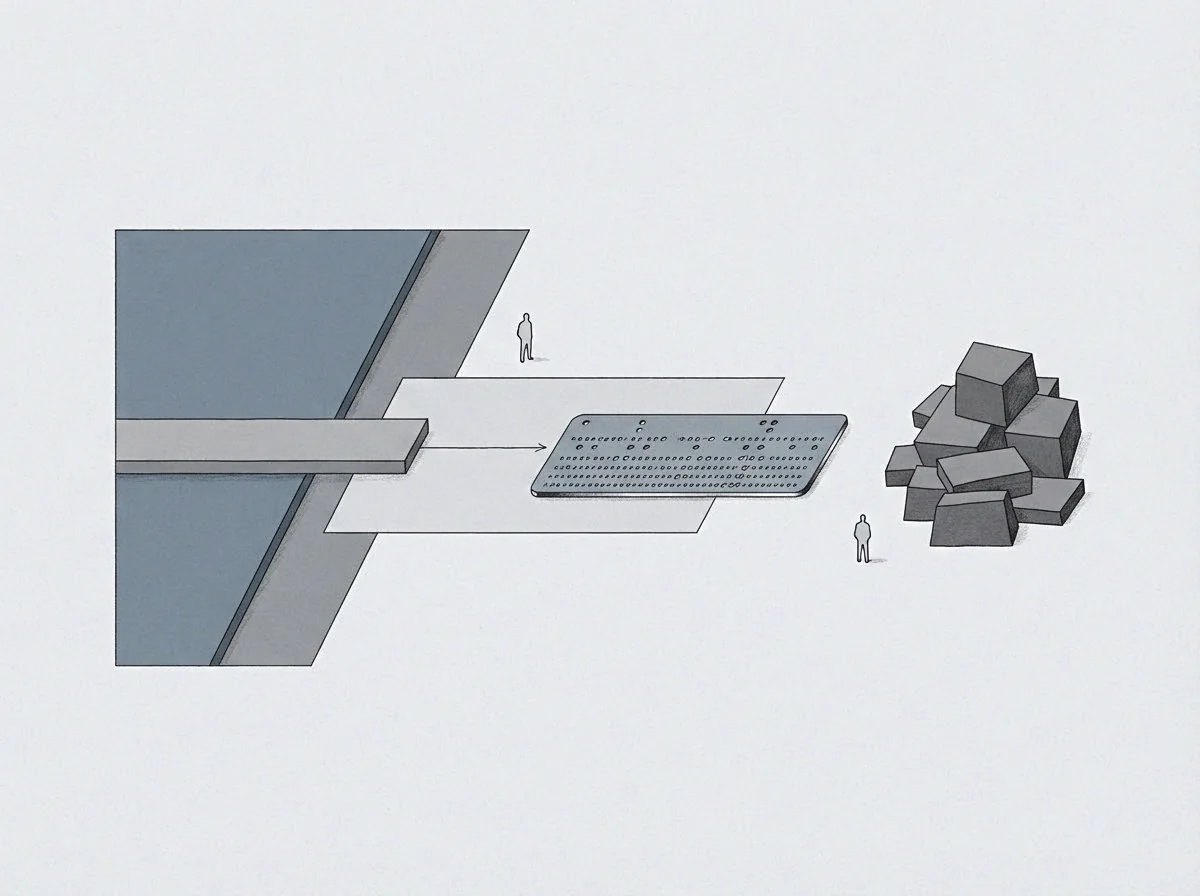
Physical memory allocations for asynchronous queues function as temporary containment structures designed to cushion transient operational friction. Without explicit byte-level constraints, operating system socket buffers and application heap layers absorb uncontrolled volumetric expansion. When garbage collection cycles occur under heavy memory pressure, consumer execution stalls, compounding the rate of accumulation.
Bounding memory requires evaluating how different architecture patterns hold unprocessed message volume. Fixed allocations dedicate static byte arrays to prevent unexpected heap expansion, whereas dynamic allocation structures grow until system thresholds trigger defensive routines.
| Strategy | Ingress Latency | Peak Memory Overhead | Garbage Collection Impact | Recovery Speed |
|---|---|---|---|---|
| Fixed Volumetric Allocation | Low | Bounded | Minimal | Immediate |
| Dynamic Ring Buffering | Very Low | Variable | Moderate | Fast |
| Leaky Bucket Queueing | Moderate | Strictly Controlled | Low | Predictable |
Choosing an inappropriate containment model leads directly to unrecoverable process crashes when inbound bursts exceed physical RAM capabilities.
Static message count limits fail to prevent process failures when payload byte mass exceeds allocated heap space.
A system operating under unconstrained dynamic memory allocation exposes surrounding services to resource starvation. As queue depth expands volumetrically, page cache availability drops, slowing down read operations across concurrent processes. The resulting system instability forces process restarts, destroying in-flight volatile data that lacked persistent backing.

Drain
Consumer processing capacity establishes the lower boundary of volumetric depletion performance. Downstream worker threads must parse incoming byte payloads, execute database operations, and commit acknowledgments before memory clears. If downstream external services experience latency degradation, worker threads stall while holding allocated memory, causing instantaneous buffer depletion capacity to drop toward zero.
The mathematical representation of volumetric depletion relies on the differential between consumption throughput and incoming payload mass. Let ingress volume rate be defined as V_in in bytes per second and egress rate as V_out in bytes per second. The depletion delta over time t follows the relation ΔV = (V_in – V_out) t.
When V_out exceeds V_in, the buffer clears at a rate directly proportional to worker thread concurrency and payload write speed.

What Determines Maximum Sustained Throughput Under Bursts?
Maximizing sustained throughput requires aligning consumer batch byte sizes with underlying hardware storage sectors and network packet limits. Garbage collection adds latency, while processing small batches creates unnecessary transaction overhead; conversely, oversized batches prolong lock duration and elevate volatile memory holdings.
In a municipal stormwater management system, surge basins capture sudden rainfall to prevent localized flooding downstream. The basin does not prevent rain from falling; it converts an unpredictable peak rate into a controlled egress velocity. Asynchronous software queues operate on identical principles, translating erratic message ingestion into a predictable computational workload.
System failure occurs when consumer thread concurrency remains fixed while payload byte volume scales beyond network interface capacity.
Calculations of depletion rates often assume static consumer efficiency across prolonged operating windows. Queueing theory establishes that as resource utilization approaches maximum capacity, queue latency grows exponentially rather than linearly. When worker node memory reaches saturation, CPU cache line invalidation increases, causing processing times per byte to double.
Operating an asynchronous queue above eighty percent volumetric capacity consistently degrades total downstream depletion rates.
Shedding
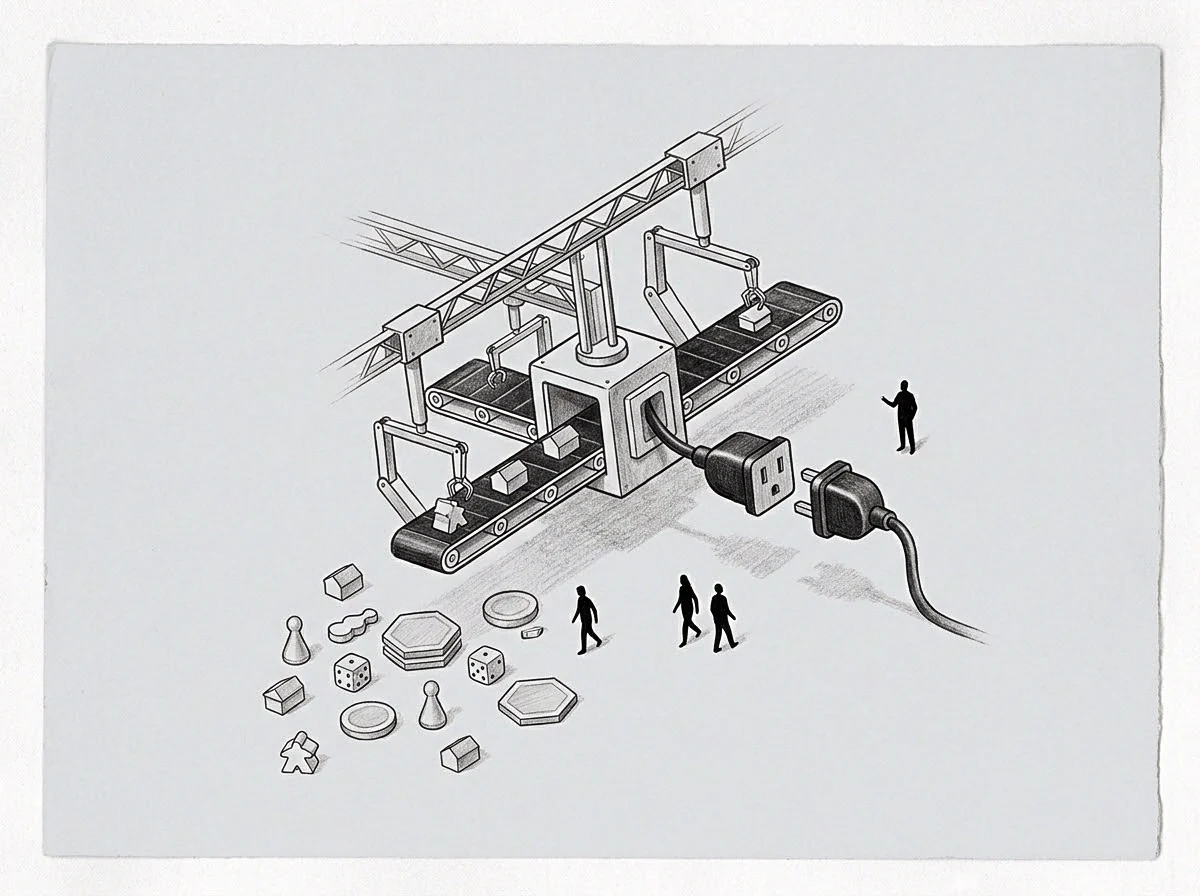
When inbound payload volume exceeds maximum processing capacity and physical memory boundaries near exhaustion, systems activate defensive load shedding. Dropping or offloading incoming messages preserves operational integrity for messages already held within memory structures. Without programmatic load shedding, the entire processing node halts when memory allocation requests fail.
Executing controlled shedding requires clear criteria based on volumetric saturation thresholds:
- Monitor real-time heap usage and active byte storage across all queue channels.
- Identify low-priority message categories configured for immediate shedding during volumetric pressure.
- Redirect excess inbound payload volume to secondary cold storage or dead-letter persistent topics.
- Reject new incoming execution requests at the edge API gateway until buffer volume drops below safety limits.
Implementing tail dropping based strictly on byte metrics ensures that large payloads get rejected first during emergency memory pressure events, preserving buffer availability for high-priority operational payloads.
When downstream services cannot handle current payload volume, the system drops incoming non-critical messages at the network layer.

Headroom
Maintaining operational stability across asynchronous message processing architectures demands continuous volumetric monitoring and dynamic capacity calibration. Systems that preserve state across restarts and calculate real-time byte depletion deltas adjust worker thread allocation before memory boundaries experience critical pressure.
Safety margins calculated from dynamic sliding windows prevent catastrophic buffer exhaustion during unexpected traffic spikes.
Establishing predictive depletion calculations involves sampling byte ingress metrics over sliding historical windows. Analyzing the gradient of volumetric accumulation provides early warnings, enabling automated scaling mechanisms to provision additional downstream processing nodes prior to buffer saturation.
Calculating volumetric buffer depletion transforms unpredictable asynchronous ingress into a measurable, controllable vector. Defining memory limits by total byte payload rather than arbitrary message count provides absolute operational boundaries. Systems engineered around exact volumetric calculations maintain predictable processing pipelines regardless of inbound payload variance.