
Operational Alignment Signals Across Multilayered Organizational Systems
Organizational alignment signals decay across administrative layers as local units optimize work along paths of least resistance to minimize operational friction.
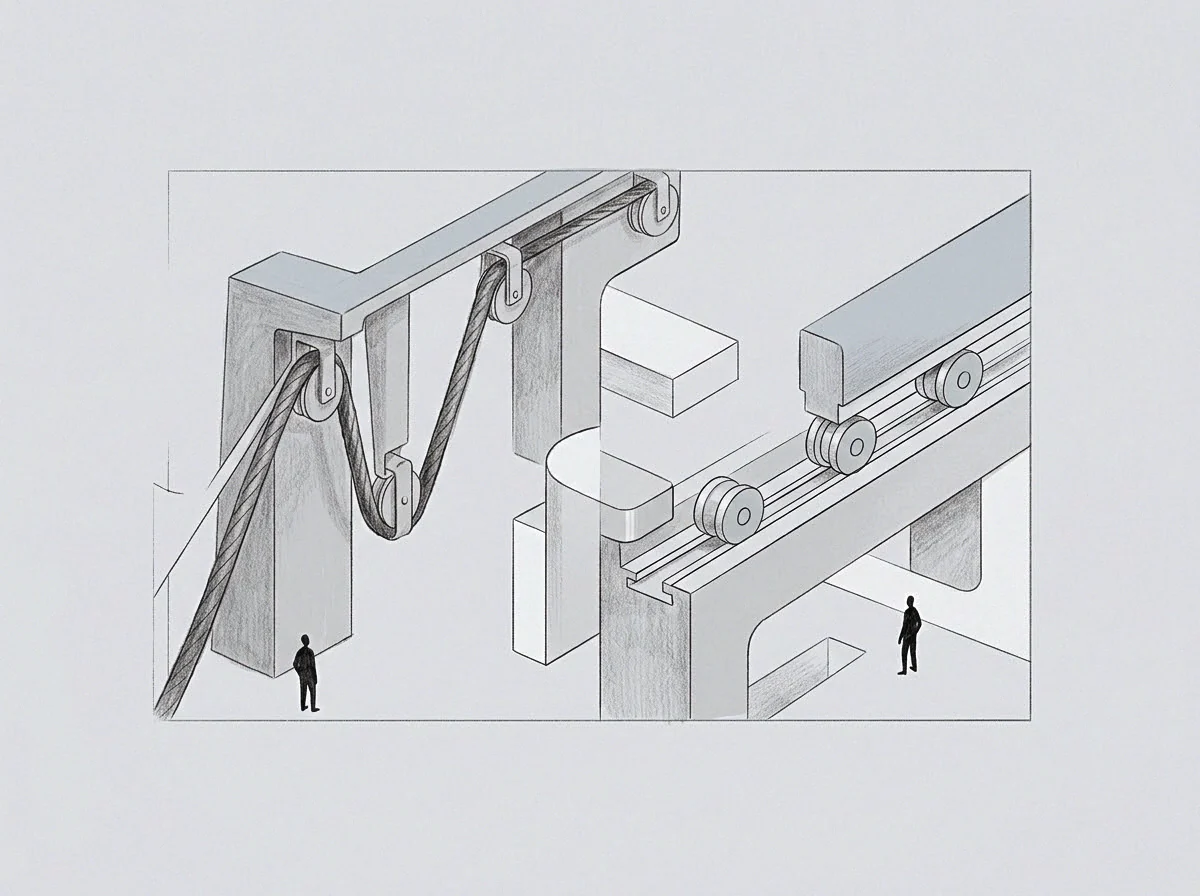
Signal
Dashboards in large organizations frequently show uniform green across departments even as daily execution paths diverge. The primary driver of this split is the difference between explicit reporting compliance and actual operational direction. Executive directives outline nominal priorities, but working teams routinely follow the path of least resistance when handling daily tasks.
When operational units encounter structural obstacles, execution slows down long before status reports reflect the delay. Strategic planning defines where an organization intends to move, but local incentives, resource limits, and administrative overhead dictate where work actually flows. Systemic drift is driven by the gradient between high-level strategy and these local operational vectors.

Metric Compliance Versus Vector Intent
Status reports standardize output formats to project stability. Managers format operational data to match executive expectations, hiding early misalignment and creating an appearance of interdepartmental coherence. Operational teams shift internal priorities to protect nominal metrics while routing critical tasks around administrative bottlenecks.
When cross-functional procedures introduce significant delays, local teams build undocumented channels to maintain throughput. These workarounds allow individual departments to meet isolated performance targets while quietly breaking wider organizational coordination. The reporting system records success, but leadership loses visibility into how work actually gets done.
Unreported variance between operational layers marks the exact location of structural friction.

Propagation Decay Across Organizational Boundaries
Executive directives lose definition as they move down through managerial layers. Each tier reinterprets priorities through the lens of its own staffing, budget, and local risk profile. By the time a strategic mandate reaches operational teams, the original intent has shifted across multiple intermediate translations.
Downward information loss creates a steady operational decay vector. Lower tiers retain the formal terminology of strategic goals while substituting local work habits for mandated methods, diluting strategic alignment as organizational depth increases.
Overlooking the gap between formal status reports and ground execution leaves organizations vulnerable to abrupt failures once accumulated friction exceeds system tolerances.

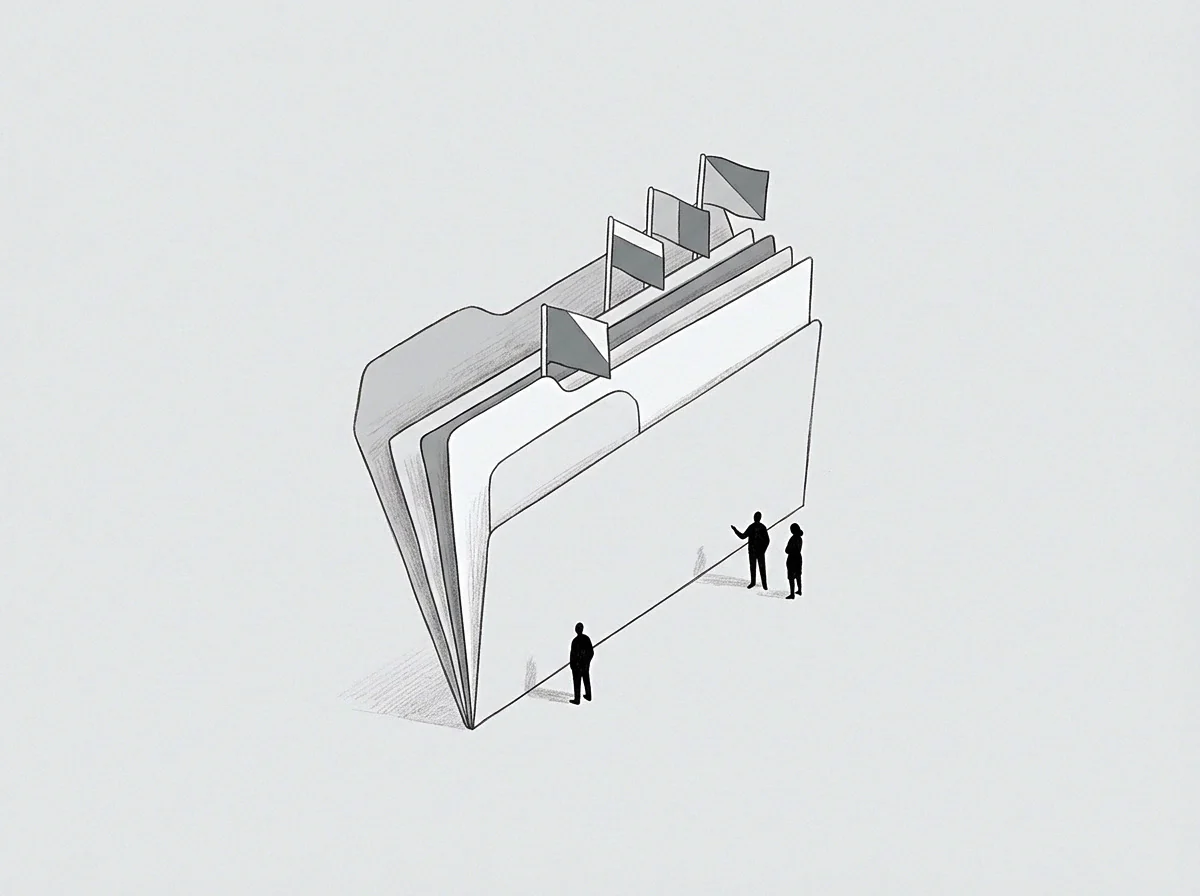
Shelf
Middle management operates as an administrative buffer where operational data collects. Intermediate managers absorb disruption from working teams to present steady metrics to executive leadership, creating an information shelf that holds unrouted friction in place until capacity runs out.
How much friction this administrative layer can hold depends on reporting schedules and the number of intermediate tiers. Ground-level realities stay localized in lower divisions while executive decisions rely on filtered summaries, preventing senior leadership from identifying operational decline until secondary indicators fail.
Structural Buffering and Information Compression
Intermediate managers smooth out variance to maintain team stability under executive scrutiny. When operations hit roadblocks, mid-level tiers absorb the shock through schedule shifts and internal resource reallocations, rarely passing records of those trade-offs up the chain.
Summary reporting mechanisms condense complex operational realities into simplified qualitative indicators. Technical debt and workflow friction turn into brief status bullet points, giving executive leadership a sanitized operational picture that strips out critical boundary constraints.
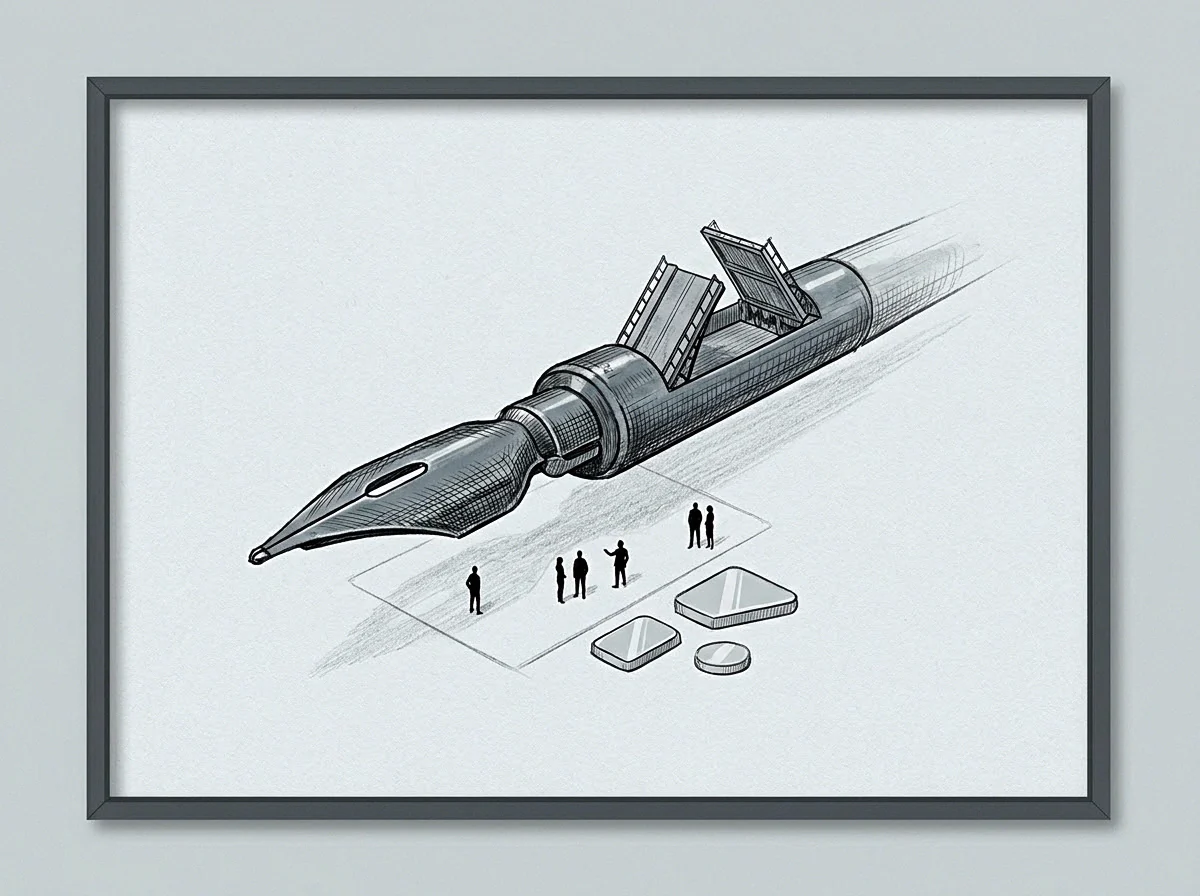
Does organizational depth attenuate operational truth?
Adding managerial tiers between planning and execution creates predictable information loss. Every extra boundary introduces filtering mechanisms designed to protect leadership from routine operational noise, but the cumulative effect is the suppression of critical alignment signals.
Teams closest to execution have clear situational awareness but lack resource authority. Executives possess allocation authority but lack granular visibility into operational friction. Intermediate buffers preserve this divide, preventing resource reallocations from addressing true bottlenecks.
| Layer Tier | Dominant Output Mode | Distortion Mechanism | Observed Signal Friction |
|---|---|---|---|
| Executive Tier | Strategic Mandate | Abstraction and Scope Generalization | High Conceptual Latency |
| Middle Operational Tier | Aggregated Dashboard Metrics | Variance Filtering and Buffer Absorption | High Information Compression |
| Ground Execution Tier | Local Task Execution | Undocumented Workarounds | High Structural Friction |
Weekly reports confirm that all major targets are on schedule, leaving local operations without direct intervention.

Slope
Workflows naturally follow the path requiring the lowest immediate expenditure of administrative effort. In layered organizations, formal procedures that impose heavy administrative overhead push teams onto alternative operational paths, and the gradient of that resistance shapes execution across departments.
When strategic mandates demand high-friction tasks without providing additional resources, execution defaults to minimal compliance. Teams do just enough to satisfy reporting software while focusing their actual effort on immediate local priorities, converging toward a routine of minimal administrative effort.

Local Optimization Along Resistance Gradients
Field teams establish custom procedures whenever central guidelines complicate daily operations. While these adaptations clear immediate bottlenecks, they cause regional units to drift apart, eventually leaving departments operating under conflicting practices despite sharing a single corporate strategy.
Consider an enterprise software business operating two distinct product divisions over an eighteen-month window. Assume the first division retains direct reporting from technical leads to executive directors, while the second division introduces two intermediate management layers. Assume both divisions receive an identical mandate to integrate a unified security protocol across legacy systems.
In the flat division, engineering teams identify technical debt early and reallocate thirty percent of development hours to resolve infrastructure dependencies. In the layered division, middle managers report full compliance while engineering leads bypass core security mandates to meet short-term product deployment deadlines. After twelve months, the layered division shows green metric status on executive dashboards but carries severe latent technical debt that requires six months of emergency remediation.
The flat division maintains lower initial delivery velocity but achieves sustainable operational integration across all systems.
- Local Workarounds emerge when central administrative requirements exceed ground operational capacity, prompting teams to bypass formal compliance channels.
- Resource Hoarding develops within intermediate tiers looking to cushion local operations against unexpected top-down mandates, creating artificial scarcity across adjacent teams.
- Selective Reporting strips negative operational data out of upward reporting lines to project systemic stability.
- Process Bypass accelerates near-term output at the expense of long-term infrastructure integrity, accumulating hidden operational debt.
When formal directives conflict with local efficiency, execution aligns with the path of least expenditure.
It remains uncertain at what threshold accumulated process workarounds permanently undermine the structural integrity of core enterprise systems.

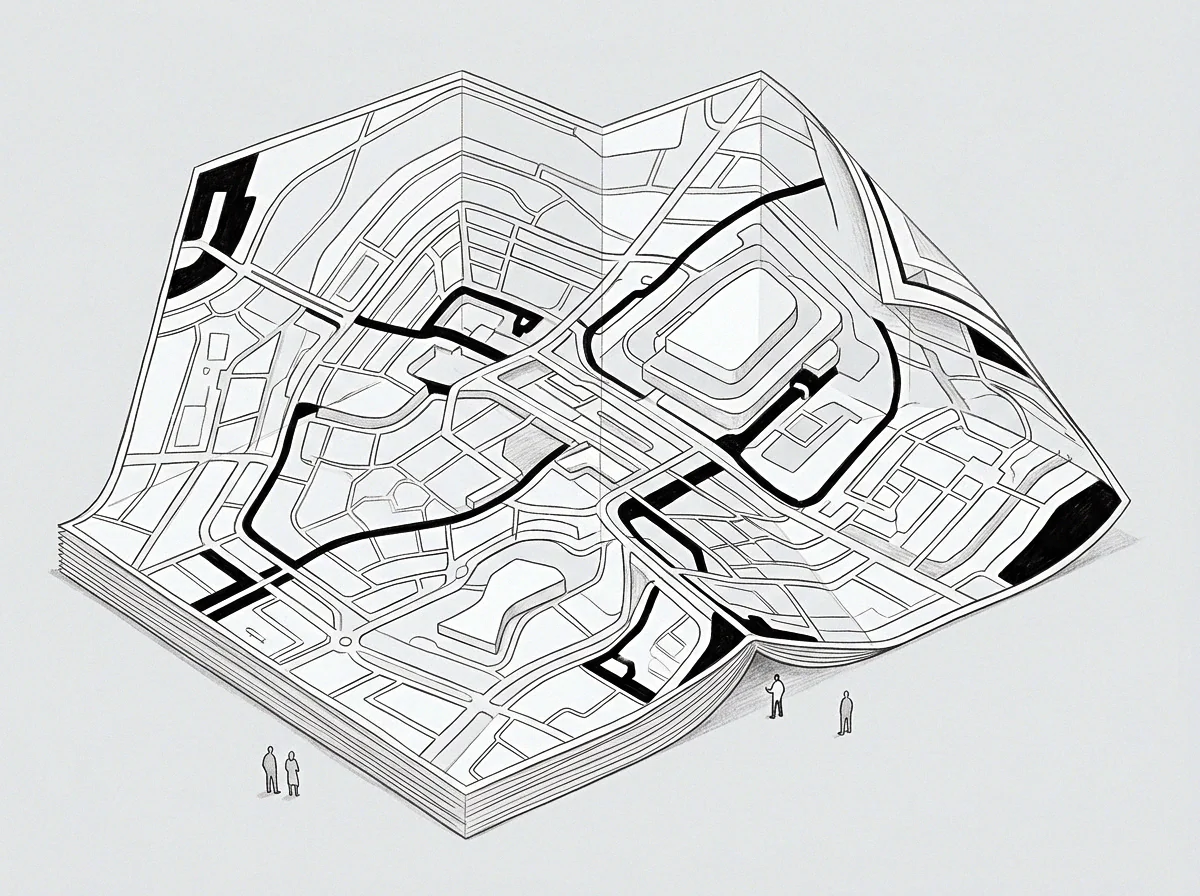
Filter
Incentive structures determine which operational details reach leadership. Promotion mechanisms inside large enterprises systematically reward consistent reports of progress while penalizing the early disclosure of structural friction, creating an administrative filter that removes negative variance from upward reporting.
Lower-tier managers learn that surfacing operational obstacles without ready solutions creates professional exposure. Teams delay reporting operational issues while attempting internal fixes, which leaves unaddressed problems to surface later as unexpected operational crises.
Selective Variance Suppression
Negative outcomes are systematically reconfigured into temporary anomalies as data passes upward. Intermediate reporting layers contextualize operational shortfalls as isolated events rather than symptoms of systemic misalignment, preventing senior leadership from recognizing patterns of structural decay.
Stripping variance from executive reporting disconnects strategic planning from day-to-day operations. Leadership then issues subsequent mandates based on inaccurate assumptions about real capacity and execution efficiency.

Quantifying Latent Operational Capacity
Unused operational capacity gathers in areas where teams work around high-friction directives. When a strategic mandate encounters local resistance, teams consume resources on superficial compliance activities while real progress stalls. The difference between consumed resources and true operational output measures latent unspent capacity.
- Strategy directives leave the executive layer with full nominal scope and abstract resource commitments.
- Department heads translate directives into measurable key performance indicators while trimming risky initiatives.
- Regional managers assign workload to ground units based on existing capacity rather than strategic shift requirements.
- Ground execution units perform routine tasks while marking complex alignment demands as deferred items.
Suppressing negative operational indicators shifts the cost of failure from immediate mitigation to deferred systemic shock.
The inclusion of an explicit variance threshold clause in quarterly review contracts forces middle managers to surface operational delays before local buffers are exhausted.

Clock
Organizational cadence regulates how quickly misalignments are detected and corrected. Large enterprise systems operate on multiple overlapping time horizons, from daily deployment cycles to multi-year strategic roadmaps. When these operational clocks fall out of sync, alignment signals distort across managerial layers.
High-velocity ground units make real-time adaptations to immediate operational friction long before quarterly strategic reviews register the shift. When executive feedback loops operate on annual schedules, central strategy continually reacts to historic operational conditions rather than present reality.

Synchronization Latency and Cadence Mismatch
Strategic planning cycles operating on annual schedules fail to capture operational shifts occurring on weekly timelines. Ground units adapting to market conditions drift from official strategy because formal approval channels move too slowly, creating structural confusion across inter-departmental workflows.
Establishing high-frequency feedback loops between execution units and strategic planners reduces synchronization latency. When operational data flows rapidly across administrative boundaries, executive leadership can adjust resource allocations before local divergence becomes a permanent habit.
Systemic alignment improves when feedback cadence matches the operational cycle time of ground units.

Realizing Signal Velocity
Shortening feedback cycles between execution teams and decision-makers restores operational transparency. Signal velocity measures the duration required for operational friction at ground level to trigger an appropriate resource reallocation at the executive level, allowing organizations to correct alignment errors rapidly with minimal resource expenditure.
Eliminating redundant administrative filters and aligning operational review schedules with ground unit execution cycles allows organizations to maintain strategic alignment across complex multilayered structures.