
Capital Feedback Latency in Bottlenecked Engineering Environments
Capital feedback latency in bottlenecked engineering environments measures the unspent technical risk accumulated during delayed validation loops.
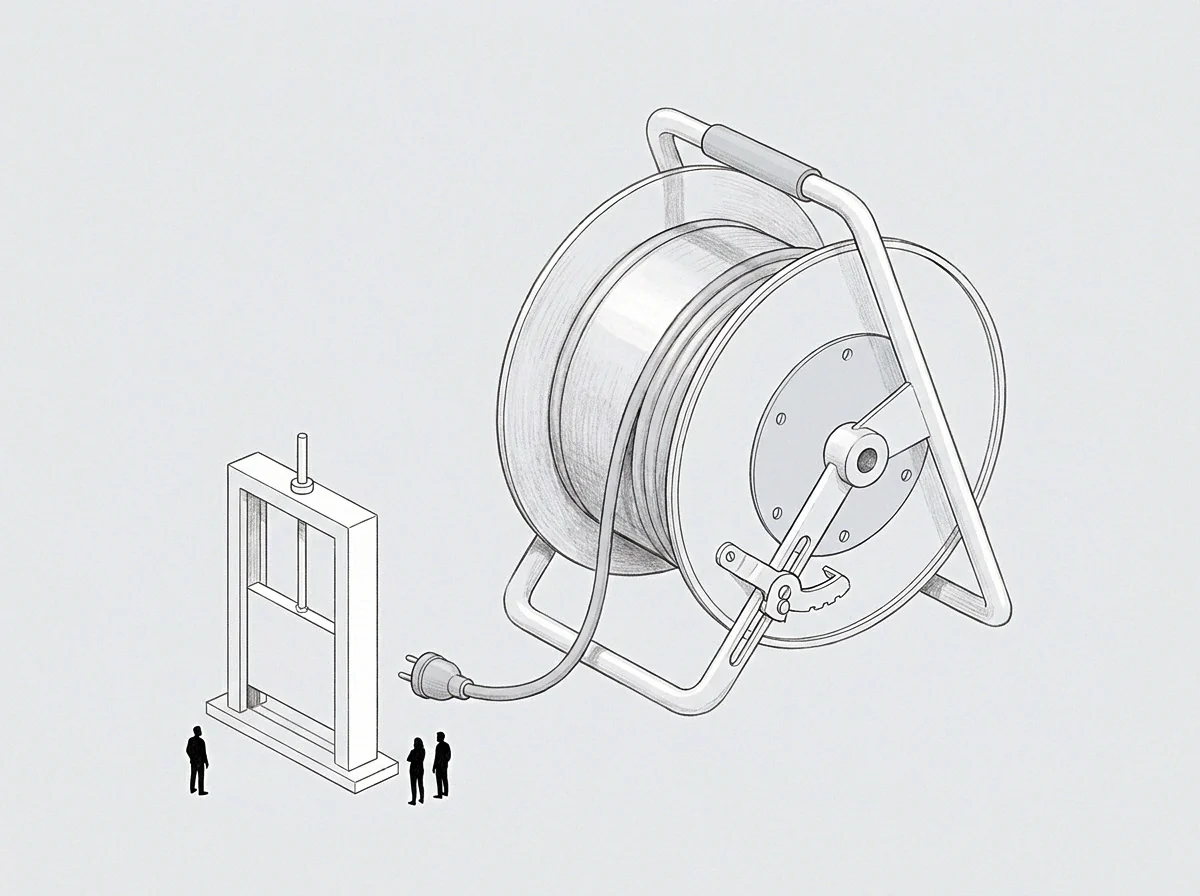
Lag
An enterprise hardware program commits forty million dollars to a multi-chip module redesign while the primary validation rig sits idle awaiting custom load boards. Engineering leads issue weekly status reports showing full developer utilization, yet the underlying physical verification signal remains muted for eleven months. Capital flows continuously into developer hours, CAD software subscriptions, and synthetic unit test suites.
The capital expenditure proceeds under the assumption that computational output corresponds directly to product convergence. In reality, the absence of physical feedback creates a silent vacuum where architectural flaws compound without detection.
When the delay between a capital outlay and its physical validation expands, the financial system loses its error signal. The internal accounting layer registers progress through completed engineering tasks, story points closed, and code commits merged into main branches. These cardinal figures measure activity rather than truth.
The actual verification happens only when hardware assemblies enter the physical test chamber, where mechanical, thermal, and electrical signals intersect. Until that coordinate is reached, the capital deployed operates without a gradient. The system moves along the path of least resistance, optimizing internal proxy metrics that hide fundamental integration failure.
Capital deployed into hardware-in-the-loop validation pipelines carries an eighteen-month silence before return signals refute or confirm initial architectural assumptions.
Engineering throughput metrics decay rapidly. Long feedback delays force teams to construct elaborate local emulation environments to maintain daily workflow momentum. These software stubs introduce subtle discrepancies that diverge from physical reality over time.
As developers build atop unverified assumptions, the cost vector expands non-linearly. The capital required to correct an architectural error discovered in physical test chambers exceeds the cost of fixing the same error during early breadboard testing by two orders of magnitude. The financial drag remains invisible until the physical hardware arrives, at which point the unspent technical risk converts into immediate capital destruction.
Failure to measure this feedback delay results in capital allocations that reward teams for building deep stacks on unverified foundations.
Clock

Compilation Loops and Validation Windows
Engineering departments operating inside physical constraints routinely decouple daily software iteration from hardware verification routines. Software builds execute in minutes, providing immediate positive reinforcement to developer teams, whereas physical hardware synthesis and board spin loops require months of lead time. Capital allocation models that evaluate engineering efficiency on short time horizons favor software velocity over physical validation.
This preference causes engineering efforts to retreat into local simulation stubs where test suites pass consistently without challenging physical system boundaries.
Empirical measurements from aerospace software audits, resting on empirical logs across forty defense hardware programs over a six-year observation window, show that engineering teams under schedule pressure double their reliance on mock interfaces when hardware test access delays exceed ten business days. This finding holds provided micro-architectural simulation fidelity remains distinct from physical silicon; if simulation toolchains attain bit-exact parity with physical hardware under real stress environments, the behavioral divergence disappears. When queue times at physical test benches expand, developers optimize for what can be verified locally.
The team reports high sprint completion rates, yet the system accumulates unprocessed integration risk. The distance between theoretical modeling and physical reality grows wider with every unverified release cycle.
| Environment Type | Iteration Cycle Duration | Primary Bottleneck Coordinate | Capital Drag Factor |
|---|---|---|---|
| Pure Cloud Software | Four Minutes | Test Suite Runtime | Low Horizon Risk |
| Embedded Firmware Stubs | Three Hours | Hardware Emulation Fidelity | Moderate Capital Latency |
| Silicon Integration Bench | Fourteen Weeks | FPGA Synthesis and Wafer Runs | Severe Feedback Delay |
| Automated Hardware Testbed | Nine Months | Physical Stress Chamber Access | Maximum Unspent Potential |

Comparative Latency Profiles in Physical Testbeds
Measuring the duration between a code commit and its physical execution reveals stark structural divergences across hardware test setups. In pure cloud software environments, feedback arrives almost instantly, establishing a tight control loop that grounds developer decisions in empirical system responses. Embedded systems relying on firmware stubs slow this feedback signal, introducing minor structural drift that accumulates across quarterly release cycles.
The most severe capital latency occurs in custom silicon and automated hardware test chambers, where physical wafer fabrication or stress-testing queues inject multi-month delays into the development loop.
Delay masks fundamental system failures.
When compilation infrastructure chokes on synthetic integration suites, software engineering teams pivot toward local stubbing to preserve artificial daily velocity metrics.
Long feedback cycles transform capital allocation into an unhedged speculative position on initial design choices. When physical test results return negative after a year of silent execution, the team faces a choices between expensive hardware revamps or compounding operational workarounds. The operational team routinely reports that the system meets software milestone targets while quietly waiting for physical test chamber scheduling.

Vector
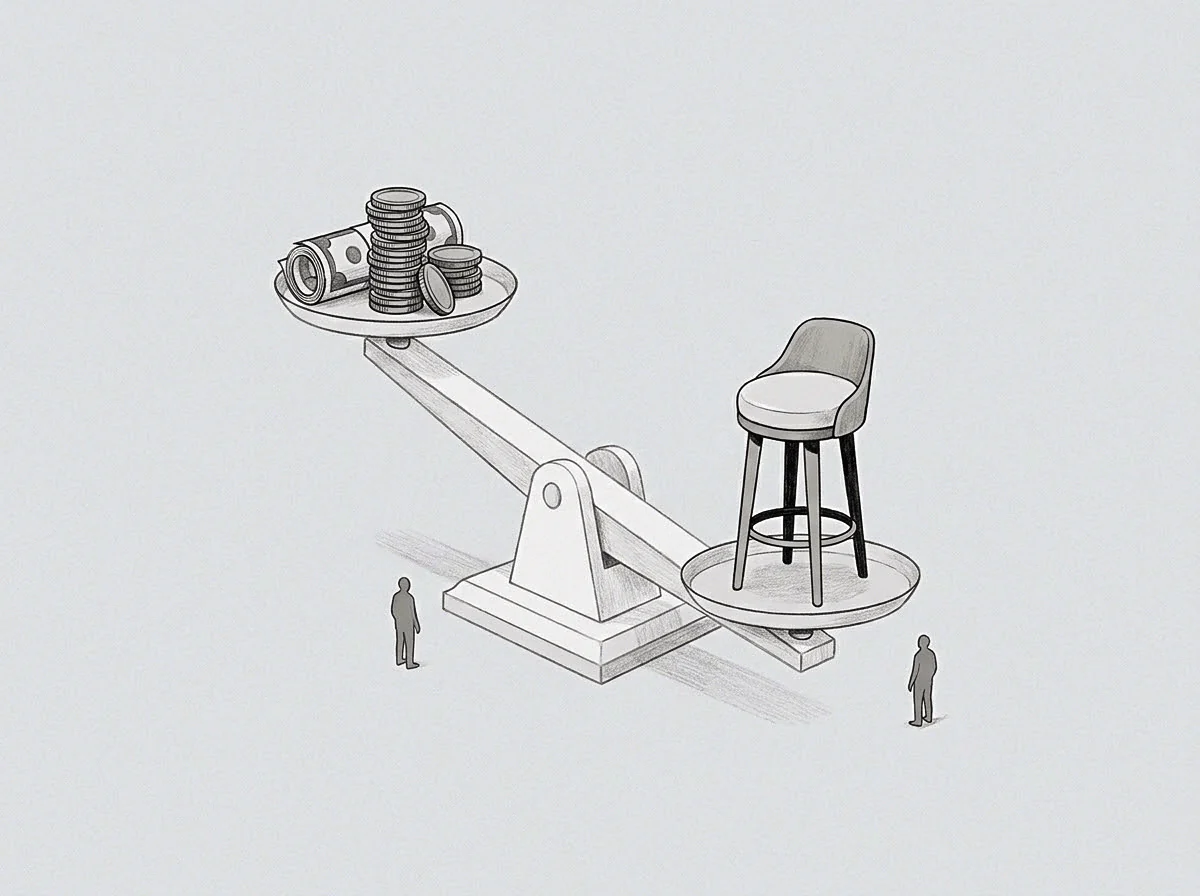
The Sixteen Month Silicon Cycle
A semiconductor organization allocates ten million dollars toward mask creation before logic emulation yields final timing closure. The executive committee signs the capital expenditure order based on timing reports generated by software tools. Developers achieve full coverage on synthetic benchmarks, fulfilling internal milestone requirements.
Capital feedback latency in this bottlenecked setting extends to sixteen months, the time required to tape out, fabricate, package, and bench-test initial silicon samples. During this window, the engineering organization continues hiring software, firmware, and board-design engineers who write millions of lines of code designed to interface with the pending chip architecture.
Take two engineering teams building custom firmware over a three-year period. Assume the primary hardware platform costs two hundred thousand dollars per chassis, with eight chassis available across sixty developers. Assume firmware compilation requires forty-five minutes per build, while full regression testing on physical chassis requires three weeks of queue time.
Under these conditions, the ratio of developers to physical validation targets creates a severe queue bottleneck at the hardware interface layer. The firm spends twelve million dollars annually on payroll, while the capital asset responsible for validating that payroll sits behind a multi-week access queue.
Naval dockyards during nineteenth-century steam engine refits exhibited the same structural pattern, where hull modification teams worked at peak speed while boiler pressure test results remained pending for half a year in dry dock. The apparent output of the shipwrights disguised the reality that the vessel could not leave berth until the thermal seals were proven. In modem hardware engineering, the accumulation of unverified work creates an identical structural drag.
Unspent technical risk accumulated during silent cycles raises the capital required for subsequent iterations by an order of magnitude.

Decoupling Execution from Verification Signal
When feedback loops expand beyond quarter boundaries, technical decision making relies on linear extrapolation rather than physical data. Software teams continue writing device drivers for hardware specifications that may contain uncorrectable logic bugs. Hardware teams freeze silicon layouts based on incomplete firmware integration profiles.
The system continues spending capital along its path of least resistance, avoiding the friction of physical validation by staying within the comfortable boundaries of simulation models.
- The engineering division commits capital to a physical hardware architecture based on initial architectural assumptions.
- Queue delays at physical test facilities force developer groups to build abstract software stubs to maintain daily task output.
- System integration gets delayed by multiple quarters while software development continues atop unverified driver interfaces.
- Physical hardware validation eventually occurs, uncovering fundamental timing failures at the silicon level.
- The organization absorbs massive capital write-downs to re-spin hardware while paying idle developer salaries during the redesign.
Capital feedback latency converts from a passive queue metric into an active financial vector when the cost of rework exceeds the remaining budget of the program. The latent potential accumulated behind validation queues represents unspent risk that eventually extracts its full payment from the enterprise balance sheet. The stated term in the capital allocation contract changes from a simple milestone schedule into an unhedged liabilities register the moment validation queues exceed ninety days.

Filter

Can Downstream Validation Bypass Hardware Integration Delays?
Isolating software components through mock interface drivers enables local developer testing without clearing physical testbench access. This isolation creates a parallel execution path where software teams report continuous feature delivery while physical system integration stalls entirely. The organizational structure routes around physical validation bottlenecks, treating mock environments as canonical targets rather than temporary approximations.
Capital flows into expanding the software layer, building complex features on top of interfaces that have never transmitted a signal through actual hardware.
Behavioural studies on engineering group resource allocation under queue delays, resting on observational data from industrial manufacturing systems across seventy high-tech enterprises, demonstrate that team managers systematically reallocate engineering hours toward upstream software refactoring whenever physical hardware access queues exceed three weeks. This behavior persists unless continuous deployment toolchains eliminate hardware batching costs completely. When physical validation queues freeze, engineering groups protect their internal velocity scores by refactoring existing code bases rather than confronting the bottlenecked physical interface.
Local stubs offer false comfort.
Engineering groups route spending toward upstream design tools whenever physical hardware test environments introduce substantial queue delays.

Avoidance Vectors in Architecture Reviews
System design committees steer engineering resources toward upstream algorithmic refactoring when integration queues stagnate. The technical leadership focuses attention on metrics that can be computed locally, such as code coverage, static analysis warnings, and unit test duration. These parameters can be measured continuously without waiting for hardware availability.
The gradient descent of the engineering management layer naturally slides toward these accessible measures, constructing a elaborate narrative of continuous optimization that ignores the structural wall sitting at the physical integration layer.
- Virtual Mock Redundancy creates elaborate software simulations that obscure underlying hardware interface mismatch.
- Upstream Refactoring Loops consume engineering hours on code polishing while core system integration remains unverified.
- Queue Avoidance Routing shifts capital outlays toward software tooling to mask delays in physical test chamber acquisition.
- Synthetic Benchmark Drift aligns optimization metrics with artificial test targets rather than physical operating parameters.
Waiting costs accrue without witness.
The magnitude of this avoidance behavior maps directly to the delay duration of the primary validation bottleneck. As the queue time for physical testing extends from weeks to quarters, the technical group builds an increasingly sophisticated internal model designed to justify staying within the simulated environment. What remains unresolved is whether any combination of advanced software emulation tools can permanently decouple software capital efficiency from physical hardware validation latencies without incurring systemic catastrophic failure at integration.

Ledge
Model Boundaries at the Test Bench
Physical hardware limits mark the exact line where theoretical design models fail and material computation begins. The wall representing the boundary of the enterprise simulation model consists of everything the software layer cannot predict: signal interference, thermal dissipation spikes, mechanical tolerance stack-ups, and unexpected component cross-talk. When capital feedback latency prevents an engineering organization from striking this wall early, the business operates on imaginary margins.
Discomfort at the physical test bench is not a negative operational signal; it is the exact coordinate where true computational feedback occurs.
Unspent potential sits behind queue barriers.
The conversion rate between unspent feedback latency and long-term capital impairment remains unquantified across early-stage hardware ventures due to the variance in hardware failure modes and market timing windows. Under this structural uncertainty, an engineering director tracks physical validation queue length as an ordinal vector rather than attempting cardinal financial forecasting. The absolute price of physical test equipment pales in comparison to the ordinal cost of running an entire development group in an unverified void for a year.
Hardware integration enforces exact limits.
When feedback latency approaches zero, the capital allocation model converges toward maximum efficiency, whereas expanding latency vectors guarantee that technical debt compounds faster than product value can accumulate.