
Correcting Trajectory Skew From Unmeasured Operational Friction Variables
Trajectory skew corrects by isolating unmeasured operational friction variables and eliminating structural interface drag rather than applying compensatory effort.

Origin
A forecast models velocity under clean atmospheric conditions, assuming operational capacity transfers directly into directional movement and projecting milestone delivery along an unbroken line. Three quarters into execution, the observed flight path separates from the calculated heading. Output slows while recorded labor inputs remain constant.
Operational reviews turn into exercises in chart analysis, searching for visible failures that explain the shortfall. No catastrophic breakdowns appear, and critical dependencies report nominal progress, yet capital reserves burn while the enterprise drifts sideways.
A projection model deteriorates the moment internal drag accumulates faster than reporting cadences can register it.
Unmeasured friction accounts for the drift. A mathematical model captures only the coordinates it is instrumented to detect: gross hours recorded, tickets closed, sprint points burned, capital deployed. Coordination overhead, switching latency, undocumented workarounds, and jurisdictional ambiguity escape these categories entirely while consuming real kinetic energy.
An organization can spend half its daily metabolic capacity surviving its internal handoffs. Because standard reporting registers this expenditure as baseline activity, leadership tends to attribute the lagging trajectory to strategic error or declining effort.
Trajectory skew is an arithmetic consequence of omitted variables. When resistance sits outside the measurement grid, the derived velocity vector points along a false heading, and the system drifts toward the path of least mechanical resistance while effort goes into holding flawed interfaces together by hand.
Drag measured late exacts the price of compound deviation.

Table
Operational reality reveals itself in the gap between formal logs and actual labor distribution. Visible parameters are tracked while latent friction operates beneath the surface. Diagnostic clarity requires laying both sets of variables side by side to assess their structural nature, collection overhead, and distortive pull on trajectory projections.
| Operational Domain | Tracked Output Metric | Latent Friction Variable | Primary Distorting Mechanism |
|---|---|---|---|
| Workforce Allocation | Sprint capacity utilization | Task fragmentation overhead | Context reset latency consumes cognitive bandwidth between assignments. |
| Process Governance | Formal approval turnaround | Pre-alignment consensus rounds | Unofficial lobbying occurs prior to official sign-off submissions. |
| Technical Infrastructure | Pipeline build completion | Environment stability patching | Engineers maintain brittle staging instances through manual intervention. |
| Organizational Design | Departmental headcount ratio | Jurisdictional boundary arbitration | Unclear mandate ownership triggers repeated scope negotiations across teams. |
Each friction variable operates as an unmeasured sink. A weekly report can show ninety percent capacity utilization while true forward progress hovers below half that rate, the difference dissipating as heat. When staff encounter persistent procedural resistance, they reroute effort around the obstruction rather than confronting it, generating secondary workflows that consume substantial labor without appearing in managerial records.
Informal compensation patterns emerge to keep the machinery functional:
- Interpersonal brokerage load shifts coordination burdens onto informal communicators who resolve departmental deadlocks through private backchannels.
- Manual data remediation occupies junior staff who spend mornings reformatting spreadsheet outputs so downstream ingestion scripts execute cleanly.
- Defensive documentation rituals multiply across mid-level management to insulate working groups from retrospective procedural scrutiny.
A contract clause mandating delivery milestones without specifying interface latency thresholds systematically drives unrecorded labor into defensive remediation work.
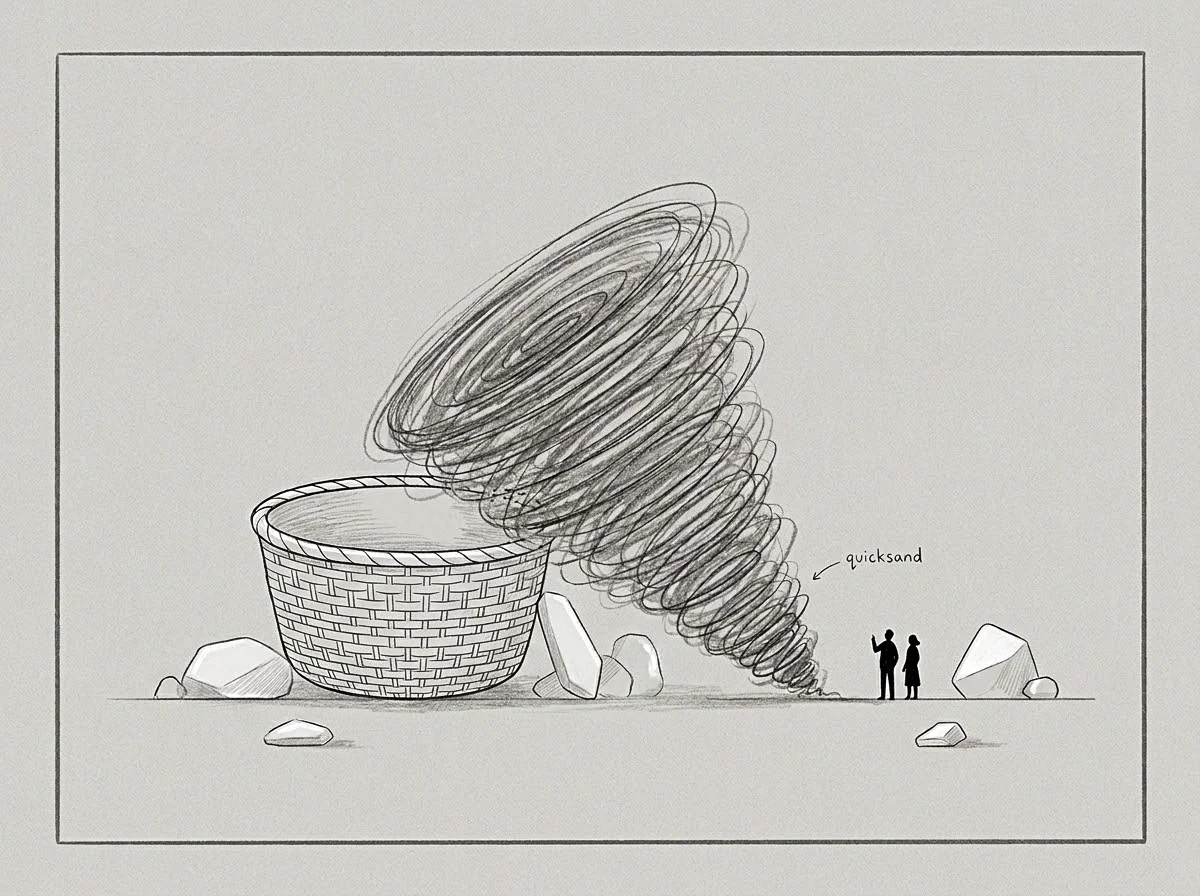
Torque
What Forces The Incline Off Course?
Physical torque alters angular momentum through an off-center force applied across a lever arm. Inside an enterprise, unmeasured friction creates an identical rotational skew. When functional units face unequal friction levels, the organization rotates away from its target objective: engineering might move cleanly while distribution stalls in regulatory review.
The resulting shear pulls the entire trajectory into an accelerating skid.
When lateral friction exceeds forward tractive force, operational momentum converts entirely into internal heat.
Take two organizations operating with identical headcount and equal capital cushions. The first maintains low interface drag through explicit jurisdictional boundaries and automated artifact handoffs. The second relies on consensus governance, requiring three cross-functional check-ins before ticket deployment.
Over twelve operating months, the second structure burns roughly eighteen percent of aggregate productive hours simply negotiating clearance across teams. As the slope flattens, leadership often misinterprets the slowdown as market resistance and pivots outward, even though the drag is purely internal.
Persistent friction converts dynamic potential into static defense. Teams stop proposing architectural improvements because the administrative overhead of making the case outweighs the return. They settle into the lowest available energy state, running known routines along paths of minimal resistance while the operation settles into a local minimum.
Misdiagnosing structural resistance as individual negligence triggers punitive governance cycles that multiply internal friction and accelerate systemic failure.
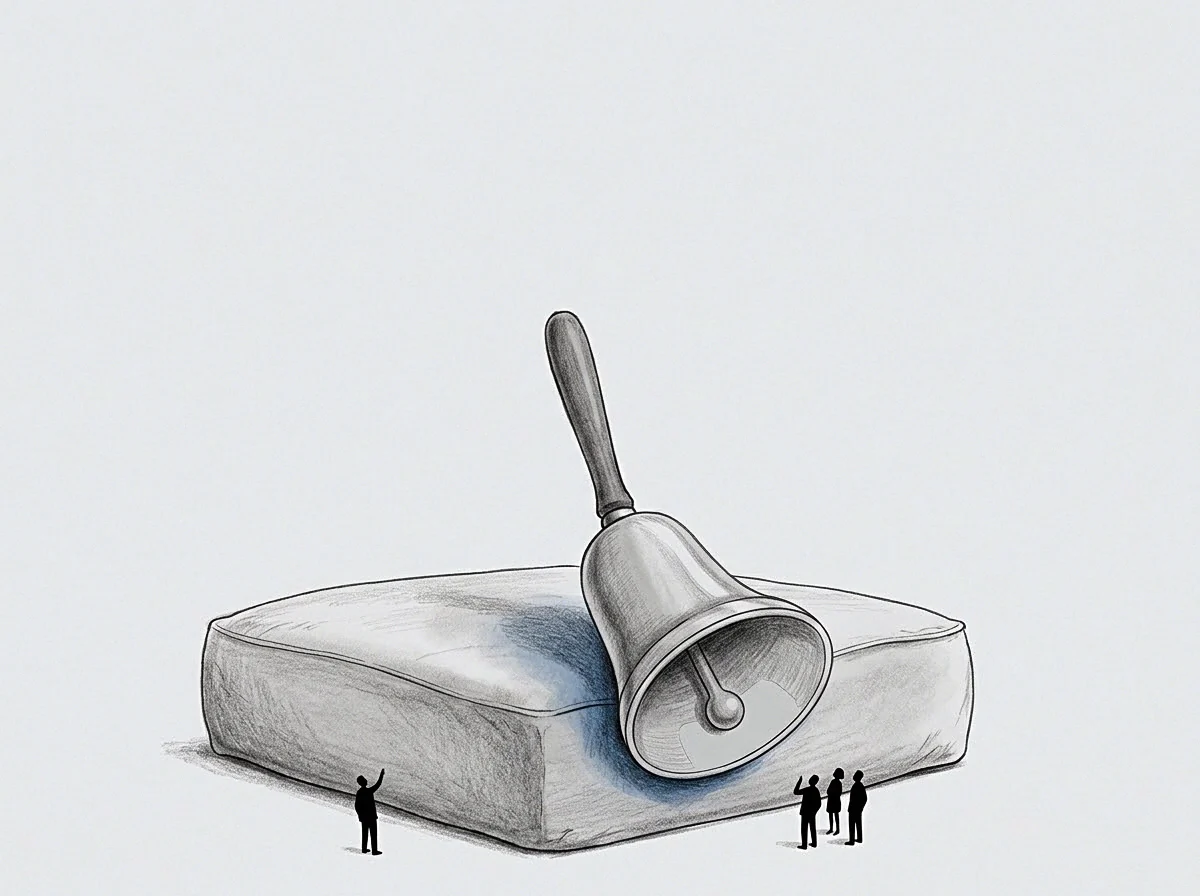
Mirror
Organizational workarounds serve as inverted maps of latent capacity. What an operating team consistently routes around marks the exact coordinate of unmeasured friction. If line engineers bypass the formal staging pipeline to deploy hotfixes through shell scripts, the friction sits in pipeline initialization delays.
The workaround outlines both the blockage and the specific relief mechanism required to clear it.
Systemic avoidance coordinates identify latent throughput waiting to be released.
Mapping unauthorized bypasses gives the operator an empirical instrument for deriving the negative gradient of the current operating model. Inverting that contour reveals the throughput suppressed by poor process topology. The volume of labor tied up in manual reconciliation, political alignment, and defensive documentation represents the kinetic lift available once friction is removed.
Diagnostic surveys frequently fail because respondents report what the evaluation rubric rewards. Direct observation of desks, unlogged shared drives, and unofficial messaging channels shows where work actually bypasses the formal system. Tracking these contours requires no moral framing; avoidance is simply a rational conservation of personal energy in response to structural defects.
The system operates smoothly provided the engineering staff handles the integrations manually before morning.
Trim
Trajectory skew is corrected by trimming structural drag rather than increasing throttle. When an aircraft encounters severe trim tab misalignment, applying engine power only drives the airframe deeper into aerodynamic flutter; the pilot must relieve control pressure first. The enterprise operator faces the same mechanical reality: remove unmeasured resistance before demanding higher output from depleted units.
A structural friction variable eliminated yields permanent compounding returns without continuous managerial intervention.
Systemic realignment follows a disciplined sequence of structural adjustments:
- Instrument hidden boundary handoffs across functional units through micro-cadence time tracking.
- Eliminate consensus review panels lacking explicit veto authority, returning unilateral decision rights to single operational owners.
- Deprecate informal manual remediation scripts by rebuilding the primary data pipeline interfaces directly.
- Recalibrate forward milestone projections against measured drag baselines rather than idealized capacity tables.
Trimming friction restores tractive force between metabolic effort and forward displacement, so teams stop fighting internal drag and velocity stabilizes along a sustainable slope. Capacity previously spent surviving procedural dysfunction returns to product development and distribution.
Whether an organization has the institutional willingness to eliminate procedural friction when that friction protects established managerial hierarchies remains an open question.