
Determining Invariant State Manifold Contraction During Unbounded Real Time Stress
Unbounded stress contracts the operational state manifold, forcing system decisions into low-energy deterministic paths along the path of least resistance.
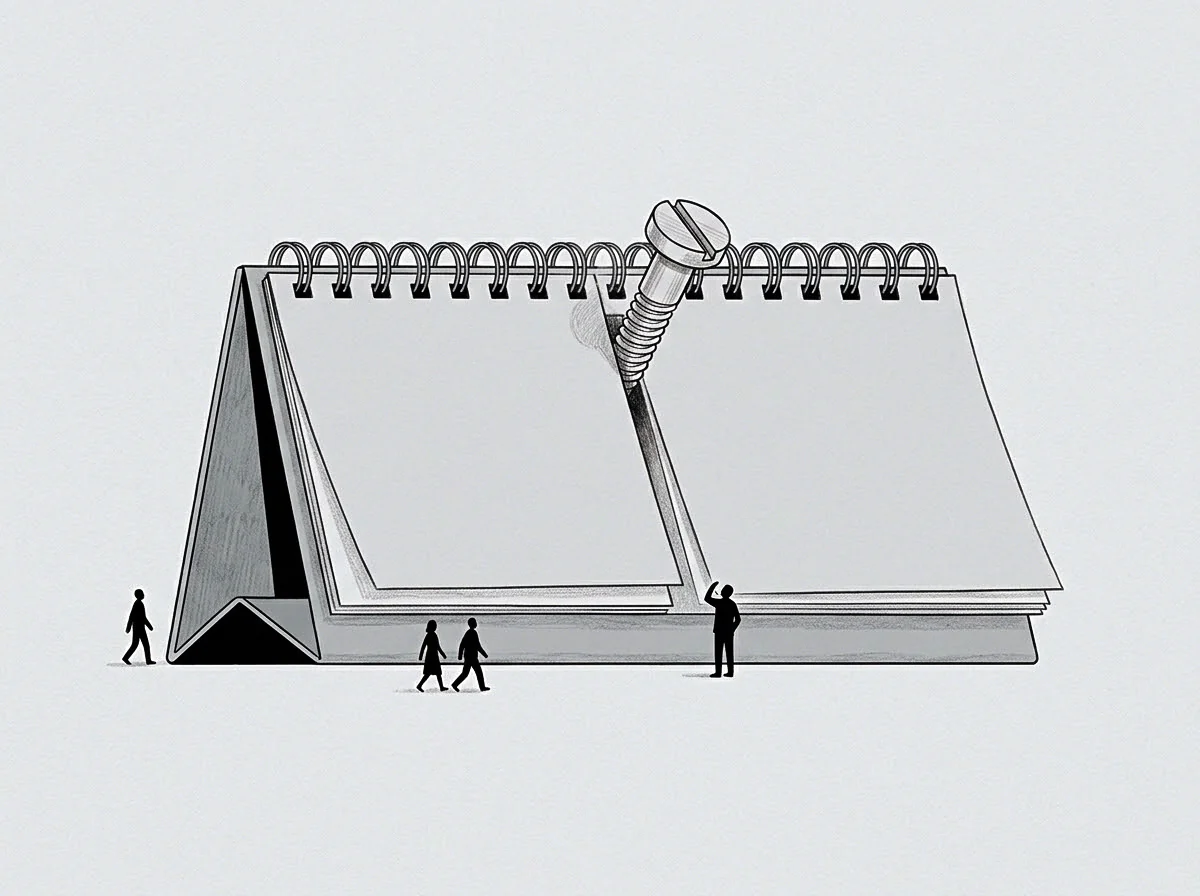
Wall
Continuous execution under unyielding deadlines compresses operational decisions into a tight, predictable corridor. When temporal relief disappears from an operating environment, an organization or individual operator stops exploring the broader dynamic state space. Processing shifts from generative problem solving to immediate pattern retrieval, collapsing high-dimensional decisions into deterministic loops that favor immediate energy conservation over structural efficiency.
Under standard operating conditions, a decision-maker evaluates options across multiple axes including long-term option value, capital allocation balance, and structural scalability. Unbounded real-time stress strips these dimensions away until only immediate operational throughput remains active. The rest of the state manifold becomes temporarily inaccessible behind the perceived computational cost of exploring alternatives.
Dimensional Shrinkage under Real Time Execution
Continuous pressure reduces the available degrees of freedom within an organizational system. In control theory, a state manifold represents the full set of persistent configurations a system can occupy. Under normal parameters, this manifold spans high dimensions, allowing flexible adaptation to unexpected inputs.
When real-time stress crosses critical processing thresholds, the system sheds dimensions to protect core throughput.
Complex strategic calculations demand ambient cognitive bandwidth and latency tolerances that unbounded real-time environments deny, causing variance to drop rapidly. The system responds by restricting state transitions to well-worn pathways. Decisions that previously involved multi-factor trade-offs convert into rigid binary choices, lowering short-term error rates at the expense of elasticity and trapping the operator in a simplified baseline.

Boundary Formation Across Operational Baselines
Systemic inputs under persistent pressure hit strict computational limits that assemble a rigid perimeter around current operating habits. The system will not process decisions requiring structural re-architecting because doing so introduces temporary latency spikes that ongoing stress prohibits. The working model forms a boundary out of everything it refuses to compute.
Strategic tasks requiring high computational depth are systematically deferred, creating a growing backlog of unprocessed operational friction. An operator often treats this deferral as an individual time management failure, yet the mechanism is structural. The active state space contracts until high-energy decisions sit outside the reachable manifold.
Whether an operator can systematically widen this compressed manifold before energy exhaustion occurs remains an active point of dispute within measurement research.
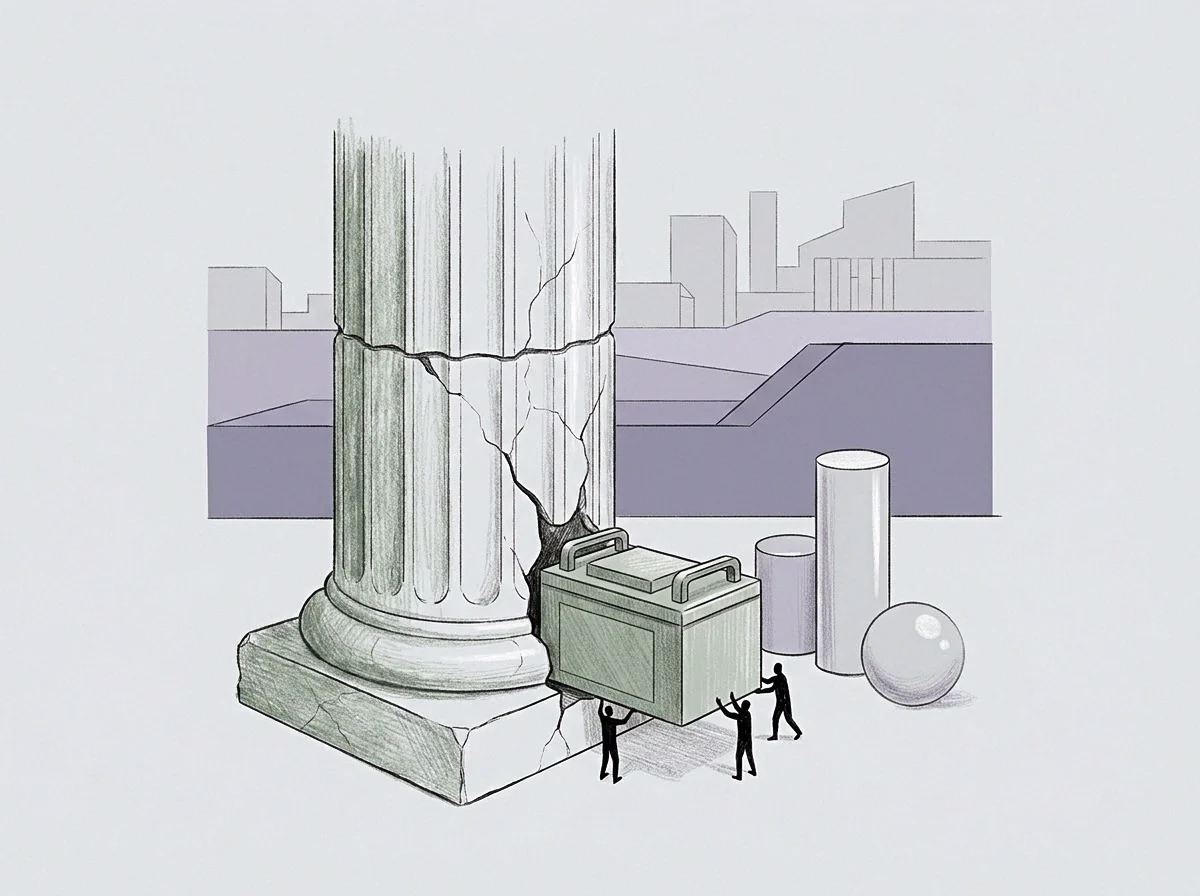
Radius
The mathematical boundary of an operational state space shrinks as incoming stress vectors outpace processing capacity. Measuring this contraction demands looking at the exact trajectory a system takes when forced to choose between immediate execution and architectural optimization. As the spatial radius of the manifold decreases, the system converges toward local minima on the value axis, following the path of least resistance down the steepest available gradient.
When continuous operational latency exceeds system capacity, state space shrinks to the single path of minimal computational resistance.
Gradient descent describes how a system optimizes for immediate stability by moving in the direction of maximum local relief. In an operational context, this descent carries no moral weight; it reflects pure systemic mechanics. The negative gradient points away from energy-intensive strategic work and toward routine maintenance tasks that yield instant feedback.
The system routes around computational obstacles because climbing the value slope costs energy that real-time pressure renders unavailable.

Gradient Mechanics Along the Value Axis
Operational priority shifts automatically toward immediate structural stability. When computing capacity drops below the threshold required for complex forward projections, the value axis flattens in the system’s internal model. Long-term gains lose their weight in the decision function, replaced entirely by immediate cost reduction.
The negative gradient dictates daily action patterns while cost accumulates silently, directing attention toward surface-level metrics while underlying structural flaws compound. A system operating under this regime appears productive because task volume remains high, but the work performed occupies an increasingly narrow functional range. The following behavioral vectors mark this contraction:
- Attractor Collapse occurs when multi-option strategic decision trees flatten into a single repeating functional routine under continuous deadline pressure.
- Local Minimum Trapping defines a stable operational state where short term energy expenditure remains minimal despite declining long term structural efficiency.
- Phase Space Shear represents the measurable divergence between intended long term strategic trajectories and actual observed daily output vectors during stress spikes.
Coordinates of Avoidance and Least Resistance
Systems consistently route daily computational tasks away from expensive energy barriers. Routine routing around a specific project, process, or structural conversation serves as an operational marker for unprocessed complexity. The magnitude of this diversion vector correlates directly with the size of the underlying structural debt.
Field evaluations in human factor engineering show that decision-makers under high real-time load display poor calibration regarding their own spatial state contraction. Operators report maintaining strategic flexibility even while empirical output logs reveal complete convergence onto low-complexity routines. This calibration gap persists until an external forcing function resets the operational window.
Systemic recovery begins at the precise coordinate where mandatory task execution stops consuming total dynamic capacity.

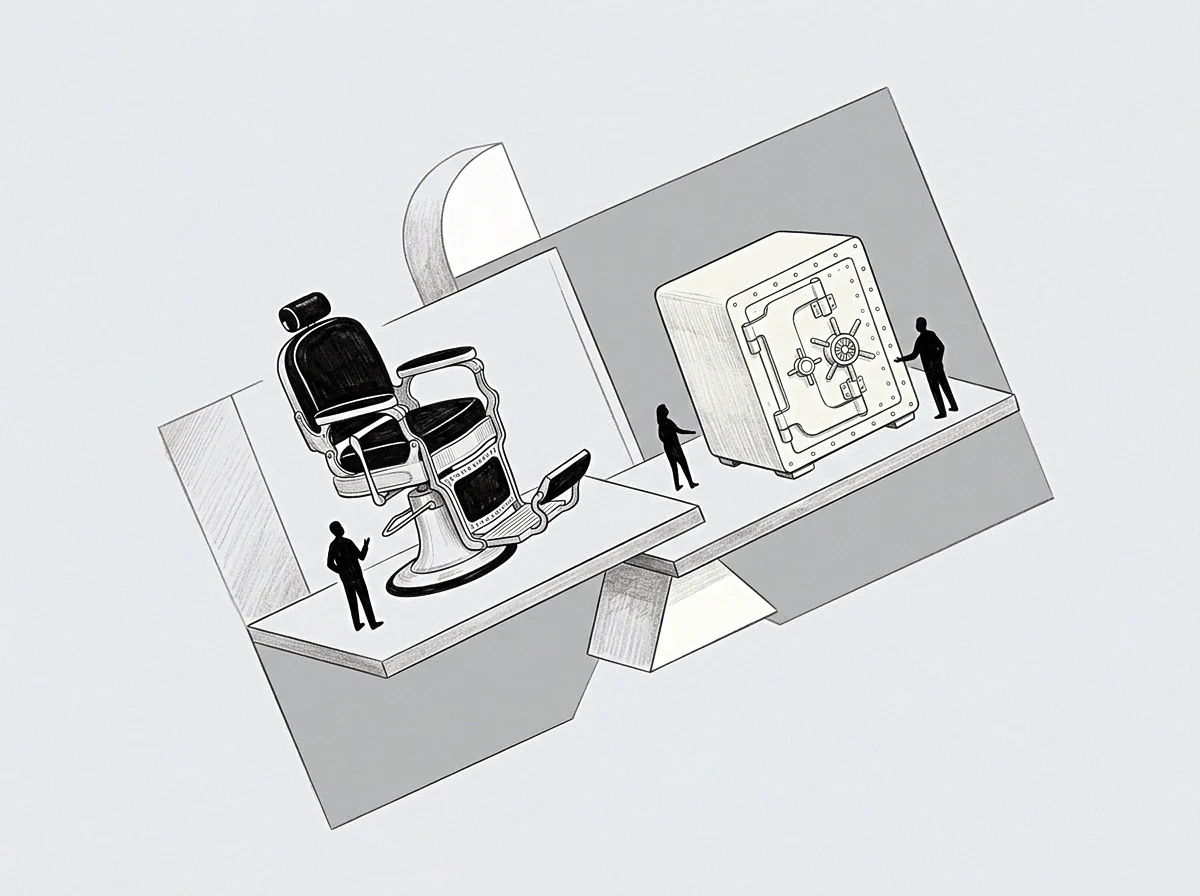
Weight
Unprocessed operational material stays behind avoided decisions, forming an unspent volume that mirrors the descent vector. When continuous stress forces a system down the path of least resistance, the energy avoided during that descent does not disappear. It accumulates above the baseline as latent potential, preserving the exact shape and magnitude of the terrain the system refused to cross.
Mapping this unspent potential reveals the hidden capacity locked within the organization’s bypassed operational terrain. For every strategic move deferred to preserve immediate real-time execution, an equal and opposite potential energy accumulates behind the boundary wall. The structural weight of this volume grows continuously as long as the state manifold remains contracted.
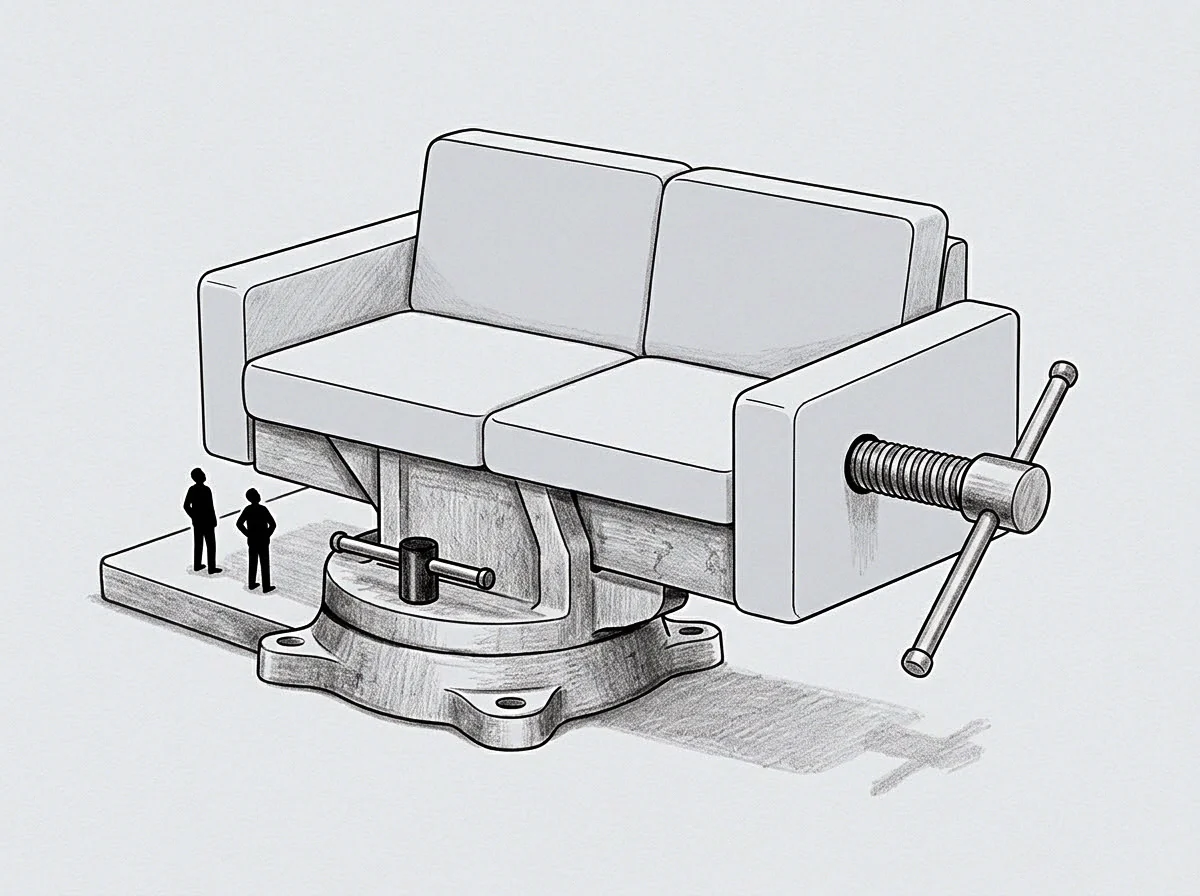
Where Does Latent Potential Accumulate During Contraction?
Deferred systemic rearchitecting gathers above the primary functional baseline. The accumulation happens quietly, shielded by surface metrics that show high daily task completion rates. The operator sees a functioning routine, but the surrounding space fills with dependencies that cannot be resolved without expanding the manifold.
A locked state manifold forces executive decisions into local energy minima where long term potential decays.
Unspent volume exerts continuous downward pressure on the active state space, further restricting the operational radius until clear capacity limits appear. An organization carrying high latent volume becomes hyper-reactive, where small unexpected inputs trigger disproportionate operational instability. The expansion sequence unfolds across three predictable phases:
- The initial operational variance drops while primary throughput maintains baseline metrics.
- Avoided structural updates create secondary dependencies that consume ambient operational energy.
- The compressed manifold locks into place, converting temporary survival moves into permanent infrastructure.
The size of avoided operational terrain measures the structural work required to restore high dimensional strategy.

Structural Mirrors Above the Functional Baseline
Refusing to process complex operational errors leaves a clean, inversion-ready image of capacity. By reflecting the negative gradient vector above the current operating baseline, an analyst can calculate the precise latent potential available for system re-architecting. The mirror reveals that the energy spent maintaining avoidance routines equals the energy required to break through the active boundary wall.
A central dispute within decision science concerns whether this latent potential degrades nonlinearly over extended time horizons or remains fully recoverable upon stress relief. While theoretical models suggest total conservation of latent energy, real-world operational decay often corrupts underlying state information before expansion can occur. Under this uncertainty, a prudent operator assumes that latent potential experiences a time-decay penalty, demanding planned interventions rather than waiting for external stress relief.
Treating manifold contraction as personal failure rather than structural geometry guarantees the permanent loss of high dimensional operational range.

Grid
Comparing operational performance across bounded and unbounded stress environments clarifies how state space contracts. Under bounded stress, temporal limits are fixed and known, allowing systems to allocate processing bandwidth toward strategic variance recovery. Under unbounded real-time stress, the absence of a temporal horizon forces the system to treat current survival parameters as permanent conditions.
System performance parameters diverge sharply when temporal boundaries disappear, altering the dynamic properties of decision-making across several key operational dimensions.
| Operational Dimension | Bounded Real Time Stress | Unbounded Real Time Stress |
|---|---|---|
| State Space Dimensionality | High; preserves parallel strategic vectors | Contracted; collapses to a single execution line |
| Computation Mode | Generative calculation and forward projection | Automated pattern retrieval and routine replay |
| Error Trajectory | Self-correcting via active feedback loops | Compounding behind structural avoidance walls |
| Latent Potential Storage | Low; regular release through strategic pivots | High; unspent volume accumulates continuously |
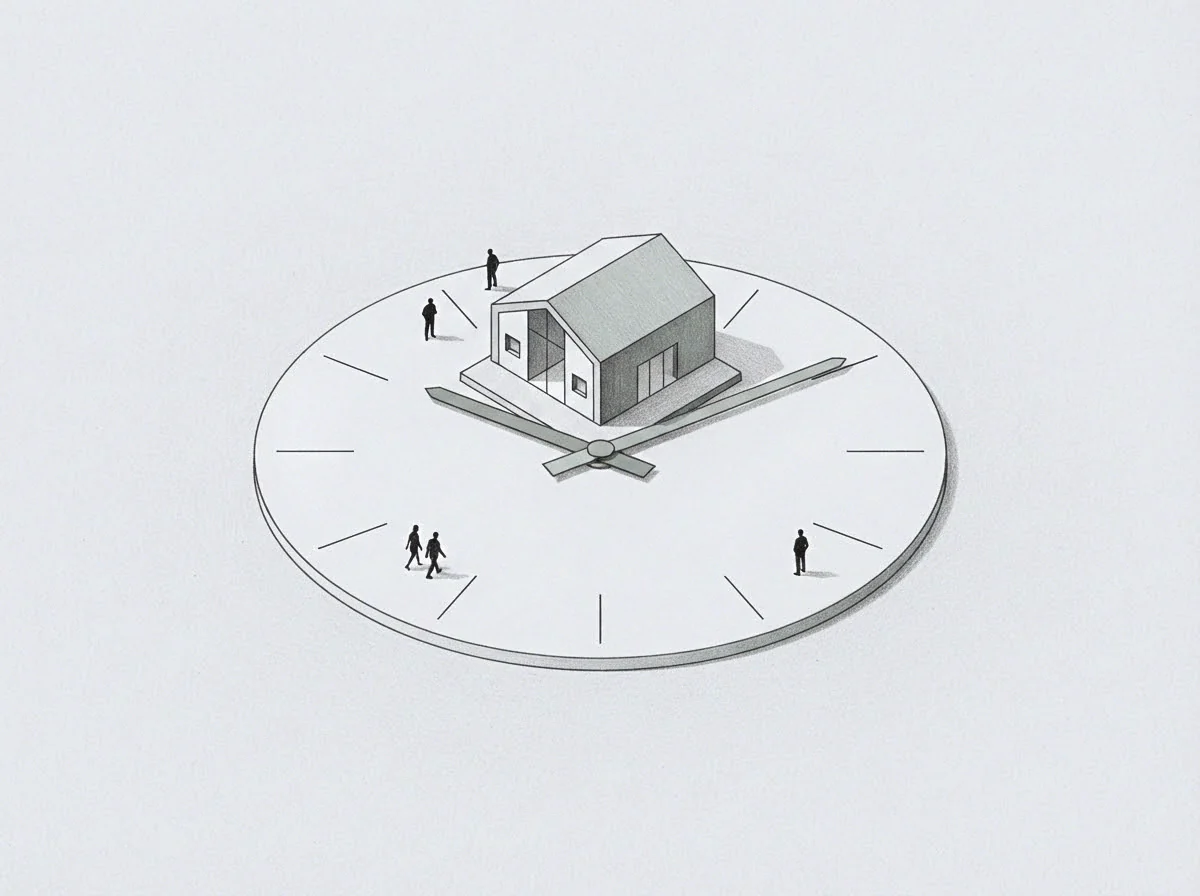
State Manifold Metrics Under Varied Stress Profiles
In bounded environments, the system maintains structural flexibility by utilizing scheduled recovery windows to process accumulated operational debt. The state manifold temporarily contracts during peak execution phases but rapidly expands once the pressure event concludes.
Continuous stress forces high capacity systems to replace generative calculation with automated routine retrieval.
In unbounded stress environments, the continuous influx of real-time demands prevents the execution of recovery windows, leading to the rapid decay of internal error signals and recalibration loops. The operational architecture locks into its contracted state, treating short-term survival adjustments as permanent structural components. The resulting playbook maintains immediate delivery while stripping out the strategic options that gave the original architecture its utility.
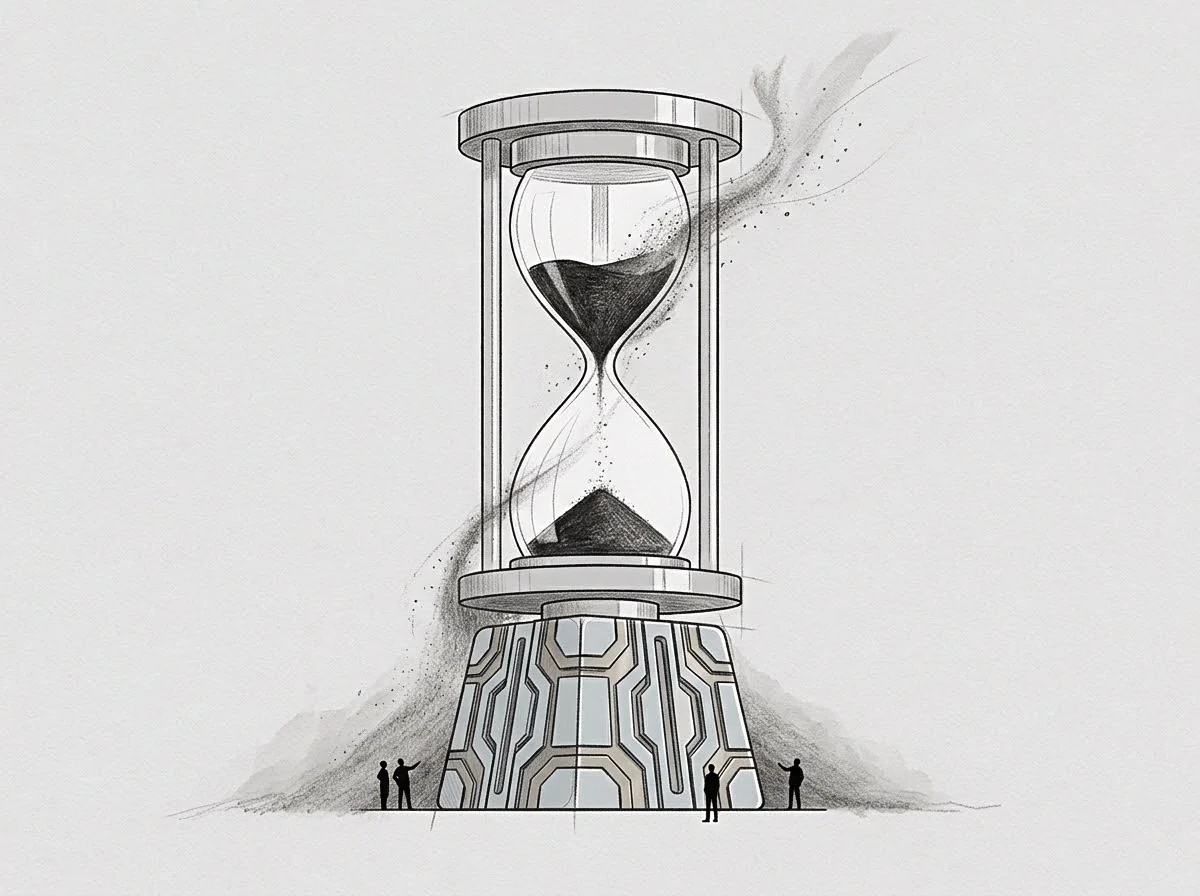
Drain
Restoring spatial range involves explicit intervention at the boundary of the active model. Once a state manifold has contracted under unbounded stress, passive waiting will not restore its original dimensionality. The system must systematically process the accumulated latent volume by pushing against the boundary wall, using intentional friction to force generative computation back into the decision loop.
High cognitive load during a strategic pivot marks the physical transition from automated pattern retrieval back to high-dimensional computation. An operator who treats this friction as a failure signal instinctively retreats down the slope of least resistance, reinforcing the contracted manifold. Treating that strain as a diagnostic reading confirms that the system is successfully expanding its operational boundary.

Boundary Interventions at Model Edges
Operators alter system setpoints by introducing mandatory friction along preferred paths. Artificially increasing the energy cost of automated routines forces the decision engine to evaluate higher-dimensional alternatives, breaking the local minimum trap and initiating manifold expansion.
Systemic expansion occurs exclusively at the current limit of computational tolerance. Business development built from compiled operational errors transforms historical failures into precise coordinate markers for structural expansion. Every logged error identifies a location where the old model reached its boundary, providing the exact engineering specifications required for the next iteration.

Mapping Coordinate Shifts and Manifold Expansion
Tracking small increases in state variance indicates structural recovery. As the operational space expands, the system regain its ability to hold parallel strategic options without triggering immediate performance degradation. The operator monitors variance metrics to confirm that decision-making has returned to high-dimensional state space.
Re-architecting an operating environment during ongoing execution demands clear structural parameters rather than vague commitments to flexibility. An explicit circuit breaker clause in operating agreements changes the energy threshold needed to re-establish dynamic computation.