
Estimating Angular Velocity Differences Between Leadership And Execution
Systemic drag increases when strategic turn rate outpaces operational retooling, turning directional change into structural heat rather than forward movement.
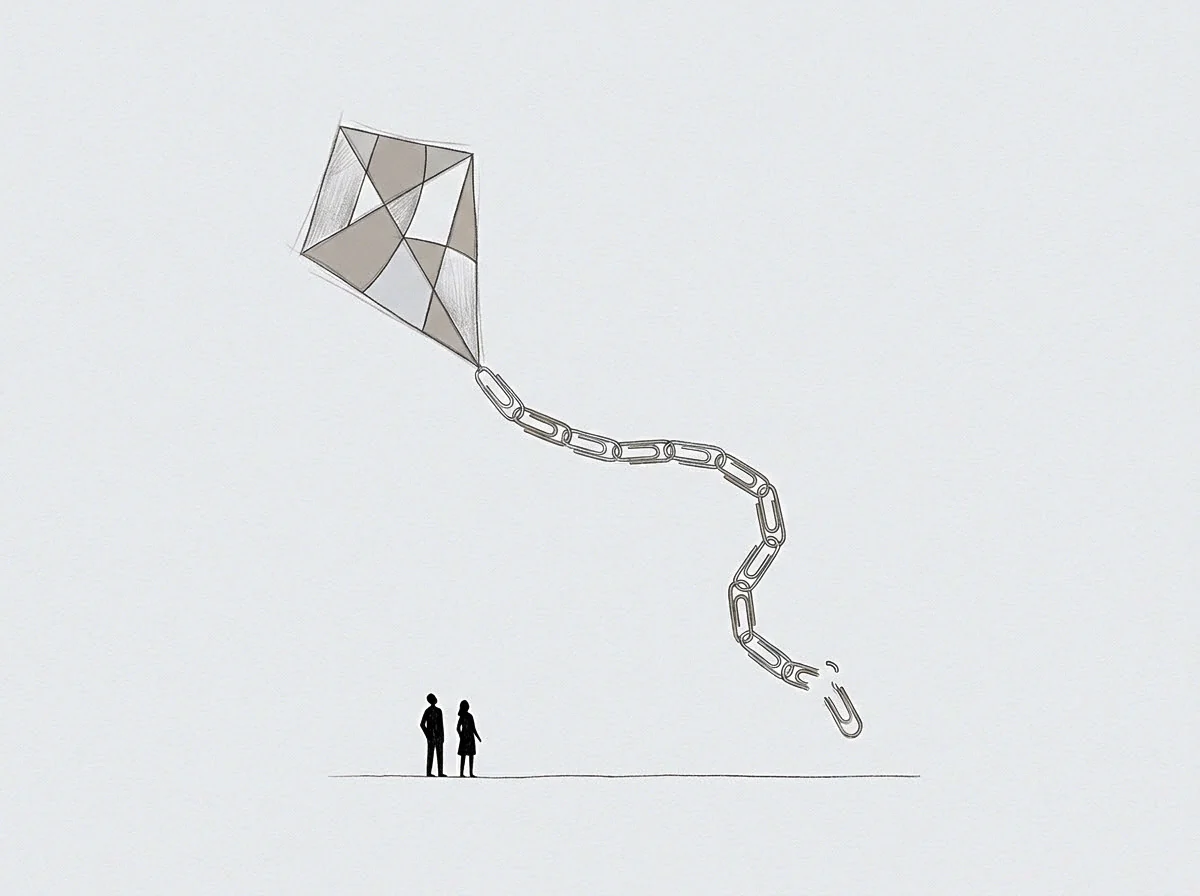
Displacement

Linear Momentum Against Rotational Trajectory
Translational speed is simply the rate an organization moves across ground along a set course. High throughput drives forward progress, but it commits capital, tooling, and labor to fixed production pipelines. Rotational rate, by contrast, tracks how fast an entity pivots on its baseline.
When leadership abruptly shifts direction, it generates high angular velocity, while the execution layer, anchored by active commitments and structural weight, keeps traveling along its existing vector.
Systemic torque builds in the gap between a steering change and the physical adjustment of the mass. A founder can crank the wheel forty-five degrees in an afternoon, but the production floor needs four months to bleed off forward momentum before the new heading takes effect. The gap between those two timelines is the actual measure of vector divergence.
Operational teams gauge efficiency against their current line of advance, while strategic teams evaluate it by market repositioning. When leadership confuses its own quick pivot with total operational realignment, it misjudges the force required to swing the business around. Because mass resists deflection, the energy required to turn a moving enterprise scales directly with its velocity and weight.
The strategic layer altered the destination three times this quarter while the operational layer finished the initial build.
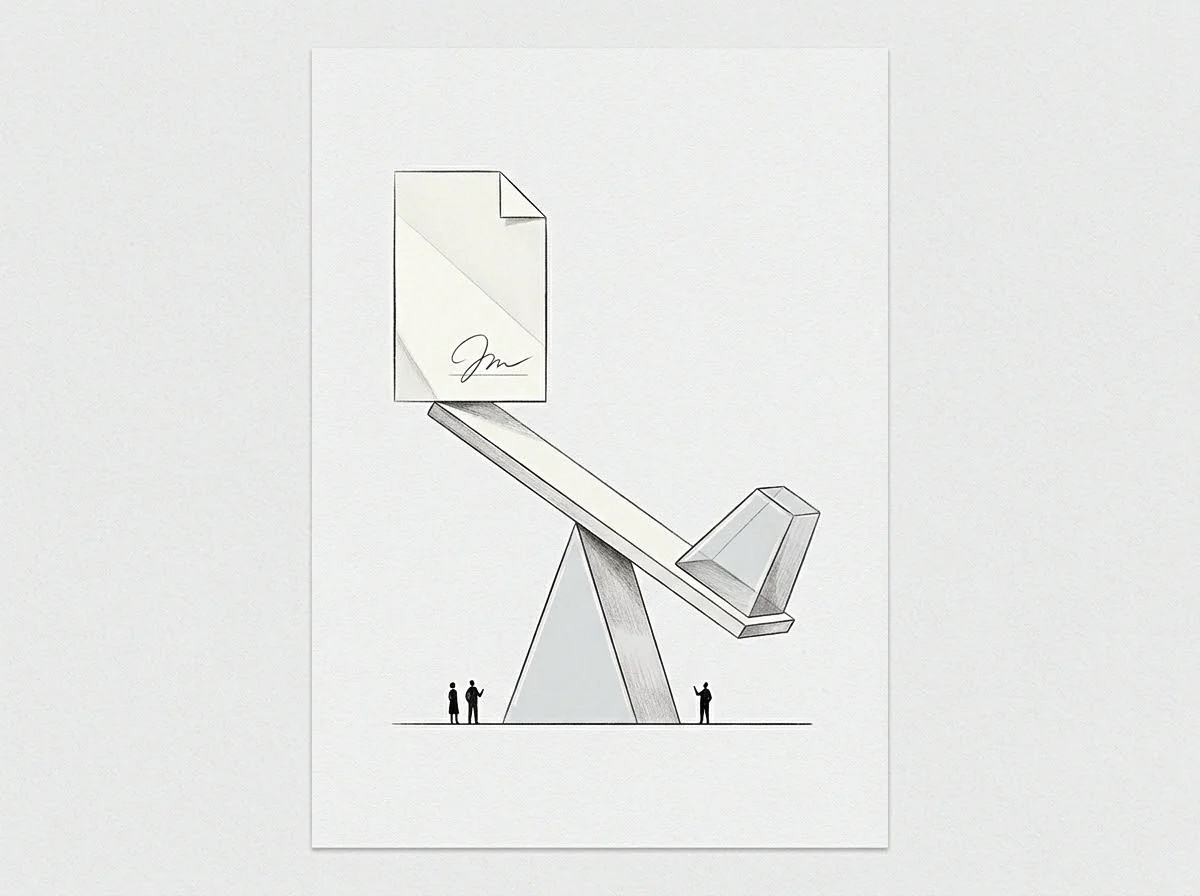
Clock

Cycle Length As Differential Inertia
Alignment falters whenever review cycles operate on conflicting frequencies. Strategic decisions move on tight loops fed by abstract signals, while execution relies on long stretches where altering a single dependency takes weeks of integration. That lag creates a cumulative phase shift between command and delivery.
Take two operating models observed across a six-month window. Under the first, leadership shifts market positioning every three weeks while engineering ships software on an eight-week cycle. Under the second, strategic priorities stay frozen for twelve-week intervals to match the engineering build cycle.
The first setup churns through wasted effort as half-finished builds get scrapped before launch; the second turns steering decisions into working operational software.
| Synchronization Mode | Strategic Adjustment Window | Operational Cycle Time | Primary Energy Outcome |
|---|---|---|---|
| High Rotation Mismatch | Weekly to Tri-Weekly | Eight to Twelve Weeks | High shear loss from abandoned work units |
| Matched Phase Calibration | Quarterly Fixed Window | Twelve Week Sprints | Direct transfer of rotational force into trajectory shift |
| Over-Dampened Stasis | Annual Fixed Window | Four Week Sprints | Execution efficiency along obsolete market vectors |
Rapid rotation applied to a high-inertia baseline generates internal heat rather than directional change.
When feedback loops come undone, leadership sees execution as obstinate friction, while engineering sees leadership as erratic noise. Neither diagnosis reflects the mechanical reality. Operational latency is not an attitude; it is simply the hours and weeks needed to flush unspent work from the line and retool.
Shortening the review cycle without cutting operational dependencies simply drives up the failure rate of released initiatives.
Gradient

How Does Directional Drift Alter System Momentum?
Directional drift builds up whenever the strategic turn rate outpaces what the execution layer can absorb. A trajectory gradient plots the divergence between where leadership aims and where resources actually travel over time. Calculating this slope means tracking the accumulation of capital and labor hours rather than consulting slide presentations.
The calculation carries no moral weight; it merely tracks mechanical drift.
Once the angle between the command vector and execution trajectory reaches ninety degrees, steering inputs generate zero progress on the new heading. The organization spends its whole energy reserve sustaining its original path while absorbing the drag of working against itself. Past ninety degrees, persistent course corrections actively brake forward movement, stalling operations entirely.
A turning input that arrives faster than the system can retool acts as a brake on total momentum.
Assessing this divergence requires a clean baseline: the natural drift of the organization when left unsteered. When leadership introduces a new course, the operation must climb an ascent gradient, which represents the work required to heave current operations out of their established groove toward the new vector.
Limiting the turn angle to what the baseline can absorb converts rotational force into forward motion without shearing the organization.

Friction
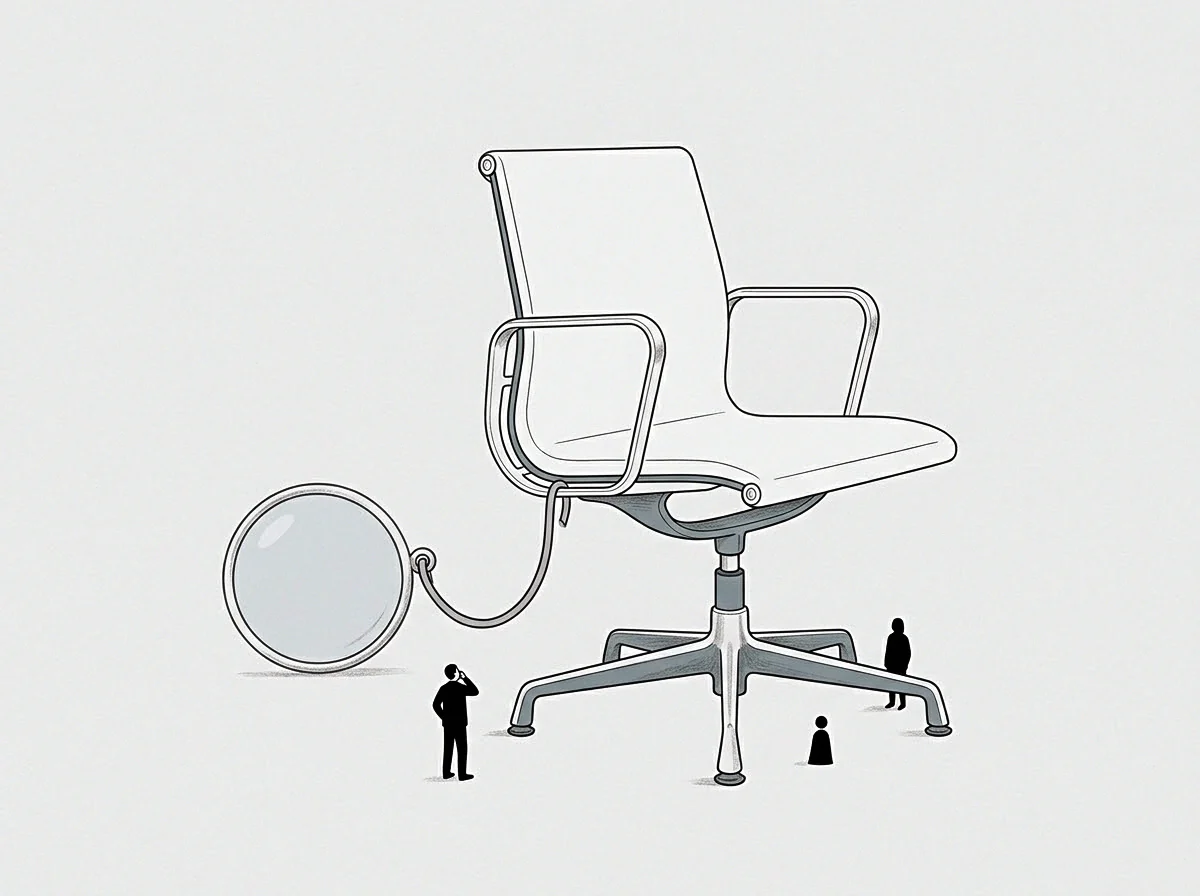
Shear Forces Across Operational Layers
When top-level rotation vastly outpaces baseline reorientation, fractures show up at internal boundaries. Middle management occupies the seam where these forces collide: the surface above turns quickly while the heavy base plows forward on its original line. The resulting drag creates operational shear stress.
- Resource Dissipation occurs when capital or tooling funded for one vector gets burned retooling for a discarded course.
- Signal Attenuation develops as middle layers dampen high-frequency steering shifts to protect day-to-day stability.
- Latent Disconnect emerges when reporting metrics project tidy alignment while work on the ground follows older paths.
Teams handle sharp angular velocity through passive dampening. They treat new directives as passing noise and hold off on compliance until the vector settles down. That hesitance is a rational defense against volatile leadership: the system preserves its linear momentum by ignoring rapid steering inputs.
Continuous directional adjustments convert available kinetic energy into structural fatigue.
This friction settles into unaddressed operational debt. Each abandoned initiative leaves half-finished infrastructure, orphaned repositories, and stranded commitments with counterparties. That residue rests on the baseline, adding mass that future steering changes will have to haul along.
Course corrections produce useful work only when the turn rate stays within the baseline’s capacity to absorb it.
Descent

Setting Vector Dampeners Across the Baseline
Matching steering speed to absorption capacity demands deliberate dampening at the executive level. Leadership must throttle its turn rate to match the retooling tempo of operational teams. While that pacing can feel sluggish to a founder, it avoids the torque that tears through organizational capacity.
A steady transition relies on fixed turning windows. Strategic changes are batched into planned inflection points instead of trickling out as constant tweaks. Between those dates, the strategic vector stays locked, giving execution time to gather speed along the new heading.
The rotational cadence settles into a rhythm.
Systemic stability improves when directional changes arrive at predictable intervals matched to build windows.
Gauging true angular velocity means watching the point of execution rather than the conference room. Output reveals the real trajectory; a steering input expresses only intent. As the gap between that intent and actual movement closes, efficiency returns, and raw effort translates into real distance covered.
A breakdown occurs when operations consumes its entire energy reserve simply reacting to course changes, leaving zero capacity to move forward along any line.