
Quantifying Latent Coordination Friction Across Enterprise Workflows Operating Under Unmeasured Rotational Shear Forces
Rotational shear friction develops when central governance changes direction faster than peripheral workflows can realign, consuming capacity in lateral drag.

Torque
Enterprise systems lose momentum when the central leadership axis shifts direction faster than outer execution units can rotate. Executive teams frequently alter strategic priorities in response to market signals, investor demands, or resource reallocations. This shift creates angular motion at the core.
Meanwhile, peripheral teams tied to fixed technical commitments and vendor contracts keep moving along earlier trajectories. The resulting mismatch creates lateral displacement between cross-functional teams, producing structural shear that drains work hours without generating useful output.
Linear friction happens when two groups move against each other along the same path. Shear friction occurs when teams operate at different distances from the central decision point while the central axis pivots. A priority shift of ten degrees at the executive level demands a proportional realigning force from peripheral engineering, sales, and compliance groups.
As distance from the core steering group grows, the physical distance a peripheral team must cover to stay aligned increases exponentially. Continuous priority changes force peripheral teams into constant correction, spending capacity on re-aligning interfaces instead of doing primary work.
Workflows under unmeasured rotational shear decelerate quietly. Project dashboards regularly capture velocity, output volume, and milestone completion dates. While these metrics record whether a team meets local targets, they miss the effort spent navigating angular displacement between interdependent units.
For instance, an engineering team delivers a service architecture designed for enterprise clients, only to learn during integration that product strategy shifted ninety degrees toward automated mid-market self-service three months earlier. The code functions cleanly against local specs, but the output requires immediate refactoring to fit the updated direction. The labor spent building the incompatible build represents unmeasured latent friction.
Angular displacement between strategy and execution scales with organizational distance, multiplying peripheral labor costs during core priority shifts.
Measuring this drag requires separating the angular velocity of governance shifts from the translational velocity of execution. Tactical units measure translational velocity by tracking completed work items over time. Angular velocity measures how fast central governance decisions alter target direction.
When angular velocity exceeds what peripheral teams can handle, technical debt accumulates along the shear plane. Teams begin bypassing official handoffs to protect local output metrics, creating informal channels that obscure structural misalignment. Unrecorded lateral work grows while official status reports stay green.
Ignoring angular displacement forces operators to absorb realignment stresses through unrecorded overtime and informal negotiation. Over time, re-establishing cross-functional consensus consumes the available attention and capacity of middle management, leaving no room for structural innovation or foundational repair.
Post
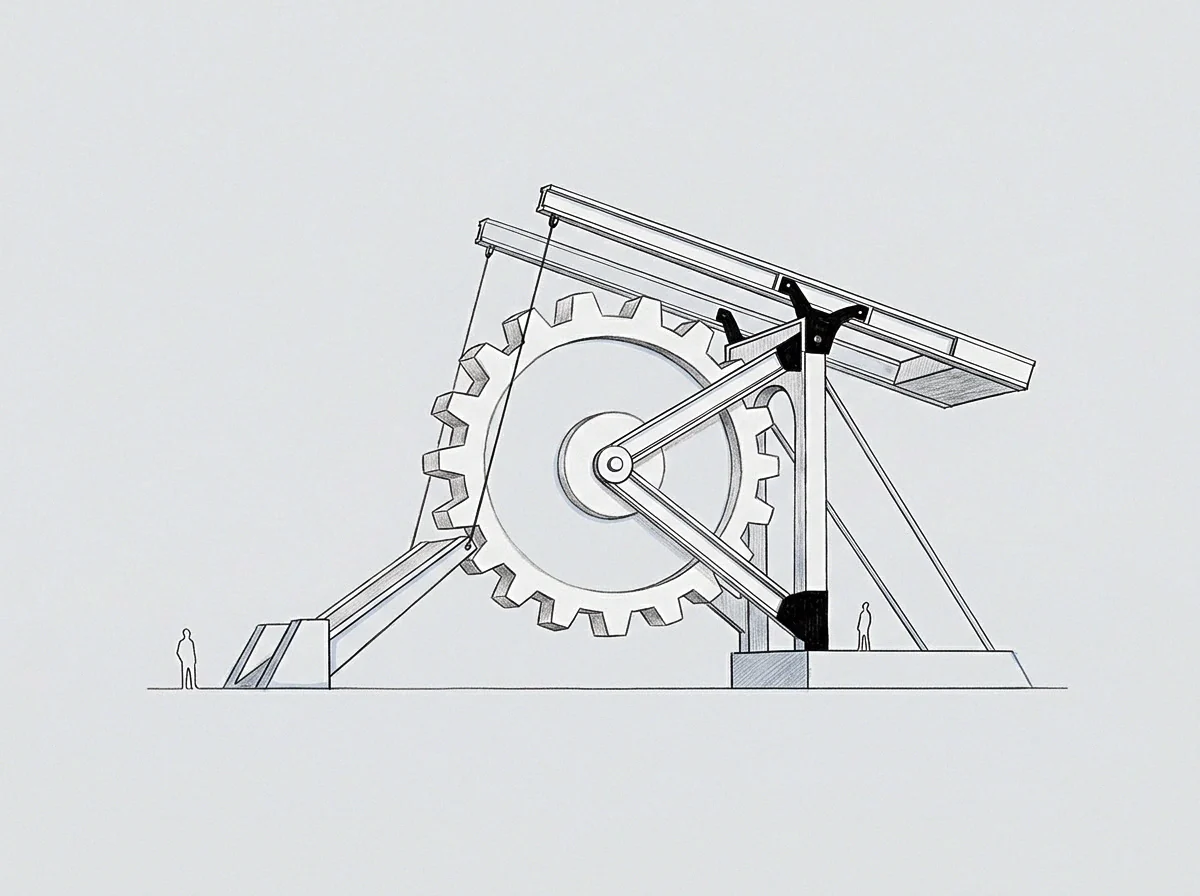
Fixed boundary markers anchor cross-functional agreements within complex enterprise workflows. In physical structures, a rigid pillar absorbs lateral forces without shifting location. Organizational systems install structural controls as stabilization points to keep peripheral teams from drifting when central strategy rotates.
These markers include hard architecture budgets, explicit API contracts, fixed headcount allocations, and formal compliance thresholds. When rotational forces press against a workflow, these controls reveal whether an organization has enough structural stiffness to maintain alignment or if internal components will slide past one another.
Unanchored enterprise workflows deform quickly under shifting executive mandates. Without explicit operational anchors, teams interpret strategic directives through local priorities. Legal adjusts contract risk tolerances defensively, while sales adopts aggressive growth targets to cover missed quarterly forecasts.
Both groups respond to central signals, but localized interpretations pull them apart. The shear plane between sales and legal widens, delaying deal execution and consuming executive attention in repeated arbitrations. Without clear boundaries, routine operations turn into perpetual jurisdictional disputes.
Structural stability relies on clear interface standards between operational units. A survey of enterprise coordination failures under rotational stress highlights recurring vulnerabilities across operational groups.
- Interface Decoupling occurs when upstream teams alter output schemas without informing downstream consumers, forcing manual realignments in production.
- Priority Skew arises when central governance changes product development metrics without updating incentives for delivery teams, creating conflicting objectives.
- Contractual Drift develops as informal workarounds replace formal service level agreements during prolonged periods of strategic reallocation.
- Resource Trapping appears when capital remains locked in legacy projects while peripheral teams try to execute updated mandates without budget reallocations.
Establishing operational stabilization markers requires explicit boundary conditions that state acceptable drift limits between dependent groups. These markers define the threshold where a local adjustment triggers a mandatory alignment pause across the enterprise. When a team approaches the defined boundary, the system forces formal synchronization rather than letting informal workarounds absorb the lateral stress.
This constraint limits maximum shear force across team boundaries.
A downstream engineering manager summarizing the cost of unanchored rotation noted that six weeks of technical progress were erased because nobody specified whether the target database schema was fixed or rotating.
Drag
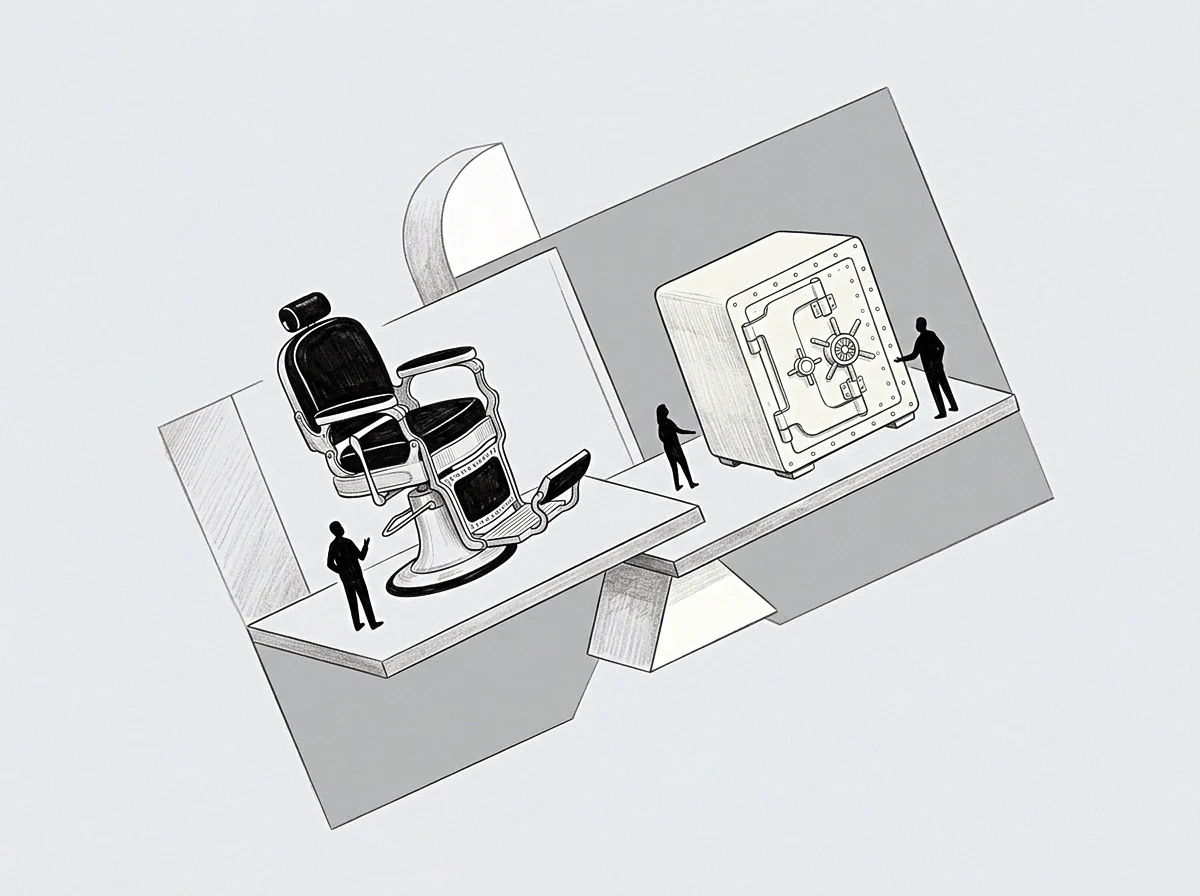
Lateral misalignment generates continuous drag on routine execution, unlike static resistance, which is simply the inertia required to launch a project. Latent coordination drag acts as a continuous tax on transactions passing between misaligned units. As rotational shear increases, the effort needed to transmit information across team boundaries rises.
Teams hold additional alignment meetings, draft elaborate documentation to hedge against shifting requirements, and run extra verification checks to confirm upstream assumptions. This administrative weight reduces throughput without adding customer value.
Rotational shear turns predictable opposition into complex lateral drag. Comparing linear resistance with rotational drag illustrates how structural mechanics operate inside enterprise workflows.
| Dimension | Linear Friction | Rotational Shear Drag |
|---|---|---|
| Primary Axis | Direct opposing vector along a single path | Lateral displacement across parallel operations |
| Detection Method | Visible schedule delays and budget overruns | Invisible capacity erosion and unrecorded overtime |
| Structural Source | Resource bottlenecks and execution constraints | Angular velocity mismatches between governance tiers |
| Scaling Factor | Proportional to workload volume | Exponential relative to organizational radius |
| Remediation Method | Process optimization and capacity addition | Boundary stabilization and governance dampening |
Quantifying lateral drag requires measuring the proportion of operational time spent negotiating interfaces against time spent producing primary deliverables. In high-shear environments, operators spend up to forty percent of their active hours verifying commitments with adjacent teams, seeking sign-offs from shifting stakeholders, and redesigning work-in-progress to fit changing requirements. This allocation acts as a hidden tax on productivity, where the true cost is the lost output that could have been directed toward primary capabilities.
Unmeasured coordination drag converts productive execution hours into administrative verification cycles across misaligned operational boundaries.
What structural conditions accelerate rotational friction?
Rotational friction accelerates when organizations separate decision-making authority from execution responsibility across large operational distances. Consider an enterprise with a central product strategy group at the core and regional deployment units operating at a wide radius. The central strategy group makes quarterly adjustments to platform architecture to capture market trends, with each change representing a fifteen-degree rotation in direction at the central desk.
At the outer radius, regional engineering teams are bound by local regulations and long-term customer contracts. A fifteen-degree shift at the core forces regional teams to rewrite integration modules, update data compliance protocols, and renegotiate delivery schedules with clients. The workload required to cover that fifteen-degree arc at a wide radius is fifty times greater than the effort needed to plan the shift at the center.
What core leadership sees as a minor strategic adjustment feels like severe disruption on the periphery.
If the central strategy team executes three such directional shifts within a single fiscal year, the cumulative displacement exceeds what regional teams can absorb. Regional staff stop updating local documentation to match central directives, maintaining a surface layer of compliance while continuing legacy operations. The organization fractures along the shear plane.
Central leadership sees peripheral execution as slow, while regional teams see central leadership as disconnected from operational reality. The gap between central mandates and actual execution widens, building up hidden technical and operational debt.
Correcting this acceleration requires reducing the frequency of central steering changes or shortening the operational radius through decentralized authority. When local teams have the autonomy to absorb strategic shifts within their own boundaries, the enterprise reduces the effective workflow radius. Shortening that distance lowers the physical work required during priority shifts, directly reducing lateral drag.
Operating under standard governance without regional boundary dampening turns every strategic adjustment into an automatic tax on peripheral capacity.

Strain
Internal deformation precedes structural failure in organizations exposed to continuous shear forces. Materials under stress undergo elastic deformation first, stretching under load and returning to shape once force dissipates. Past the yield point, materials enter plastic deformation, where structural changes become permanent.
Enterprise workflows show the exact same response. Under moderate rotational shear, teams temporarily absorb alignment stress through overtime or informal channels. Once the yield threshold is crossed, the organization suffers permanent degradation, leading to burned-out staff, fragmented documentation, and unmaintainable technical architecture.
Quantifying structural deformation requires tracking specific indicators of operational strain across cross-functional boundaries. Measuring vector divergence across enterprise workflows involves a clear five-step sequence.
- Establish Steering Vectors by auditing formal decision logs from central governance committees to map the direction and speed of strategic shifts over a rolling twelve-month window.
- Map Peripheral Trajectories through time-tracking records, code repository commits, and project logs to trace operational output across outer execution teams.
- Calculate Angular Displacement by comparing the divergence angle between central governance decisions and peripheral execution outputs across quarterly intervals.
- Quantify Interface Shear by measuring unexpected inter-team dependencies, ticket escalations, and architecture review rejections along departmental boundaries.
- Determine Yield Boundaries by plotting lateral alignment costs against team delivery capacity to locate where output quality begins to degrade.
Measuring an organization’s baseline state reveals capacity lost within misaligned workflows. When a system operates under high shear, energy is lost through friction along internal team boundaries. Calculating this loss requires comparing current output under shear against output in a stabilized system.
The resulting gap illustrates the path of least resistance the organization has taken to avoid confronting structural misalignment.
Permanent operational deformation occurs when continuous rotational shear forces drive teams past their elastic capacity to absorb alignment shifts.
Bypassing official channels serves as a primary marker for latent coordination friction. When an organizational interface becomes too complex or painful to navigate due to constant shear, operators route around it entirely. An engineering team builds a duplicate authentication microservice rather than coordinating with central security, accepting long-term maintenance debt to avoid immediate alignment costs.
A sales unit creates informal contracting templates rather than submitting deals through central legal review. These bypass routes show where internal friction has crossed acceptable thresholds, mapping the structural barriers within the enterprise.
As a rule, any internal interface requiring continuous executive intervention to maintain basic operational traffic has already breached its structural yield point.

Yield
Structural limits define the maximum rotational shear a workflow can endure before execution fractures. When the rate of strategic rotation permanently exceeds the realigning capacity of peripheral teams, the enterprise hits a wall. At this stage, adding project managers, increasing reporting frequency, or asking teams for extra effort produces no improvement in output.
The system cannot process further alignment adjustments in its current setup. Frictions at this boundary signal that current governance has exhausted its capacity to direct execution.
Exceeding structural limits forces an enterprise to re-evaluate its organizational structure. Applying rotational torque to a frozen, misaligned system causes broad operational failure, resulting in staff turnover, platform outages during updates, or compliance breaches. Re-establishing alignment requires pausing central priority changes until peripheral workflows stabilize around a shared baseline.
Strategic shifts must match the execution speed of peripheral teams, or the system will continue fracturing along internal boundaries.
Dampening rotational shear requires setting fixed synchronization windows during which central leadership cannot alter strategic direction. During these freezes, peripheral teams dedicate full capacity to clearing interface debt and aligning technical architecture with current governance. Shortening the operational radius through decentralized decision rights allows peripheral units to absorb local variation without passing lateral shear across the broader organization.
Hitting this limit marks the end of simple process optimization, forcing a fundamental redesign of how authority connects strategy to execution.