
Quantifying Non-Stationary Kernel Thread Scheduling Delays In Distributed Service Mesh Envelopes
Kernel thread scheduling delays in distributed service mesh envelopes stem from cgroup quota exhaustion, runqueue starvation, and non-stationary preemption.

Signal
Production sidecars drop packets when the CPU scheduler stalls. Round-trip latency across distributed service boundaries regularly shows variance that steady-state queuing formulas cannot account for. The baseline shifts under load, generating non-stationary distributions where tail latencies drift across time steps without any change in socket traffic volume.
Runqueue latency, the interval an executable context spends waiting on a runqueue after becoming runnable, runs through distinct statistical phases under bursty proxy workloads.
The completely fair scheduler distributes execution quotas through virtual runtime accounting. When proxy tasks and application workers share an execution boundary, ingress socket wakeups trigger preemption attempts that run directly into kernel softirq routines. Runnable threads wait while the core finishes servicing hardware interrupt queues.
The resulting delay is non-stationary because packet arrival rates fluctuate, cache residency degrades during bursts, and the kernel periodically migrates tasks across cores to balance runqueue depth.
A proxy stalled on a runqueue accumulates ingress socket buffer backlog before user space reads the first byte.
Measuring this delay accurately requires instrumenting kernel sched_wakeup and sched_switch tracepoints via extended Berkeley packet filters. Because static histograms hide the drift, computing sliding quantiles across fixed millisecond windows shows that runqueue stalls arrive in clustered bursts, driven by scheduler migration decisions and lock contention inside the core scheduler routines.
These scheduler traces highlight a concrete trade-off: tuning migration margins reduces inter-core task movement, but leaves runqueue depths uneven across NUMA nodes.
Wall
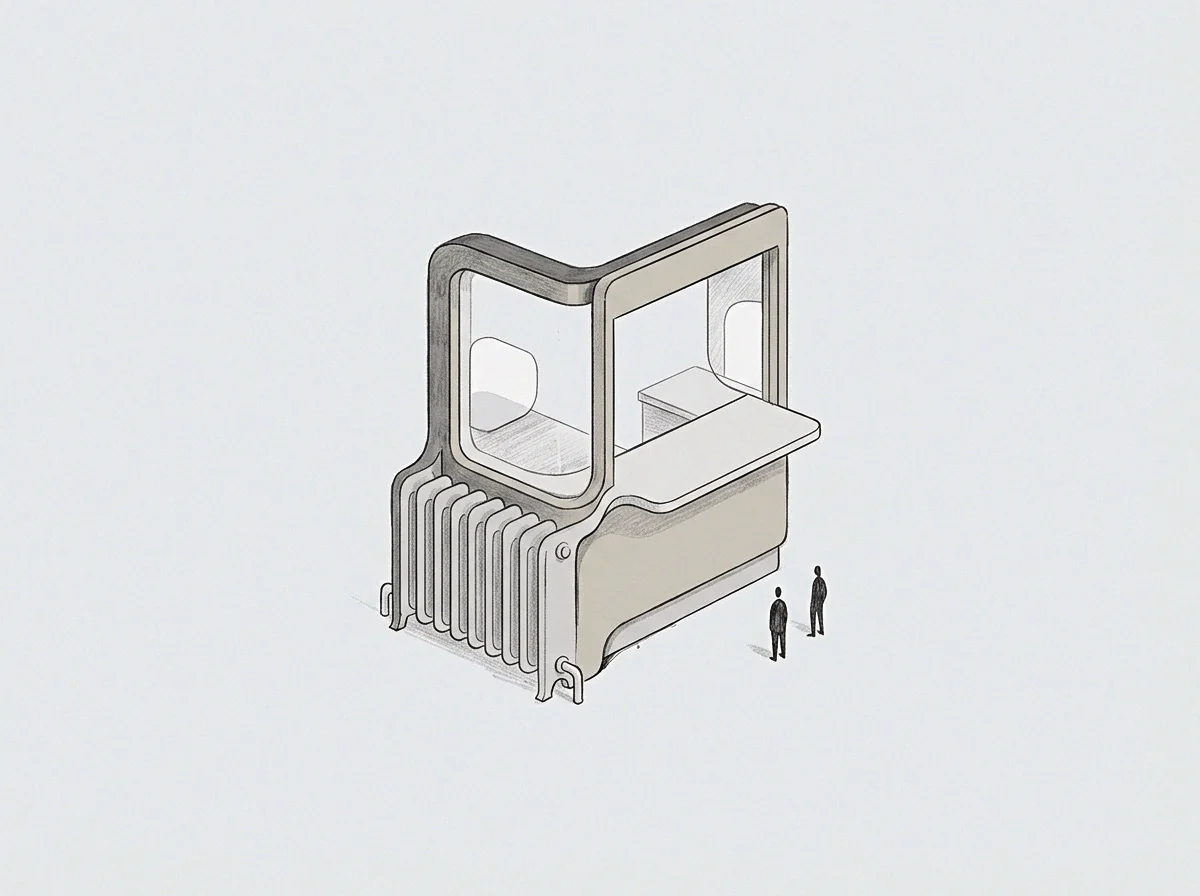
Resource isolation boundaries enforce hard limits that skew scheduling timing. Control groups constrain CPU shares through quota windows, typically set at one hundred milliseconds. When an ingress proxy burns through its allotted quota before the accounting window finishes, the kernel throttles the task completely until the next period opens.
This throttling forces fully runnable tasks to sit on the runqueue receiving zero execution cycles. The resulting stall causes sharp spikes in service boundary round-trip times, shifting the latency gradient upward by orders of magnitude within a single control period.

Bandwidth Control Mechanics
The kernel manages bandwidth limits via timer slack mechanisms and hierarchical scheduling trees. If a sidecar process handles transport layer security termination alongside request routing, burst consumption often depletes the quota within twenty milliseconds of a period starting. The remaining eighty milliseconds register as pure scheduling pause.
Application containers waiting on upstream responses then inherit the stall through socket backpressure.
Engineers often mistake quota throttling for memory bus saturation or dropped packets. The signature of quota exhaustion is distinct: zero hardware queue drops paired with instantaneous ninety-ninth percentile response spikes that match the cgroup period value. The boundary holds firmly until timer interrupts replenish the runtime allowance.
When quota misconfigurations lock execution units behind periodic runtime freezes, downstream services trigger retry storms that compound total cluster socket load.

Queue
Runqueue dynamics vary sharply depending on whether worker tasks run cooperative event loops or preemptive operating system scheduling. Ingress proxies rely on asynchronous polling loops, whereas application containers often use thread-per-request models. When hundreds of blocking application workers compete with a small pool of asynchronous proxy routines on the same physical cores, scheduler fairness algorithms work against latency stability.
The table below compares execution behaviors observed across standard service boundary deployments under asymmetric context density.
| Execution Model | Context Switch Cadence | Runqueue Dwell Time | Cache Locality Impact |
|---|---|---|---|
| Asynchronous Sidecar Polling | Infrequent voluntary yielding | Sub-millisecond outside throttle windows | Preserves core instruction cache |
| Preemptive Application Worker Pool | Continuous forced preemption | Multi-millisecond non-stationary variance | Evicts shared level-three cache entries |
| Kernel Softirq Bottom Halves | Asynchronous preemption interrupts | Zero queue delay with priority elevation | Invalidates pipeline execution states |
Preemption latency compounds when sidecars and applications run in separate namespaces on a shared host. Operating system schedulers evaluate task priority strictly by accumulated virtual runtime. An application worker waking from a database call presents an expired virtual runtime figure, giving it immediate preemption priority over a proxy actively processing ingress sockets.
The proxy yields execution midway through parsing a payload header.
Preemption priority granted to waking worker processes forces proxy packet parsers into involuntary idle states.
Kernel tracing demonstrates this behavior consistently. Tracing sched_switch shows extended intervals where proxy routines yield to batch jobs, leaving connection state machines paused while latency climbs steeply. The queue becomes a reservoir of unserviced transport payloads.
Fixing processor affinity avoids preemption collisions by pinning proxy loops to isolated physical cores. That pinning, however, introduces idle overhead when request rates drop, leaving reserved cores unutilized.

Partition
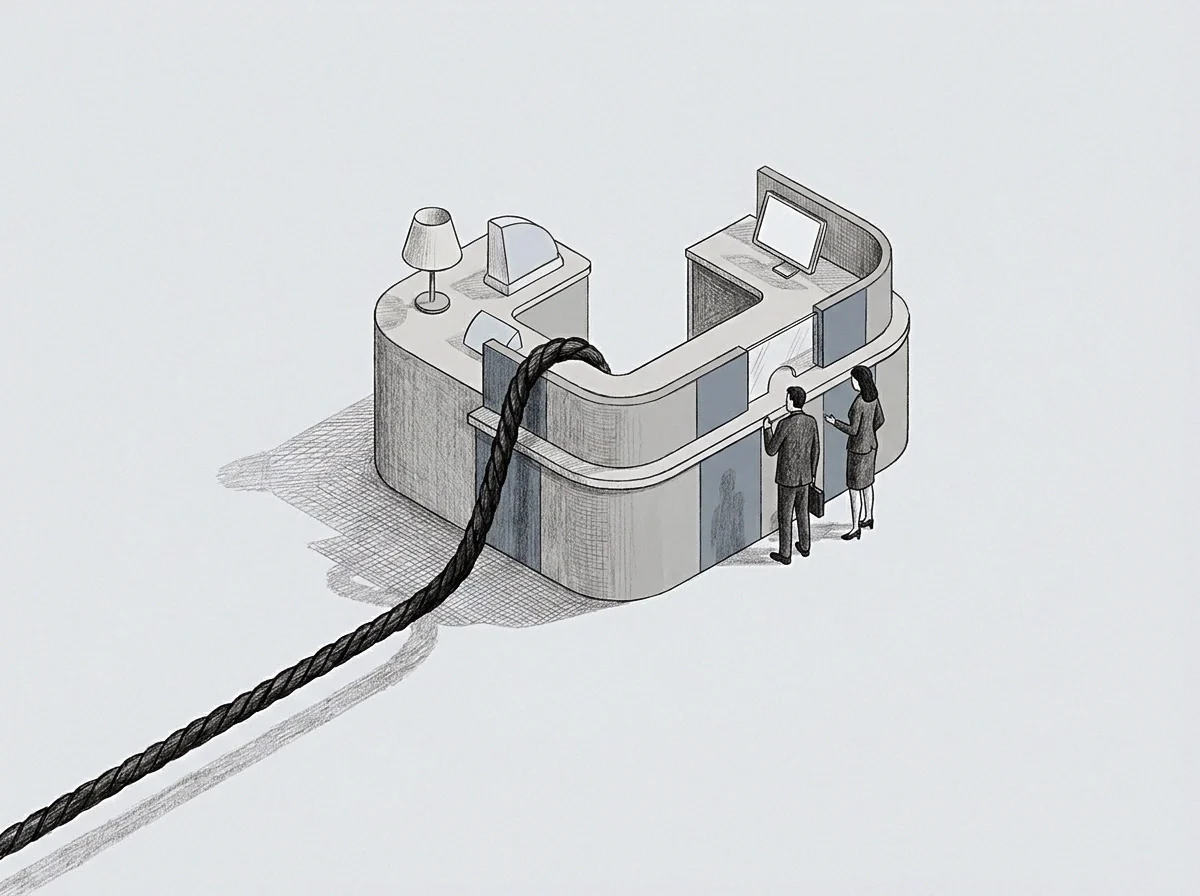
Non-stationary scheduling delay can be quantified through continuous quantile decomposition of runqueue durations. Rather than averaging across arbitrary collection windows, the telemetry tracks kernel execution states across rolling time segments. The distribution baseline moves continuously in response to background host activity, memory reclamation, and garbage collection pauses in adjacent execution boundaries.
Quantifying Dynamic Ingress Stalls
Isolating scheduling delays from raw application processing time involves three discrete measurement points:
- Kernel Wakeup Tracepoint registers the exact nanosecond timestamp when a network packet transitions an execution task from sleeping to runnable state.
- Scheduler Switch Event records when CPU registers load the task state and execution actually resumes.
- Socket Read Completion marks when user space finishes copying payload data from transport buffers into runtime buffers.
Subtracting the wakeup timestamp from the switch timestamp isolates kernel runqueue latency. Any value above fifty microseconds under low aggregate CPU load points to scheduler starvation or NUMA balancing penalties. When the delay instead falls between scheduler switch and socket read completion, the bottleneck sits inside user process execution rather than operating system task arbitration.
Subtracting wakeup timestamps from context switch events isolates kernel scheduling starvation from application runtime overhead.
Because of this statistical non-stationarity, classical mean-variance models fail to forecast tail events. The latency envelope exhibits sharp regime shifts: when host memory pressure triggers kernel page cache writebacks, storage flushing tasks obtain priority, introducing bimodal spikes into sidecar runqueue dwell times.
The infrastructure cannot maintain deterministic processing bounds without dedicated execution partitions.

Gauge
Tuning distributed proxy environments requires treating scheduling latency as an ordinal vector rather than a static budget metric. Attempting to optimize proxy performance without accounting for scheduler non-stationarity produces fragile configurations that collapse under sudden bursts. Setting aggressive cgroup quotas to avoid resource contention directly triggers the periodic execution freezes recorded in production post-mortems.
Decoupling proxy execution from application execution spaces eliminates preemption conflicts at the root. Allocating dedicated physical cores to sidecar processes bypasses fair scheduler balancing heuristics entirely. Where dedicated core pinning remains impractical due to server density constraints, setting scheduler policy flags to prioritize proxy tasks reduces runqueue dwell times below socket timeout boundaries.
System designers face an unresolved question: how can kernel schedulers dynamically infer microservice transport deadlines directly from socket buffers without violating operating system isolation boundaries?