
Quantifying Reserve Capacity Losses During Queue Overload
Queue overload converts reserve capacity into coordination friction, collapsing realized throughput as arrival rates exceed processing thresholds.
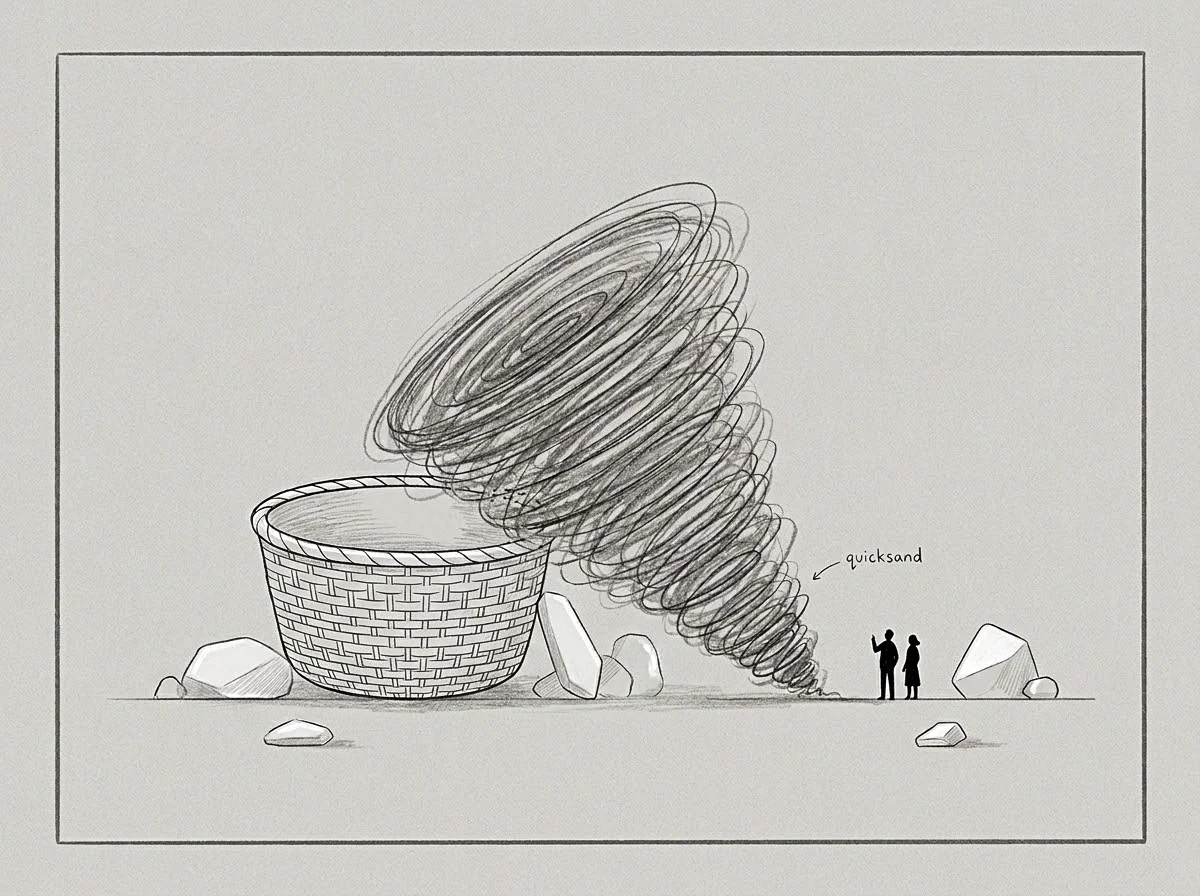
Friction
A monitoring screen displayed seventy-two open tickets on a Tuesday morning, climbed past four hundred by Thursday dusk, and showed processing output dropping by a third while every workstation remained occupied until midnight. The incident log recorded no hardware outages or employee absences during that stretch. Work piles up.
Physical inputs continue entering the receiving pipeline while finished units exit at a diminishing rate. When an operational system operates near full allocation, incoming tasks wait in holding lines that consume working space, memory registers, and human attention. The boundary separating stable buffering from unmanageable congestion is governed by the ratio of intake velocity to completion velocity.
As that utilization ratio crosses eighty percent, the relationship between line length and delay ceases to follow linear proportions. Queues generate drag.
Arrival Rate Saturation Across Operational Buffers
Intake streams fluctuate unpredictably across every active production environment. The mathematical foundation of congestion shows that expected wait intervals follow a hyperbolic trajectory when demand nears peak capacity. Small upticks in task submissions trigger disproportionate delays once reserve buffers shrink.
A queue acts as an energy sink, absorbing operational momentum and forcing resources to manage holding states instead of finishing discrete units. The system diverts real effort into staging, sorting, and holding preliminary requests.
When arrival volume approaches total service limits, nominal processing margins compress while holding delays escalate along a hyperbolic curve.
Engineers and managers frequently misinterpret this dynamic as an unexpected shortfall in individual labor. The underlying distortion stems from variance in service duration combined with erratic submission rhythms. When incoming units arrive in tight clusters, service channels experience brief micro-collapses.
If the operational reserve has already been eroded to extract short-term efficiency gains, these micro-collapses compound into persistent blockages. Unprocessed demand remains active. Each delayed work unit stays in memory, occupies a row on the project board, and prompts status inquiries from stakeholders waiting downstream.
Three mechanical penalties emerge when incoming demand exceeds the absorption threshold of the workspace:
- Contention latency develops as parallel processes compete for fixed shared tooling, causing active jobs to stall until locks clear.
- State preservation overhead consumes active working memory because unfinished items demand continuous tracking, reporting, and shelf allocation during multi-day holding intervals.
- Cascading retry volume multiplies raw intake pressure when external senders reissue identical inquiries after initial response windows expire without resolution.
The backlog expands rapidly. Nominal estimates of available reserves assume that all idle hours represent usable output. In operational reality, reserve buffers perform the structural duty of dampening random demand surges.
Stripping away that buffer to maximize cardinal utilization metrics leaves the operating unit defenseless against ordinary stochastic variation. The cost of running without an absorption cushion is paid through sudden service failure rather than gradual slowing.
Mathematical Properties of Service Degradation
Formulas describing single-server and multi-server pipelines confirm that average wait time scales with utilization divided by the unallocated margin. When utilization sits at ninety percent, average wait time is nine times the raw execution duration. At ninety-five percent utilization, that wait expands to nineteen times the execution baseline.
Buffers drain under pressure. At ninety-nine percent, the delay factor reaches ninety-nine times the baseline execution interval.
The system loses throughput. Human teams subjected to this mathematical reality alter their working patterns to survive the intake deluge. Operators abandon long-horizon structural maintenance to handle urgent incoming pings.
They truncate verification checklists, skip documentation passes, and defer system hygiene. These tactical concessions permit short bursts of rapid clearances, but they seed downstream errors that inevitably re-enter the queue as rework. Attempting to run an organization without reserve capacity causes the service threshold to drop below its designed baseline, converting temporary traffic spikes into permanent operating deficits.
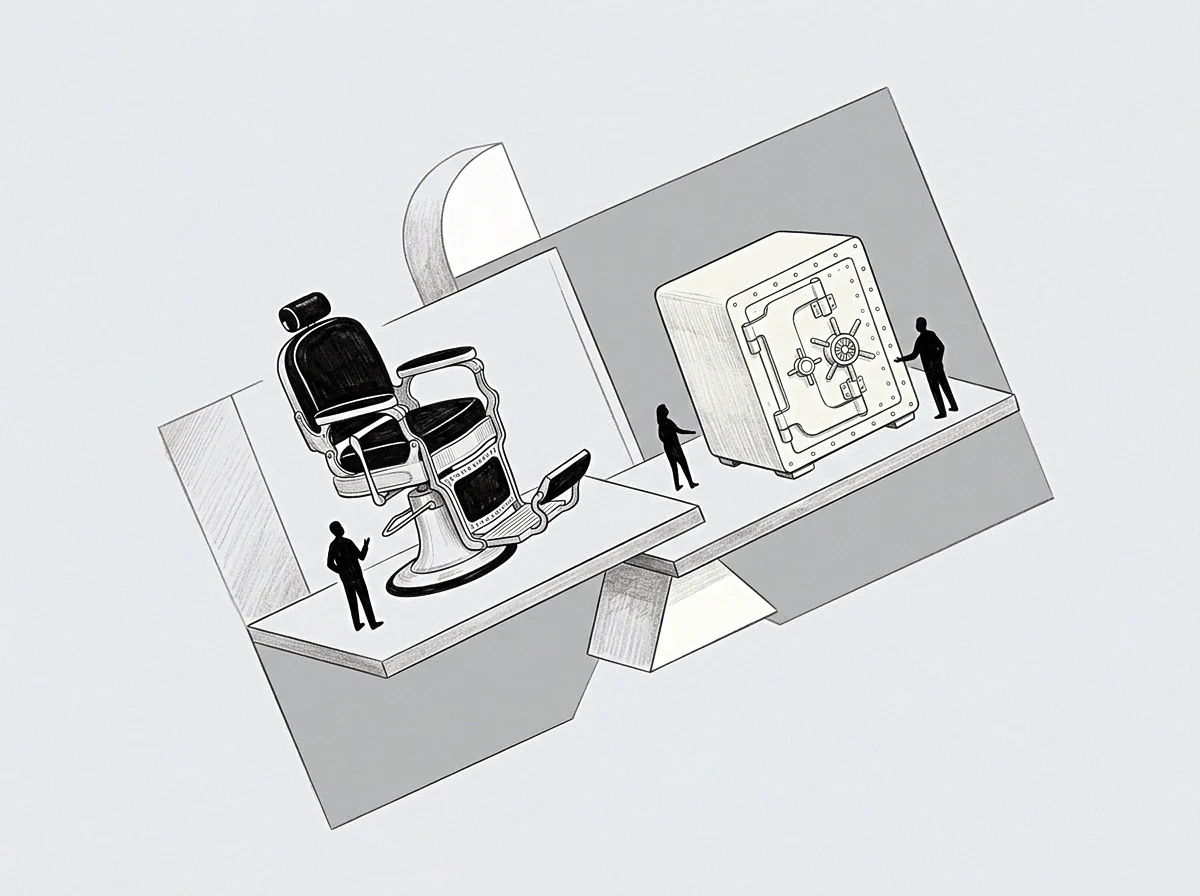
Floor
The baseline represents the lower boundary below which an operational system forfeits self-correcting equilibrium. Maintaining functional reserves preserves the ability to absorb unexpected inputs without breaking internal synchronization. When a leadership team mistakes reserve capacity for wasted overhead, they systematically dismantle the shock absorbers that protect operational continuity.
Headroom disappears quickly. The organization converts all remaining elasticity into active commitments, leaving zero slack to navigate routine friction.
Structural Boundaries of Minimum Slack
Operational reserves provide the spatial and temporal buffer required to stage incoming dependencies cleanly. Without this margin, every minor delay propagates through interdependent units without dampening. A developer waiting on code review cannot begin integration testing; a distribution hub waiting on customs clearances fills its loading bays and blocks incoming freight.
The queue begins feeding on its own physical perimeter. Space allocated for sorting items becomes occupied by stalled cargo. The math turns vicious.
Operating below minimum reserve margins triggers self-reinforcing congestion that reduces effective capacity below baseline output.
In human workflows, the collapse of reserve headroom manifests as schedule compression. A founder schedules back-to-back design reviews, investor updates, and client negotiations across an unbroken ten-hour block. Any conversation exceeding its assigned slot by six minutes shunts the entire sequence forward.
By late afternoon, the founder rushes through substantive product trade-offs, providing hurried answers that require extensive clarification threads over the subsequent forty-eight hours. The initial refusal to hold open space on the calendar creates dozens of administrative side effects that consume multiple hours of team effort later in the week.
Comparative Regimes of Buffer Depletion
Analyzing operating regimes across quantifiable saturation levels clarifies the progression from stable elasticity to structural gridlock. The transition points reflect observable changes in latency, throughput, and error generation.
| Operating Regime | Headroom Margin | Queue Behavior | Effective Throughput | Primary Failure Mode |
|---|---|---|---|---|
| Nominal Elastic | 30 to 40 percent | Transient spikes resolve spontaneously | Stable at baseline | Isolated component delay |
| Saturated Linear | 10 to 20 percent | Backlog accumulates steadily during peaks | Flat near ceiling | Deferred preventive maintenance |
| Thrashing Congested | 1 to 5 percent | Backlog growth outpaces arrival rate | Declines 20 to 40 percent | Context switching and triage overhead |
| Terminal Lockup | Zero percent | Unbounded queue expansion | Collapses toward zero | Cascading deadlock and retry storms |
The data demonstrates that operating throughput peaks well before physical or human resources hit total saturation. Once utilization enters the thrashing zone, realized output drops precipitously even as expenditure and effort remain pinned at maximum thresholds. The unspent volume of potential work represented by reserve capacity is not an idle luxury.
That reserve acts as the kinetic boundary that prevents the system from crossing into self-destructive coordination drag.

A Worked Assessment of Latency Spikes
A software engineering division supporting fifty enterprise clients provides an empirical demonstration of this reserve collapse. Assume an engineering organization of twenty developers handling two distinct streams: routine feature requests and critical production defects. Over two quarters, leadership mandates that eighteen developers dedicate one hundred percent of their recorded hours to contracted feature roadmaps, allocating only two engineers to handle incident response and infrastructure maintenance.
The baseline arrival rate of production bugs averages four incidents daily, with each incident demanding six engineer-hours to isolate, patch, and deploy.
Under steady-state conditions, four daily defects require twenty-four engineer-hours. Two dedicated engineers supply sixteen hours of capacity per workday. A permanent structural shortfall of eight engineer-hours daily develops immediately.
Initially, the team covers this gap through overtime. By week three, sustained fatigue increases production defect generation from four daily bugs to six, as hurried deployments introduce regression errors. The bug intake velocity jumps to thirty-six engineer-hours daily against the same sixteen-hour response capacity.
The incident backlog swells from five tickets to eighty within thirty calendar days.
To stem client defections, leadership pulls six developers off feature tracks to assist with bug triage. This sudden shift interrupts thirty active development tasks. Half-finished code sits unmerged in local branches, accumulating merge conflicts as other patches land.
The six reassigned developers spend their first two days reading incident logs, attending status briefings, and reconstructing incident context. Context switches interrupt execution. Coordination extracts a heavy toll.
By month two, feature delivery has stalled entirely, while defect resolution throughput remains lower than the historic baseline due to communication overhead across eight engineers stepping on shared code paths. The decision to run at zero reserve capacity reduced total delivered value by forty-two percent across the combined department.
The contractual delivery deadline remains fixed in the vendor agreement while the technical staff spends sixty percent of its working week resolving dependency deadlocks.
Deficit
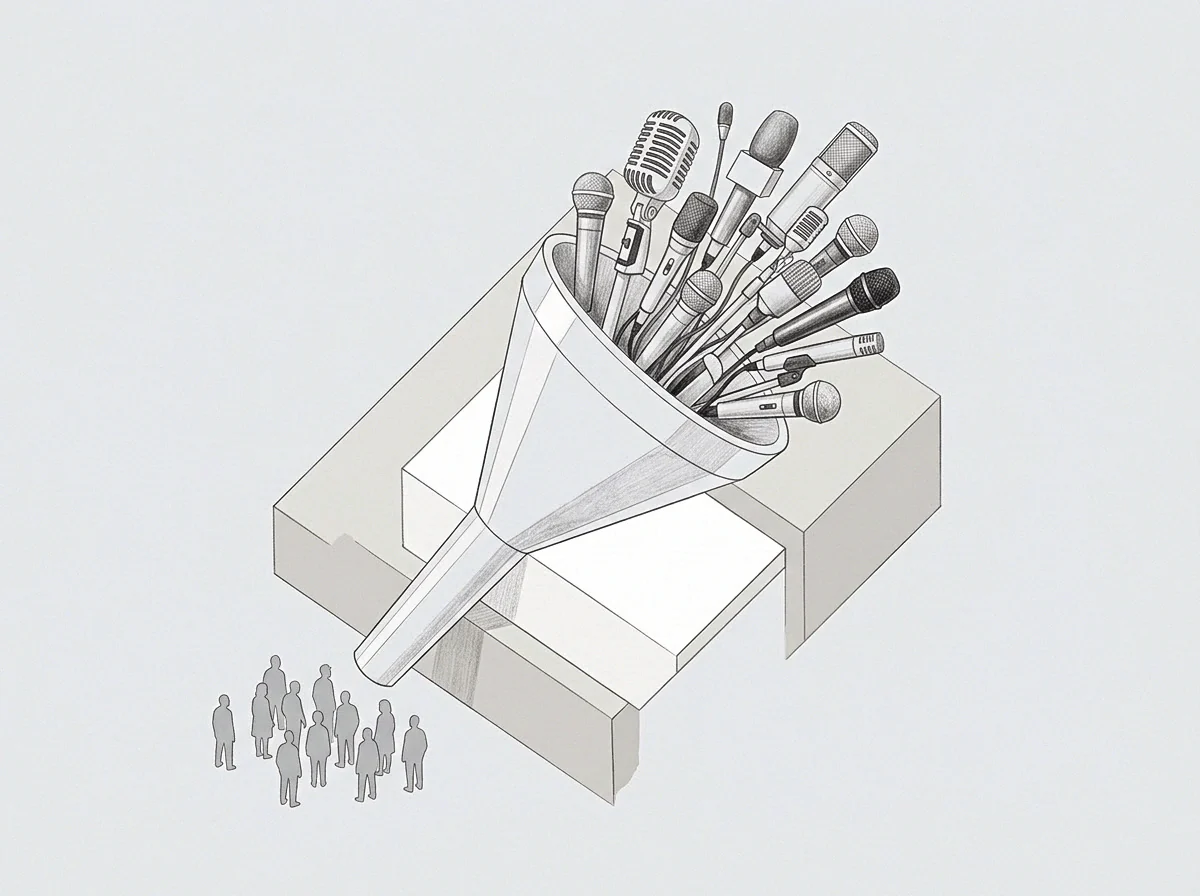
Accumulated queues extract a hidden tax across physical machinery, software services, and human cognition. When a queue outgrows its holding container, the effort required to administer the backlog eclipses the effort needed to clear the underlying tasks. Operators drop deep tasks.
In physical supply chains, this phenomenon appears as yard congestion, where crane operators move containers three times simply to reach the specific box scheduled for afternoon truck pickup. In software engineering, it surfaces as memory swap churn, where an operating system spends more processing cycles paging memory blocks to disk than executing application instructions.
Compound Penalties of Context Preemption
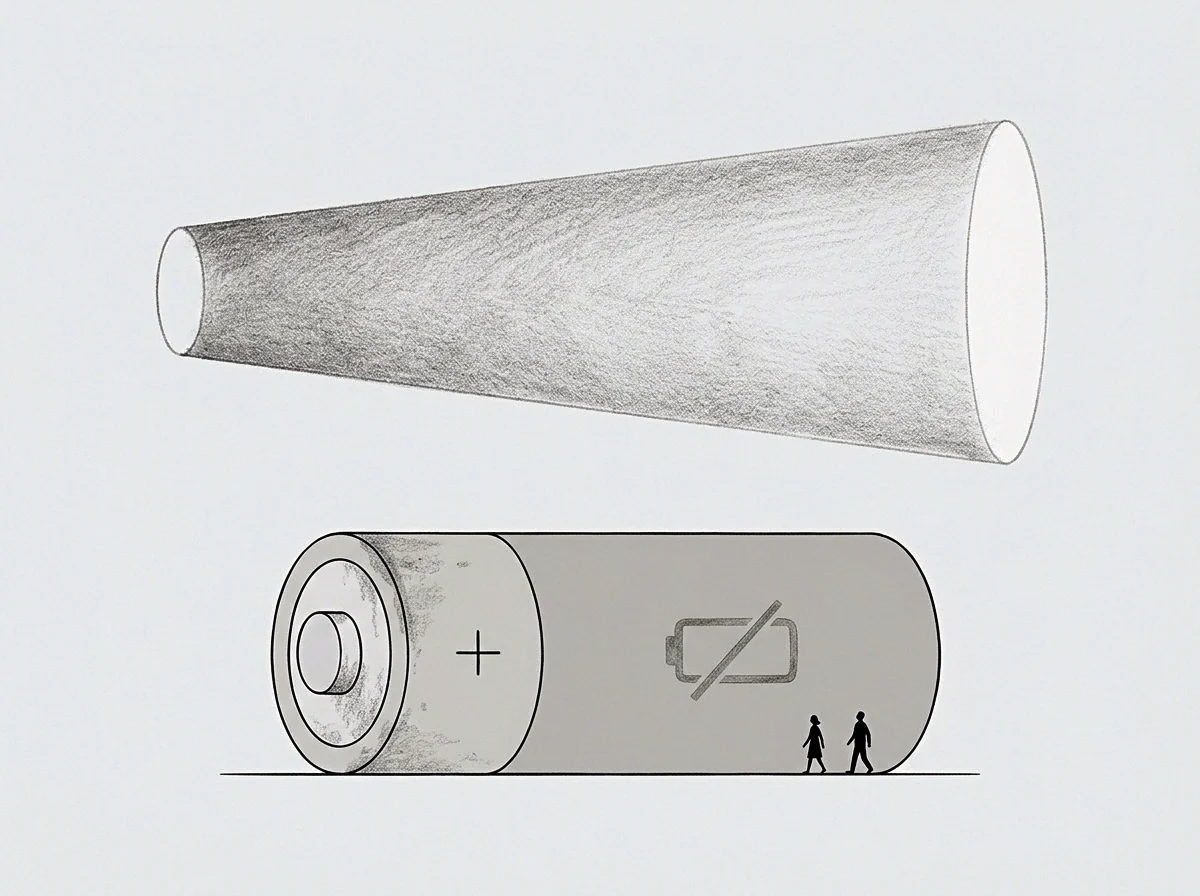
Human beings display marked performance losses when forced to toggle rapidly between fragmented tasks. Switching out of an incomplete analytical assignment to answer an urgent escalation requires a person to store mental state, discard immediate working models, and reconstruct the historical parameters of the interrupting issue. Studies in cognitive ergonomics show that returning to a complex creative or analytical state requires fifteen to thirty minutes of warm-up effort following an interruption.
When a person receives four escalations per hour, deep cognitive work ceases completely.
The resulting shortfall does not appear on balance sheets as an explicit line item. The cost registers as an ordinal loss of strategic momentum, degraded code quality, and mounting operational debt. A founder spending eight hours in back-to-back operational triage maintains high subjective exertion while generating negligible structural headway.
The path of least resistance under extreme congestion is local firefighting: answering the loudest client, clearing the shortest ticket, and patching the most visible symptom. The wall stands right there. The team builds an intricate defensive perimeter of spreadsheets, status channels, and triage committees around the backlog, actively avoiding the deeper restructuring that would clear the root obstruction.
The administrative friction of managing an uncontrolled queue expands faster than the direct labor required to complete the underlying work.
Avoidance acts as a coordinate marker in saturated organizations. When an executive team refuses to prune an overloaded project portfolio, they route around the uncomfortable necessity of declining low-value stakeholder requests. They introduce weekly prioritization scrums instead.
Those scrums consume hundreds of collective person-hours debating relative rankings of work units that the organization lacks the reserve capacity to build. The unspent volume of organizational potential remains trapped behind that operational wall, waiting for leadership to re-establish a credible baseline.
Whose Capacity Absorbs the Escalation Gradient?
Every unresolved queue pushes its pressure outward onto adjacent systems or upward onto managerial layers. When line operators lack the slack to handle unusual customer edge cases, those exceptions escalate directly to department heads. The department head becomes an informal human buffer, converting strategic planning hours into manual administrative patching.
The gradient computed from value flattens as executive attention is consumed by transactional friction.
An operator managing an overloaded support desk experiences this extraction through continuous cognitive preemption:
- Interruption fragmentation divides the working day into sub-fifteen-minute intervals that prevent coherent execution of complex investigations.
- Priority ambiguity creates decision fatigue as conflicting stakeholders simultaneously demand top-tier queue placement for divergent deliverables.
- Emotional depletion accelerates when customer-facing staff absorb repeated friction from clients whose inquiries have lingered in unserviced buffers for weeks.
- Quality degradation sets in as technicians truncate diagnostic steps to clear raw ticket counts, generating downstream failure modes that trigger future escalations.
A field team in this state behaves like an engine operating past its thermal dissipation limit. The mechanical parts continue moving, but friction rapidly welds sliding surfaces together. Does an overstretched organization ever recover its original reserve margins through incremental labor efficiency without first discarding active obligations?
Recoil
Restoring functional stability to an overloaded pipeline demands a sudden reduction in system friction rather than an emotional plea for increased exertion. Queues do not clear symmetrically. A system that took two weeks to saturate can require months to untangle if leadership relies solely on baseline throughput to drain the backlog.
This phenomenon of path-dependent recovery, known as hysteresis in physical dynamics, dictates that returning from a collapsed state requires significantly lower intake rates than the rate that triggered the original failure.
Dynamic Recovery from Thrashing States
When an operational pipeline enters thrashing, adding fresh personnel to the bottleneck invariably worsens delays. New arrivals require onboarding, mentorship, and communication bandwidth from the few senior operators who possess the context needed to resolve critical blockages. The classic observation that adding labor to a late engineering effort accelerates its slippage holds true across customer service teams, physical fulfillment lines, and corporate legal departments.
Triage preserves basic operations.
The only mathematically sound move during severe queue overload is deliberate load shedding. The system must drop, reject, or postpone non-vital transactions at the intake perimeter before they enter internal buffers. In packet-switched telecommunications, routers facing buffer saturation drop incoming packets immediately.
This drop signals sending servers to back off their transmission frequencies, allowing internal queues to drain cleanly. Human organizations often resist this move because explicitly saying no to a client or internal partner feels like administrative failure.
Deliberate rejection of non-essential intake at the perimeter protects core processing throughput from cascading internal gridlock.
Dropping incoming demand clears internal space. It eliminates the holding costs, the status updates, and the contention latency that paralyze core execution channels. Backlog clears slowly.
By enforcing a hard ceiling on active work-in-progress, the operating unit establishes an artificial floor for reserve headroom. Operators regain the uninterrupted blocks of time needed to execute tasks completely on the first pass, halting the generation of rework loops that fuel sustained congestion.

Load Shedding and Hysteresis Constraints
Recovery demands deliberate intervention. Implementing perimeter intake controls requires establishing explicit triage thresholds that separate existential commitments from secondary aspirations. The operator defines clear criteria for what gets serviced and what gets returned to the sender with a polite refusal.
This structural boundary protects the team from sliding back down the gradient of least resistance, where workers accept every incoming ping to avoid immediate relational friction, only to default on core commitments three weeks later.
Rebuilding reserve capacity requires operating well below theoretical maximum capacity for an extended window following an overload crisis. If a team possesses forty hours of nominal labor per person weekly, scheduling thirty hours of task allocation allows the remaining ten hours to absorb latent technical debt, perform preventative tool maintenance, and clear cognitive fatigue. Over time, that deliberate reserve expands realized throughput by eliminating the friction, churn, and rework loops that thrive in saturated environments.
Operating with abundant headroom yields faster cycle times than running at maximum utilization.