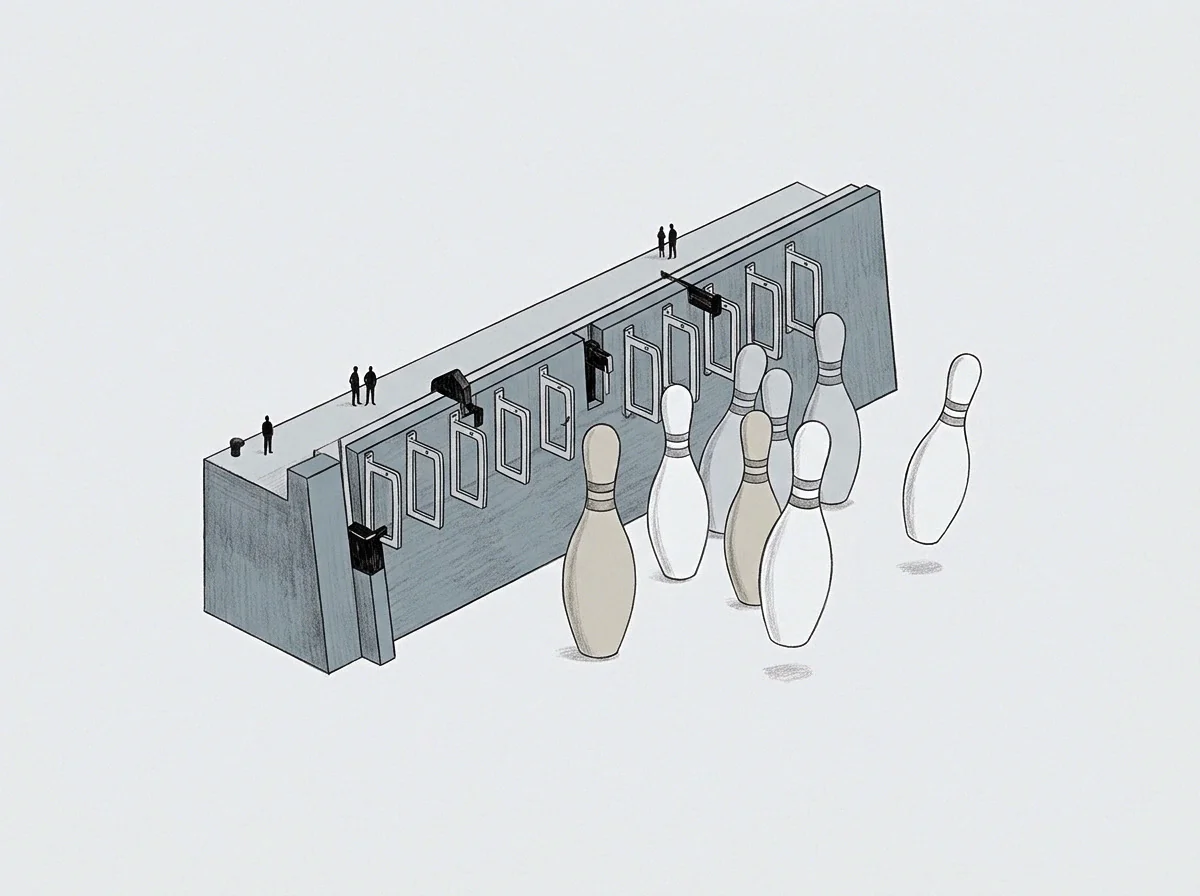
Meaning
Spare production potential denotes the delta between current output levels and the maximum physical throughput of a system. Reserve capacity quantifies this variance to identify how much additional work a founder can undertake before requiring capital investment in new infrastructure. The value exists as a cardinal measurement of remaining headroom within an established operational setup.
Production Thresholds
Management relies on this indicator to assess the cost of scaling without altering the fixed cost structure of an entity. Reserve capacity signals the point at which efficiency peaks and marginal costs begin to climb due to resource constraints. Founders track this metric against incoming demand to determine if current assets sustain temporary spikes or require immediate expansion.
Constraint Dynamics
Technical bottlenecks dictate the ceiling of the system through physical limitations like machine cycle times or human hours. Bottlenecks impose a hard boundary on output that creates a finite volume for reserve capacity. Operational flow suffers when the system ignores these constraints by pushing beyond the calculated ceiling.
Resource Allocation
Strategic distribution of surplus effort follows the recognition of latent energy in the organization. Reserve capacity functions as a buffer against volatility by allowing an operator to absorb shocks without depleting liquid assets. High variance in this surplus indicates an inefficient distribution of resources across the primary business lines.