
Tracking Dynamic Execution Boundary Shift When System State Exceeds Baselines
Exceeding baseline operational states shifts execution boundaries outward, routing uncomputed work around original system models along paths of minimal resistance.

Ledge
Primary dashboard monitors reflect stable throughput while peripheral batch processing slips behind schedule. The operational surface appears stationary because key health indicators evaluate primary queue latency rather than secondary state retention. When operational load creeps past historical setpoints, execution logic stays intact at the core while edge behavior adapts without an explicit re-configuration.
The system absorbs pressure by quietly abandoning non-critical validation passes, deferring garbage collection, or pushing tasks into unmonitored retry loops.
System parameters establish nominal boundaries for execution safety. Under baseline conditions, state execution operates within predictable variance, returning expected outputs along deterministic paths. As system state climbs past baseline constraints, the system reaches the edge of its operational model.
The perimeter of actual execution separates from the perimeter of assumed execution.
- Baseline Setpoint names the designated upper limit of state volume where nominal execution paths operate without dynamic re-routing.
- State Overflow occurs when incoming operational volume or context complexity exceeds calibrated storage or processing baselines.
- Boundary Separation marks the spatial divergence between the baseline model parameters and the actual execution paths taken under load.
Capacity dictates the line. Operational state expansion forces internal logic to choose between explicit execution failure and silent execution alteration. When system design prioritizes uptime over strict protocol compliance, execution alters its path automatically.
Unmonitored processing queues expand toward path resistance long before central telemetry records a failure.
The system seeks rest. Operational managers track central queue health while peripheral processes slip into unmonitored states. What remains unclear is how far peripheral boundary relocation can extend before system recovery requires a complete forced halt.

Surge
System state expansion places immediate structural pressure on historical control loops. When operational load breaches baseline figures, internal execution dynamics shift from predictable retrieval to high-cost dynamic computation. System state is not merely an asset count or memory footprint; it represents the total active context the execution engine must retain to perform deterministic operations.
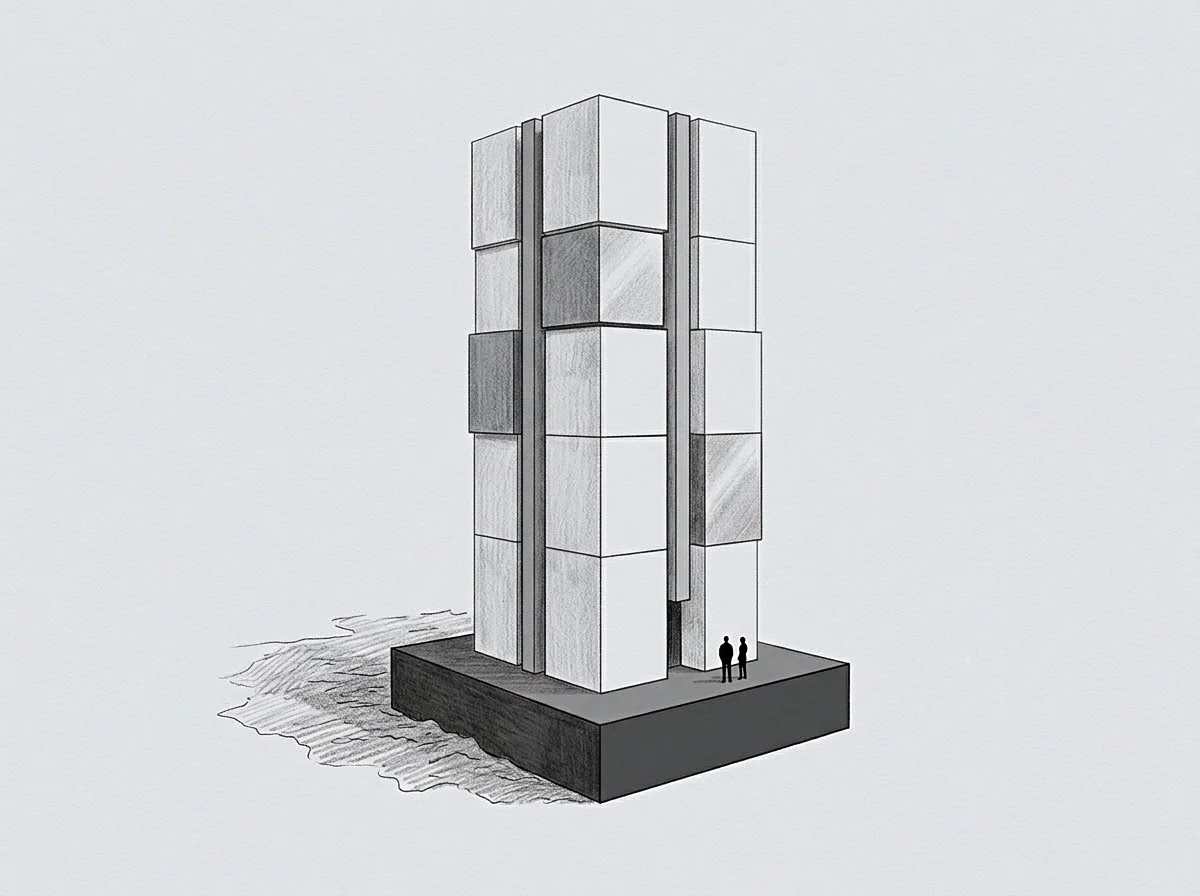
Vector Divergence Under System Stress
Operational capacity metrics often mask localized stress vectors. While average resource utilization stays within yellow thresholds, specific operational choke points reach total saturation. The error signal generated by a control loop under load directs execution down paths that reduce local friction, even when those paths compromise global alignment.
Load changes the wall. The model holds until context volume strips the system of pre-calculated state lookups. At that juncture, execution moves from low-cost retrieval to high-cost dynamic processing, accelerating resource exhaustion across adjacent nodes.
| Operational Vector | Nominal Baseline State | Exceeded System State |
|---|---|---|
| Execution Latency | Deterministic and bounded within calibrated windows | Unbounded with exponential tail-risk distribution |
| Error Signal Routing | Direct feedback leading to immediate setpoint correction | Suppressed or re-routed to peripheral dead-letter logs |
| State Memory Allocation | Pre-allocated static tables with fast lookup times | Dynamic heap allocations causing GC thrashing |
| Boundary Drift Vector | Zero drift with exact alignment to model parameters | Positive outward expansion along paths of minimal resistance |
| Data derived from behavioral observation of control loops under state expansion exceeding forty percent over baseline. | ||
The queue absorbs excess. When system state exceeds baseline limits, processing nodes route execution away from heavy transactional checks. The system trades long-term state integrity for short-term queue drain speed.
A state overflow without adjusted model boundaries converts deterministic execution into probabilistic workarounds.
System state exceeding calibrated baselines re-routes execution toward unmonitored paths as an operational rule of thumb.

Shift
When operational metrics breach assigned parameters, the model perimeter alters its position. This dynamic movement forms an adaptive execution boundary. The system creates a new operational footprint without updating its formal configuration files or architecture diagrams.
The physical execution changes while the written baseline remains fixed.

Where Does Execution Relocate When Load Spikes?
Workflows seek pathways offering minimal friction during periods of resource exhaustion. Execution drops heavy validation layers, bypasses transactional guarantees, or delegates complex tasks to external asynchronous workers. This relocation follows the path of least resistance across the operational landscape.
Silence signals drift. The system appears stable because primary error rates remain low while execution relocates into unmonitored channels. Avoiding an expensive computation is a coordinate marker pointing to a broken baseline model.

Mechanisms of Boundary Movement
Execution relocation operates through three distinct structural adjustments:
First, execution bypasses synchronous validation loops to protect core throughput, shifting operational checks into deferred batch runs. Second, memory allocation spills over from static pools into volatile heap allocations, increasing system vulnerability to sudden state drops. Third, error handling shifts from explicit exception handling to silent fallbacks, hiding failure states from central monitoring tools.
Cost accumulates in secret. Pressure redirects the current. Execution follows least resistance.
The model’s actual boundary is defined by what the system will not execute when capacity limits are pressed. Discomfort at the model boundary is a direct measurement of dynamic computation replacing cached retrieval.
Avoidance marks the coordinate where computation becomes too expensive for current capacity.
Leaving boundary shifts unmonitored results in catastrophic systemic corruption when latent state expansion finally breaches physical infrastructure limits.

Route
Avoided operational paths generate dense clusters of unprocessed material behind the active boundary. This unprocessed volume represents latent potential energy stored within the system state. It sits invisible until operational load recedes, or until a state reconciliation pass attempts to process deferred operations.

Latent Volume and Unprocessed State
Accumulated operational debt sits quiet until system state recedes. When load drops, the system attempts to re-integrate bypassed operations, often triggering secondary outages during off-peak windows. The unspent volume accumulated behind the avoided path retains the exact magnitude of the force that pushed execution away from nominal baselines.
Parameters restrict movement. Operational engineers frequently mistake suppressed metrics for structural resilience.
- Bypassing transactional consistency checks during volume spikes creates phantom inventory records across downstream databases.
- Deferring state cleanup jobs fills volatile memory space, degrading garbage collection efficiency over extended runtime windows.
- Routing uncomputed payload directly to temporary file storage shifts processing bottlenecks onto disk write performance.
- Suppressing non-critical timeout exceptions masks degradation in third-party API response times.
The vector stays positive. State overflow alters geometry. Tracking the dynamic boundary shift requires reading the shape of what the system actively routes around rather than measuring what flows down nominal channels.
System state exceeding baseline thresholds forces dynamic execution boundaries outward until local resource limits halt expansion.
The operational team stated that automated processing kept pace with volume during the peak window, ignoring the three hundred thousand deferred validation tasks sitting in dead-letter queues.

Threshold
Stabilizing systemic operations depends on resetting boundary coordinates rather than forcing compliance against an obsolete baseline. Forcing a overloaded system back into nominal parameters without expanding underlying capacity causes immediate operational failure. The path forward involves calibrating the baseline to match current state volume, or re-architecting the execution envelope to hold the new state load.
Every threshold carries weight. When system state exceeds historical setpoints, operators update validation schemas, adjust memory allocations, and establish explicit fallback parameters. Adopting dynamic boundary tracking transforms unmonitored drift into explicit system reconfiguration.
The dynamic execution boundary stabilizes when operational contracts explicitly define state limits and specify automated system fallbacks for every load level above baseline capacity.