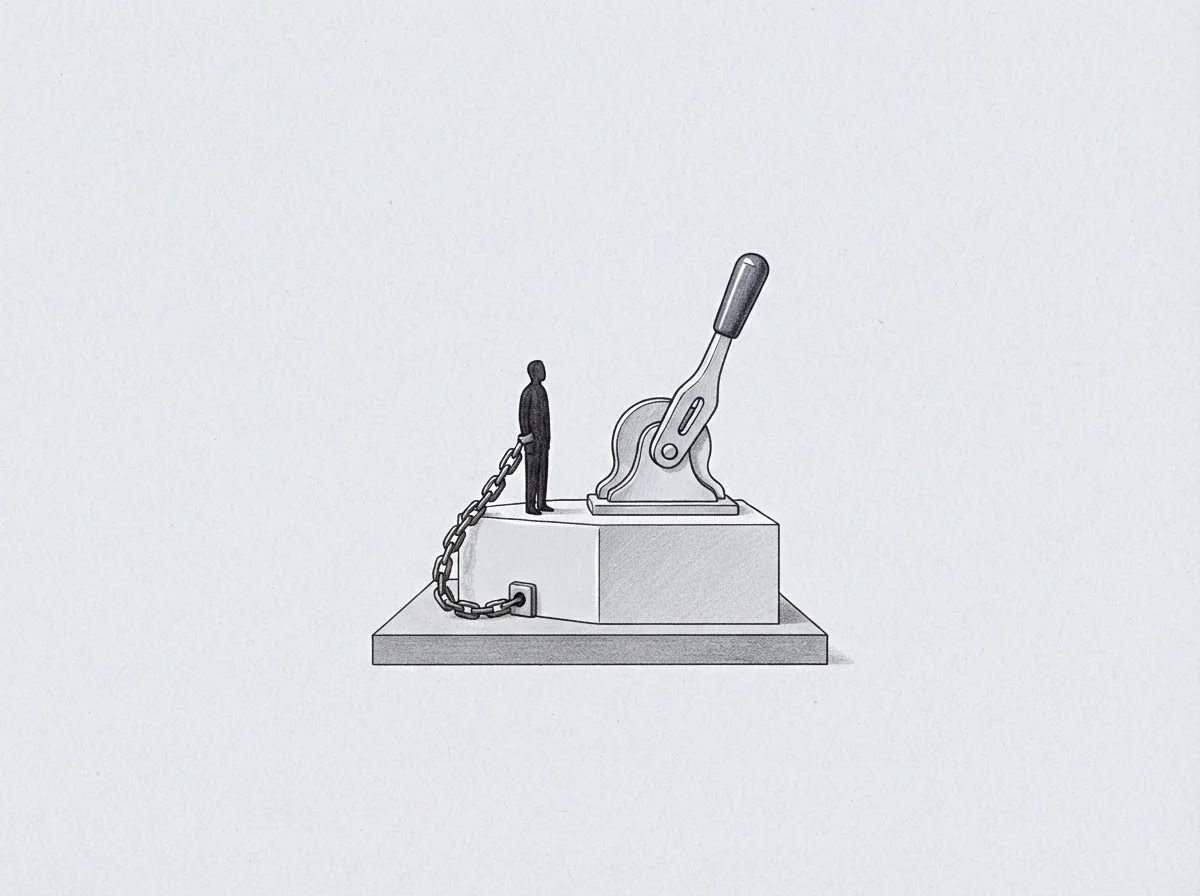
Meaning
Statistical patterns represent the tendency of a variable to fluctuate based on its own past values, independent of external shocks. The auto-regressive drift occurs when a time series exhibits a persistent movement in one direction because the current value is a function of previous states plus a stochastic component. It measures the degree of internal momentum within a dataset.
The application of this concept stops where external volatility overpowers internal correlation.
Temporal Influence
Dependency on history determines the slope of the trend line. Since auto-regressive drift relies on a coefficient applied to the prior observation, a positive value creates a steady climb.
Error Accumulation
The deterministic part of auto-regressive drift provides the direction, and the stochastic part ensures that the actual path never follows a perfectly straight line. Cumulative noise enters the system through the random variable added at each step of the process. This leads to a widening cone of uncertainty as the projection moves further from the last known data point.
The variance of the forecast grows linearly with the number of steps into the future, making long term predictions increasingly unreliable as the signal to noise ratio drops.
Stability Limit
Structural breaks in the underlying environment invalidate the assumption of constant parameters. If the coefficient governing the auto-regressive drift changes, the model fails to predict the new trajectory. This boundary usually appears when a market enters a period of extreme turbulence or a fundamental shift in user behavior occurs.
Detection of such a break requires a comparison of the residuals against historical volatility.