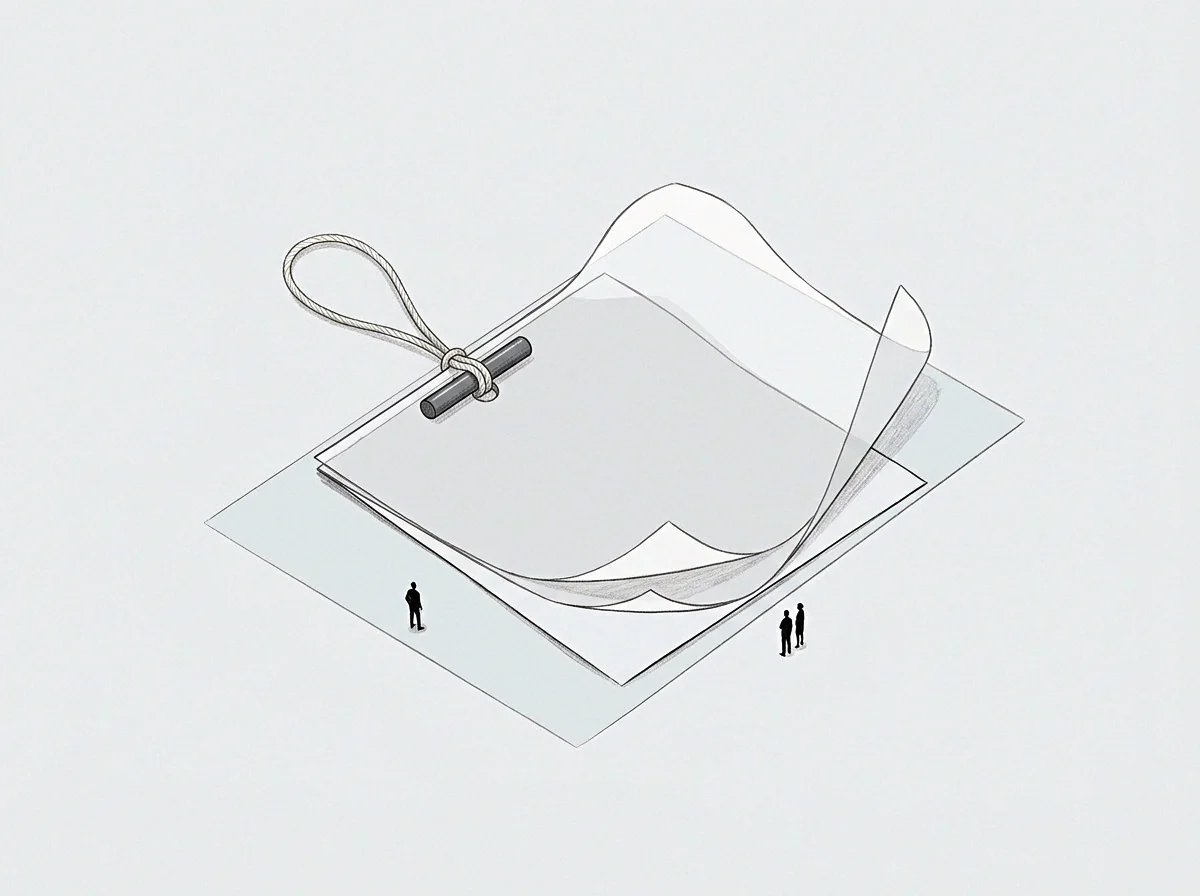
Meaning
Operational variance between projected resource allocation and realized throughput forms the baseline of execution slippage. This quantity operates on a ratio scale representing the divergence between planned burn velocity and actual work unit output over a bounded accounting cycle. Mathematical expression divides the scheduled expenditure by delivered volume, yielding a dimensionless coefficient above unity whenever friction absorbs capacity.
Resource Drainage
Actual energy expenditure frequently exceeds theoretical limits because cognitive friction degrades operational throughput. Unscheduled meetings consume hours that should belong to core development tasks, generating invisible deficits in team capacity. Administrative overhead accumulates quietly until technical output drops below the threshold required for product survival.
Attention scarcity forces context switching among engineers, multiplying the time cost of every completed feature.
Temporal Friction
Calendar compression distorts project timelines when dependencies stall midway through an execution phase. Sequential tasks suffer downstream delays whenever upstream deliverables miss their intended landing date by a margin of days. Schedule expansion compounds linearly at first, then accelerates exponentially once team momentum fractures entirely.
Deadlines recede continuously under the weight of accumulated micro-delays, rendering forward planning obsolete.
Throughput Degradation
Output volume shrinks relative to financial input when organizational drag slows down delivery mechanics. Unit cost rises correspondingly because fixed payroll expenses distribute across a smaller denominator of finished work. Systemic latency prevents the enterprise from reaching economies of scale during critical growth windows.
Financial reserves deplete faster than anticipated while revenue realization lags behind expenditure milestones. Structural divergence between intention and reality determines the survival ceiling of the post-founding enterprise.