
Measuring Operational State Space Reduction During Sustained Execution Stress
Sustained execution stress forces operational systems into low-energy default states, contracting reachable execution options to local historical paths.

Wall
Engineering teams facing sustained quarterly execution pressure experience a progressive narrowing of their operational choices. Operational state space defines the complete set of reachable configurations, architectural choices, resource allocations, and strategic moves an organization can actively execute at any given moment. Under continuous operational strain, this theoretical volume shrinks long before formal strategy documents reflect any change.
An executive board might review a roadmap containing forty viable initiatives, while the underlying technical system and team cognitive load permit exactly three predictable paths. The distance between theoretical state space and reachable state space represents the unacknowledged structural tax of chronic execution strain.
When operational stress accumulates, human operators and automated monitoring tools default to paths offering the lowest immediate energetic resistance. Complex choices demanding high multi-step computation, cross-functional coordination, or novel architecture are systematically routed around. The gradient computed from task value tilts sharply toward immediate local mitigation.
Systems converge toward local minima where short-term stability replaces long-term optimal design. A team running at ninety percent operational capacity for six consecutive months stops evaluating systemic refactoring, novel market entry vectors, or structural process redesign. The reachable state space contracts until execution becomes strictly deterministic, repeating past patterns regardless of their strategic fit.
An organization under relentless delivery pressure narrows its operational choices long before its financial budget depletes.
Quantifying this contraction requires examining the operational boundary. The boundary consists of actions, decisions, and system changes that the organization systematically avoids because the energetic cost of computing or executing them exceeds immediate capacity. Avoidance functions as a precise coordinate marker.
Where a team routinely routes around a deployment script, an architectural dependency, or a counterparty renegotiation, the boundary of the reachable state space is exposed. Ignoring this boundary leads leadership to assign tasks that sit outside the true reachable space, creating unexpected execution failure, hidden operational debt, and severe team burnout.
Uncorrected state space shrinkage reduces organizational resilience to zero. When external environment shifts occur, a system operating within a severely contracted state space cannot pivot because alternative execution branches have decayed from disuse. The cost of failing to measure this reduction manifests as catastrophic operational brittleness, where minor unexpected input variance collapses the entire execution pipeline.
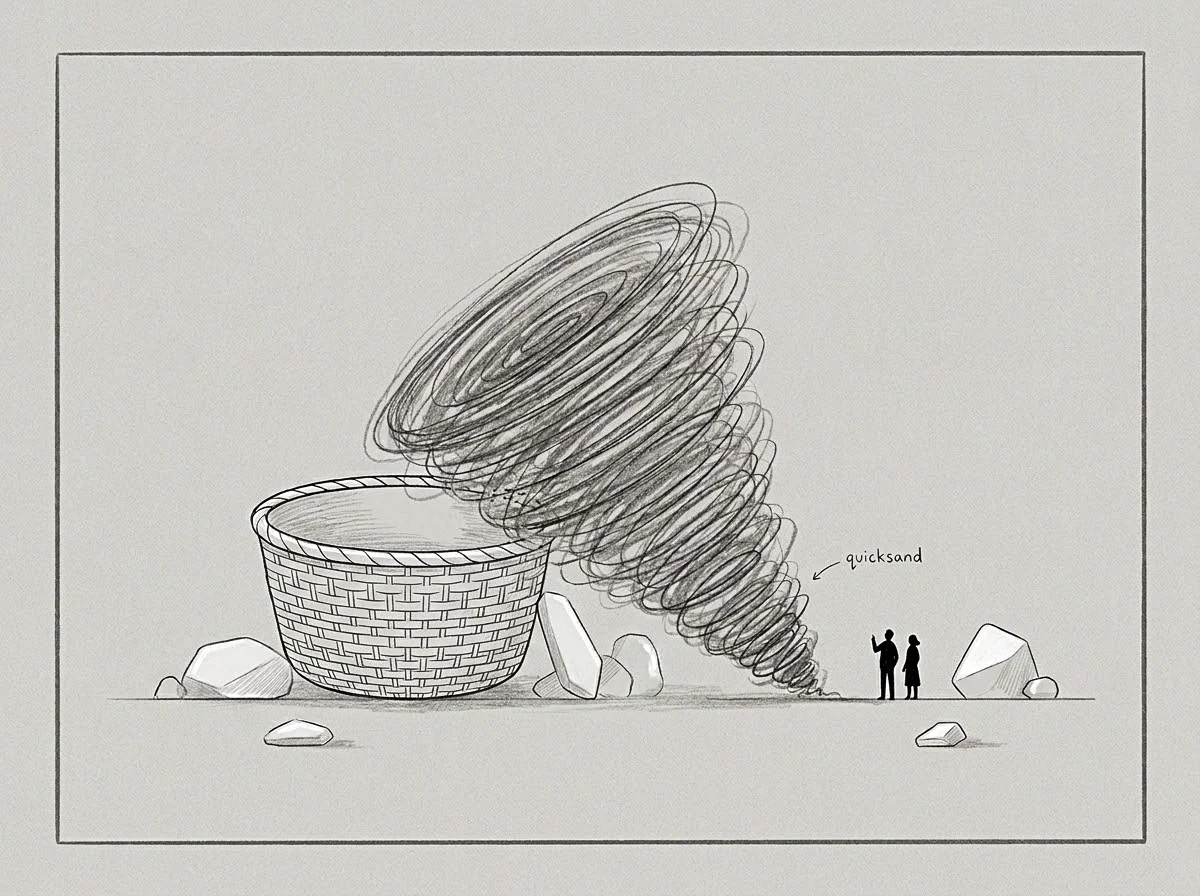
Contraction
Systemic collapse of accessible execution branches occurs along predictable gradient pathways. As operational stress increases, the system sacrifices option breadth to maintain core throughput. This structural degradation moves through discrete phase transitions, converting flexible decision nodes into rigid single-path corridors.
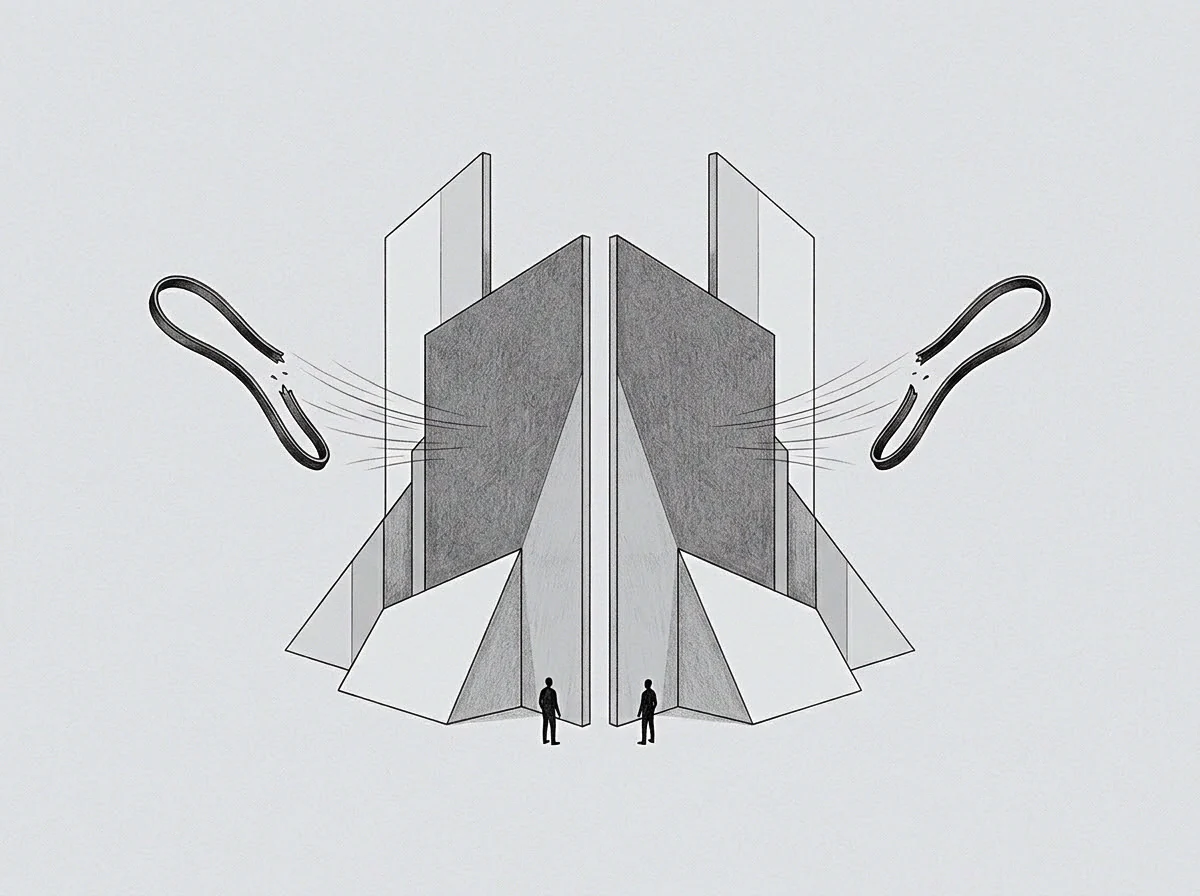
Branching Collapse Across Technical and Organizational Layers
Initial state space reduction targets structural branching. Under normal operating conditions, a software development or business operations cycle evaluates multiple concurrent execution branches. As delivery timelines compress, operators execute early pruning of non-standard branches.
The path of least resistance governs every operational choice. Over time, the system loses the physical and cognitive capacity to hold alternative execution branches in memory, collapsing the decision matrix into linear execution.
The accumulation of unprocessed operational debt accelerates this structural narrowing. Every avoided edge case, deferred architectural cleanup, and bypassed process check adds friction to the operational surface. Friction elevates the activation energy required to select non-default actions.
Consequently, operators select default operational modes even when those modes generate explicit sub-optimal outcomes.
When cognitive load exceeds supervisory bandwidth, execution pathways decay to the nearest historical default regardless of strategic intent.

Where does state space contraction hide in plain sight?
State space reduction disguises itself beneath high surface throughput. An organization running at maximum velocity often operates within an extremely narrow set of execution paths, executing routine tasks rapidly while remaining completely incapable of handling novel conditions. Measuring the actual breadth of reachable states requires evaluating specific functional dimensions across the operating surface.
- Path Degeneracy Rate measures how rapidly alternative technical solutions are discarded in favor of historical patch scripts during operational incidents.
- Cognitive Horizon Reduction identifies the shortening time horizon of planned tasks, contracting from multi-quarter architectural targets to immediate daily ticket clearance.
- Boundary Avoidance Magnitude quantifies the total volume of system components, codebases, or process steps marked as untouched due to fear of unexpected outage.
- Recovery Latency Expansion tracks the increasing duration required for an operational unit to return to baseline state space after absorbing an acute shock.
The baseline shift occurs quietly. When leadership tracks output volume rather than option volume, state contraction accelerates unrecognized. A team completing fifty routine pull requests per week appears productive on primary metrics, yet its capacity to alter core architecture drops to zero.
A stated limit on workload capacity that omits state space breadth calculations guarantees rapid structural exhaustion.
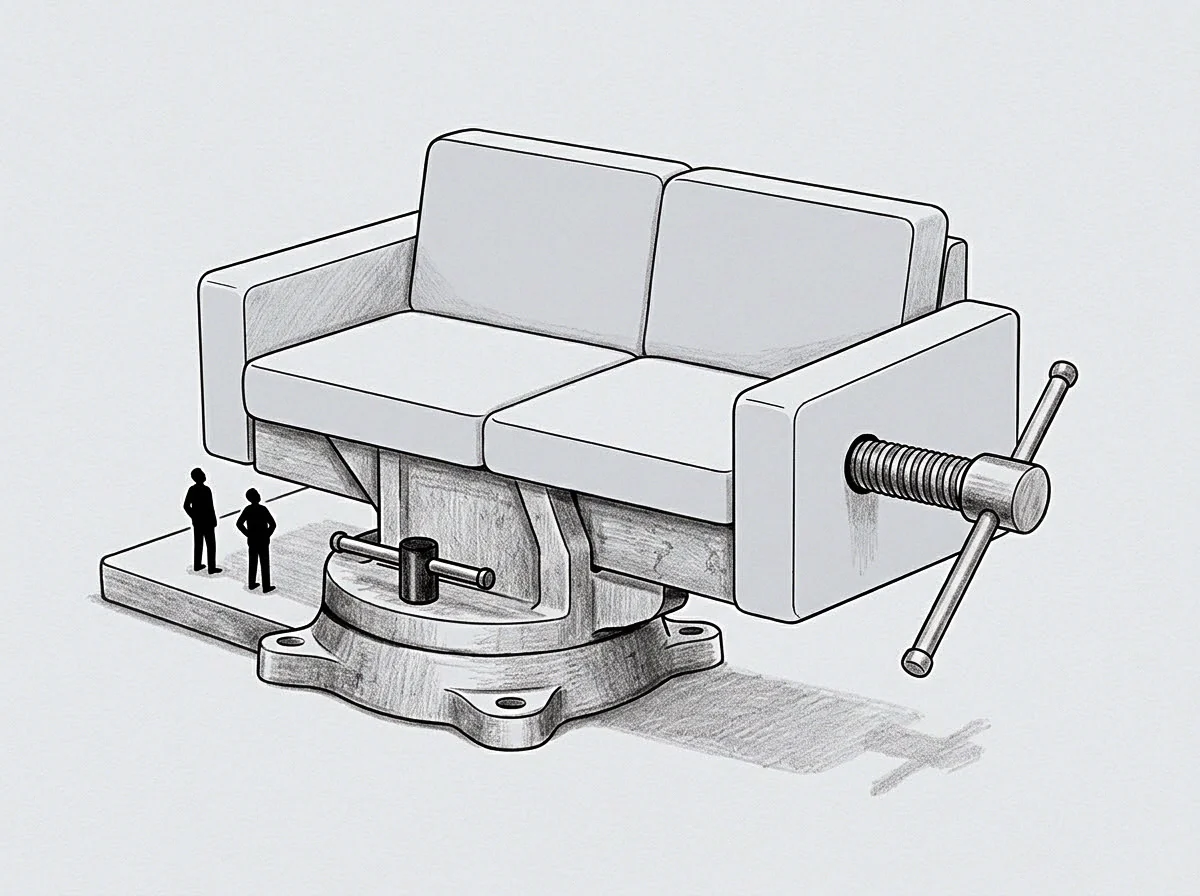
Spectrum
Operational flexibility spans a continuum between fully exploratory execution and locked deterministic repetition. Tracking an organization along this continuum yields an accurate measurement of operational state space health. As execution stress persists, systems transition downward through defined operational regimes.
| Stress Regime | Accessible Branch Depth | Recovery Energy | Error Rate | Option Retention Ratio |
|---|---|---|---|---|
| Unstressed Baseline | Multi-stage exploratory branching | Low reserve requirement | Nominal predictable variance | 0.85 to 1.00 |
| Acute Execution Pressure | Single-stage direct branching | Moderate reserve consumption | Transient spike managed by patch | 0.50 to 0.84 |
| Sustained Execution Stress | Deterministic single path | High reserve depletion | Compounding systemic errors | 0.15 to 0.49 |
| Terminal State Lock | Zero alternative branching | Exhausted capacity reserves | Catastrophic systemic failure | 0.00 to 0.14 |
Moving down the stress regime spectrum alters how decisions are made inside the room. In the unstressed baseline regime, operators evaluate actions based on long-term value gradients, accepting short-term energetic costs to secure systemic flexibility. Once sustained execution stress takes hold, decision calculus shifts entirely to immediate risk avoidance.
Operators no longer select actions that optimize outcomes; they select actions that prevent immediate operational stoppage.
A hard deadline stated without explicit state boundaries converts discretionary execution pathways into non-negotiable failure modes.
The transition into terminal state lock happens when recovery energy drops below the minimum activation threshold required to execute a single non-default path. In this regime, external intervention becomes mandatory. The operators inside the system perceive every potential change as a direct threat to immediate execution, forcing them to resist structural improvements.
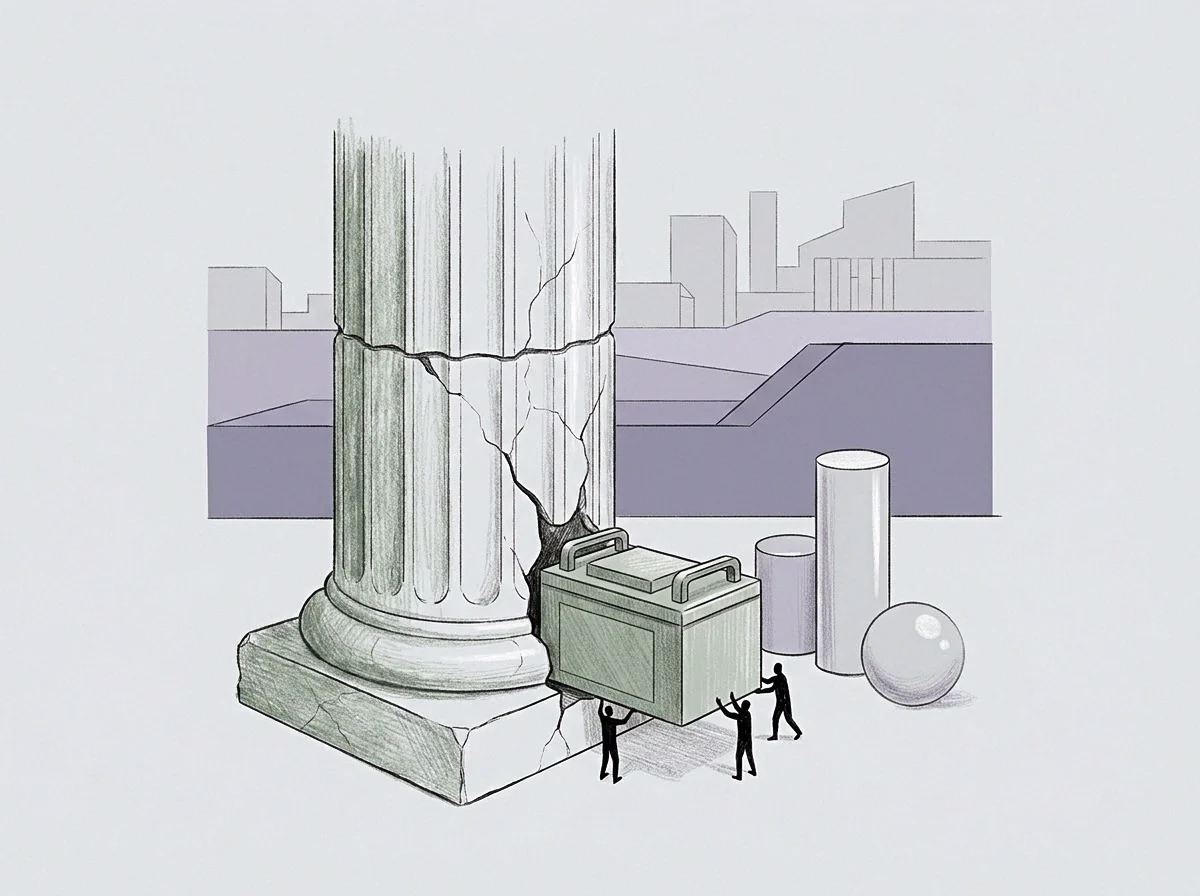
Derivation
Quantifying state space shrinkage relies on measuring the variance between planned operational pathways and actual executed transitions. The operational state space cannot be observed directly as a single scalar figure. It must be derived by analyzing the reduction in choice variance over time across consistent operational inputs.
To establish a clean derivation protocol, analysts establish a fixed observation window and evaluate decision variance at standardized operational nodes. Systematic baseline derivation proceeds through a structured sequential methodology.
- Define the theoretical decision topology by mapping all permissible state transitions for a given operational workflow under zero-stress conditions.
- Establish the empirical execution window, recording every action selected at identified decision nodes over a continuous thirty-day sustained execution period.
- Compute the operational entropy across decision nodes, comparing the historical distribution of choices against current selection frequencies.
- Map the boundary coordinates where alternative execution paths drop to zero frequency, identifying specific architectural or organizational touchpoints being systematically avoided.
- Derive the state space reduction coefficient by calculating the ratio of executed state paths against the theoretical state topology baseline.
Structural stress demands active measurement. When entropy drops toward zero without a corresponding simplification of the underlying business goal, the system is suffering from forced state space compression. The system is not becoming more efficient; it is becoming increasingly rigid.
Distinguishing between genuine optimization and stress-induced state compression represents the primary analytical challenge in operational measurement.
Operators gauge actual state capacity by counting valid rejected alternative actions rather than completed tickets.
The boundary moves under load. A baseline established during low-stress conditions loses predictive validity when execution stress persists beyond sixty days. How long can an organization maintain a reduced state space before the lost execution branches permanently atrophy and become impossible to recover without complete organizational restructuring?

Reversal
Restoring lost operational breadth requires deliberate injection of computational capacity at identified structural boundaries. Simply removing delivery pressure does not automatically expand a contracted state space. Once an organization establishes low-energy execution grooves, operators continue utilizing default paths out of institutional habit and lingering risk aversion.
Active intervention requires forcing execution along previously avoided paths to test boundary conditions and recalibrate team risk parameters. Consider a software engineering organization running a mission-critical platform that has avoided updating its primary data persistence layer for two years due to launch pressure. The theoretical state space includes multiple modern storage paradigms, but the reachable state space is locked into a legacy database schema.
Removing execution stress allows the team to relax, but they continue building around the legacy database. Expanding the state space demands allocating dedicated operational energy to execute a controlled migration spike, directly probing the avoided boundary and lowering the energy barrier for future schema alterations.
Reclaiming state space requires explicit structural terms applied to daily operations. The baseline operational capacity must be redefined through stated operational constraints rather than vague directives to innovate.
A rule of thumb for operational recovery dictates that state space expands only when a team repeatedly executes non-default paths until the energy required for exploratory execution matches the historical cost of standard default routines.