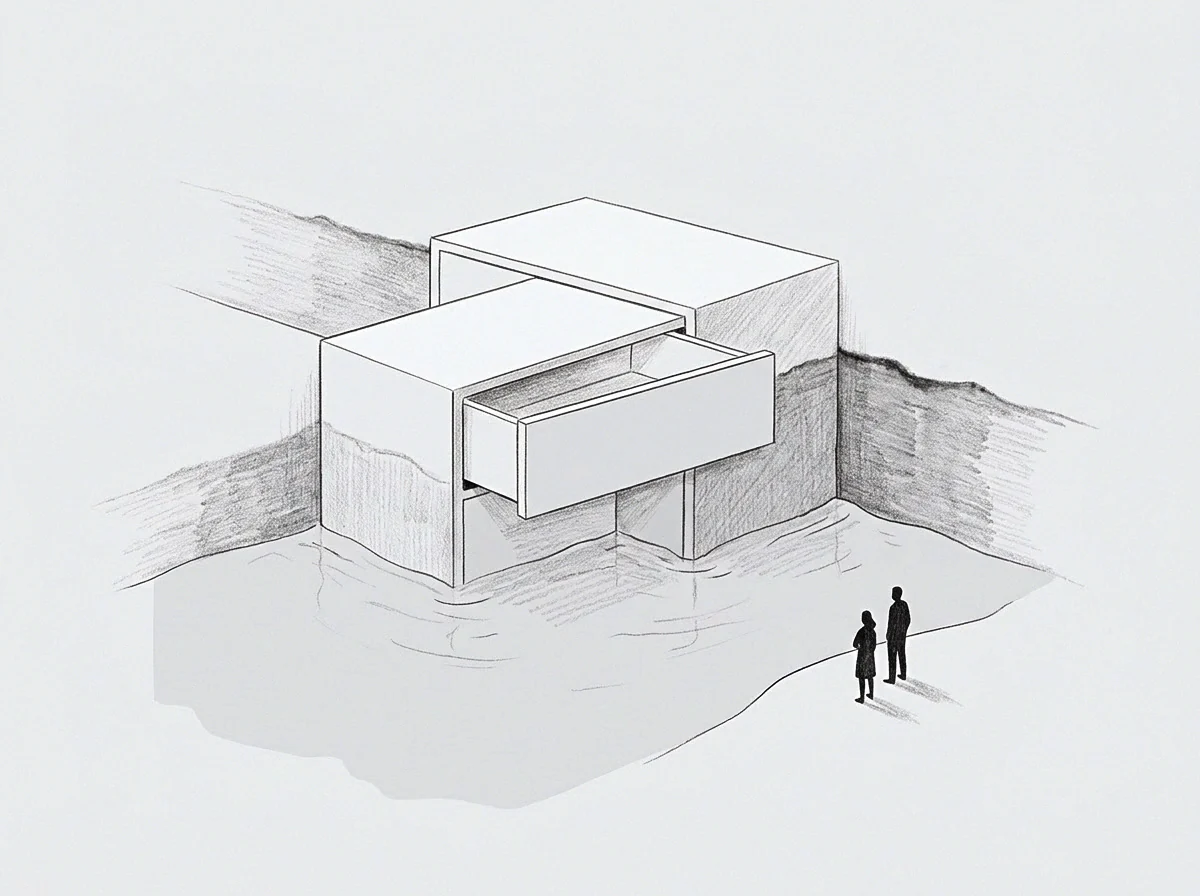
Meaning
Structural failure in a system or organization occurs at a rate that is disproportionate to the input stress. A non linear fracture happens when a small increase in load causes a total collapse of a previously stable component. This event differs from a standard breakdown because it lacks a predictable slope or a warning period.
The breakdown is usually permanent without a complete redesign of the affected area.
Stress Response
Materials or organizations show little sign of strain until they hit a critical tipping point. Once a non linear fracture begins, the speed of the failure outpaces the ability of any management team to react. This rapid decay is a feature of complex systems with high internal coupling.
Cascade Effect
Initial breakage in one area often triggers failures in connected nodes. The non linear fracture spreads through the network by overloading adjacent components that were not designed for the extra weight. This leads to a total system blackout where the cost of repair exceeds the value of the original structure.
Failure at the edge moves quickly to the center.
Prevention Strategy
Avoiding these sudden collapses requires the introduction of decouplers or circuit breakers. Because a non linear fracture is hard to predict, the safest approach is to limit the size of any single point of failure. Redundancy provides a buffer.