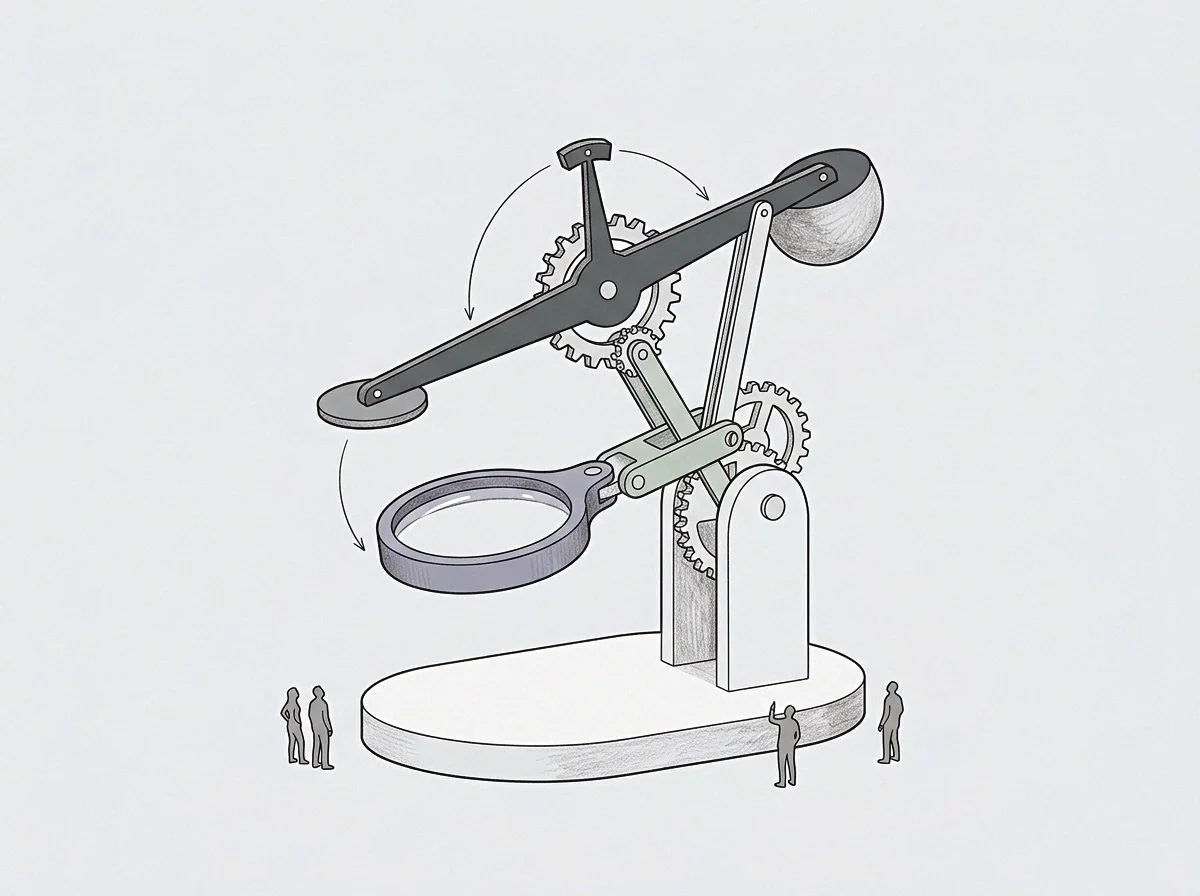
Meaning
The temporal interval wherein distributed teams align operational cadence is known as a sync window. This specific measurement belongs to the operational frequency class, functioning on a cardinal scale of hours. Coordination overhead scales directly with team expansion, and the sync window provides the numerical boundary for that friction.
Temporal Boundary
Founders establish this interval to bound communication loops and prevent continuous interruption. Operational drift accelerates when teams lack a shared operational rhythm, so the sync window compresses divergence back to baseline. Engineers and product leads operate inside distinct local clocks, and the sync window forces these rates into a common denominator.
Teams calculate the window width by dividing the total weekly operational hours by the desired synchronization frequency.
Frequency Cost
Attention capacity depletes whenever context switches occur outside the assigned temporal interval. Workers expend cognitive energy returning to primary tasks after every unscheduled interruption, which degrades output quality across the entire engineering cycle. Strict adherence to the sync window reduces this friction by clustering alignment discussions into designated blocks.
Unscheduled check-ins violate the boundary, converting productive focus hours into reactive communication overhead.
Drift Calibration
Measurement of alignment error occurs when teams compare planned milestones against actual delivery vectors at the close of every interval. A wide sync window increases the magnitude of undetected drift, whereas an overly narrow window starves execution time of continuous focus. Calibration requires adjusting the interval width until the divergence between expected progress and observed output reaches zero.
Operational stability improves permanently when the sync window matches the natural velocity of product iteration.