
Asynchronous State Capture Structures for Mitigating Advisor Re-entry Overhead Costs
Asynchronous state capture structures replace manual verbal onboarding by recording continuous operational deltas that external advisors inspect before engagement.

Drift
An advisor stepped away forty days ago when the operating cash stood at six months of runway and the primary customer acquisition channel produced consistent conversion. The enterprise today operates under an eight-week sales cycle with three enterprise prospects demanding customized governance guarantees, while engineering velocity dropped by a third following a database migration. The advisory meeting opens at ten on a Tuesday morning.
The first twenty-four minutes disappear into an ad hoc verbal reconstruction of why the product road map deviated from the November plan, who left the infrastructure team, and why enterprise buyers refuse the standard commercial terms. The participant who charges an hourly rate or draws equity compensation sits in an orientation deficit, absorbing context through uncalibrated narrative rather than evaluating capital deployment.
The operational gap between engagements decays along a predictable half-life. Without deliberate persistence, an external observer loses access to the governing trade-offs, the discarded alternatives, and the hidden constraints that directed intermediate executions. The advisor evaluates the present organization through obsolete assumptions.
When advice arrives based on circumstances that expired three weeks prior, the executive must either discard the counsel entirely or spend emotional capacity correcting the baseline premises.
A delayed orientation sequence converts high-value strategic evaluation into an expensive manual briefing.
The drag compounds because memory inside a growing company operates as an informal oral chain. Important trade-offs remain locked in fleeting chat threads, commit histories, and the executive head space. The outsider who enters this environment after an absence faces a steep cognitive barrier.
Re-establishing the mental model of the organization demands substantial energy from both parties.
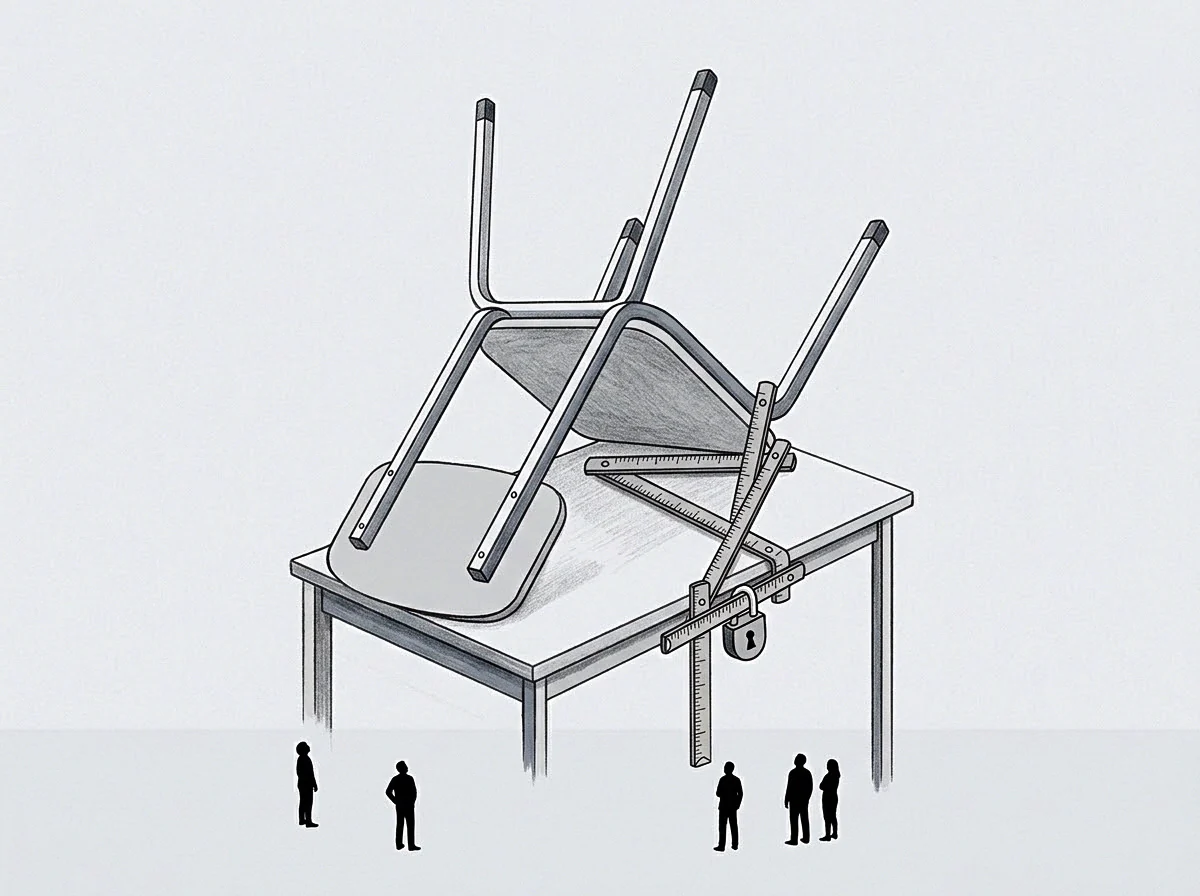
Cognitive Load and Orientation Friction
Re-entry tax consists of three measurable components: the synchronous hours spent walking through operational changes, the misdirected advice produced before context aligns, and the cognitive fatigue experienced by the operating team during redundant explanations. An advisor whose background context remains cold tends to default to generic industry heuristics. These platitudes lack relevance to the acute bottlenecks of the business.
The partner reads the log. When context transfer occurs through synchronous meetings, the executive burns scarce working memory defending historical compromises instead of receiving objective pressure-testing. When this orientation sequence fails, capital allocation proceeds on expired information while the advisor bills for listening to historical retrospectives.

Record
Preserving operational context between advisory sessions relies on an asynchronous baseline created during ordinary workflows rather than through retrospective composition. Operating teams that attempt to write comprehensive briefing documents twenty-four hours before a steering meeting impose an acute writing tax on their leadership. The burden of synthesizing a month of fragmented operations into an executive briefing routinely derails direct operational execution.
The solution lies in lightweight, persistent registration of four distinct operational vectors: capital consumption, critical path blockers, discarded tactical options, and structural organizational shifts. These registrations do not take the form of polished memos. They exist as dated, state-based delta logs embedded in daily operational tools.
Operating telemetry registered during active decisions protects future advisory hours from historical reconstruction.
The delta log captures the exact parameters of every major fork in execution at the moment the decision closes. This structure eliminates reliance on human memory and removes narrative revisionism.

Persistence Formats for Executive State
Three primary persistence models establish asynchronous state continuity across discontinuous touchpoints:
- Decision rationale registers log the environmental constraints, chosen solutions, and rejected paths within forty-eight hours of major technical or commercial trade-offs.
- Resource velocity snapshots outline liquidity changes, runway calculations, and headcount capacity figures updated automatically at weekly intervals.
- Impediment escalations track unresolved strategic contradictions where executive resolution stalled due to external counterparty friction or missing market feedback.
When an advisor can inspect these three structured artifacts prior to a conversation, the orientation curve flattens instantly. The conversation begins directly at the frontier of the company’s current challenges.
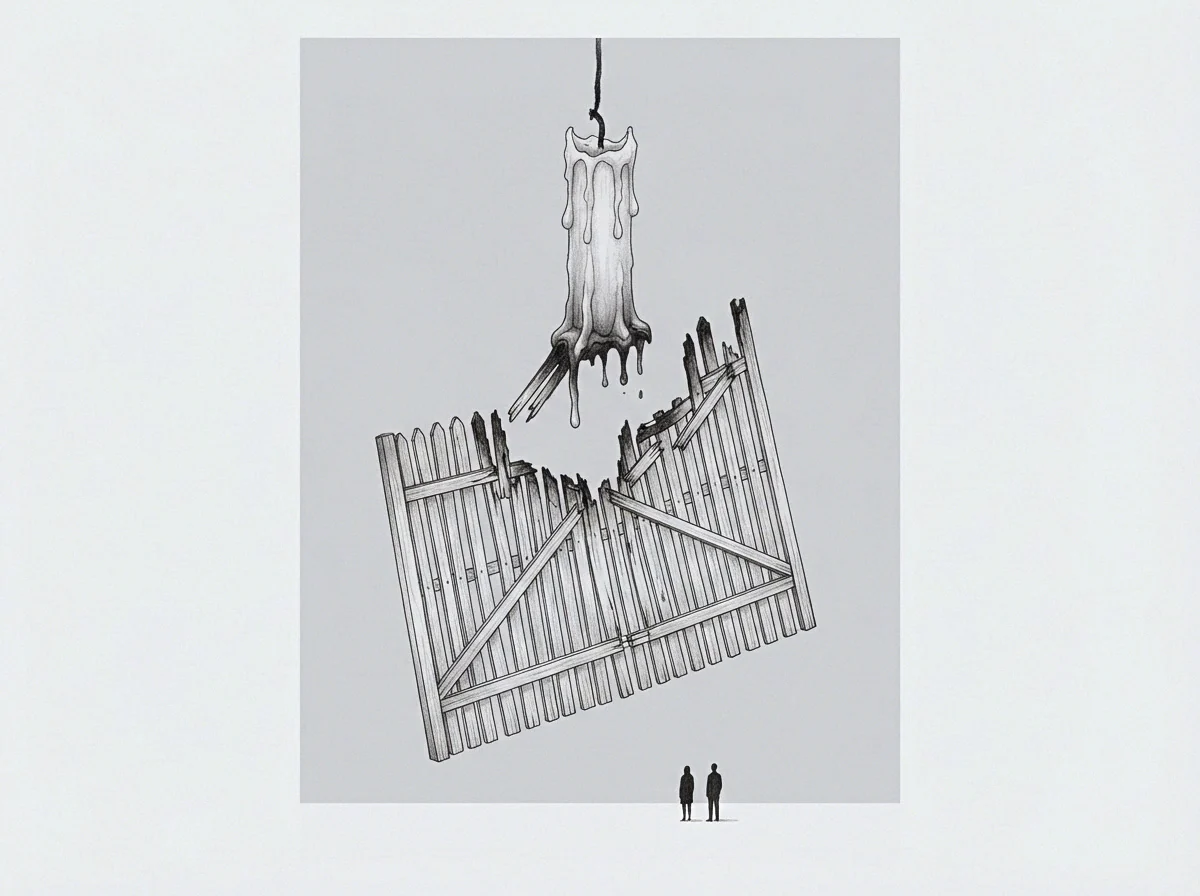
Can Retrospective Logs Preserve Contextual Fidelity?
Writing down justifications weeks after an event invariably introduces survivorship bias and defensive rationalization. The mind rewrites past uncertainty to appear deliberate and cohesive. An asynchronous state log must capture the genuine ambiguity present at the moment of execution.
This includes recording the explicit risks accepted and the information gaps that could not be resolved before commitment.
The log serves as an objective audit trail of operational intent. Systematic recording of immediate constraints provides the external partner with genuine diagnostic insight, bypassing the sanitized polish typical of board presentations. Record only the raw operational constraints when the decision closes, and discard all retrospective editorial defense.

Stack
The functional architecture of an asynchronous state capture pipeline rests on three interlocking tiers: raw operational telemetry, synthesized state deltas, and bounded advisory inquiry queues. Raw telemetry lives in repository commits, customer support queue spikes, pipeline velocity dashboards, and general cash flow sheets. This tier contains excessive noise for external consumption and requires automated aggregation into state changes.
The middle tier, the synthesized state delta, aggregates weekly movements across the company. It highlights shifts in burn rate, customer concentration metrics, and key engineering delivery variances. It presents these movements without narrative spin.
The tier presents deviations against stated baseline goals, highlighting areas where actual velocity drifted from projected targets.
The highest tier is the bounded advisory inquiry queue. Here, the company converts state variances into specific, falsifiable strategic inquiries for external review. Instead of asking open-ended questions about growth, the inquiry queue presents an explicit trade-off supported by contextual artifacts.
Structured operational boundaries convert ambiguous strategic requests into discrete evaluation tasks.
An advisor receives an inquiry package containing the target question, the operational delta summary, and the explicit constraints bounding the response. The advisor reviews the documentation independently, returning written observations or targeted voice memos before any live conference is scheduled.
- Contextual payload delivery transmits the state delta package seventy-two hours prior to an evaluation checkpoint, establishing common baseline knowledge.
- Asynchronous interrogation permits the external partner to submit structured questions targeting specific operational anomalies identified in the log.
- Synchronous exception handling restricts direct meetings to sixty minutes focused strictly on unresolved strategic contradictions identified during asynchronous review.
In practice, the executive team maintains this operational stack by allocating twenty minutes every Friday to finalize the state delta entry. The discipline preserves operational momentum while preventing the accumulation of unseen context debt. The operating agreement stipulates that an advisor who fails to review the contextual payload forfeit synchronous meeting access for that cycle.

Assay
The efficacy of asynchronous state capture structures compared to traditional synchronous orientation briefings can be evaluated across five operational vectors: executive time commitment, orientation speed, contextual depth, feedback latency, and cumulative dollar outlays. Traditional models lean heavily on synchronous meetings, creating recurrent scheduling drag and high overhead costs.
| Evaluation Metric | Synchronous Briefing Model | Asynchronous State Capture Structure |
|---|---|---|
| Executive Preparation Time | Six to eight hours per monthly session compiling slides | One to two hours weekly logging raw operational deltas |
| Advisor Re-orientation Latency | Thirty to forty-five minutes of live meeting dialogue | Fifteen to twenty minutes of self-directed artifact review |
| Contextual Retention Horizon | Decays rapidly within fourteen days post-meeting | Persists indefinitely via searchable decision registers |
| Strategic Focus Density | Frequently derailed by reactive tactical explanations | Constrained strictly to prioritized inquiry queues |
| Direct Capital Expenditure | High hourly advisor spend consumed by factual transfer | Advisor billing concentrated entirely on synthesis and critique |
Measurement theory requires that these properties be evaluated as an ordinal vector rather than collapsed into a single financial index. The synchronous approach carries significant hidden friction. The executive burns substantial creative capacity assembling presentation decks that become obsolete the moment the session concludes.
The asynchronous structure builds a durable corporate asset: an institutional memory of strategic execution that survives personnel transitions.
In high-volatility operational settings, an organization that relies on episodic synchronous updates experiences continuous context debt. By the time the third monthly advisory session occurs, the foundational assumptions discussed in the first session have disintegrated, forcing the participants to restart the orientation cycle from scratch.
A system that records raw operational trade-offs preserves institutional memory across discontinuous relationships.
The asynchronous discipline redistributes preparation effort evenly throughout the operational cycle. It prevents the end-of-month panic that disrupts standard customer-facing workflows. When the external partner finally engages, the conversation begins at an elevated intellectual plane, addressing real trade-offs rather than basic chronology.
What remains unsettled in practice is whether early-stage organizations experiencing continuous structural pivots possess sufficient operational stability to maintain asynchronous logs without executive burnout.

Remit
The transition from synchronous verbal updates to asynchronous state architecture changes the contractual expectations placed on external advisors. Advisors accustomed to passive participation in bi-weekly video calls frequently resist the obligation to review detailed decision registers independently. Their business models often favor unstructured verbal consultation where their preparation time remains zero.
The company must establish clear operational boundaries around advisory remuneration. Contracts should define compensation in relation to analytical depth and critical artifact review rather than physical attendance in virtual rooms. Equity vesting milestones or retainer dispatches should tie directly to verified engagement with the asynchronous state capture repository.
The founder states the term early. When setting up the advisory charter, the operating parameters must define the transmission format explicitly: all company updates arrive as read-only telemetry, questions must be submitted through written marginalia, and live calls occur only to arbitrate disputed options with high financial implications.
Formal engagement agreements must link advisor equity vesting directly to demonstrable asynchronous artifact interaction.
When the structure works, the return on advisory spend rises sharply. The external specialist is unburdened from the chore of passive listening. Instead, the specialist operates as an asynchronous logic checker, identifying hidden flaws in operating assumptions before those errors manifest in the market.
The client gave thirty days of unvarnished operational history, yet the resulting recommendations suggested standard strategies that directly contradicted the documented constraints.