
Measuring Asynchronous Communication Costs in Service Level Retainer Agreements
Unbounded asynchronous communication consumes specialized cognitive capacity through context switching, converting profitable service retainers into unbilled operational losses.

Weight
A client retainer providing twenty hours of monthly service often exhausts thirty hours of labor without logging a single extra hour of direct execution. The unbilled balance disappears into intake, comprehension, and background tracking of unscheduled messages spread across email, project boards, and chat channels. When an agreement specifies guaranteed response windows under an active service level agreement, every incoming notification creates an operational obligation before any technical work begins.
Service retainers regularly treat asynchronous messaging as frictionless coordination. The delivery team reads incoming tickets, parses ambiguous briefs, requests clarifying parameters, and monitors updates during execution cycles. These operations consume attention and cognitive capacity without registering as discrete tasks on a cardinal billing ledger.
The team registers the retainer as profitable on paper while capacity for other commitments collapses.
A service level agreement that binds response times without bounding message frequency transfers infinite operational variance onto fixed retainer capacity.
Measuring the real weight of asynchronous communication requires tracking the entire intake lifecycle rather than isolated typing time. An engineer or designer spends six minutes reading a client query, twelve minutes cross-referencing repository branches or previous deliverables, and eight minutes composing a clear update. Cardinal time trackers categorize this sequence as non-billable overhead, yet the twenty-six minutes directly consumed specialized labor.
When six such interruptions occur in one business day, the retainer extracts substantial operational output without triggering overage clauses.
Unpriced message ingestion compounds across multi-stakeholder channels. When a client adds four department heads to a shared communication space, ticket volume expands exponentially while retainer scope remains static. The operational cost lands squarely on team attention and calendar fragmentation.

Switch
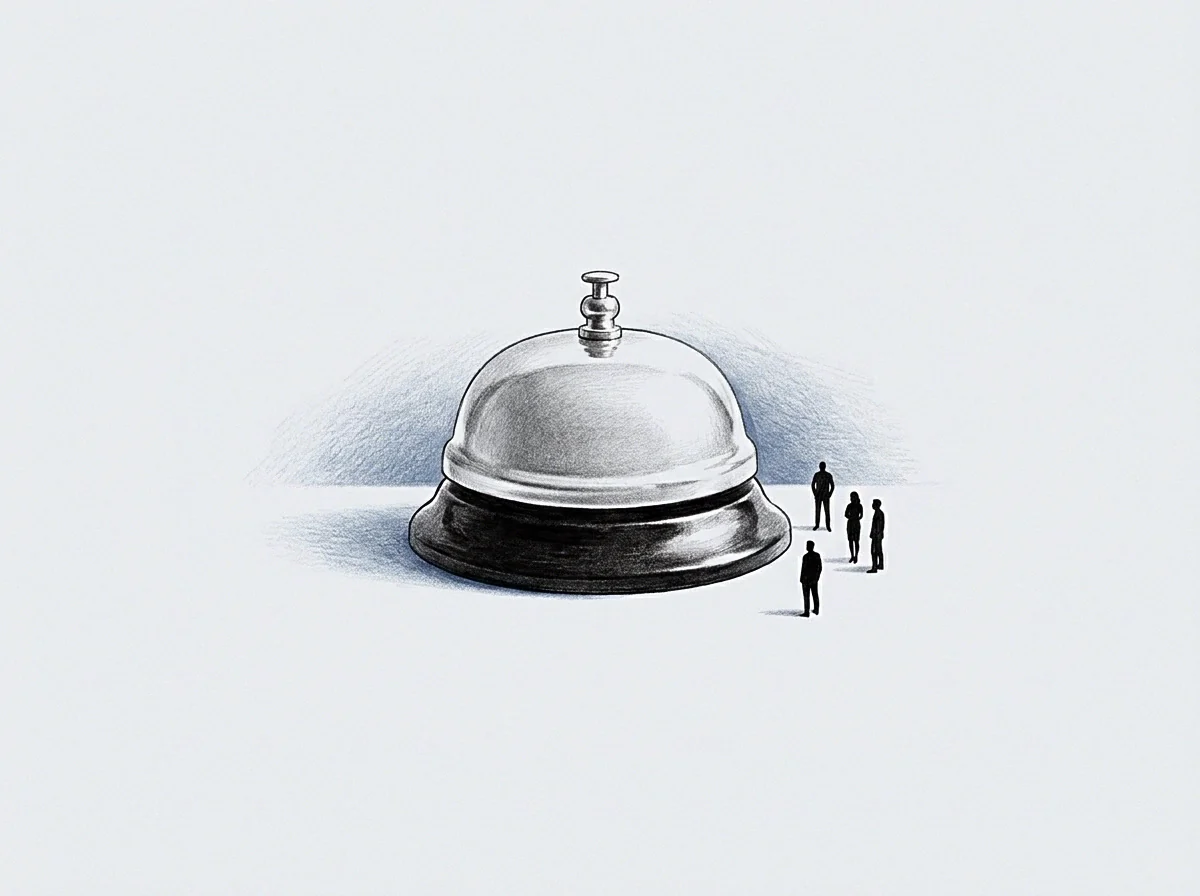
Cognitive science establishes that human attention requires extended recovery periods following task interruptions. When a technician leaves deep execution to answer an asynchronous notification, the labor penalty exceeds the few minutes spent drafting the reply. Returning to complex engineering, writing, or design problems requires reconstructing mental models and operational context from scratch.
Attentional Fragmentation and Attention Recovery
Laboratory findings in workplace attention show that resuming interrupted technical tasks consumes between fifteen and twenty-three minutes of cognitive reconstitution. When a service level retainer demands replies within two hours, team members structure their workdays around constant channel surveillance. This persistent background monitoring prevents deep concentration cycles, lowering total production capability across all client accounts.
The operational penalty hits multiple resource vectors simultaneously:
- Interruption latency removes productive calendar blocks as specialists cycle between active execution and message monitoring throughout standard working hours.
- Context restoration burns specialized energy reconstructing technical parameters after brief conversational interruptions.
- Attentional splintering degrades execution accuracy, generating rework cycles that further deplete unbilled retainer hours.
Attentive surveillance of incoming communication channels prevents sustained focus long before an actual reply is written.
Consider a retainer priced at four thousand dollars monthly, calibrated for twenty billable hours at a nominal rate of two hundred dollars per hour. If incoming asynchronous inquiries interrupt the lead specialist three times daily, the distraction penalty accounts for over twenty hours of destroyed focus per month. The nominal margin evaporates entirely in unrecorded cognitive reset periods.
Protecting operational capacity requires strict separation between scheduled focus blocks and asynchronous processing windows.
Queue
Retainer agreements frequently conflate acknowledgment speed with problem resolution. An acknowledgment confirms receipt of a message, whereas resolution delivers the completed technical solution. When contracts enforce rapid acknowledgment without defining batch boundaries, the client treats asynchronous channels as live conversational feeds.

When Do Unscheduled Messages Destroy Retainer Margins?
Unscheduled messages undermine profitability the moment communication frequency exceeds planned delivery intervals. A daily stream of minor requests generates persistent queue churn. Team members spend more effort reprioritizing the backlog and acknowledging receipt than advancing substantive milestones.
The friction worsens when client teams submit fragmented queries across disconnected platforms. One stakeholder leaves comments inside Figma, another posts requests in Slack, and a third sends revisions through project management software. Consolidating these scattered notes into an actionable technical queue requires dedicated administrative hours that retainers almost never price into the base fee.
Clients operating under continuous communication access assume that written messages impose zero overhead on the provider. The client views constant access as the primary value of the retainer relationship.
Audit
Quantifying asynchronous overhead requires structuring clear communication parameters inside service level agreements. Establishing precise operational boundaries allows agencies and consultancies to preserve delivery capacity while maintaining predictable client satisfaction.
| Agreement Parameter | Unbounded Asynchronous | Structured Batch Protocol | Dedicated Triage Channel |
|---|---|---|---|
| Intake Windows | Continuous 24/7 ingestion | Two daily processing blocks | Single centralized intake queue |
| Response SLA | Under two hours constant | Next scheduled batch window | Four business hours via portal |
| Context Switch Penalty | Severe daily fragmentation | Isolated to defined windows | Absorbed by dedicated triage role |
| Capacity Preservation | Low effective delivery | High focus preservation | Maximum specialist efficiency |
| Overage Attribution | Hidden in lost capacity | Tracked via batch consumption | Directly metered per incident |
Applying rigorous accounting to communication channels transforms invisible labor into observable data. Teams measure total message volume, average thread length, and clarification roundtrips per work unit. When data reveals that a client requires twenty message exchanges per completed ticket, the delivery firm holds quantitative evidence to renegotiate retainer scope.
A contract term that converts all communication outside scheduled batch windows into billable units immediately stabilizes team delivery schedules.
A specific contractual stipulation defining all client inquiries exceeding three thread replies as formal scope items shifts communication discipline back to the counterparty.
Remedy
Remediating communication drain begins at the contracting phase. Service level agreements must clearly state acceptable communication channels, designated response intervals, and explicit limits on asynchronous interaction density. Defining these operational limits protects both provider margins and client outcome quality.

Contractual Guardrails and Batch Processing Architecture
Modern retainer agreements incorporate structured batch communication protocols. Instead of promising continuous availability, the provider agrees to process client tickets during two designated daily intervals, such as ten in the morning and three in the afternoon. This windowing policy consolidates interruptions, allowing specialists to maintain uninterrupted four-hour execution blocks.
Additionally, forward-thinking operators implement interaction limits. Retainer tiers specify the number of included asynchronous tickets per billing cycle, with surplus requests billed at standard hourly rates or deducted from the monthly execution pool. When clients understand that uncoordinated messages consume tangible contract units, their internal teams consolidate feedback and eliminate frivolous pings.
Whether enterprise clients will permanently accept rigid batch constraints in high-velocity retainers without demanding immediate conversational access remains an open question in professional service contracting.