
Contracting Customer Payment Terms Without Surrendering Operating Control Over Core Product Quality Standards
Decoupling customer payment schedules from automated technical acceptance suites prevents commercial credit delays from eroding product architecture.

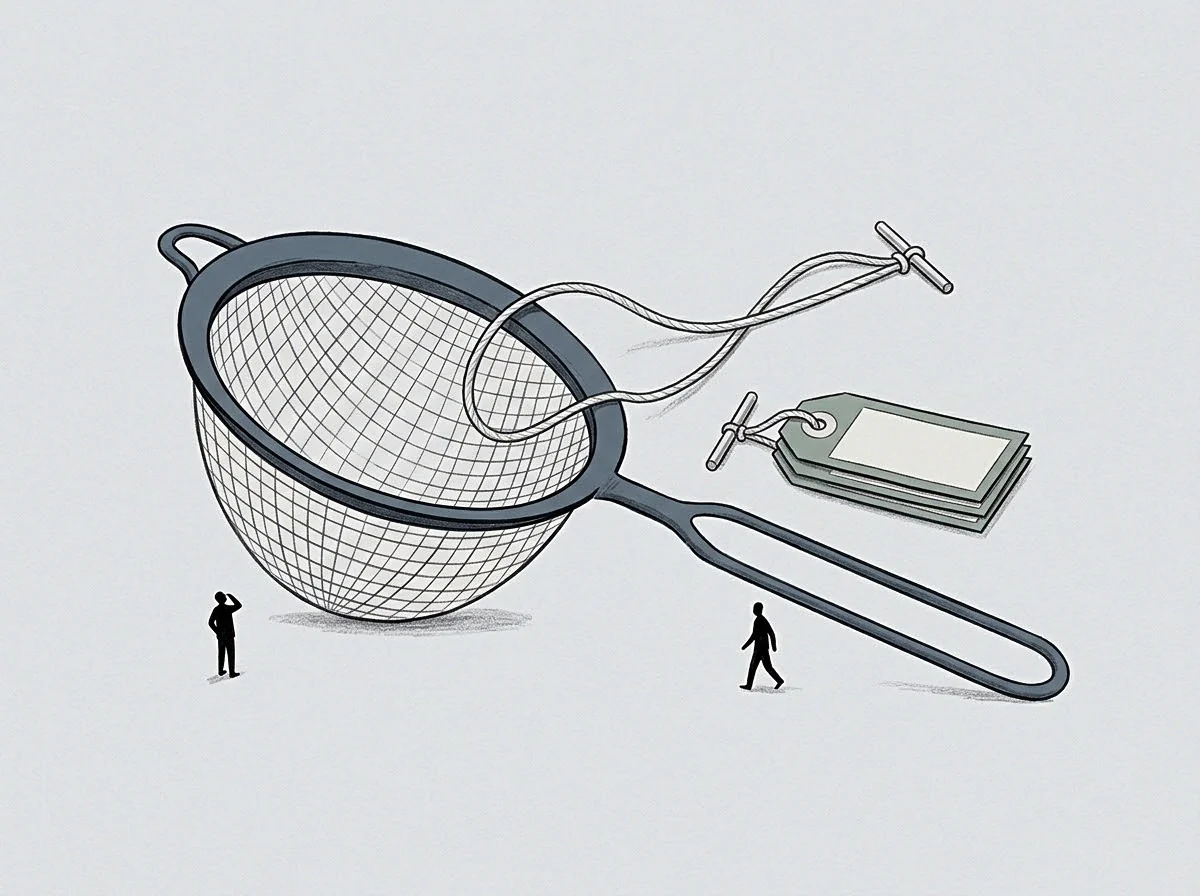
Knot
An enterprise buyer negotiates extended settlement terms while simultaneously inserting subjective acceptance conditions into the delivery schedule. The contract draft arrives with payment set at net ninety days following formal departmental sign-off. Accounts receivable aged past ninety days.
The commercial team views the arrangement as a credit concession granted to secure annual revenue. The engineering team inherits an open-ended review loop where client managers condition invoice payment on custom feature adjustments outside the agreed product roadmap. Cash timing alters engineering priorities.
Commercial credit terms and technical completion benchmarks occupy different measurement domains. Payment schedules reside on a cardinal scale of calendar days and bank transfer amounts. Product verification operates on an ordinal scale of system performance, deterministic test suite completion, and error rate thresholds.
Conflating the two domains grants procurement officers indirect authority over the engineering backlog. When invoice disbursement depends on discretionary customer evaluation, the customer uses outstanding account balances to force technical compromises.
A commercial credit term linked to subjective client approval converts standard accounts receivable into an unhedged operational liability.
Enterprise procurement departments routinely separate commercial negotiations from technical scoping. The procurement agent requests net sixty or net ninety terms late in the contracting cycle, presenting the concession as an administrative standard across their corporate vendor registry. Concurrently, the procurement agent inserts language stating that invoice clocks start only after designated user representatives issue signed acceptance certificates.
This structural binding places product governance in the hands of corporate payables clerks.

Commercial Entanglement of Settlement and Technical Release
A supplier extending ninety-day credit assumes financial carrying costs, calculated through the cost of working capital or short-term credit lines. Tying that ninety-day clock to technical acceptance compounds the financial carrying cost with an unpriced engineering commitment. The buyer delays final approval.
Each week of delayed approval extends the vendor float while customer staff test edge cases that were never part of initial design specifications. The vendor management team faces a deteriorating choice: reject the client demands and absorb extended payment delays, or divert technical staff from core development to satisfy an ad hoc request.
The client says the invoice clears the afternoon the departmental committee signs the release certificate.
Drift
A technical organization absorbs three consecutive rounds of undocumented interface adjustments to secure an overdue invoice. Capital strain forces engineering capitulation. The initial contract permitted sixty days of post-deployment testing, during which client staff submitted forty-two change requests disguised as defect notices.
Engineers spent two hundred billable hours altering database queries and visual styles rather than shipping scheduled improvements to the central codebase. Internal engineering hours evaporate quickly. The financial loss appears as delayed revenue, yet the operational damage lands squarely on system stability and engineering capacity.
Operating capacity consumed by customer change requests rarely returns to the general product roadmap. When client payment terms grant unilateral sign-off authority, product teams settle into a defensive posture. System architecture fragments under customer-specific branches created solely to unlock frozen billing tranches.
Technical debt accumulates along the exact fault lines of the client portfolio. The largest customer dictates the branch structure, while accounts receivable balances determine sprint backlogs.
Conditioning invoice settlement on arbitrary sign-off schedules forces engineering capacity into unbudgeted maintenance routines that degrade baseline platform stability.
This dynamic produces systematic organizational erosion across four identifiable operating dimensions:
- Architectural fragmentation occurs through the rapid production of customer-specific exceptions that bypass the unified codebase to satisfy immediate inspection hurdles.
- Capacity diversion strips senior developers from long-term architectural upgrades to resolve non-blocking interface preferences lodged by customer accounting liaisons.
- Forecasting collapse invalidates delivery schedules across adjacent customer accounts as release engineers spend unpredictable hours supporting disputed client deployments.
- Margin decay converts high-margin recurring software licenses into low-margin professional service contracts through continuous, unbilled customization passes.
The cost lands on the senior developers whose scheduled technical upgrades remain stalled behind customer payment hurdles. Technical standards yield under working capital pressure. The long-term consequence is an unmaintainable software architecture where every major customer operates on an isolated, fragile branch maintained solely to avoid contractual withholding disputes.
Bench
Objective verification relies on mathematical boundaries determined prior to contract execution. In industrial civil engineering, maritime authorities establish load-line marks directly on a vessel hull to indicate maximum legal submergence under varying water densities; neither port officials nor cargo owners can adjust those physical lines during transit negotiations. Software and systems contracts require equivalent structural boundaries.
Decoupling payment timing from technical governance demands absolute clarity regarding what constitutes delivered work.
Whose Testing Environment Governs Disputed Acceptance Clauses?
The vendor environment provides the only stable baseline for technical verification. Running acceptance tests inside customer environments introduces untracked infrastructure variables, idiosyncratic network permissions, and external dependencies that distort system functionality. The agreement defines the testing harness, the precise dataset, and the specific automated test suites that determine technical delivery.
Testing scripts eliminate subjective debate. If the platform executes its test suite with zero blocking errors inside the controlled staging environment, the technical delivery gate opens automatically.
A contractual acceptance clause referencing automated test suite completion inside a vendor staging environment eliminates discretionary customer payment delays.
Programmatic Verification Specifications
Protecting product integrity while offering flexible credit terms requires moving all verification criteria from narrative descriptions into reproducible operational parameters. The contract incorporates these safeguards through three explicit structural mechanisms:
- Deemed acceptance triggers establish an automatic five-day inspection window following delivery notification, after which technical approval occurs by operation of contract unless explicit automated test failures are documented.
- Segregated dispute partitions isolate disputed billing tranches, forcing the immediate commercial disbursement of undisputed software fees while technical disputes proceed through separate operational channels.
- Deterministic testing benchmarks replace subjective satisfaction clauses with machine-evaluated performance thresholds, uptime counts, and standardized API response benchmarks.
Acceptance criteria govern payment obligations. The inspection window closes without dispute. The deemed-acceptance stipulation transfers invoice liability to the customer on day fifteen unless documented unit test failures arrive accompanied by machine-generated error logs.

Ratio
Trade credit functions as an unsecured loan extended from vendor to purchaser. When an enterprise customer demands net ninety payment terms, the vendor acts as an unlicensed short-term commercial lender. Vendor leadership frequently calculates only the monetary carrying cost of this loan, equating net ninety terms with a simple two percent working capital interest expense.
This cardinal calculation ignores the ordinal costs that emerge when payment delays intersect with technical delivery covenants. Working capital contracts under pressure.
Evaluating payment structures requires balancing cardinal credit concessions against the preservation of technical autonomy. The trade-off is not uniform across contract designs. Structural arrangements alter how risk distributes across corporate departments.
| Contractual Structure | Cash Conversion Interval | Codebase Autonomy | Customer Intervention Surface | Engineering Capacity Siphon |
|---|---|---|---|---|
| Subjective Retainage Gate | 120 to 180 Days | Minimal | Continuous and Discretionary | High Ongoing Drain |
| Decoupled Commercial Credit | 60 to 90 Days | Absolute | Restricted to Reported Bugs | Negligible |
| Programmatic Escrow Release | 30 to 45 Days | High | Confined to Automated Test Run | Zero Unbudgeted Hours |
The table demonstrates that extended payment terms become manageable only when customer intervention surfaces are strictly curtailed. Late settlement invoices collect statutory interest. A vendor can extend ninety-day credit with negligible operational damage if technical acceptance is programmatic and verified prior to deployment.
Conversely, extending thirty-day credit with subjective customer sign-off routinely causes catastrophic operational disruptions. The cardinal length of the payment cycle matters far less than the structural separation between commercial invoicing and engineering release authority.
Payment delays cannot alter production architecture. Capital preservation drives silent compromises. Code architecture survives client procurement cycles.
Extending commercial payment timelines while holding absolute authority over acceptance testing preserves both cash reserves and baseline system integrity.
Post
Contractual boundaries require precise language separating accounts receivable collection from technical release decisions. When commercial negotiations conclude, the operational protective barrier lives entirely within the master services agreement. The commercial terms specify payment timing, late payment penalties, and interest accruals.
The technical exhibits define delivery benchmarks, automated validation harnesses, and scope boundaries. Neither section refers to the other for operational authority. Programmatic testing protects system uptime.
An enterprise buyer experiencing cash constraints may attempt to delay invoice processing by manufacturing technical complaints during the credit period. A properly drafted contract neutralizes this tactic by defining software defects strictly through reproducible deviations from documented specifications. Customer complaints regarding workflow layout, stylistic choices, or uncontracted integration points are routed directly to the product backlog for subsequent commercial estimation.
Technical standards remain intact. The release passes without commercial renegotiation.
The vendor balances working capital risk against product standard protection through the deployment of three interconnected legal boundaries. First, software access licenses remain active only while accounts receivable stay within contracted credit intervals. Second, late payments accrue commercial interest automatically without invalidating prior technical approvals.
Third, warranty remediation runs concurrently with full invoice settlement rather than preceding it. The commercial transaction proceeds along its financial track while software architecture follows its internal development cadence.
Whether enterprise procurement divisions will continue accepting automated testing gates when broader macroeconomic conditions favor aggressive buyer-side cash retention remains an unresolved question across commercial software markets.