
Converting Multi Attribute Operational Strain Vectors Into Contractual Escalation Clauses
Operational strain vectors convert multi attribute internal friction into contractual price adjustments by mapping ordinal operational metrics to cardinal rate triggers.

Load
Internal operational friction differs fundamentally from external billing figures. Operational strain in delivery contracts manifests as a multi-attribute vector. The vector includes direct hours expended, specialized attention consumed, capability erosion, and capacity depletion.
Accounting systems record currency expended, converting complex operational realities into single cardinal numbers. Operational strain remains ordinal in nature within the enterprise. Service providers order operational friction by intensity rather than absolute currency metrics.
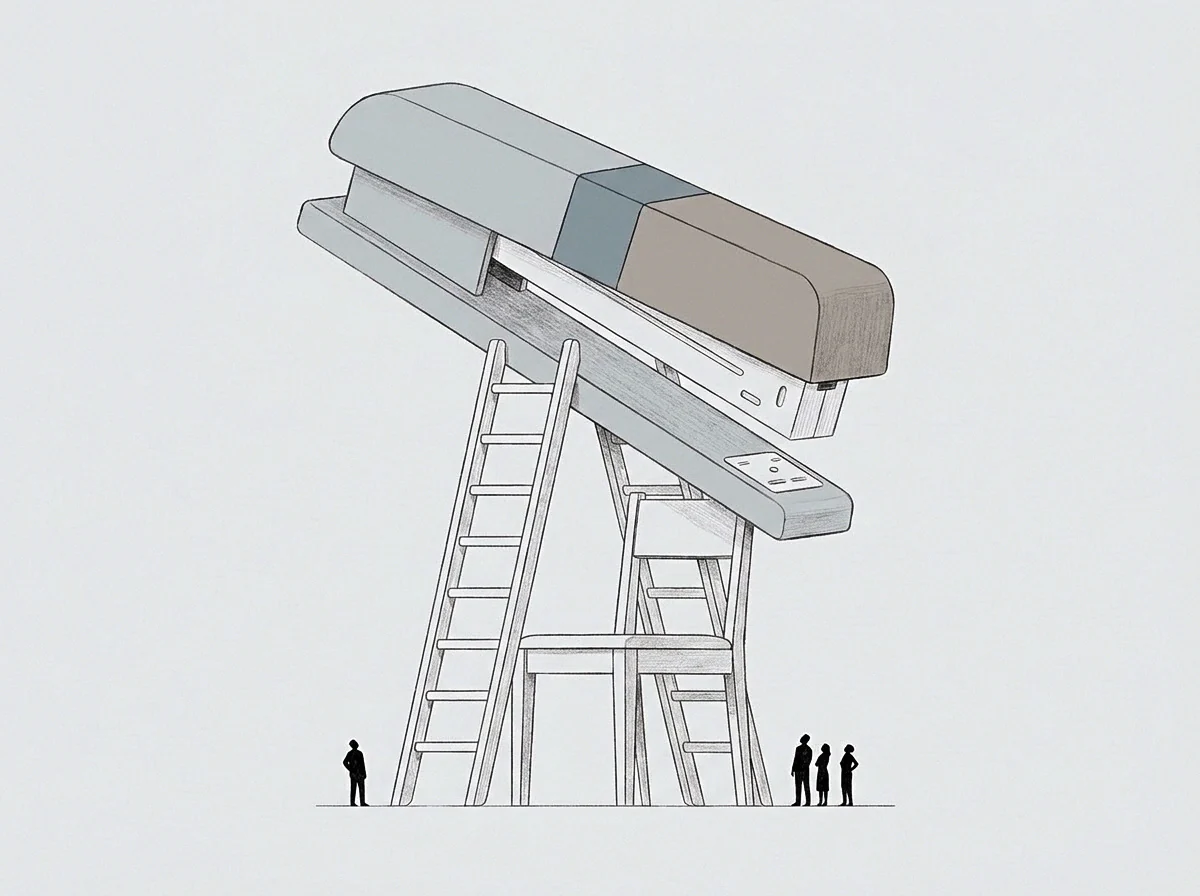
Operational Strain as a Multi Attribute Vector
The components of operational strain operate across distinct physical and psychological dimensions. When a client demands custom operational adjustments, the delivery team experiences strain across multiple vectors. Direct labor hours increase.
Attention shifts from standard deliverables to non-standard exception handling. Capability gains diminish when engineers perform repetitive workarounds rather than building core asset architecture. Money covers only part of the strain.
The vector moves across several axes. Attempting to compress these distinct vectors into a single monetary loss figure obscures the actual operational impact.

The Fallacy of Single Metric Abstraction
Cardinally expressed pricing structures fail to capture ordinal operational shifts until capacity collapses. Financial statements measure currency flows at fixed intervals. Ordinal strain resists direct counting.
Service providers routinely observe escalating operational strain while gross margins appear stable on paper. This divergence occurs because attention consumption and capacity depletion precede financial line-item changes. By the time monetary losses manifest in quarterly accounting statements, operational reserves have reached exhaustion.
An internal strain vector retains its ordinal structure until contractual terms force conversion into cardinal price adjustments.
Decomposing multi attribute operational strain requires evaluating each vector component independently. Operational strain vectors carry unique scales of measurement. Hours operate on a ratio scale.
Attention operates on an ordinal scale based on cognitive disruption. Capability gain operates on an ordinal vector measuring technical debt accumulation. Conflating these distinct scales into a single financial loss metric prevents early identification of contract unprofitability.
Failing to decompose operational strain into discrete vectors leads to uncompensated capacity exhaustion and eventual contract default.

Joint
Enterprise delivery arrangements fail when operational strain accumulates beyond initial operational baselines. The structural point of connection between internal delivery operations and external commercial contracts often lacks explicit feedback mechanisms. Without calibrated thresholds, operational strain absorbs internal engineering capacity without generating contractual remedies.

Decomposing Strain Magnitudes in Service Agreements
A enterprise service agreement covering software operations serves as a clear demonstration of vector decomposition. Take an arrangement structured around a fixed monthly fee over thirty-six months. The service provider commits to maintaining system availability and implementing minor feature updates.
Over the first twelve months, the customer introduces unscripted operational requests, demanding custom reporting formats and accelerated response windows. The monetary figure appears unchanged on monthly billing invoices. The internal strain vector expands dramatically across distinct operational attributes.
The operator absorbs the daily friction. Capacity drops when friction rises. Attention breaks before hours run out.

Capacity Depletion Across Operational Boundaries
Internal resources shift away from planned initiatives when customer exception handling expands. Operational strain vectors accumulate quietly within delivery teams, creating hidden project friction.
- Hours Magnitude increases through unscheduled operational troubleshooting during off-peak windows.
- Attention Consumption escalates as senior engineering personnel monitor custom customer workflows instead of core platform updates.
- Capability Friction develops when custom workarounds prevent the deployment of standardized automation assets.
- Capacity Depletion Rate accelerates as staff turnover rises due to persistent operational stress.
Unpriced attention drift forces internal operational capacity to subsidize fixed contract deliverables.
Service providers frequently absorb operational strain during early contract stages under the assumption that operational velocity will normalize. Research in organizational stress physiology demonstrates that unmitigated operational load compounds exponentially rather than linearly. Unaddressed strain shifts team focus from long-term asset development to immediate crisis mitigation.
Contractual escalation mechanisms prevent this structural drift by translating operational load metrics into billable price adjustments.
The scope remains within agreed contractual definitions because total monthly tickets fall beneath the written threshold.

Band
Translating internal operational friction into external contractual terms demands explicit conversion parameters. Operational strain vectors must pass through formal quantification boundaries before entering contractual negotiation. Establishing numerical thresholds allows internal operational metrics to translate into enforceable rate adjustments.

Does Operational Friction Convert to Contract Price?
Operational friction translates to contract price when specific ordinal thresholds pass into quantifiable cardinal triggers. Commercial agreements operate on cardinal triggers, explicit metric variations, or predefined threshold breaches. The delivery organization must establish conversion rules that map internal vector changes directly to external financial metrics.
Conversion drops internal detail. The contract records the price. The baseline shifts over time.

Ordinal Thresholds and Cardinal Conversion Boundaries
Predefined index levels allow contractual counterparties to track operational escalation objectively. The table below outlines how specific internal strain attributes convert into contractual pricing adjustments upon reaching designated ordinal thresholds.
| Attribute Vector | Internal Strain Metric | Ordinal Threshold | Cardinal Conversion Unit |
|---|---|---|---|
| Hours Vector | Engineering incident intervention hours per month | Exceeds fifteen percent of total allocated delivery hours | Hourly rate escalation of twenty-five percent for excess hours |
| Attention Load | Unscheduled custom reporting requests per billing cycle | Exceeds three distinct ad-hoc requests within thirty days | Fixed fee charge of two thousand dollars per additional report |
| Capability Friction | Custom legacy code integration maintenance hours | Exceeds ten percent of technical sprint velocity | Conversion to dedicated time-and-materials billing structure |
| Capacity Exhaustion | Operational team response duty rotation frequency | On-call rotations occurring more frequently than one week in four | Ten percent increase in overall monthly retainer fee |
Stating escalation terms at contract formation costs less than negotiating operational recovery during active delivery failures.
The conversion table establishes an objective interface between internal delivery operations and client billing mechanisms. By defining exact ordinal thresholds, the contract eliminates subjective disputes regarding operational strain levels. When operational parameters cross predefined boundaries, financial adjustments activate automatically under the governing agreement.
Operational metrics left unindexed in the contract become uncompensable internal overhead.

Trigger
Escalation formulas calculate contractual adjustments based on verified baseline metrics. Once operational strain thresholds are established within commercial contracts, activation rules determine when price adjustments take effect. Clear trigger definitions prevent ambiguity during contract performance reviews.

Algorithmic Escalation Formulas
Mathematical formulas embedded within contract terms automatically adjust pricing based on strain metrics. Rather than relying on renegotiation cycles, effective contracts integrate automated price adjustment formulas. These formulas pair operational strain thresholds directly with consumer price indices, labor rate variations, or volume metrics.
The margin collapses under strain. Data points accumulate across quarters. The baseline establishes expected performance.

Baseline Measurement Windows and Adjustment Frequencies
Measurement windows determine how frequently operational metrics evaluate contractual escalation eligibility.
- Establish a baseline operational measurement window spanning ninety days prior to contract execution.
- Track monthly variance across all defined operational strain attributes against established baseline values.
- Calculate cumulative vector drift at quarterly evaluation intervals to determine escalation threshold breach status.
- Issue formal escalation adjustment notices specifying the exact cardinal price increase dictated by contract terms.
Escalation terms remaining unexecuted for multiple quarters establish an implied waiver that weakens enforcement authority.
Regular measurement windows ensure operational strain vectors receive timely contractual evaluation. Delaying evaluation windows allows operational strain to accumulate without financial compensation. Establishing predictable quarterly measurement cycles aligns internal operational monitoring with contract billing operations.
The quarterly baseline adjustment term resets expected operational volume targets, automatically increasing the base service fee by eight percent upon breach.

Clause
Legal precision in contract language determines whether operational escalation terms survive commercial dispute. Escalation clauses must clearly define the strain vectors, measurement methods, and payment modification steps. Precision in contract drafting protects both service providers and clients from arbitrary price adjustments.

Contractual Drafting for Multi Vector Escalation
Drafting escalation terms requires explicit definitions of operational attributes and unambiguous rate modification mechanisms. Contract drafters isolate distinct strain categories within individual contractual sections. Blending multiple strain metrics into generic service level adjustments creates interpretative ambiguity.
The agreement defines the boundary. Verbal agreements decay rapidly. Contractual terms survive personnel changes.

Boundary Conditions and Enforcement Mechanisms
Enforcement provisions establish clear procedural pathways for enacting contractual price escalations. Contractual escalation provisions specify notice periods, invoice calculation methods, and dispute resolution timelines. When an escalation threshold is reached, the service provider transmits written calculation workpapers to the counterparty.
The counterparty receives a thirty-day review window. If no formal dispute is filed within thirty days, the escalated rate applies to subsequent billing invoices.
Contractual terms must clearly assign audit rights and verification standards for operational strain calculations. Counterparties frequently dispute internal time tracking data and attention load metrics. Including independent verification procedures or third-party telemetric monitoring terms reduces friction during rate escalation execution.
Explicit enforcement terms maintain contract stability while ensuring fair operational cost recovery.
Whether commercial counterparties will accept multi attribute escalation terms without demanding matching performance penalty clauses remains dependent on market leverage dynamics.