
Translating Internal System Strain Vectors Into External Commercial Contracts
Internal operational strain maps to commercial terms when multi attribute friction vectors convert into explicit contract triggers and fee adjustments.

Scale
Internal strain builds up inside an organization long before it shows up in client negotiations. Engineering runs out of capacity, support handles a growing queue of edge cases, and leadership spends time putting out fires instead of building planned features. These internal pressures are ordinal, meaning friction is felt as more or less relative to normal baseline operations.
Commercial contracts, however, are cardinal: they demand exact prices, fixed schedules, and explicit liability limits. Turning operational friction into a contract requires translating subjective internal strain into concrete commercial terms.
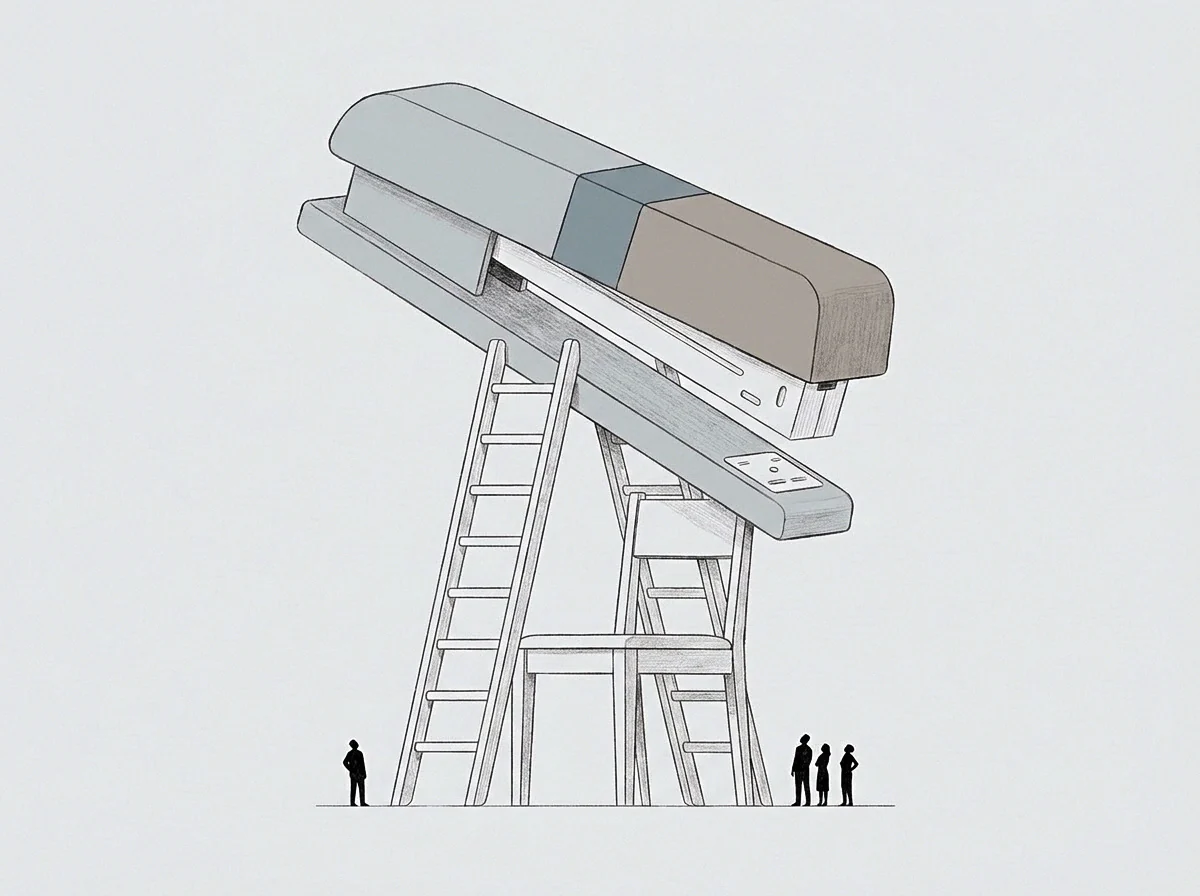
Distinguishing System Drag From Invoice Figures
System drag represents the physical drain on engineering capacity caused by unpriced client requests. When a customer asks for custom software changes without a contract adjustment, the engineering team absorbs the extra workload. On paper, revenue looks steady, but internal reserves quietly erode.
The result is an operational deficit where today’s delivery burns up tomorrow’s product capacity.
Operational friction hits different roles in different ways. Engineering hours spent writing custom integration scripts directly drain capacity. Support managers handling middle-of-the-night messages suffer fragmented attention.
Product leaders forced to reshuffle roadmaps for bespoke feature requests take on opportunity costs. Because each role measures impact differently, combining these figures directly is impossible without a shared baseline.

The Components of Internal Operations
Operational friction involves both physical and cognitive metrics across technical teams. Quantifying internal strain requires tracking five key components across active projects: engineering hours diverted from core roadmaps, support ticket resolution latency, employee context-switching frequency, unexpected cloud infrastructure utilization, and uncompensated management oversight. Tracking these metrics establishes an empirical baseline for internal operational velocity.
When an operational system absorbs unpriced custom requests beyond baseline capacity, internal attention degrades before monetary losses surface on financial statements.
If internal friction goes unmeasured, commercial contracts will consistently underprice delivery and drain what remains of an organization’s reserves.

Board
Contract negotiation brings internal capacity metrics onto an explicit commercial surface. The operational board serves as the structural interface where internal strain vectors map directly to external obligations. When internal system boundaries remain unstated, client demands expand to fill whatever engineering capacity exists.
Constructing a solid agreement requires transferring internal strain limits onto the negotiating table.

Mapping Operational Load Across Contractual Surfaces
Physical operational limits dictate how incoming work moves through technical teams. To prevent unchecked strain expansion, commercial agreements map specific operational metrics directly to client charges and delivery schedules. Evaluating different contract structures shows how operational risk is shared between service providers and client organizations.
| Regime Type | Internal Vector Impact | External Pricing Mechanism | Operational Recovery Window |
|---|---|---|---|
| Unbuffered Fixed-Fee Terms | High attention fragmentation, unpriced scope growth, core roadmap delay | Static monthly fee with static deliverables | Zero designated operational recovery time |
| Indexed Strain-Adjusted Terms | Bounded capacity allocation, predictable queue depth, stable context switching | Dynamic baseline fee with metric-triggered surcharges | Automated queue throttling upon reaching strain thresholds |
| Capped Time and Materials | Moderate engineering diversion, capped support queues, tracked hour limits | Hourly rates subject to strict ceiling caps | Manual renegotiation required upon cap breach |
Choosing an indexed strain-adjusted structure ensures internal capacity directly limits external commitments. A fixed-fee structure forces the delivery organization to act as an unpaid shock absorber for client-driven volatility. Linking capacity metrics to dynamic contract pricing protects development speed while securing proper compensation when scope expands.
Clients often expect immediate resolution under a fixed monthly retainer, regardless of the team’s actual capacity.

Term
Translating operational friction into clear contract language stabilizes service delivery. Setting explicit operational boundaries in legal provisions prevents scope creep and protects technical capacity. Contracts need clear limits on request volume, deployment frequency, response windows, and custom engineering work.
Doing so moves operational management away from constant firefighting and into structured contractual enforcement.

Drafting Specific Triggers for Scope Variation
Contractual triggers adjust fee structures whenever operational demands spill past standard baselines. Defining clear operational thresholds gives both sides an objective basis for recalibrating fees during active contracts.
- Capacity Trigger specifies the maximum monthly engineering hours allocated to client customization before automated hourly billing applies.
- Scope Excursion Rate establishes a thirty percent fee surcharge whenever un-scoped feature requests alter the core database architecture.
- Response Latency Index links emergency support response times to elevated monthly maintenance tier fees.
- Deployment Burst Allowance restricts off-hours software deployments to two events per quarter before triggering additional infrastructure fees.

How Do Contractual Limits Preserve Internal Attention?
Clear boundaries buffer internal teams from constant, unstructured client requests. Support queues overflow quickly when ticket volume has no contractual limit. Setting explicit request quotas forces clients to prioritize issues before submitting them.
Operational strain falls when external clients carry the cost of their own operational unpredictability.
A tier-structured service agreement prevents internal team burnout by automatically recalibrating delivery schedules when request volume exceeds historical baselines.
Adding an automated volume threshold clause passes excess operational costs directly to the client.

Clause
Legal structures turn operational boundaries into enforceable limits. Service level agreements, liability caps, and indemnification terms govern how risk is shared between parties. Translating technical risk into legal clauses protects an organization from uncompensated exposure, provided the contract relies on clear, objective metrics for performance and failure.

Structuring Liability and Service Level Penalties
Service level agreements set the pace of work by attaching financial penalties to delays. When SLA targets demand more than systems can handle, engineering teams end up operating in permanent crisis mode. Fixing these clauses means setting realistic performance targets that are explicitly tied to client cooperation dependencies.
- Define baseline system availability metrics based on historical operational performance data under standard load conditions.
- Insert co-operation dependency provisions stating that client integration delays suspend service level agreement penalty clocks immediately.
- Cap total monthly service level credits at ten percent of the recurring monthly contract value to preserve operating margin stability.
Converting informal commitments into explicit contractual limits protects ongoing operations from uncompensated system exhaustion.
Whether liability caps indexed to historical strain survive tough commercial negotiations usually depends on the buyer’s market power.

Price
Converting ordinal strain into cardinal numbers requires systematic translation. Internal friction represents real capacity loss across engineering, support, and management. Price is the single cardinal figure buyers understand in a negotiation.
Translating internal friction into price bridges the gap between operational reality and commercial compensation.

The Conversion Arithmetic of Strain to Fees
Financial translation attaches concrete numbers to internal capacity loss. Pricing operational strain requires accounting for direct labor rates, lost opportunity costs, and system recovery overhead. An hour of senior engineering time spent handling urgent custom requests costs far more than their base hourly salary.
Context switching drags down overall productivity and delays revenue-generating core features.
Calculating the final commercial price comes down to three main cost components. Direct execution expenses cover base labor and cloud infrastructure. Capacity opportunity costs account for delayed features and lost sales.
System recovery fees cover post-incident maintenance and team recalibration. Combining these three elements turns operational friction into a defensible price.
The invoice is the single vehicle through which operational cost converts into external commercial reality.
Translating operational strain into commercial agreements protects internal capacity by tying compensation directly to real operational friction.