
Designing Operational Boundaries To Protect Structural Architecture Under Alert Instability
Operational boundaries fail under alert instability when operators bypass structural interfaces to quiet alarms, requiring strict telemetry decoupling to survive.

Shock
Alert volume doubled across three consecutive quarters in early distributed engineering organizations before incident counts shifted by even five percent. Pagers fired forty times a night across distributed teams while underlying server failures stayed completely flat. That divergence produces an immediate structural breakdown: human attention absorbs the turbulence while system boundaries dissolve under emergency permissions granted to silence the sirens.
Operational boundaries define where an execution runtime ends and where another subsystem preserves autonomous integrity. When alerts flap, oscillate, or broadcast false anomalies continuously, human responders alter software pathways directly. They bypass deployment stages, disable strict interface schemas, and grant persistent elevated rights to fast-track remediation.
The operational instability degrades the structural architecture long before code repositories register an intentional refactor.
Under sustained signal noise, operators bypass isolation protocols to quiet monitoring queues.
Consider the measurement scales governing this state. A cardinal metric like raw alert frequency conceals the multi-attribute exhaustion landing on an operations team. A cost vector decomposes across several distinct dimensions: hours lost to false triage, cognitive reserve drained, and architectural isolation surrendered during frantic manual interventions.
Responders treat immediate recovery as the primary utility while long-term module separation drops down their internal preference ordering.
The cost lands on architectural modularity.
System designers frequently assume alerting layers sit cleanly outside the application architecture they observe. That assumption fails under operational stress. Every monitoring probe, health check handler, and automated restart hook couples an external supervisory harness directly to internal object boundaries.
If the monitoring harness vibrates with false positives, the boundary buckles.

Decay

Mechanisms of Boundary Dissolution
Telemetry instrumentation changes the execution paths of production code. High-frequency tracing agents inject thread-local storage overhead and alter memory layout guarantees across microservices. When an alert threshold triggers repeatedly, operators routinely push ad-hoc logging filters, widen firewall openings to permit external diagnostic pollers, and temporarily disable transport-layer authentication between tightly coupled components.
The drift occurs through progressive concessions. An engineer debugging an alert cascade grants a read-replica service wide write permissions to clear a stalled pipeline. Another engineer injects a cross-domain query directly into a boundary database to bypass an unresponsive API gateway.
Each intervention trades long-term decoupling for an immediate drop in pager chatter. The resulting dependency web makes future service extraction impossible without massive refactoring investments.
An emergency permission granted during operational chaos persists indefinitely as architectural debt.
Field research on system safety confirms that operators under high cognitive workload universally optimize for immediate alarm cessation over distributed structural integrity. Controlled laboratory simulations of supervisory control show an eighty percent drop in rule compliance when alarms trigger faster than human short-term memory can process. The breakdown traces to baseline information capacity: when sensory inputs saturate, the human operator cuts through formal procedural boundaries to regain control.
The cost lands on domain autonomy.

The Degradation of Service Isolation
Coupling accumulates quietly. A service designed to communicate strictly via asynchronous event buses begins accepting synchronous RPC requests because an asynchronous failure alert proved too difficult to diagnose under pressure. The synchronous bypass resolves the diagnostic blind spot while introducing distributed runtime deadlock risks across both domains.
| Subsystem Attribute | Nominal Isolation State | Degraded Interlock State | System Cost Dimension |
|---|---|---|---|
| Interface Ingress | Schema validated via typed gateway contracts | Raw payload bypass enabled for telemetry pollers | Type safety and downstream validation latency |
| Data Store Access | Strict single-domain write isolation | Shared database handles granted to diagnostic scripts | Schema lock-in and storage corruption risk |
| Runtime Permissions | Least-privilege operational roles | Persistent wildcard operational tokens | Security blast radius expansion |
| Call Topology | Asynchronous bounded queues | Direct synchronous RPC dependencies | Cascading service stall and deadlock vectors |
Reversing these compromises requires significant engineering effort. An operator who adds an undocumented diagnostic channel creates an unmapped transit route between isolated zones. Subsequent architectural audits encounter a system that no longer matches its formal documentation.
Structural decay is the cardinal expression of unmeasured operational debt.
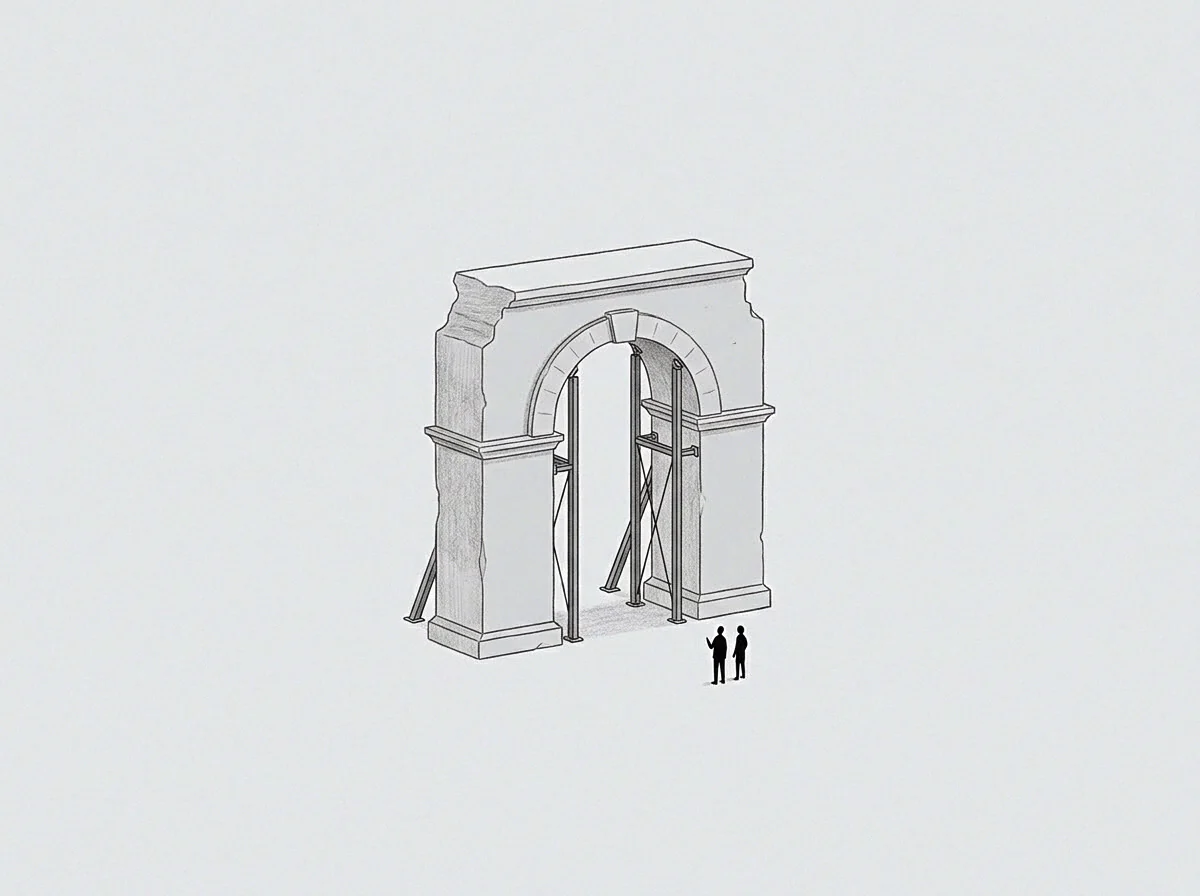
Dam

Isolation of Control Planes
Defending structural boundaries requires physical and logical barriers between the runtime application path and the supervisory telemetry path. Telemetry loops consume operational bandwidth. When telemetry systems share processing resources, memory spaces, or control queues with primary business logic, alert instability triggers cascading core system failures.
A runaway log collector starves a message processing thread, which triggers downstream latency alerts, multiplying overall system noise.
Structural resilience demands strict resource reservations. Applications allocate memory ceilings and execution thread caps exclusively to diagnostic interfaces. If an alert firestorm generates thousands of telemetry events per second, the telemetry emitter discards those events at a designated circuit breaker rather than saturating core network fabrics.
Bounding the monitoring harness preserves the business transaction path.
Architectural boundaries require enforceable structural firewalls:
- Ingress rate limiters enforce strict quotas on diagnostic monitoring endpoints, shedding excess health check pings before downstream connection pools exhaust their capacity.
- Dedicated supervisory networks route alerting traffic, metrics, and distributed tracing metadata away from primary customer transport channels.
- Autonomous circuit breakers isolate misbehaving internal domains, severing non-critical telemetry streams whenever message queue latencies exceed three standard deviations.
- Immutable data interfaces prevent diagnostic agents from altering state configurations inside storage boundaries during incident triage workflows.
These boundaries protect human cognition alongside server hardware. When an operations team defines an unbreachable barrier around diagnostic pathways, alert storms cannot force runtime mutations. A team that preserves this boundary preserves the long-term modularity of its software footprint.
A simple field observation holds: noisy telemetry destroys good architecture faster than poor implementation ever does.
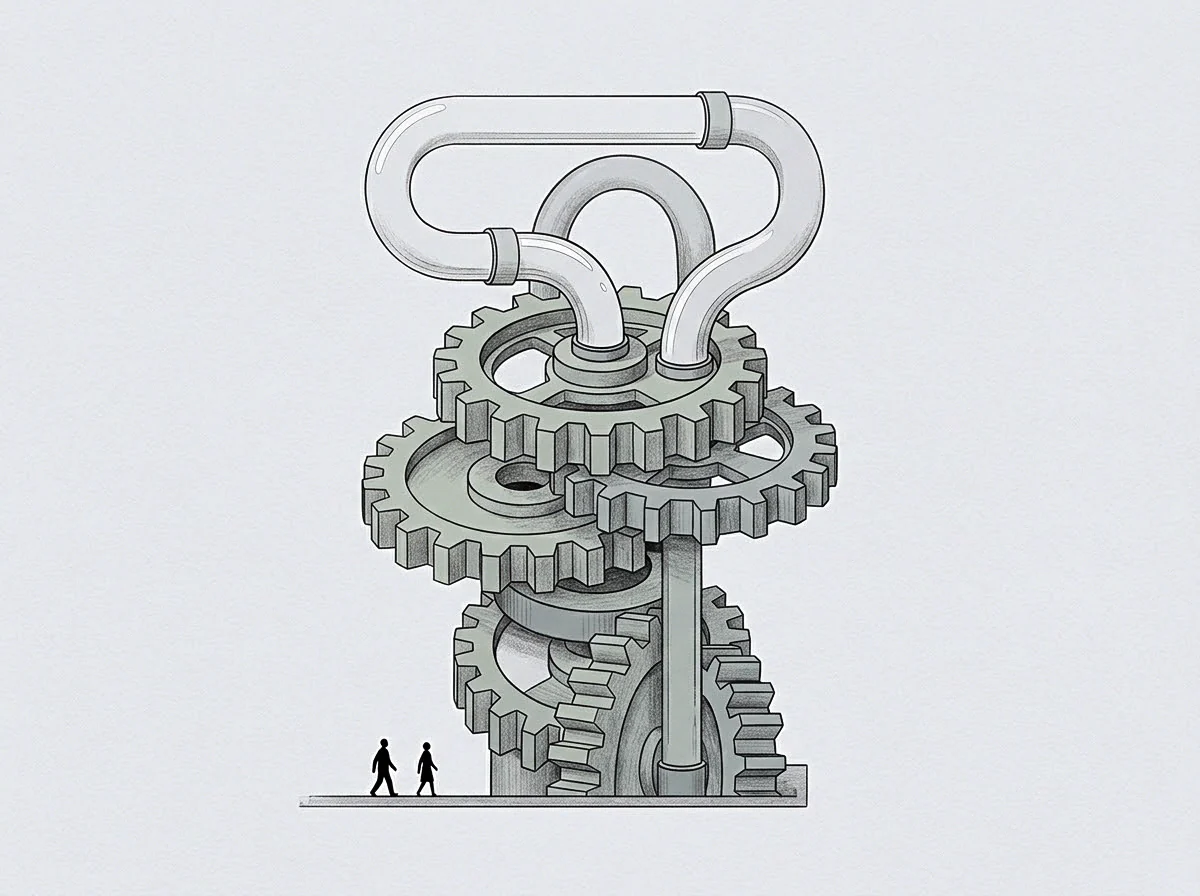
Scale
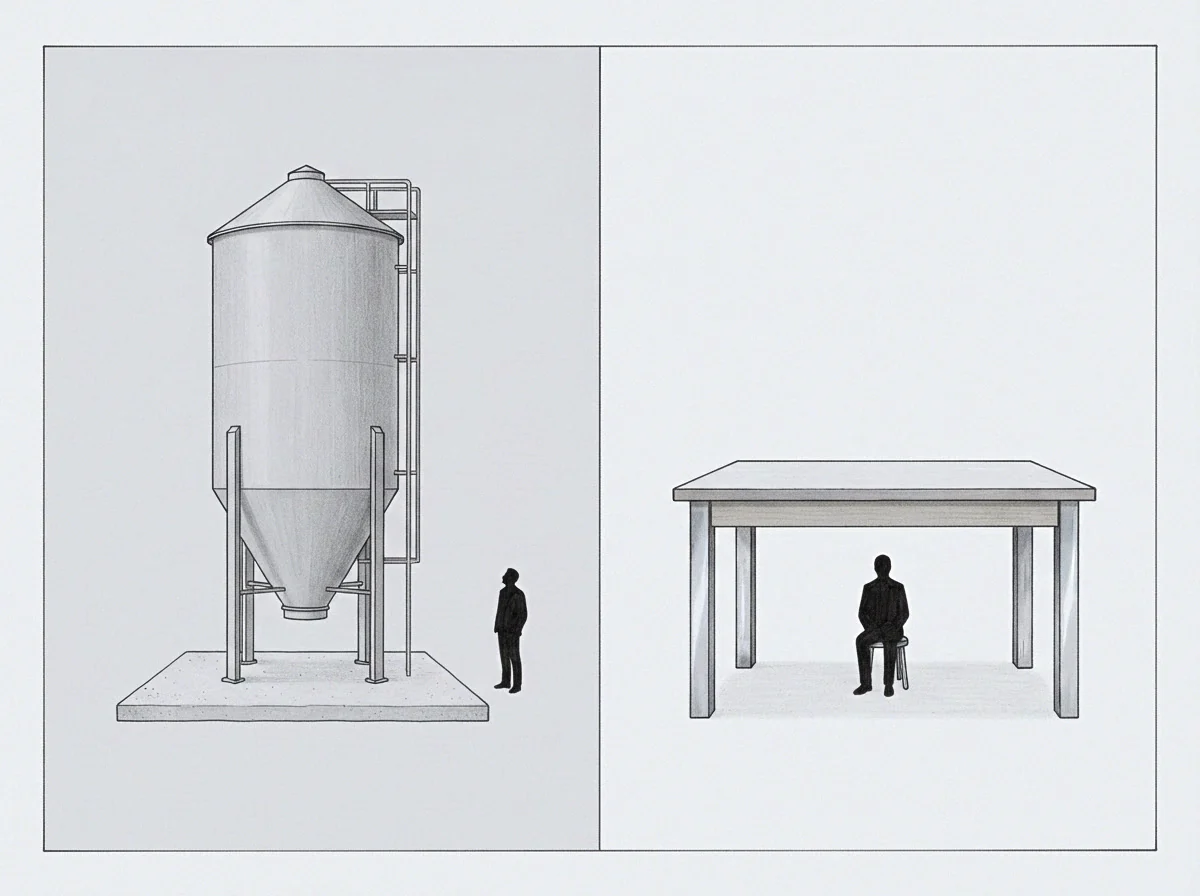
Ordinal Valuation of Boundary Protection
Founders and engineering leaders calculate operational costs cardinally: compute bills, monitoring SaaS invoices, and full-time employee salaries. These numbers represent prices rather than operational costs. An ordinal cost vector captures the true internal drain of running noisy systems: cognitive focus lost, architectural boundaries decayed, and engineering autonomy eroded.
A team spending sixty hours a week quieting false alerts incurs a catastrophic capacity drain that cardinal bookkeeping cannot capture.
Decision theory distinguishes cardinal pricing from internal ordinal ordering. A monetary invoice can be shared across an organization, whereas internal cognitive depletion cannot. When an engineering organization evaluates whether to refactor a screaming monitoring harness or ship an extra customer feature, cardinal figures bias the calculation toward product shipping.
The refactoring appears as an immediate cash drain. The boundary decay appears as a hidden degradation of structural capacity, only realized years down the road when every small feature change takes eight weeks instead of two.
Engineers calculate this trade-off implicitly. They accept a degrading codebase if the immediate operational misery abates. Structural architecture erodes because the humans inside the seats protect their biological stamina before protecting modular abstractions.
A team protecting its sleep schedule cuts through code abstraction layers without remorse.
The cost lands on engineering velocity.
A system running at sustained alert instability burns its engineering capacity. When the cost vector points sharply upward in attention spent and capability lost, cardinal profitability figures offer false comfort. The organization appears productive on paper while its technical assets hollow out from inside.
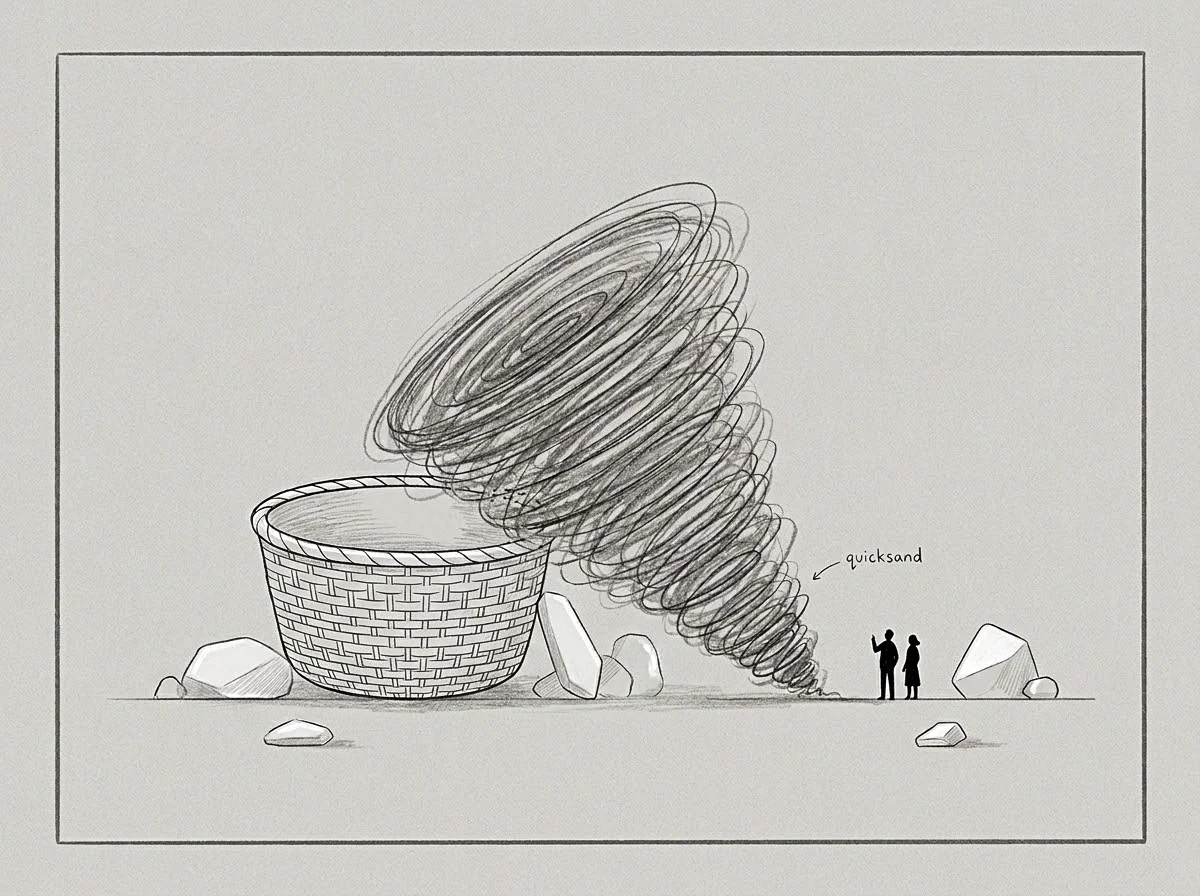
Tether
Structural protection requires mechanical tethers that link operational alert levels directly to deployment authority. When an alert system enters instability, automated policy gates freeze software promotion channels. System architects implement this protocol by locking configuration files and preventing non-emergency schema modifications until alert baselines normalize over forty-eight continuous hours.
This coupling aligns operational stability with long-term architecture. Developers cannot push new service boundaries while existing boundaries shake under false alarm cascades. If an operations room spends all morning chasing dead metrics, the deployment pipeline rejects afternoon release candidates.
The mechanism anchors organizational incentives: silence the alerts cleanly, or engineering deployments halt entirely.
Consider two organizations operating under identical alert noise profiles. The first maintains open deployment pipelines, encouraging responders to push hotfixes and bypass abstraction barriers to stop alarms. Within six months, its core microservices bind into an entangled monolith, moving zero operational metrics while development cycles stretch out.
The second organization clamps its delivery pipeline the instant alarm volume exceeds acceptable variance, requiring responders to repair instrumentation rather than bypass software contracts. Its architecture stays intact.
Is architectural stability maintained by restricting operational bypasses?
The boundary survives because operational integrity ranks higher than immediate release cadence. Engineers forced to fix instrumentation preserve code structure. Those permitted to hack bypasses destroy it.
The operator who cannot silence a rogue monitor cleans the codebase instead of opening a permanent backchannel.