
Structural Coupling Mechanisms For Aligning Strategic Recalibration Cycles With Operational Throughput Boundaries
State-gated structural coupling aligns strategic recalibration cycles with operational throughput boundaries by gating strategic shifts through queue backpressure.

Floor

Distinguishing Strategic Cadence From Execution Limits
Strategic recalibration frequency reflects how quickly leadership shifts organizational direction, while operational throughput limits dictate the speed at which work moves through an execution pipeline without breaking down. Confusing these two dynamics causes structural instability. Strategic priorities can shift in hours, but operational throughput depends on fixed cycle times, setup costs, and relaxation periods.
When leadership recalibrates faster than operational capacity allows, unexecuted directives simply accumulate inside functional teams.
Every operational unit has a throughput floor shaped by physical processing constraints, dependency chains, and queue depth. A software development group, a production unit, or a legal review pipeline requires a set duration to clear work in flight and reach a steady state. Shifting priorities mid-cycle consumes resources without recovering the lost hours, while the resulting task-switching overhead fragments velocity across functional lines.
When strategic directional shifts occur faster than the operational queue clearance time, the system produces stranded inventory rather than adapted output.
Structural coupling resolves temporal friction by establishing concrete procedural interfaces between high-level planning cycles and operational limits. Without explicit coupling mechanisms, leadership assumes an execution fluidity that does not exist in practice. Meaningful alignment requires defining the exact state-dependent conditions under which a new directive is allowed to interrupt active throughput streams.
An explicit capacity buffer clause in an operational agreement determines whether mid-cycle priority adjustments translate directly into dropped deliverables.
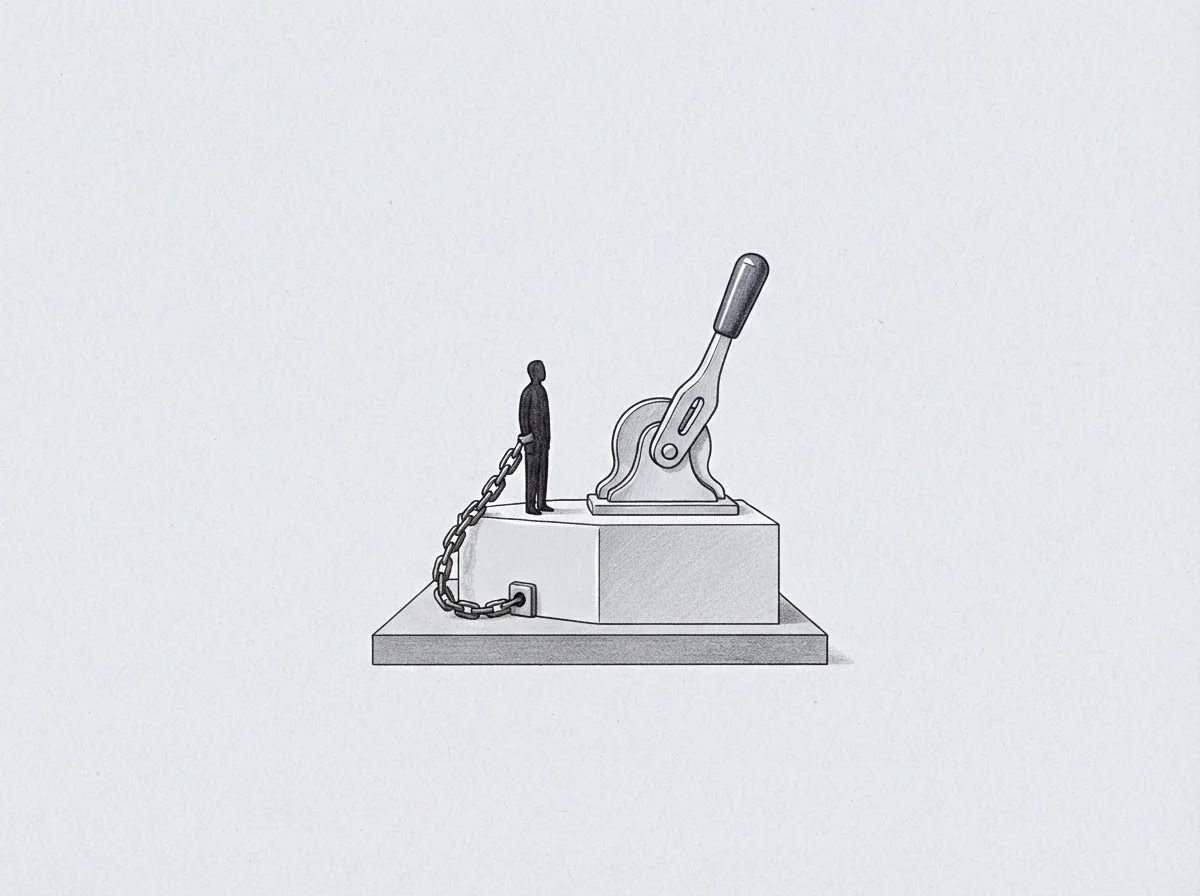
Cadence

Dynamic Mismatch Across Temporal Horizons
Introducing frequent strategic shifts into slower operational systems creates severe oscillation. When direction changes weekly but work items take three weeks to clear, the execution pipeline stays trapped in continuous transition. Technical staff abandon partially completed work to take on new directives, leaving unmaintained dependencies across active repositories until execution breaks down entirely.
Control theory shows that feedback loops operating faster than system response times produce divergence rather than stability. When leadership misreads lagging throughput signals, the typical response is to recalibrate even faster. That acceleration destroys baseline telemetry, making it impossible to evaluate whether any strategic shift delivered measurable value.
The minimum stable recalibration cycle matches the duration required for an operational change to complete its baseline measurement period.
Four dynamic failure modes emerge when recalibration detached from throughput limits governs organizational scheduling:
- Queue Saturation Spike occurs when incoming priority modifications arrive faster than current work units clear, forcing active queues beyond baseline storage limits.
- Phantom Throughput Yield describes a condition where teams register high activity log figures while net customer-facing output approaches zero due to context switching.
- Depreciation of Unfinished Volume measures the permanent value loss incurred when partially built features get abandoned before reaching functional integration.
- Telemetry Blindness State arises when constant operational target recalculation prevents statistical baselines from capturing meaningful performance variations.
Resolving cadence mismatch requires treating operational relaxation time as a hard boundary. Relaxation time is the interval an operational queue needs to clear existing commitments and regain a steady state after a pivot; ignoring this window guarantees systemic friction.
Neglecting operational relaxation times leads to structural inventory write-downs and steady turnover among key implementation leads.
Latch

Rate Limiting Interfaces And Queue Control
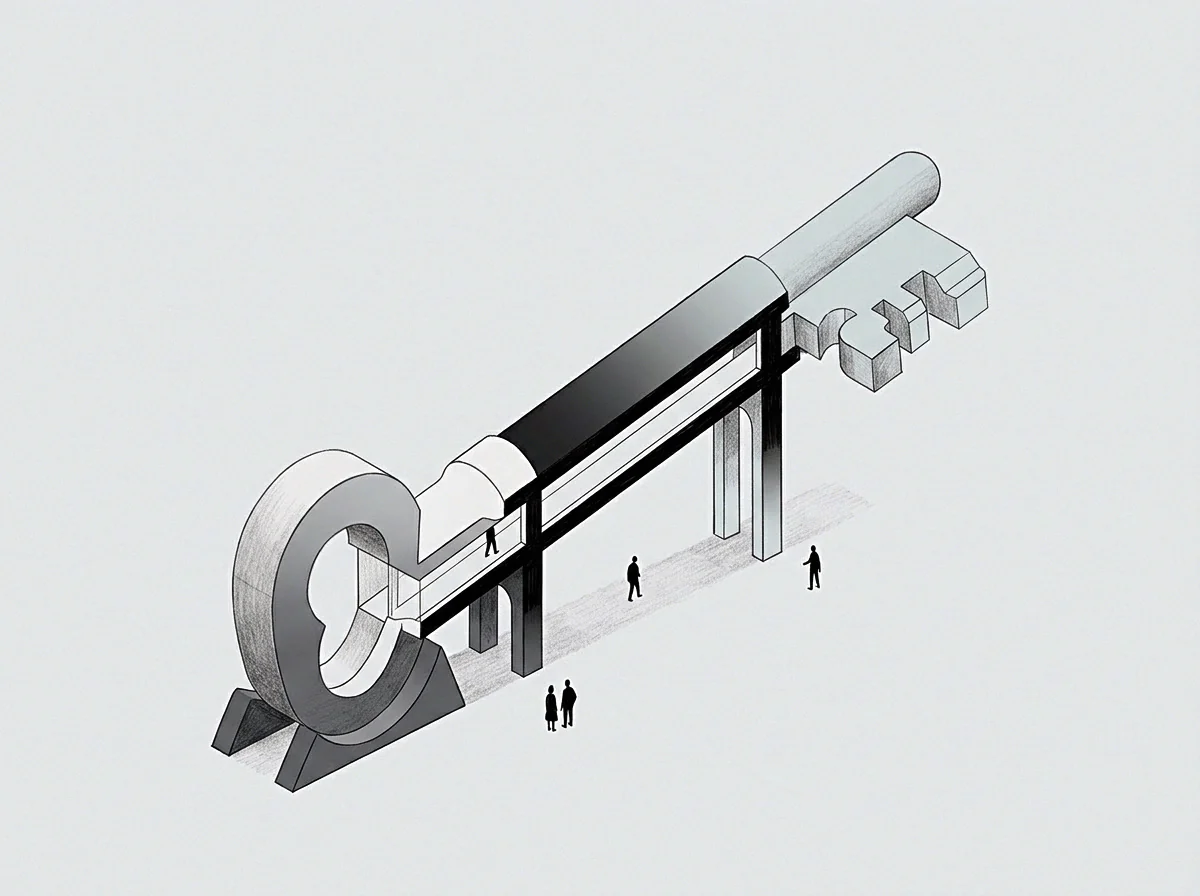
Structural coupling acts as a rate-limiting interface between asynchronous strategic cycles and deterministic execution floors. Just as a mechanical latch locks a mechanism into a fixed vector until internal conditions clear, an organizational coupling latch holds strategic shifts in a buffer until operational queues reach defined release points.
What prevents queue saturation during recalibration?
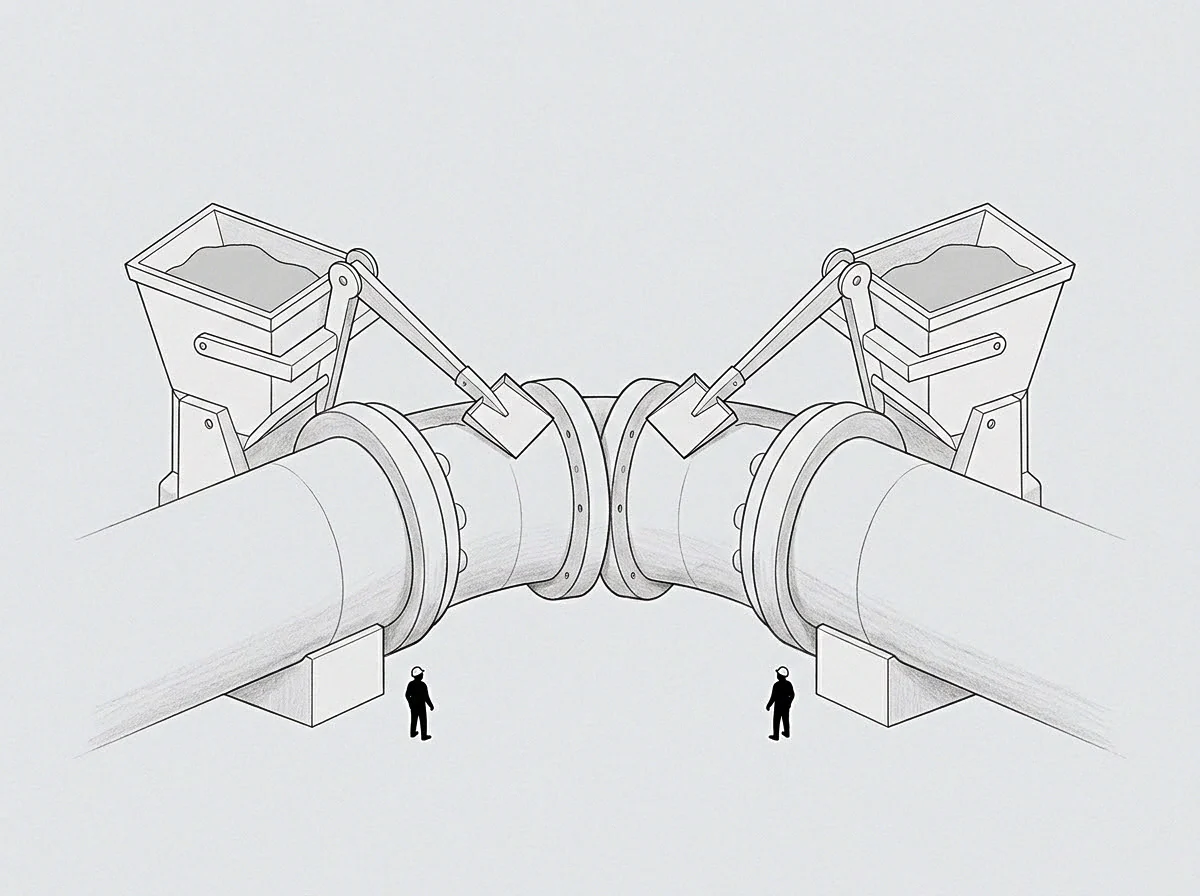
Queue saturation is prevented by replacing calendar-based planning cycles with state-gated coupling architectures. Fixed quarterly or monthly calendars push strategic pivots onto teams regardless of queue health, whereas state-gated latches admit new inputs into execution pipelines only when operational metrics confirm that work in progress has dropped below capacity thresholds.
| Coupling Architecture | Trigger Condition | Operational Capacity Impact | Recalibration Lag | System Stability Boundary |
|---|---|---|---|---|
| Fixed Interval Synchronous Interlock | Calendar date boundary | High task-switching penalty during uncleared queues | Zero lag relative to schedule | Collapses when queue clearance exceeds interval length |
| State Dependent Queue Gated Latch | Work-in-progress threshold drop | Protects execution floor by queuing strategic shifts | Variable lag tied to operational velocity | Maintains dynamic equilibrium under changing demand |
| Asynchronous Decoupled Buffer Coupling | Buffer depletion indicator | Absorbs strategic volatility through intermediate buffer | Bounded maximum lag equal to buffer depth | Requires strict inventory limits to prevent obsolescence |
| Architectural selection determines whether strategic recalibration disrupts active execution throughput. | ||||
Using a state-dependent queue latch ties control to real queue states rather than calendar dates. When leadership identifies the need for a directional change, the revised strategic payload sits in the coupling interface while operational teams finish current commitments without disruption. As in-flight work reaches completion, the latch checks available capacity and releases new directives only as space opens up.
An engineering team accepts new directional directives only after the previous feature set completes deployment without mid-sprint scope modifications.

Dam

Managing Volatility Through Structural Buffering
A structural dam isolates executive volatility from operational capacity by holding recalibration pressure behind controlled boundaries. While strategic planning generates continuous potential energy, execution lines require steady conditions to convert that energy into delivered work. Without a buffering dam, early-stage executive discussions cascade straight to execution floors, overwhelming operational channels with unrefined requirements.
An uncoupled engineering pipeline continues executing deprecated specifications long after the executive board approves a revised vector.
Managing structural backpressure requires systematic queue discipline. Operational leads maintain clear volumetric limits on incoming work pools and enforce a strict one-in, one-out policy: when leadership places a priority request into the coupling buffer, an existing task of equivalent scope returns to the backlog or is formally cancelled.
Establishing state-gated coupling involves five steps across functional boundaries:
- Define the baseline execution floor by measuring minimum uninterrupted queue clearance times for each functional unit.
- Construct an explicit coupling buffer between strategic planning groups and execution leads to hold incoming recalibration requests.
- Set quantitative work-in-progress thresholds that automatically block new input items when operational queues exceed capacity.
- Implement dynamic rate-limiting controls that translate high-level strategic revisions into staggered implementation units.
- Audit queue clearance rates weekly to re-calibrate buffer depth based on demonstrated operational velocity.
An operational dam works only when telemetry flows in both directions. Strategic teams receive real-time visibility into buffer depth and queue clearance rates, enabling them to forecast when new directives can enter production. At the same time, implementation leads proceed without facing uncoordinated shifts in mid-flight work.
Whether executive leadership will accept the intentional lag created by a coupling buffer during sudden market shifts remains a matter of organizational negotiation.

Yield

Measuring True Progress Across Coupled Interfaces
Aligning strategic recalibration with operational throughput boundaries turns raw activity into measurable yield. Effective execution systems do not maximize the number of pivots attempted per quarter; they optimize the ratio of finished strategic deliverables to the total capacity expended across delivery channels.
State-gated structural coupling suppresses systemic variance provided the threshold triggers derive from queue backpressure rather than calendar dates.
Yield measures net directional progress along a defined value vector rather than gross local activity. When coupling latches protect the operational floor, execution velocity stabilizes at its sustainable peak. Teams complete discrete assignments cleanly, establishing clear empirical baselines for future evaluations and ensuring operational stability.
Coupling strategic recalibration cycles to operational throughput boundaries allows an organization to function as a resonant control loop. Leadership gains dependable execution timelines for major initiatives, operational teams retain the uninterrupted focus needed to clear complex work, and the entire system gains resilience against external market shifts.
Strategic throughput reaches its peak when recalibration signals match the exact clearance rate of the underlying operational queue.